“Pick an intersection, any intersection. Okay, California and Hyde Streets.”

I’ve been to and have ridden past this intersection many times, but I’ve never paid attention to the small brick building on the southeast corner until I read Amy O’Hair’s article on her Sunnyside History Project website about Charlotte Coleman and Gilmore’s Bar. Charlotte’s story is interesting enough in itself, but Amy also included a brief history, with vintage photos, of the Gilmore’s building and the area around the California, Hyde Streets intersection. Last Thursday, I took the #1 MUNI bus up Sacramento Street to Hyde, and walked one block south to California Street to take then and now pictures of some of the vintage pictures Amy posted in her article, and a few others from the websites she visited.  When I caught the #50 cable car back along California Street to Market Street, I felt like a teenager again, jumping on the outside of the cable car as it stopped at Hyde Street, and hanging on as it rattled back to Market. Also, Amy was kind enough to give me permission to post the link to her Sunnyside History Project article here. (Thumbnail images)
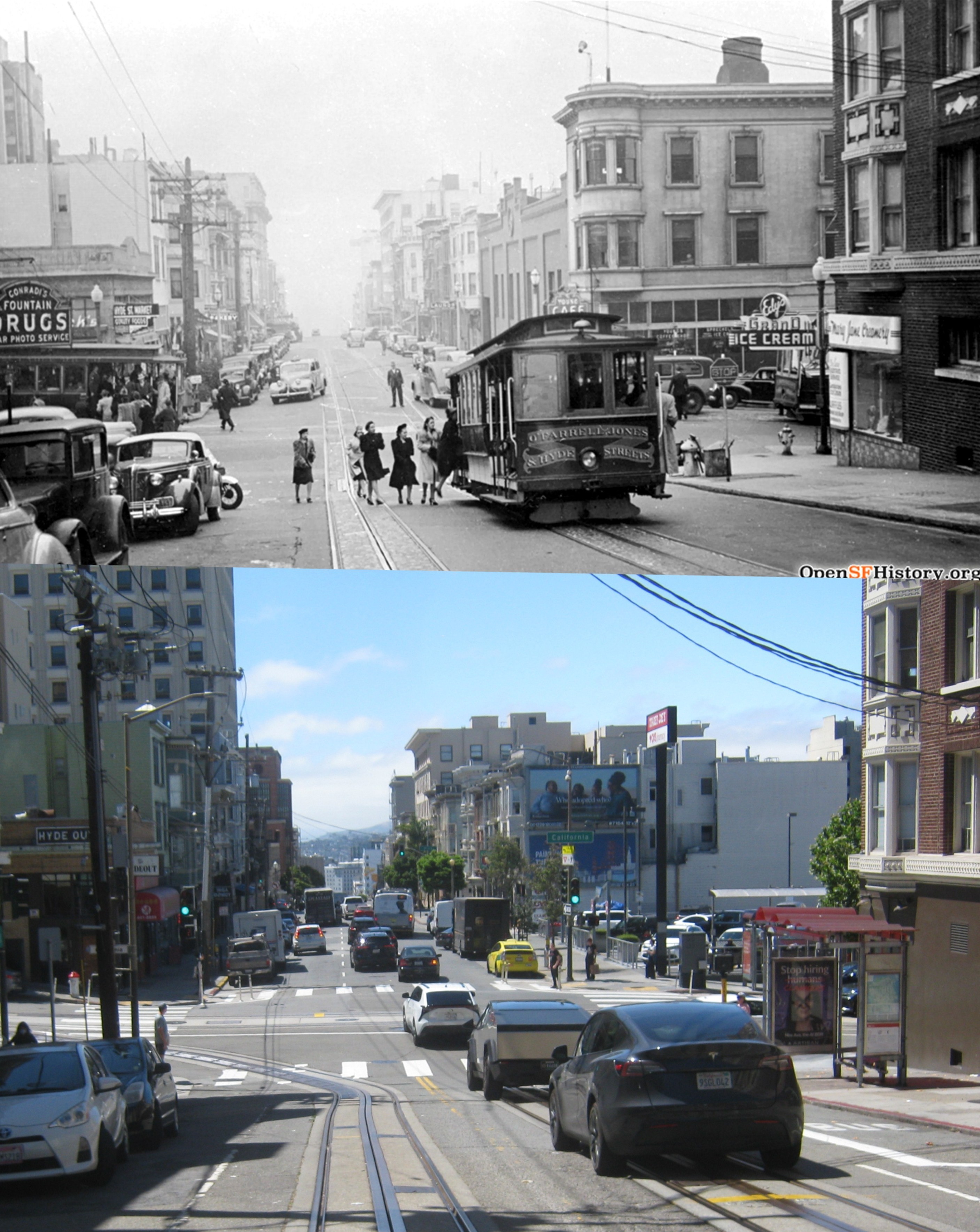
 

The O’Farrell, Jones & Hyde Streets cable car, known in poetry as ‘The Hyde Street Grip’, is picking up passengers on the way back from Beach Street in 1941. This cable car line stopped running in 1954. On the left is the building that became Gilmore’s Tavern in 1955. I didn’t have to do a lot of research for this post, thanks to Amy. When the vintage picture was taken, part of the building was home to the Hyde Street Market. (opensfhistory.org)
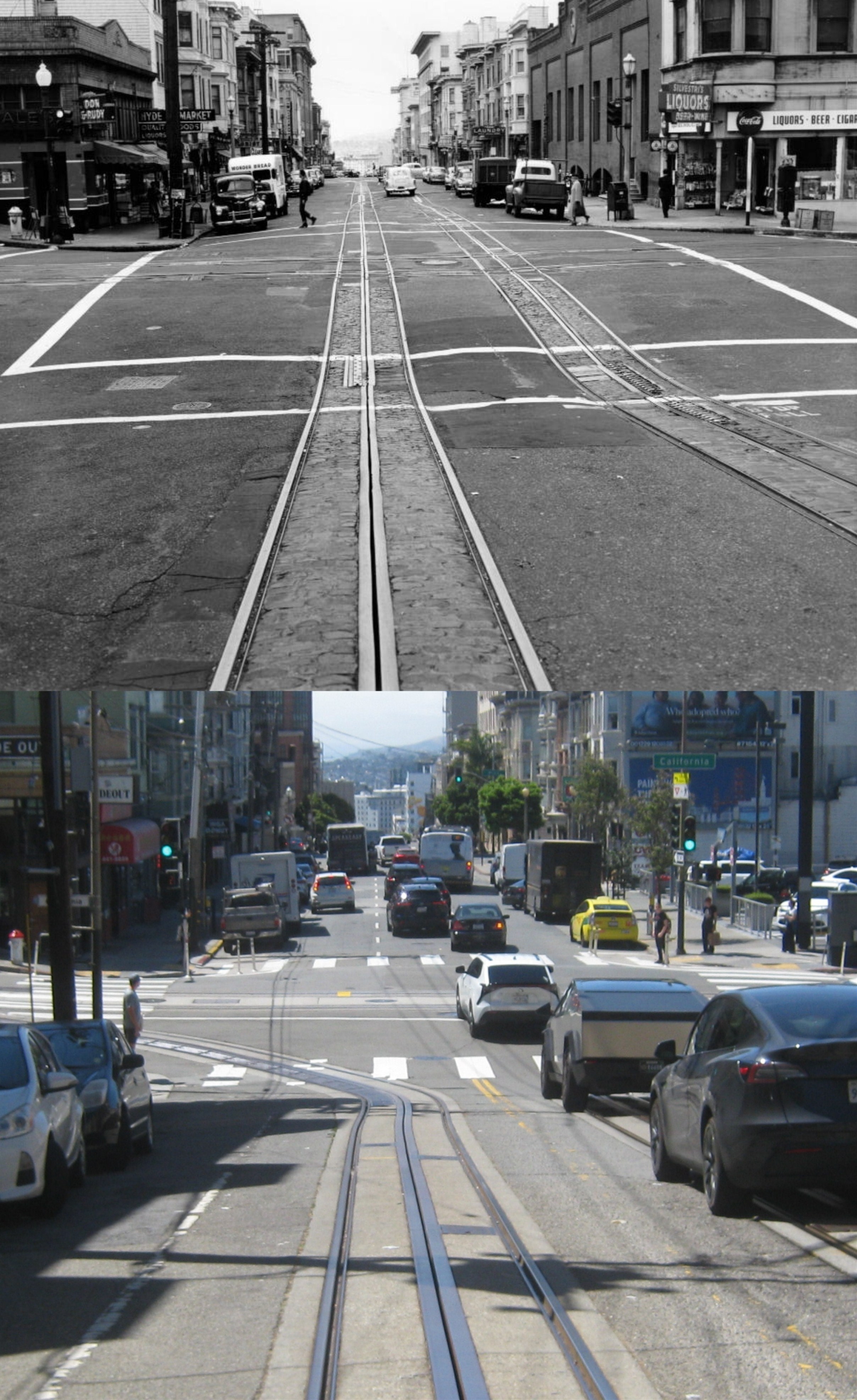
  

A closer look at the intersection in 1954: After 1949 the club on the corner was called Don and Rudy’s. (San Francisco Library Digital Archives)
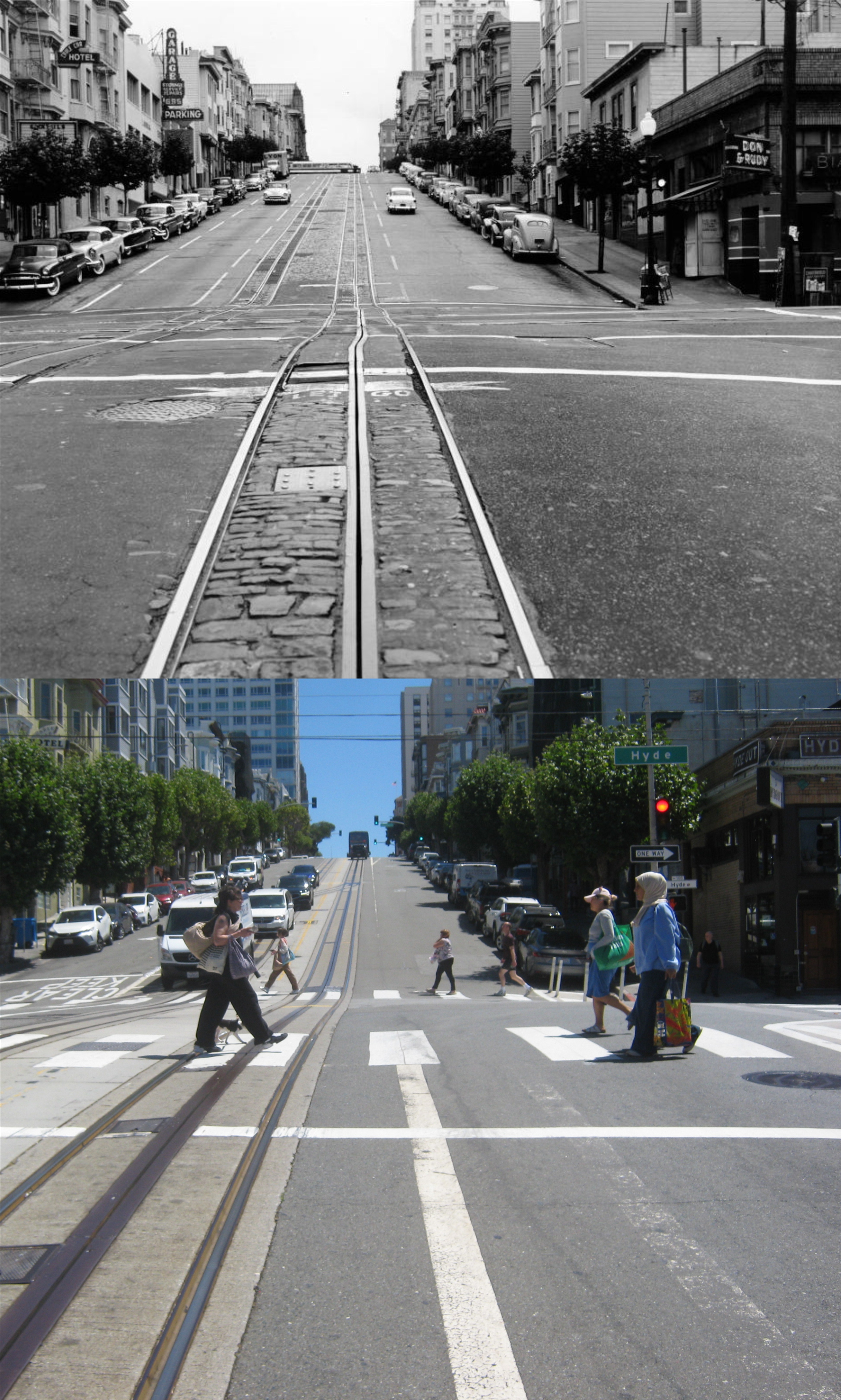
  

Looking east past the intersection toward Leavenworth Street in 1954: I’m wondering what that was that looks like a train crossing California Street at Leavenworth in the vintage picture. I’ll check back if I find out. (San Francisco Library Digital Archives)
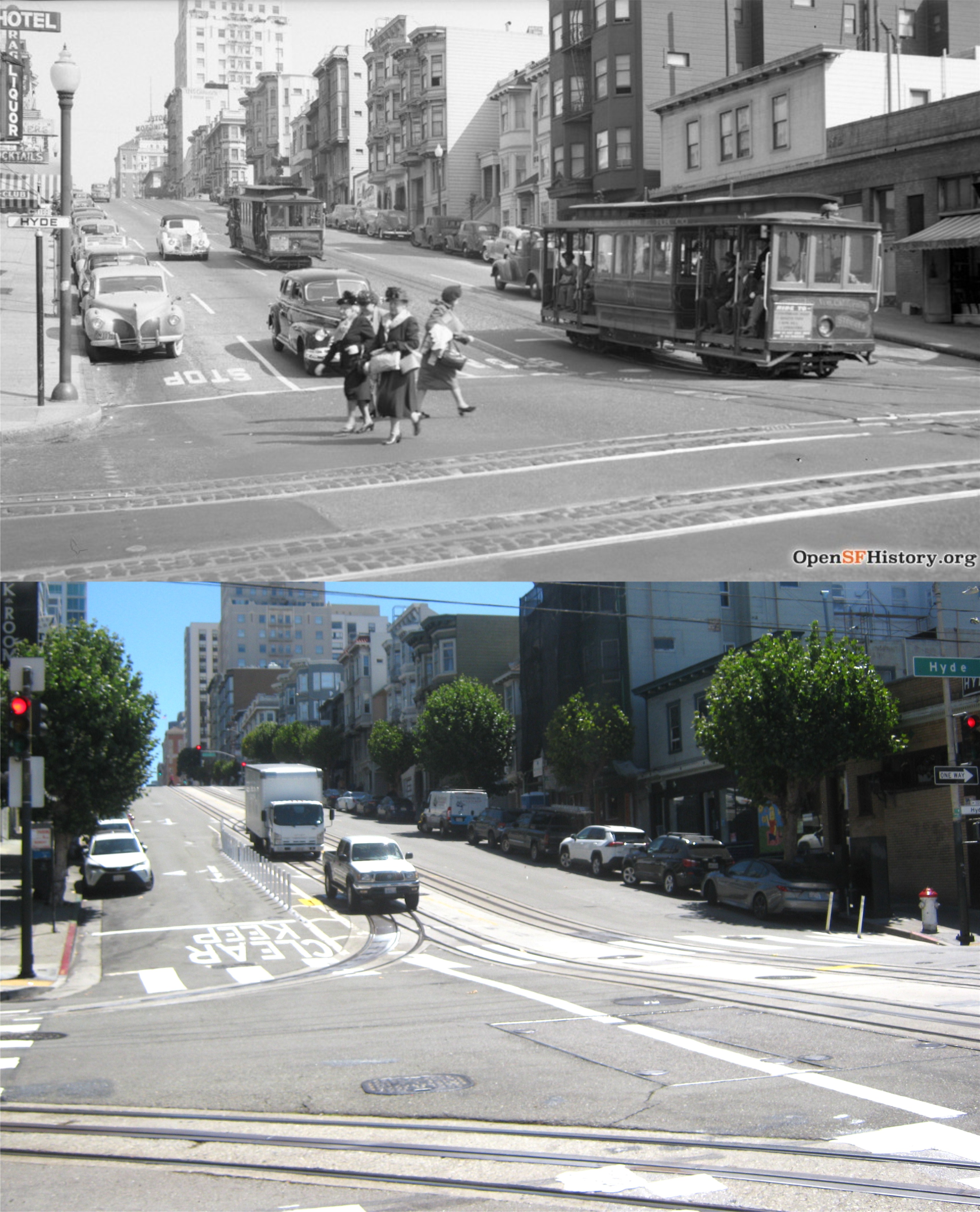
 

Looking southeast across the intersection in 1949: You can see part of the shoeshine stand on the right mentioned in the Sunnyside History Project article. (opensfhistory.org)
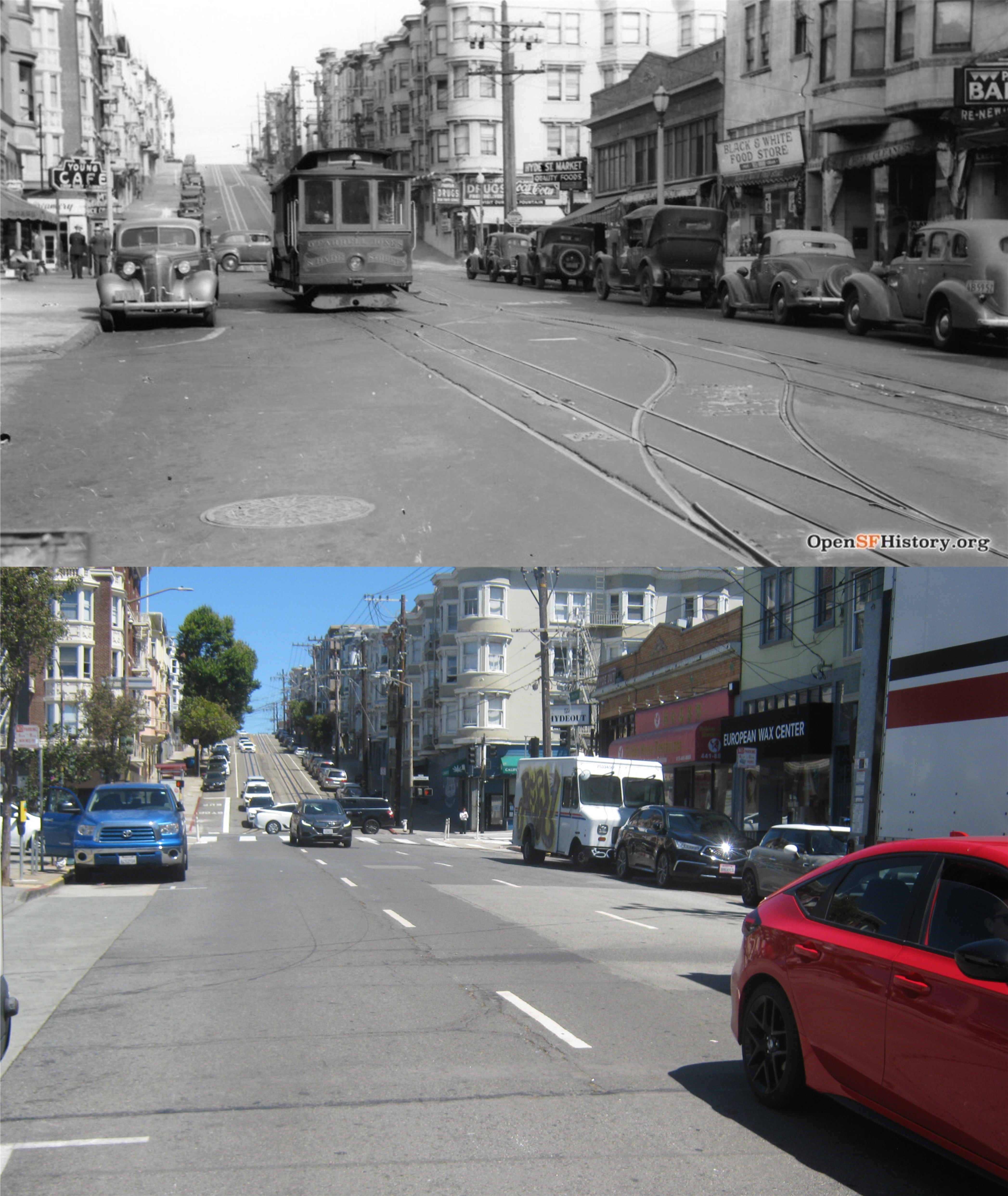
 

Looking northeast across the intersection in 1940: The building where Gilmore’s was now houses a pub called The Hyde Out. (opensfhistory.org)
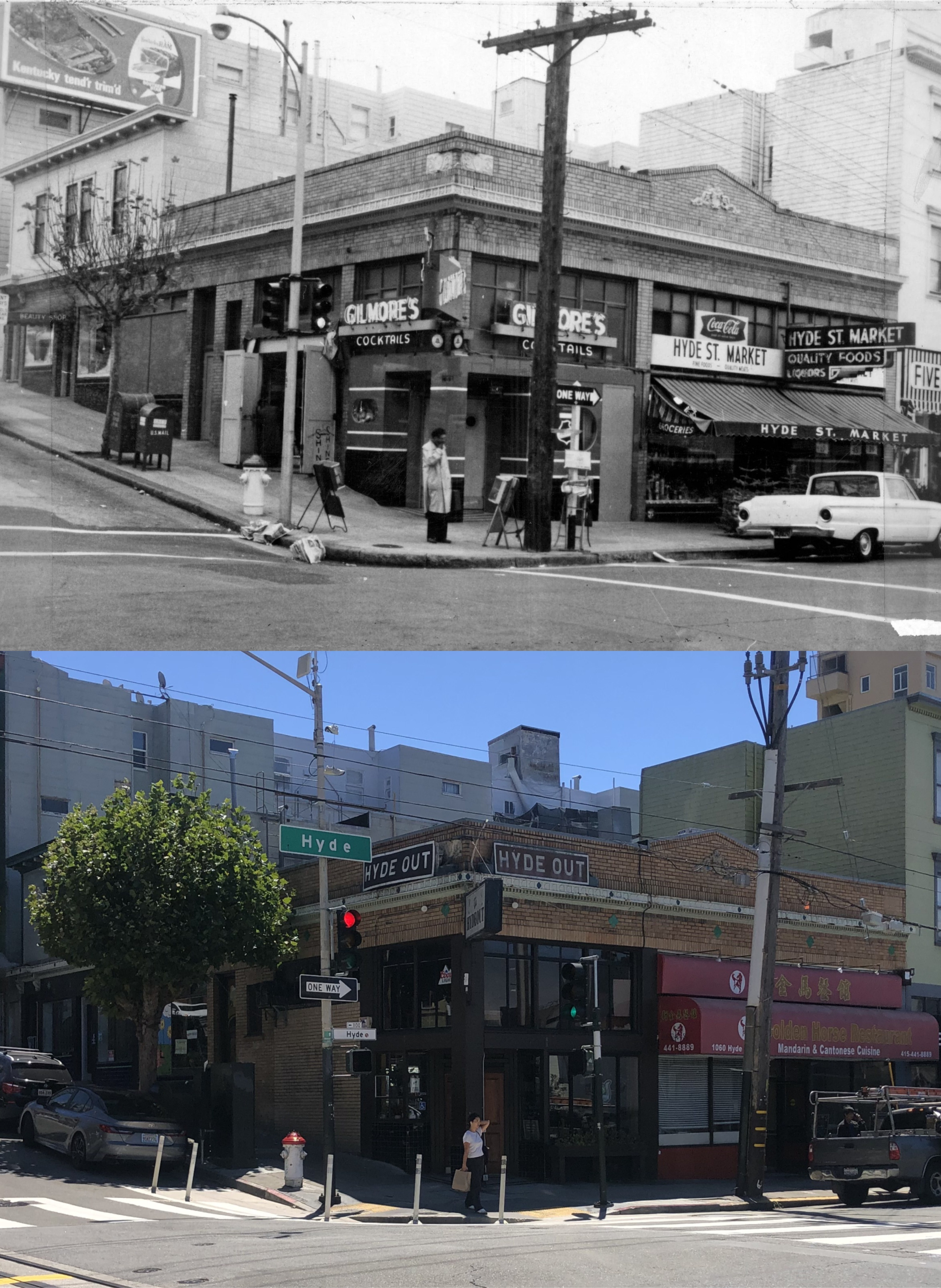
  

Another great picture featured in the article from 1964, when the bar had become Gilmore’s: Love that Ford Falcon Ranchero (I think) on the right. (San Francisco History Center, San Francisco Public Library)

Here’s the link below to the Sunnyside History Project article about Gilmore’s Bar and Charlotte Coleman.

https://sunnysidehistory.org/2026/07/16/gilmores-charlotte-colemans-nice-quiet-bar-of-the-1980s/
Another “deep dive” along Sutter Street, from Mason to Market

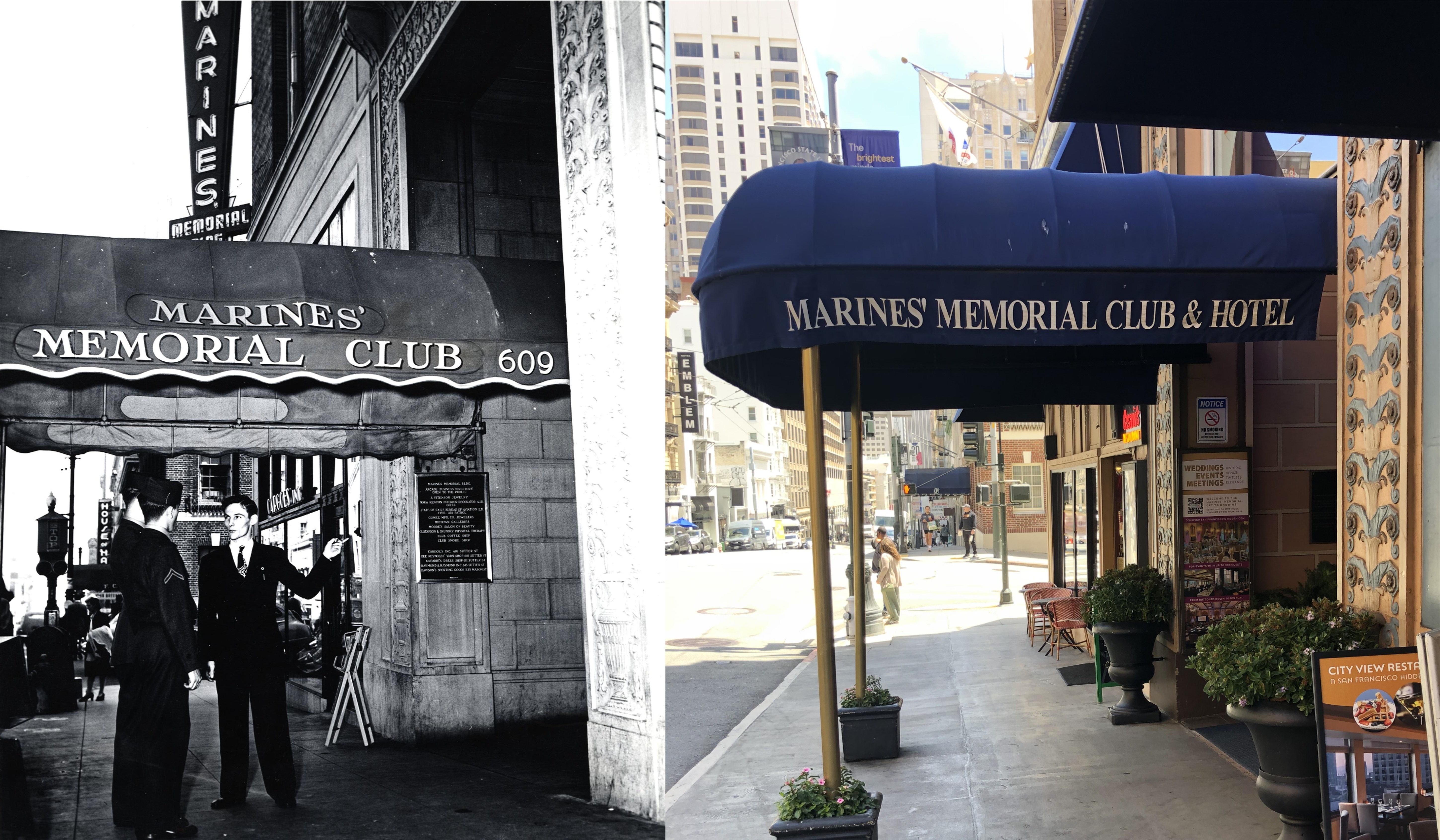
My walk along Sutter Street was from Mason Street to Market Street so I could get some Ghirardelli Chocolate at the Palace Hotel before heading home. The “deep dive” refers to a compliment AI gives to my website that you can read in the About section of my blog. All but one of the vintage pictures are from the San Francisco Pictures Blog; I keep losing and finding that website for my bookmarks, and it has a wonderful collection of vintage San Francisco street photography. Here’s the link. https://sanfrancisco-pictures.blogspot.com/ The Marines’ Memorial Club photo is from the San Francisco Library Digital Archives. (Thumbnail images)


I looked up the Marines’ Memorial Club because a friend of mine sent me a link featuring a Jack Benny radio broadcast from the Western Women’s Club in San Francisco in 1938. I wasn’t familiar with where the Western Women’s Club was until I learned that the name was changed to the Marines’ Memorial Club in 1947, the year the vintage picture was taken.


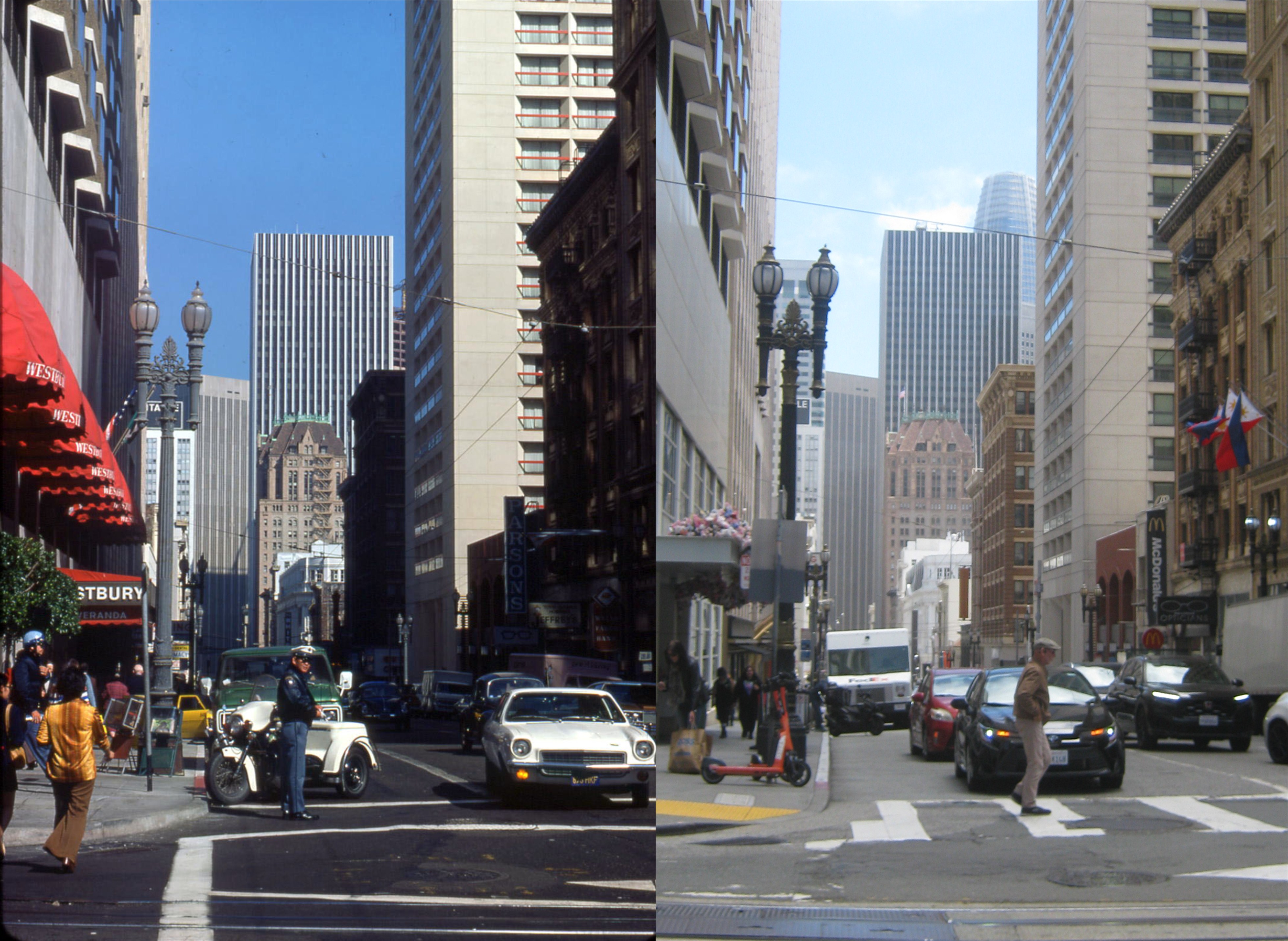
I moseyed down to Powell Street, if anybody moseys anymore, for an update of this 1974 picture, looking down toward the Gothic looking Hunter-Dulin Building where Samuel Spade from ‘The Maltese Falcon’ had his office.


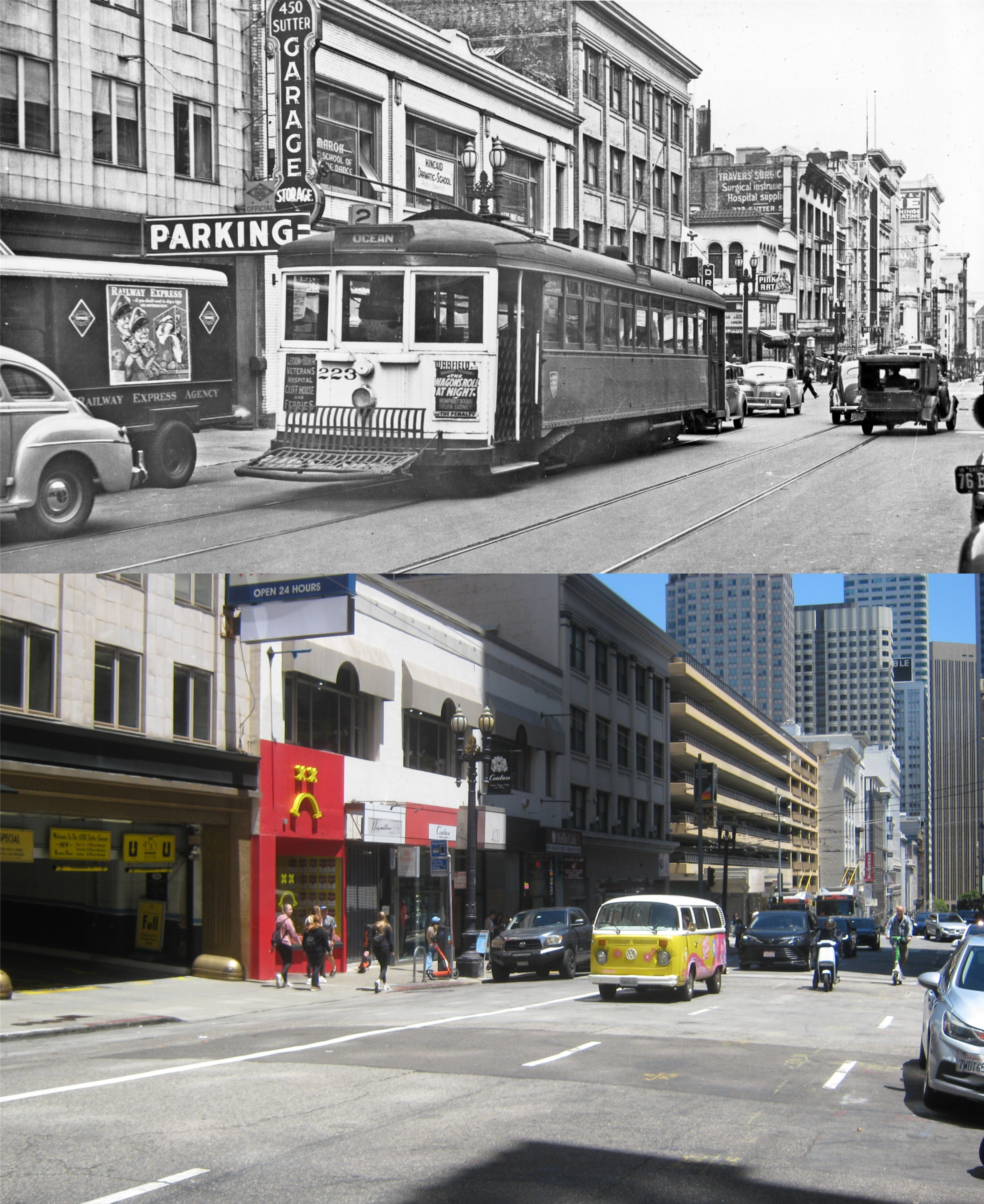
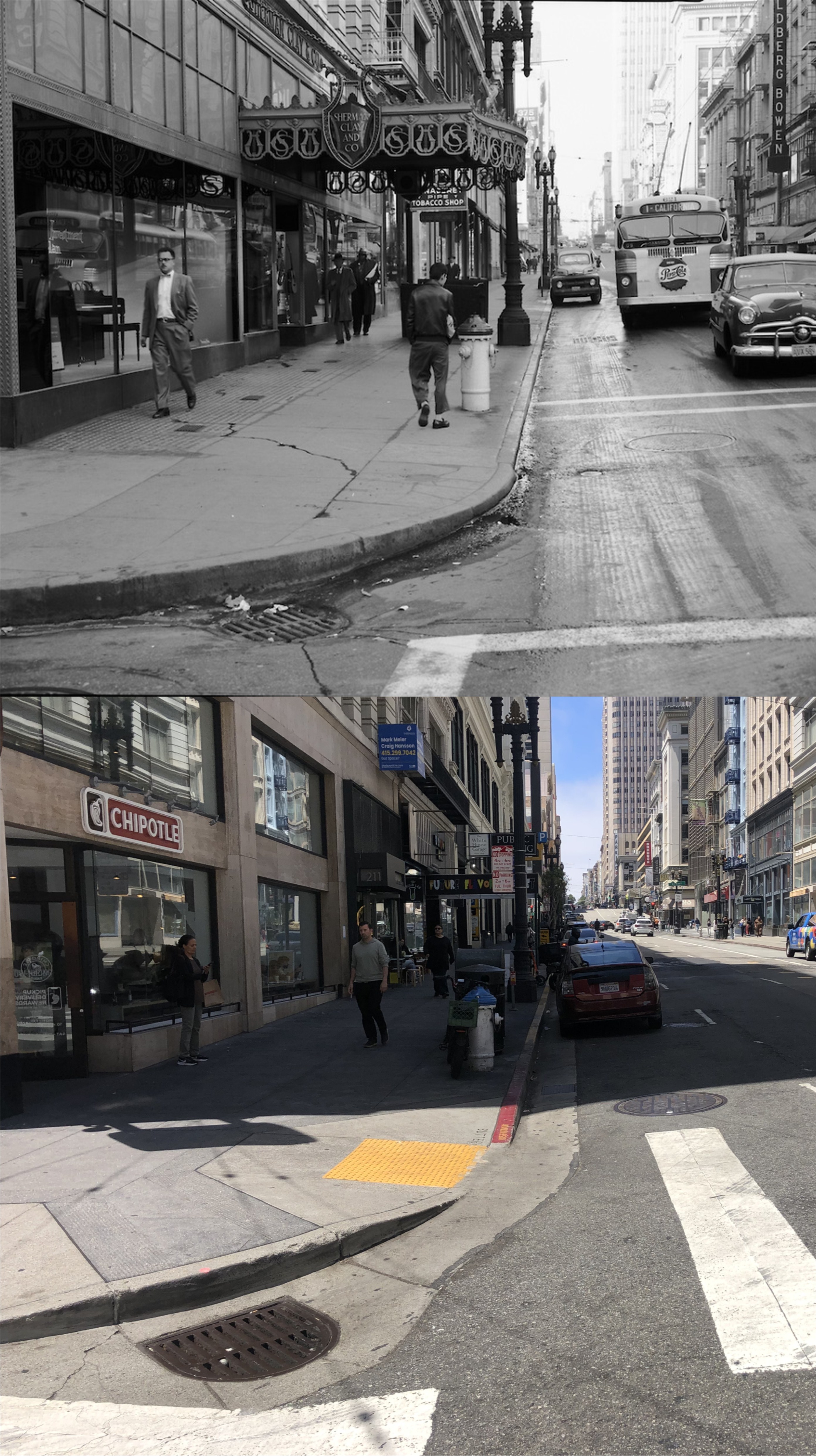
Between Powell and Stockton Streets is the 450 Sutter Medical Building. The vintage picture is dated 1950, however, the movie being advertised on the streetcar was made in 1941. Trivia note; Humphrey Bogart was starting to get noticed in 1941, and received top billing in ‘The Wagons Roll at Night’, although this movie predated ‘The Maltese Falcon and ‘Casablanca’. After ‘The Wagons Roll at Night’ Bogart received top billing in every one of his movies until he died.


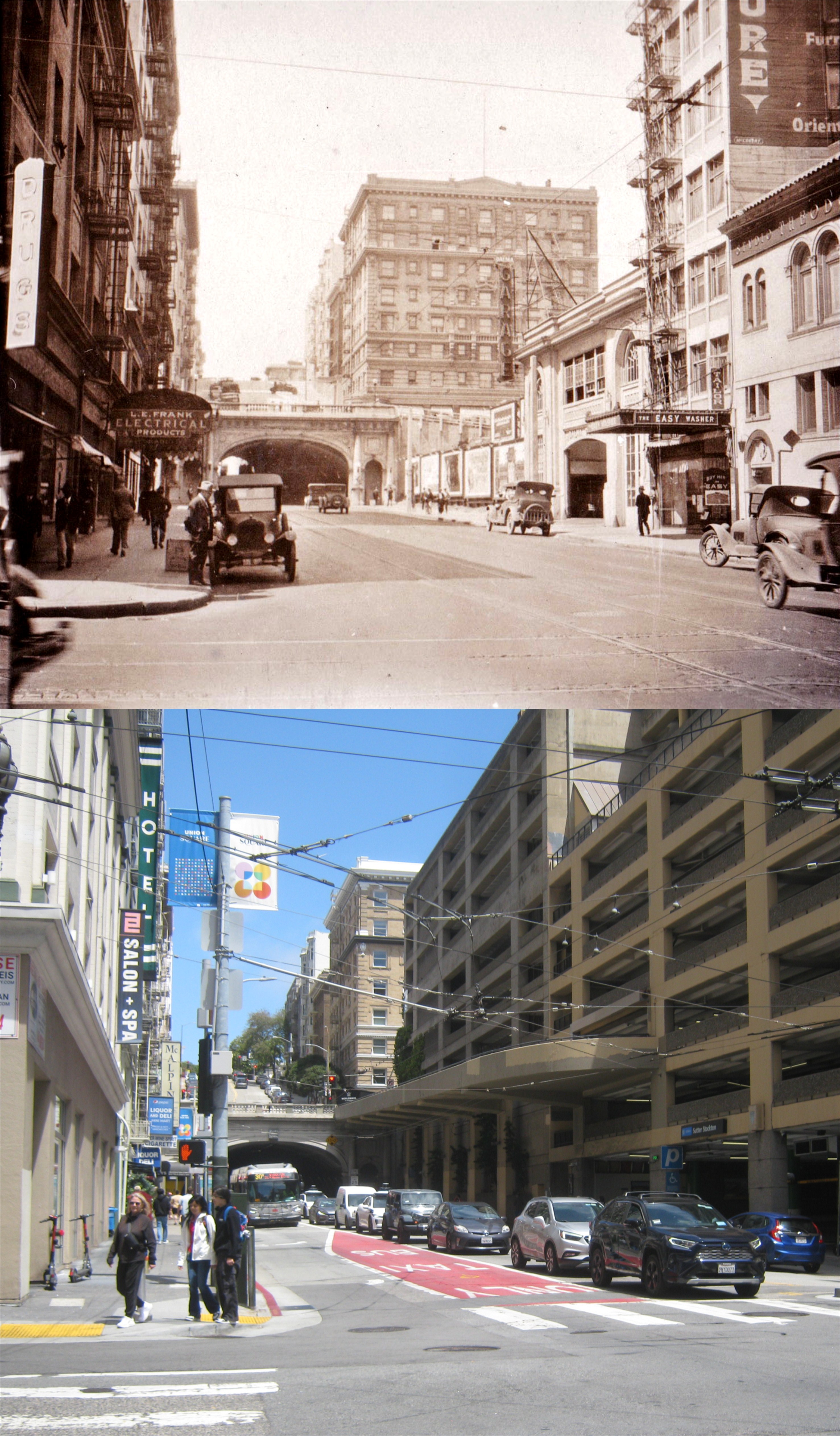
Sutter Street at Stockton, looking north in 1920: The Stockton Tunnel is in the background.


Approaching Kearny Street in 1957: Almost all of the buildings in the vintage picture are still around.


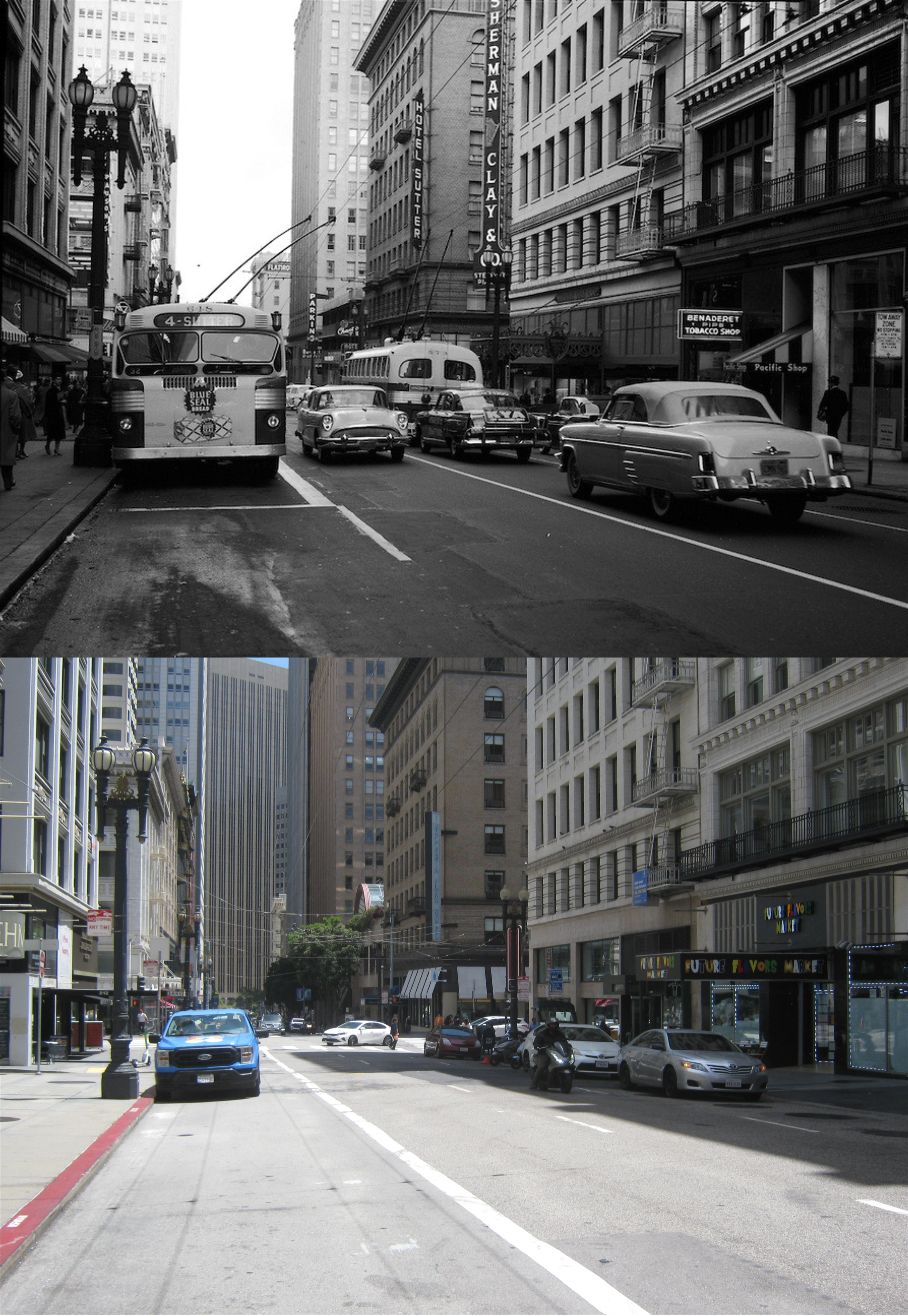
Looking back along Sutter Street from Kearny in 1958: The Sherman Clay Building doesn’t have its fancy entrance overhead, and the entrance has been relocated. You can see the 450 Sutter Medical Building on the right background of both pictures.


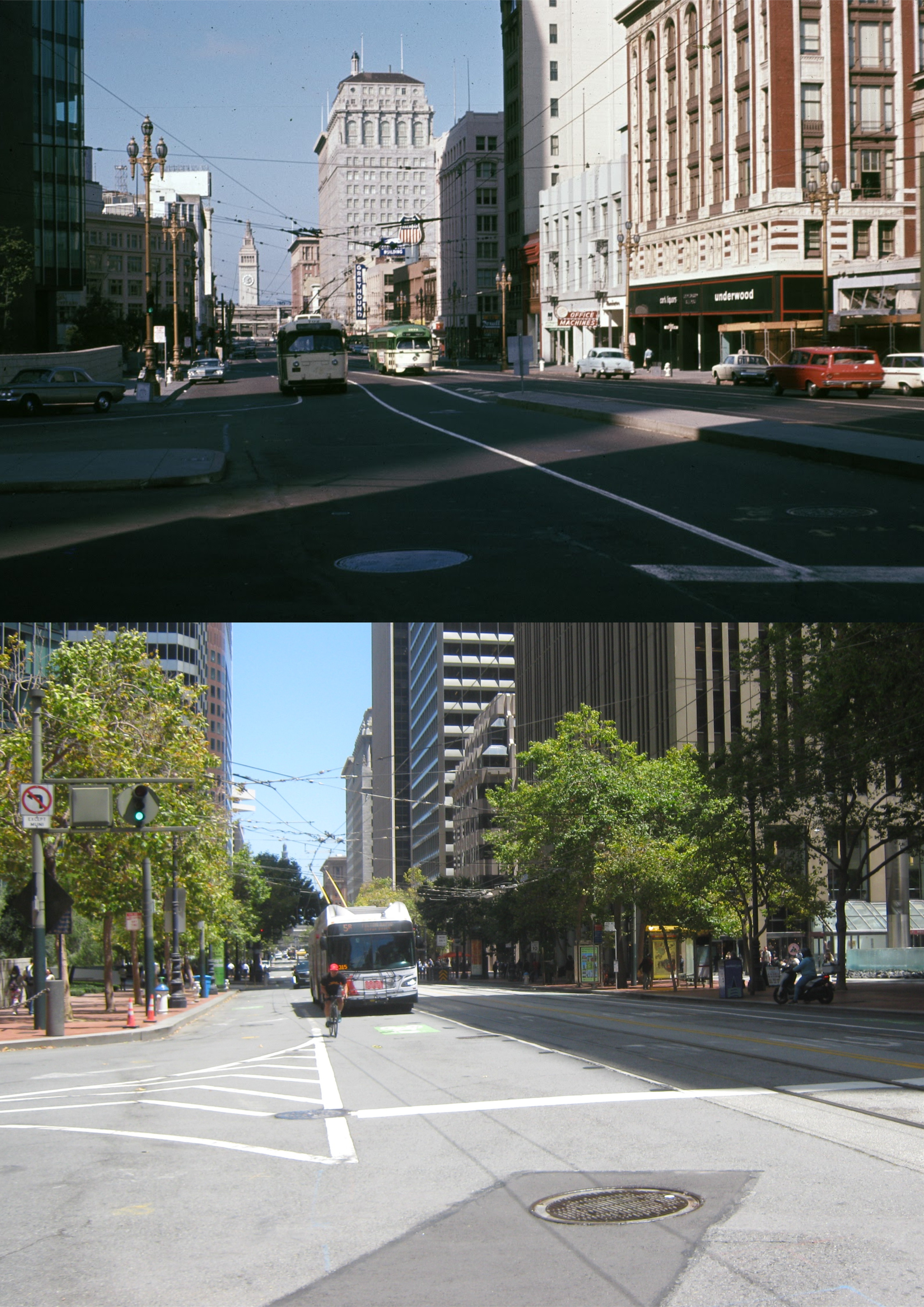
Where Sutter Street branches off from Market Street in 1963: The turquoise windowed Crown Zellerbach Building can be seen on the far left in both photos. The Ferry Building is hidden by a tree on the left in the modern picture. The Southern Pacific, Matson, and PG&E Buildings in the center are visible, but nothing past those remain in the current picture.


The Rustic Stone Bridge

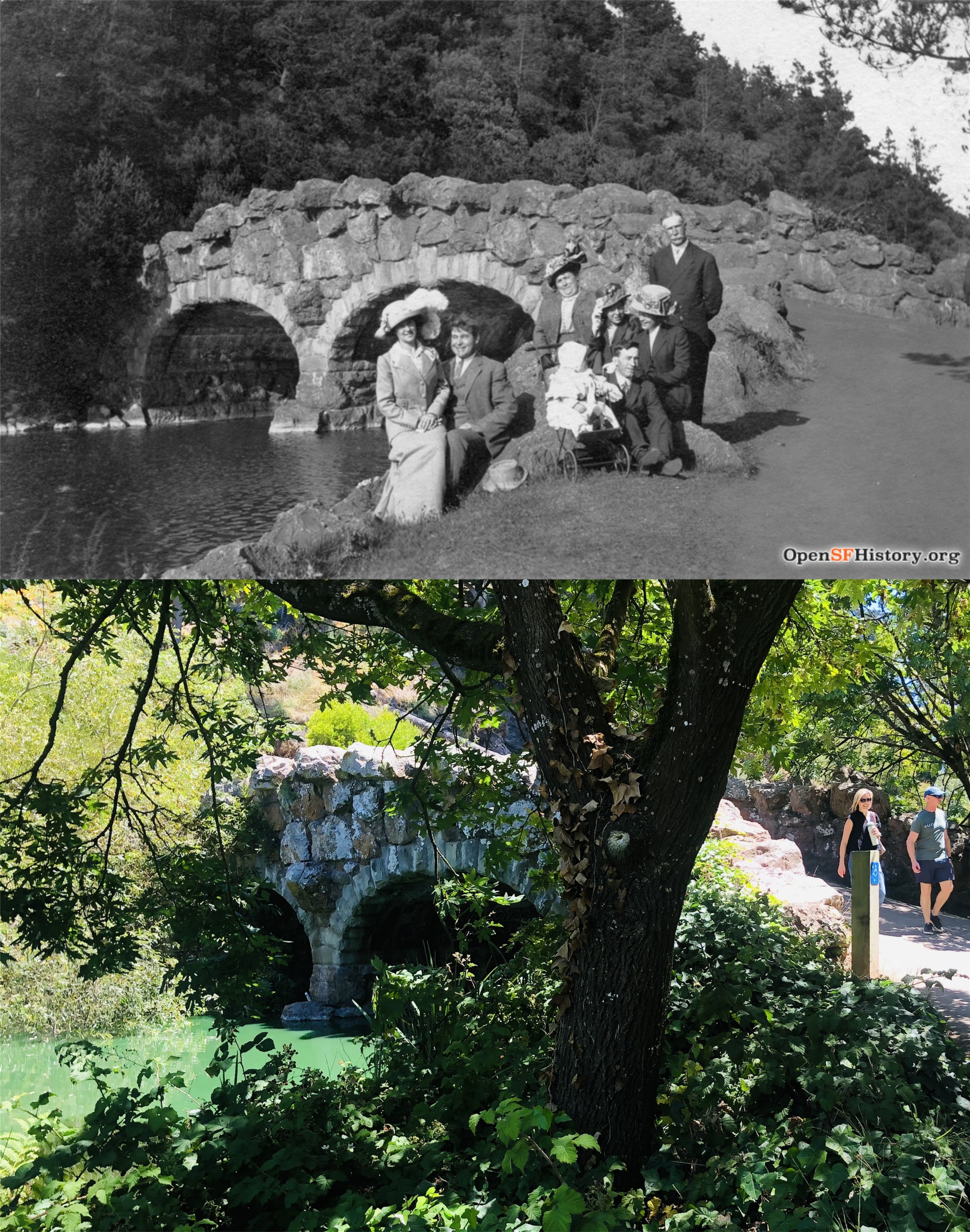
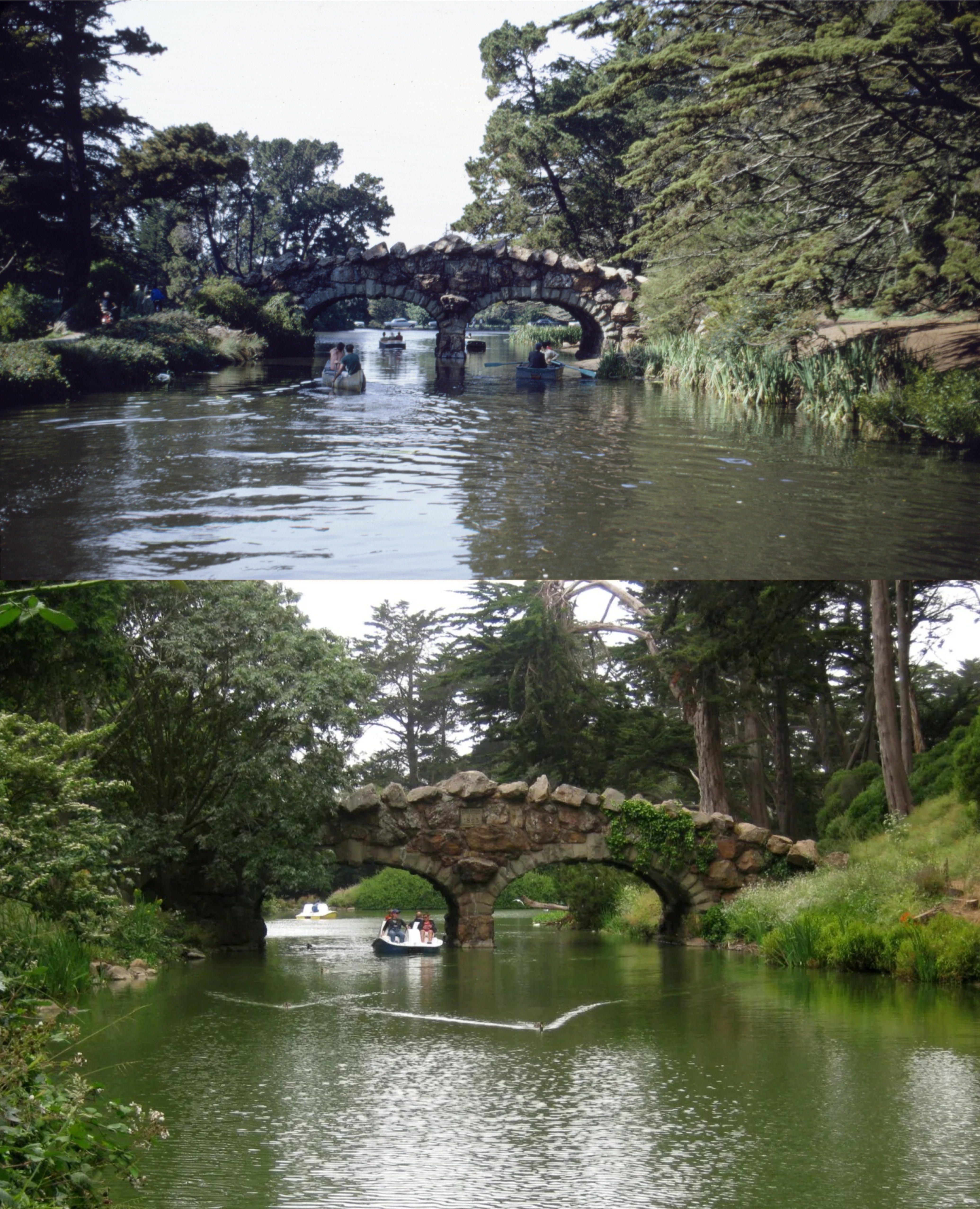
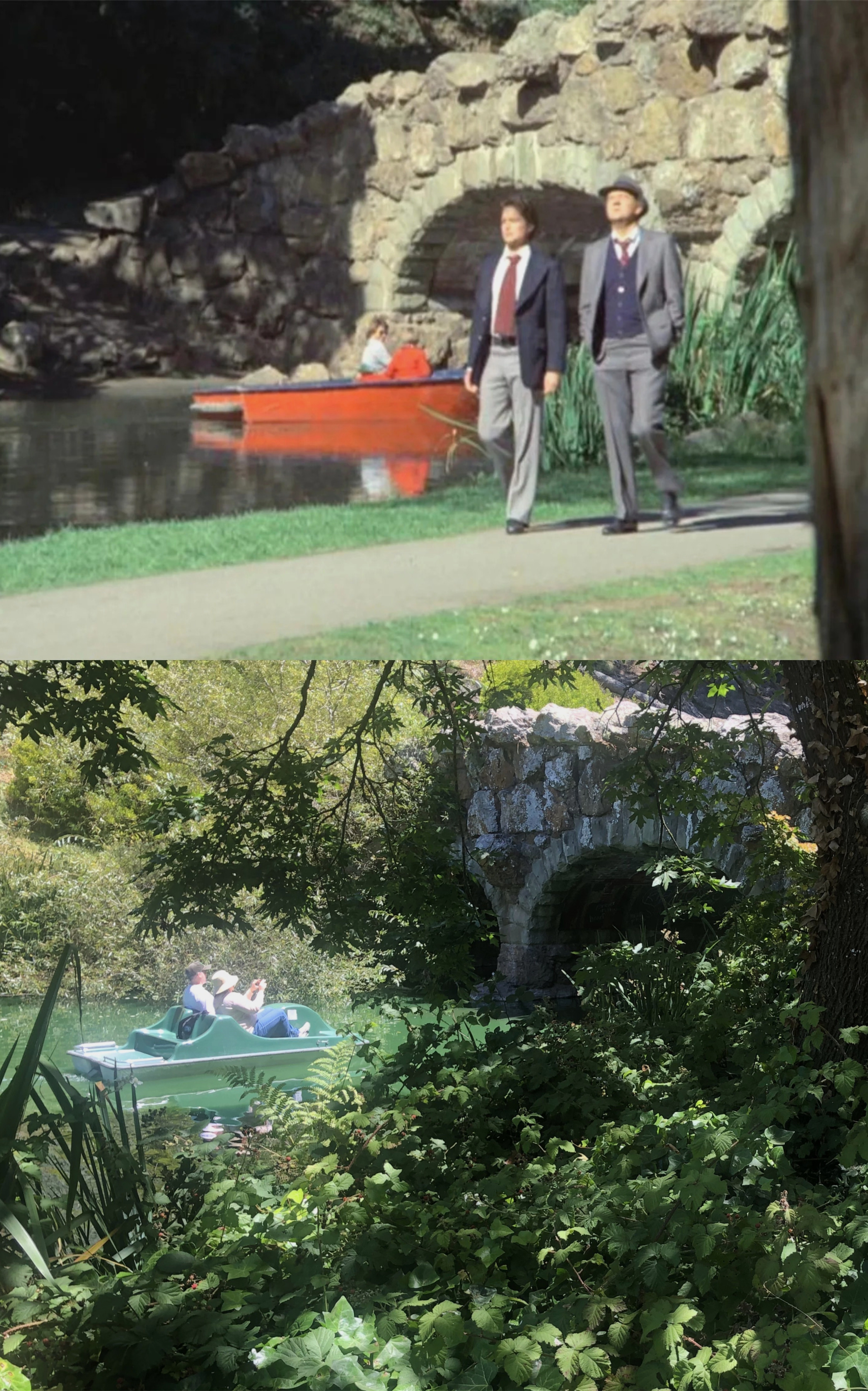
Referred to as the Rustic Bridge or the Stone Bridge, I’ll play it safe and refer to it as I call it in my title. Built in 1893, the Rustic Stone Bridge is easily one of the most peaceful places in San Francisco. As Inspector Michael Stone said to Inspector Steve Keller, “It’s so peaceful, we should come here more often.” (Thumbnail images)


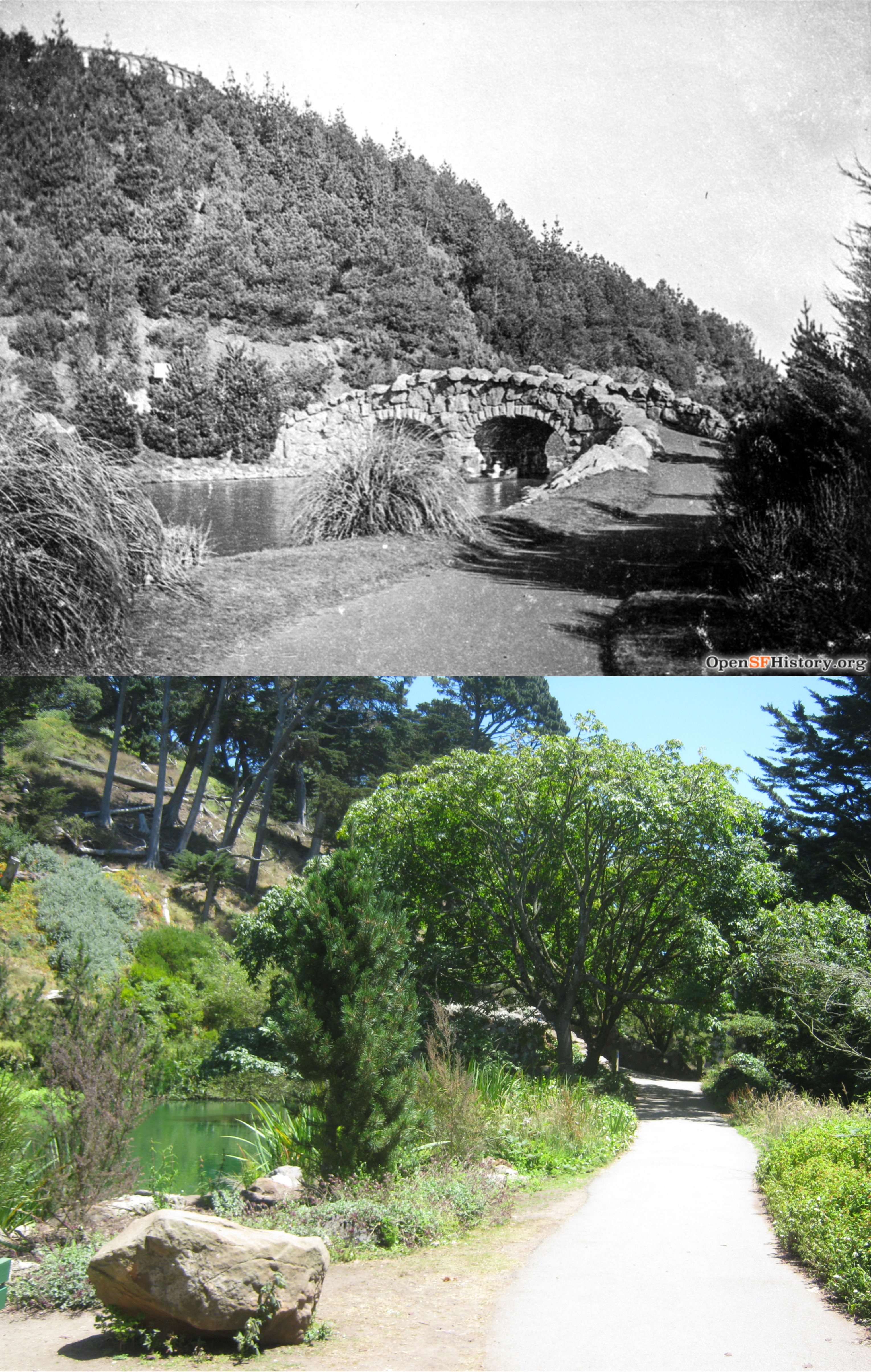
Take the N Metro to 19th Avenue, walk two blocks north into Golden Gate Park, walk up the footpath next to Mother’s Meadow, and you’re at Blue Heron Lake, formerly Stow Lake. The path leading to the Rustic Stone Bridge is a lot more overgrown, for the better, than it was in 1900 when this picture from opensfhistory.org was taken.


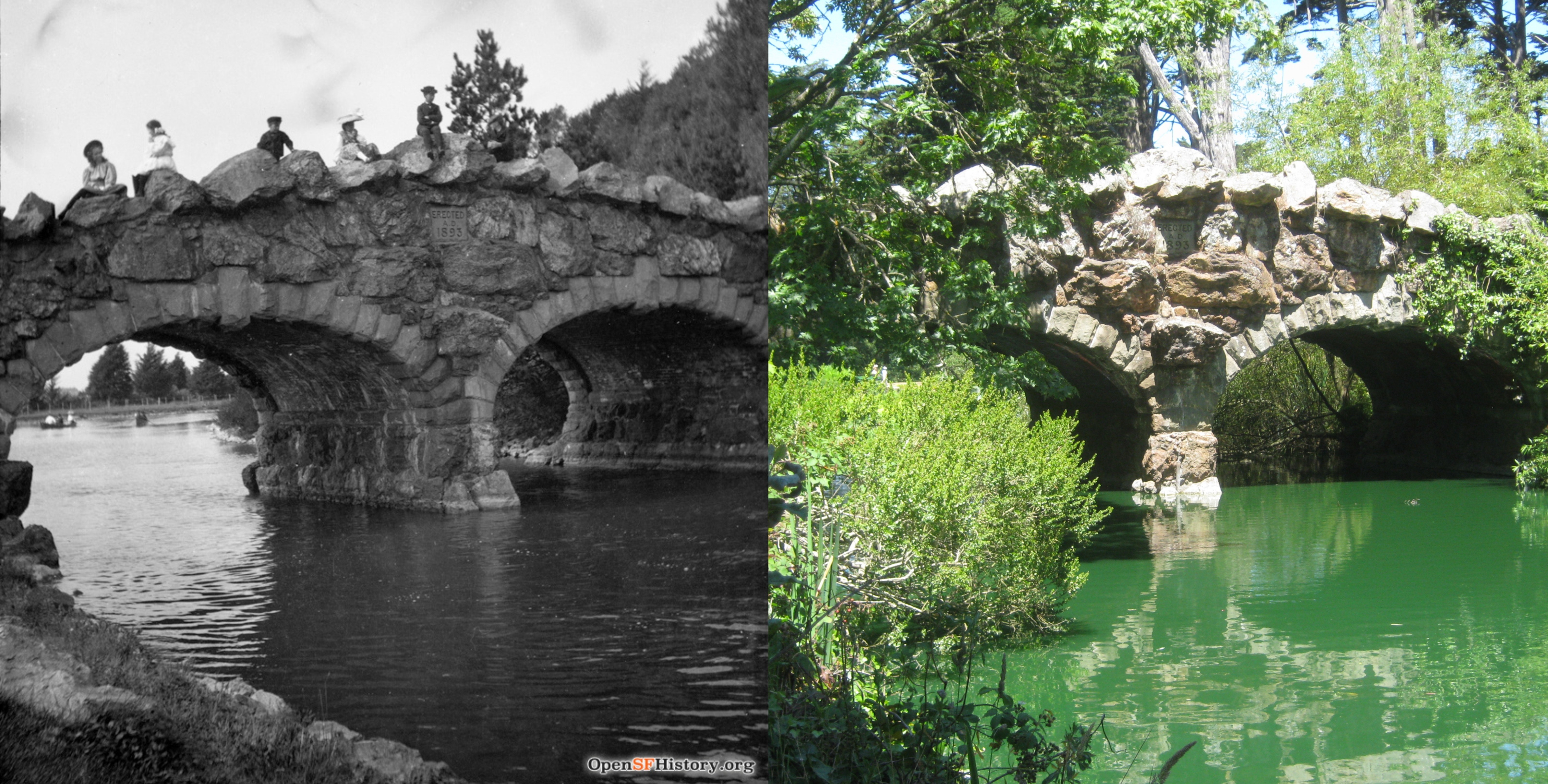
A 1903 photo of the bridge: It’s not stretching the truth to say that this is child endangerment, especially for the kid on the right. If he slips off, he’s going to be lucky if he hits the water first! Somebody would go to jail for this nowadays. (opensfhistory.org)


It’s hard to get good lineups with some of the vintage pictures today, like this opensfhistory.org picture from 1913. Come on, tell it like it is, the fellow with the lady sitting on his lap looks like a pervert!

Rowboats, canoes, and pedal boats passing under the bridge in 1966: (San Francisco Library Digital Archives)

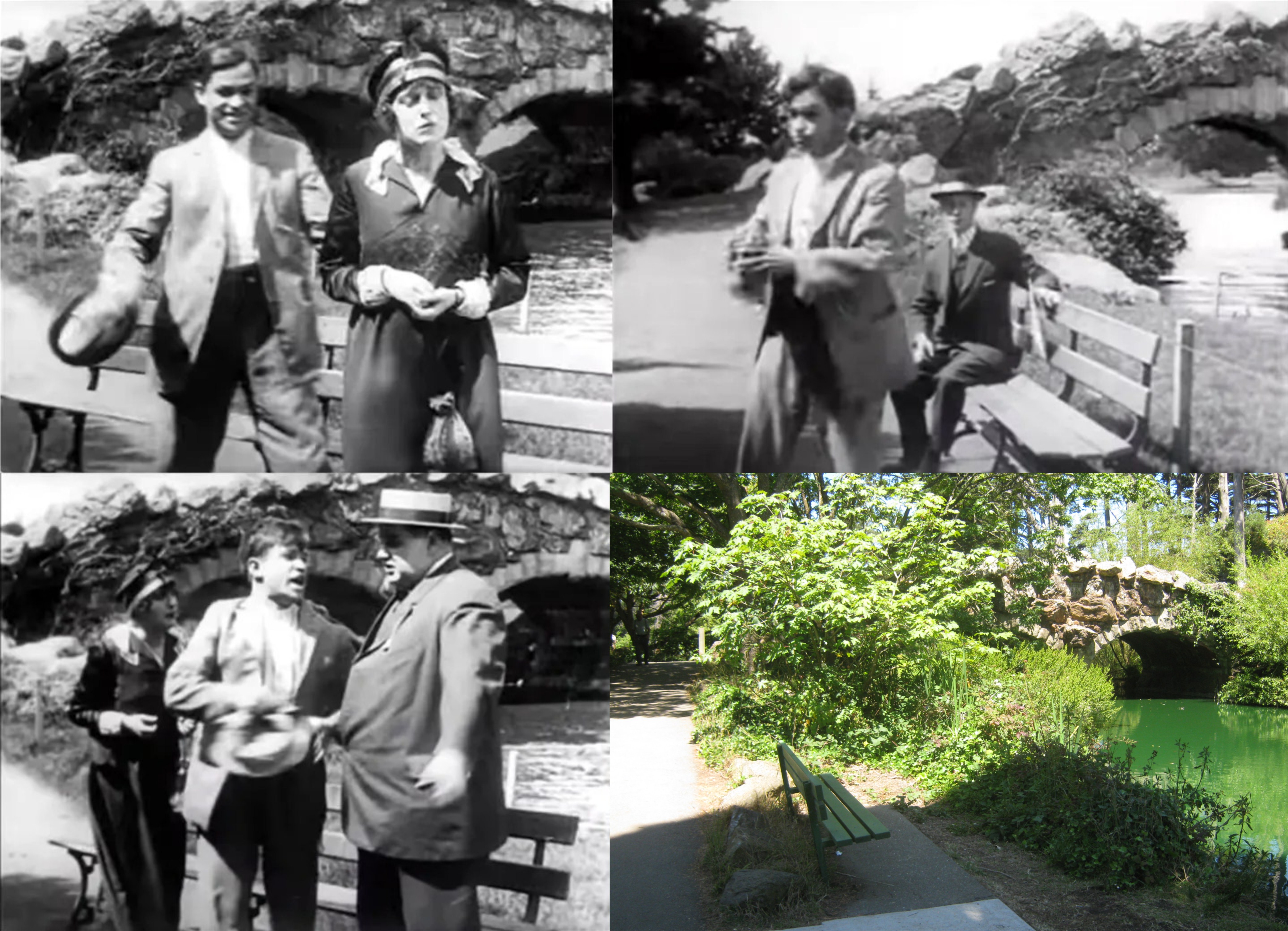
Movies and television have take advantage of this beautiful location, as well. In ‘Mabel and Fatty Viewing the World’s Fair from 1915, at the upper left, a lecherous thief starts hitting on Mabel Normand near the Rustic Stone Bridge when Fatty Arbuckle comes to her rescue below. Also, the thief has an encounter with another fellow at the same bench in the upper right photo. Interestingly, the bench is facing away from the lake in the film, so it may have been a prop. There is a bench facing the lake at this spot today.


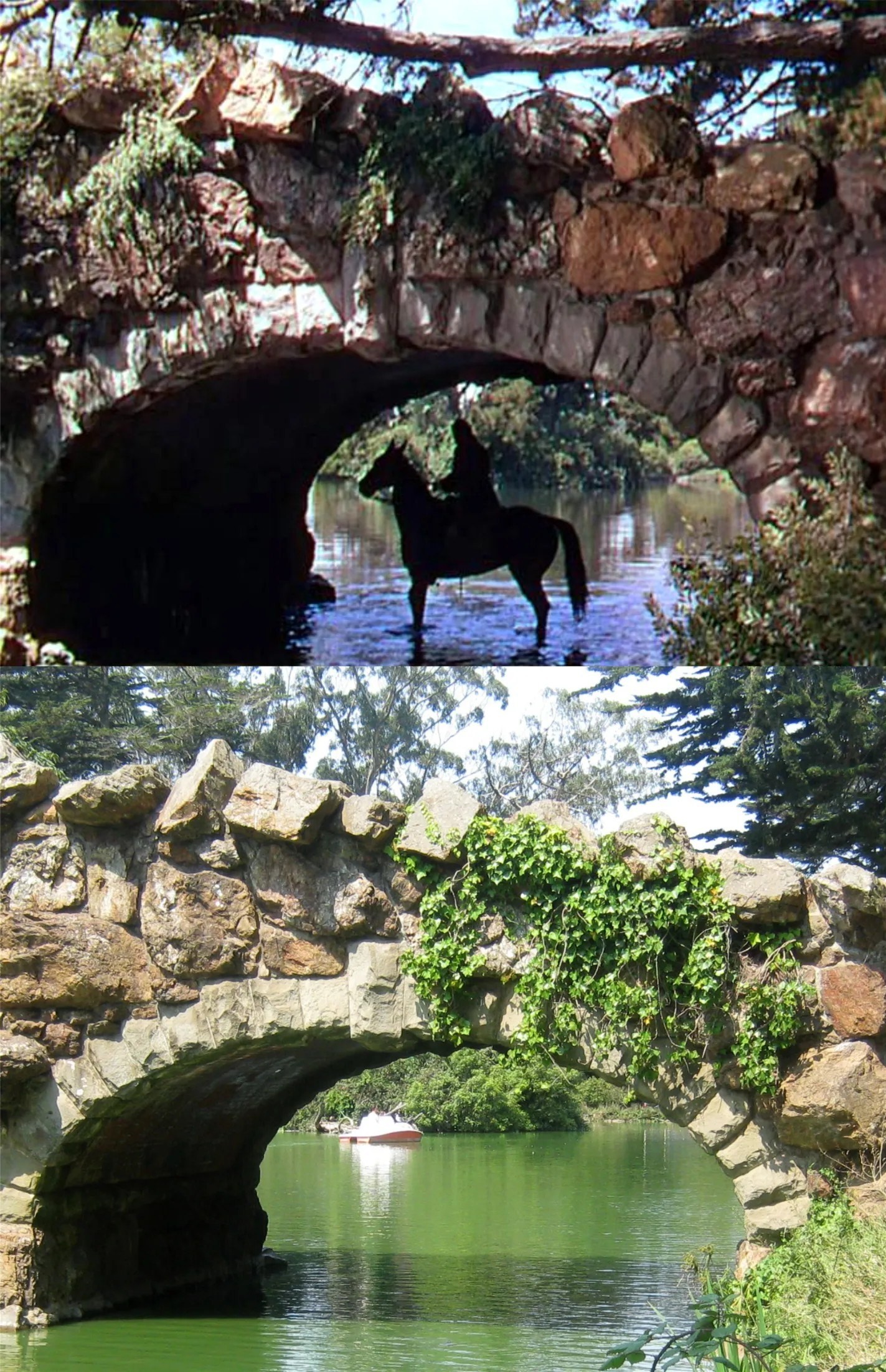
In the 1952 film ‘Scaramouche’ Andre Moreau, played by Stewart Granger, hides underneath the Rustic Stone Bridge while being chased by French guards of the Marquis de Maynes. Leonard Maltin, in his Movie & Video Guide, states that the sword fight at the end of the film is the “longest in swashbuckling history”.


And, as I mentioned in the opening, Inspector Michael Stone, (Karl Malden) reflects on how peaceful this spot is to his partner, Inspector Steve Keller, (Michael Douglas) before going after more bad guys in the television show ‘The Streets of San Francisco’.


Sliding down Market Street

{Biology Professor:

“What do you think of that slide?”

Professor Wagstaff (Groucho Marx):

“Well. I think he was safe at second, but it was very close.”}

These are some slide pictures I took along Market Street from 1983 to 1985, and updated Saturday. (Thumbnail images)


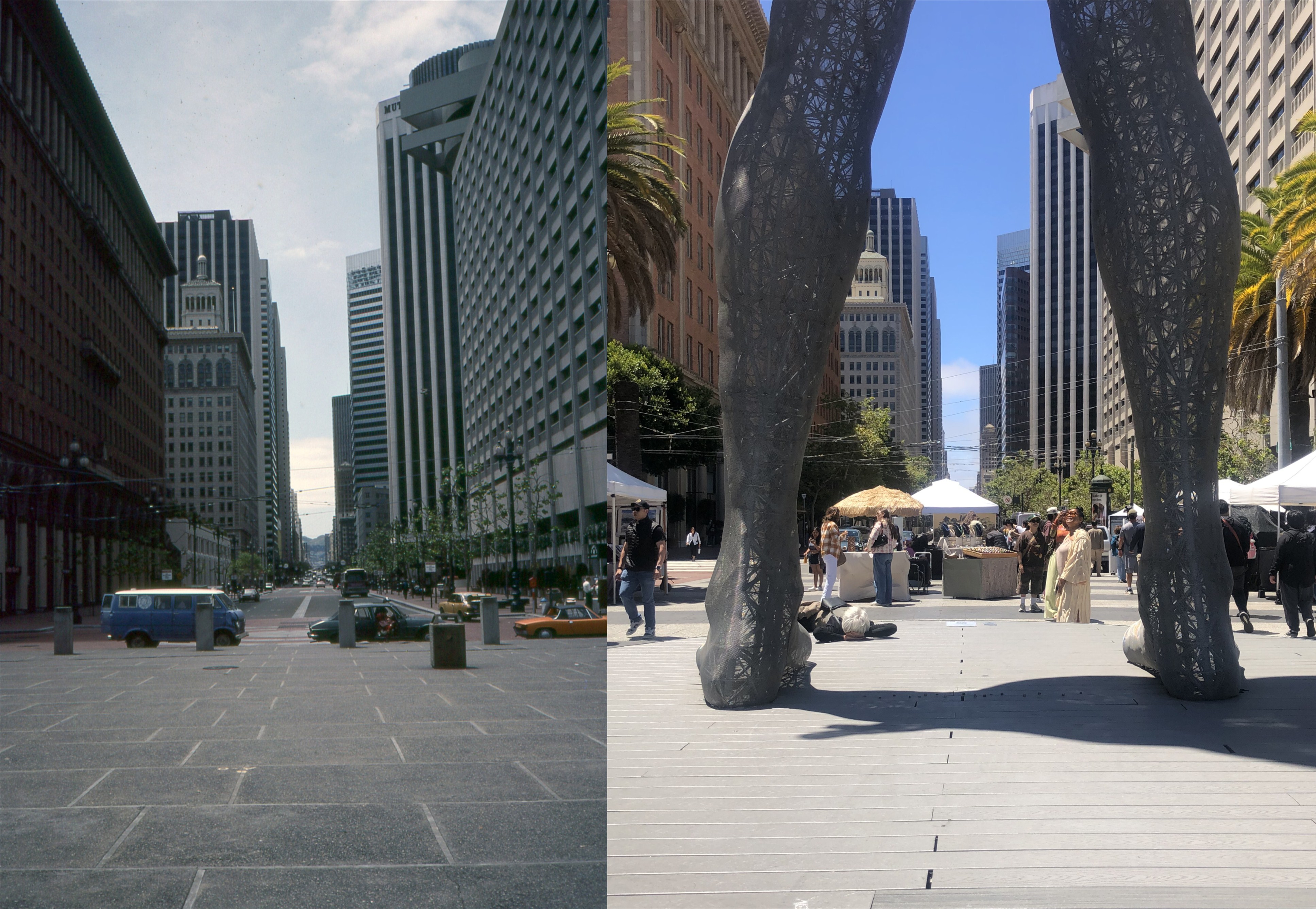
Market Street at the Embarcadero: If someone would have told me back then that 43 years later I’d be taking a redo of this picture through the legs of a 45 foot naked woman…..


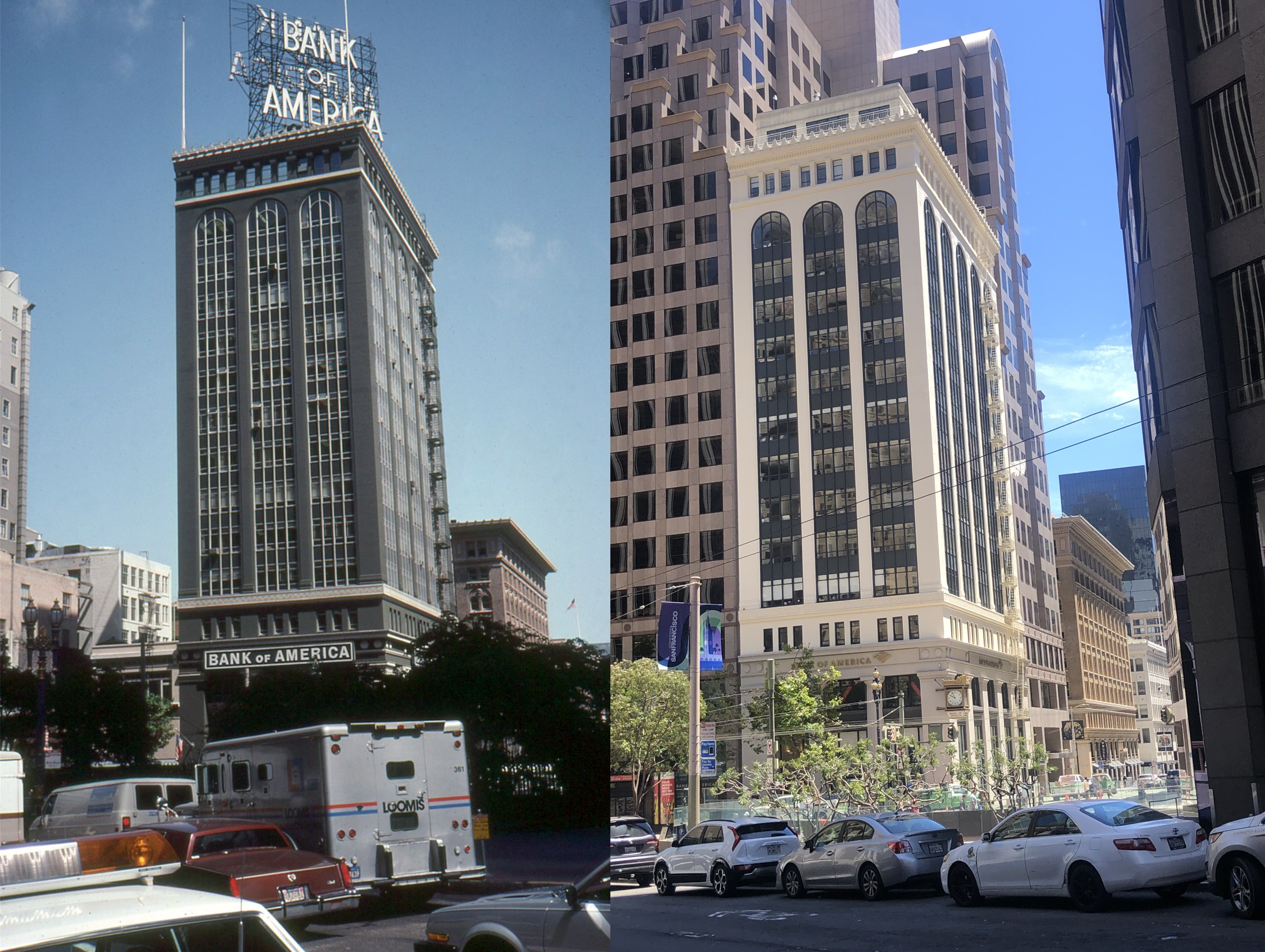
The Metropolis Trust and Savings Bank Building: There’s still a Bank of America there.


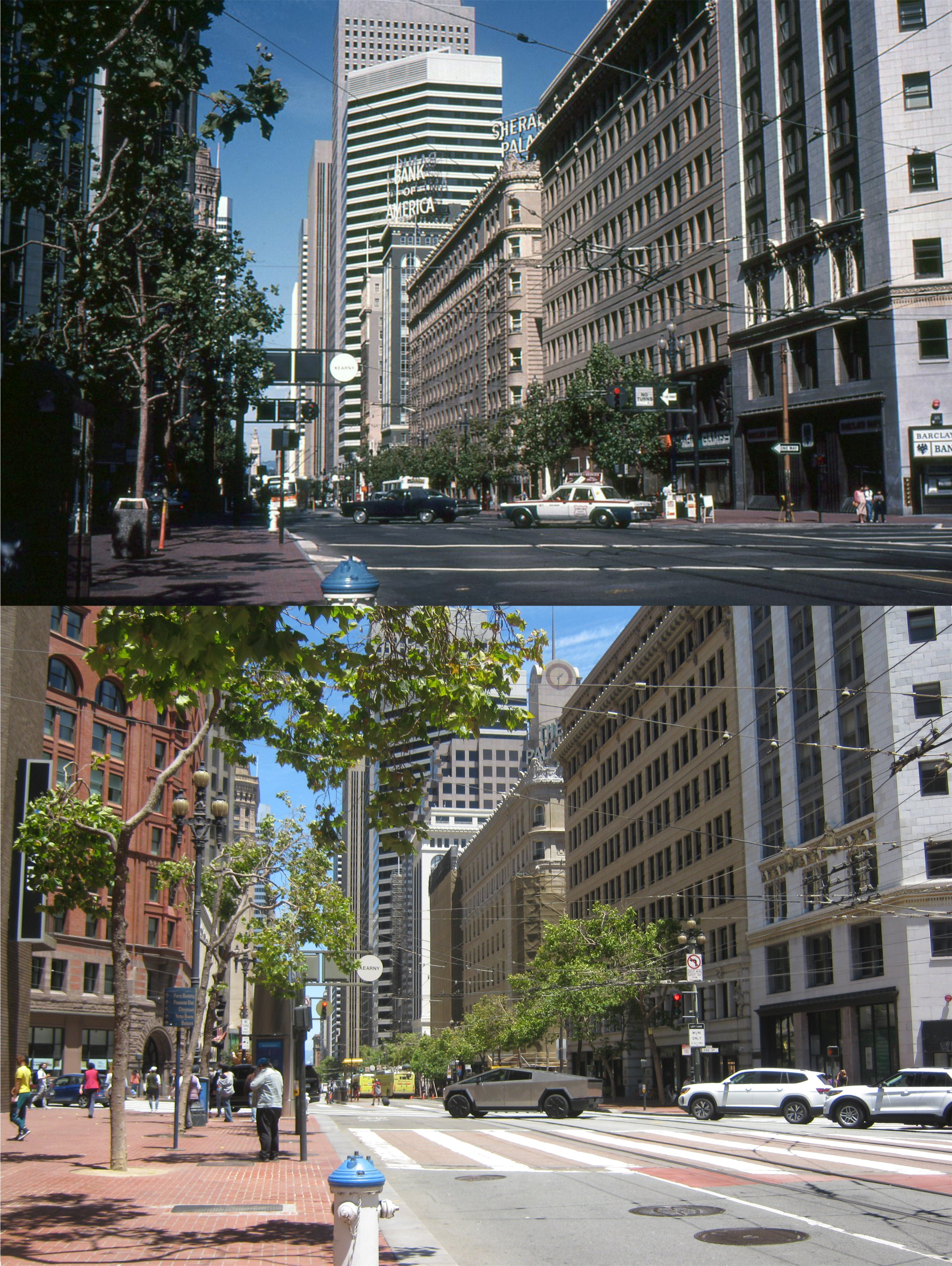
Market Street at Kearny, “Newspaper Row” once:


The Citizen Kane Building at Third and Market: Well actually it was the William Randolph Hearst Building, but it’s well known that Orson Welles patterned Charles Foster Kane after Hearst. Orson Welles died the year I took the vintage picture.


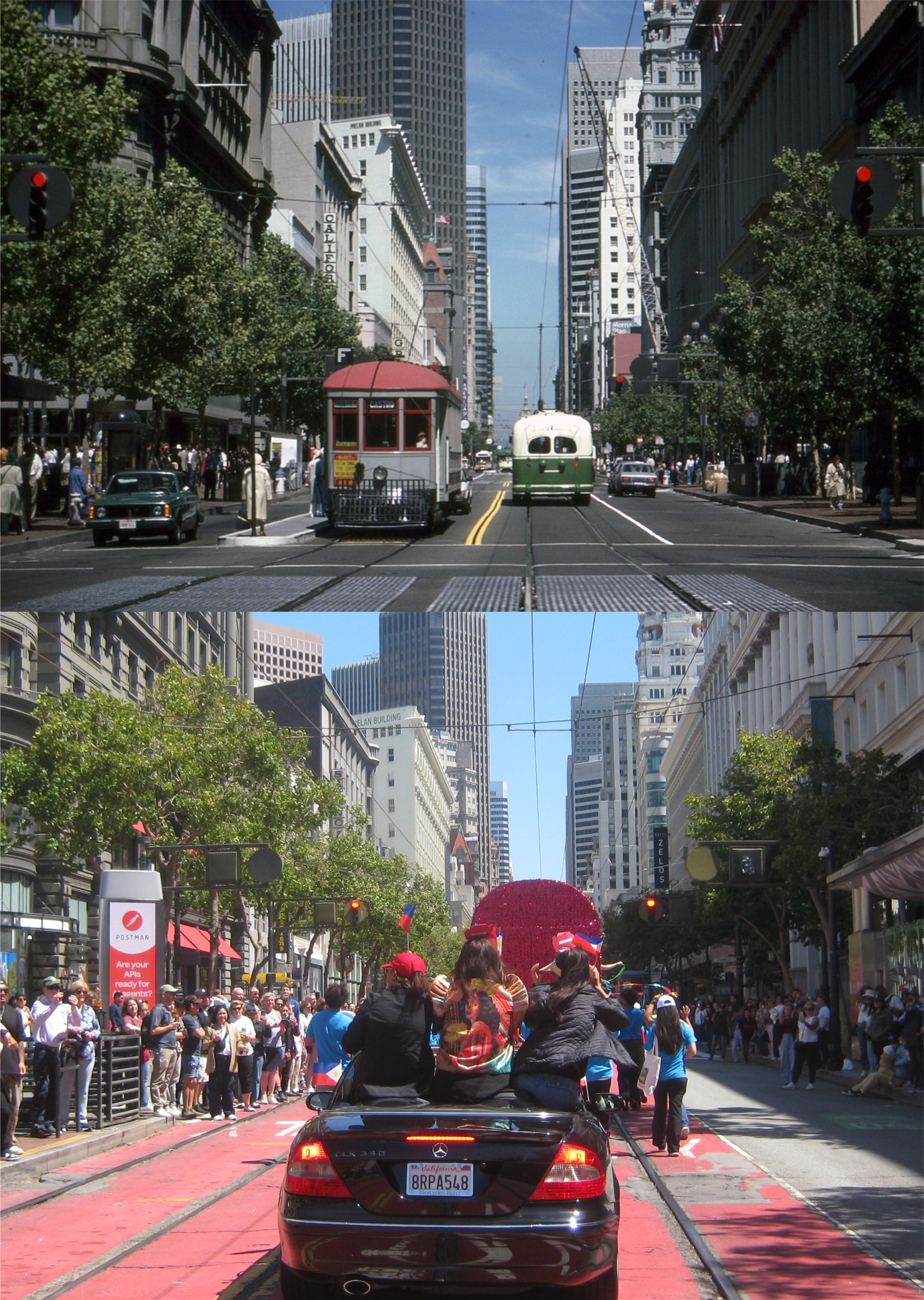
Market and Powell Streets, around the time they started running vintage streetcars along Market Street: Actually, I took this update at Market and Powell Streets at the tail end of the Pistahan Parade last August.


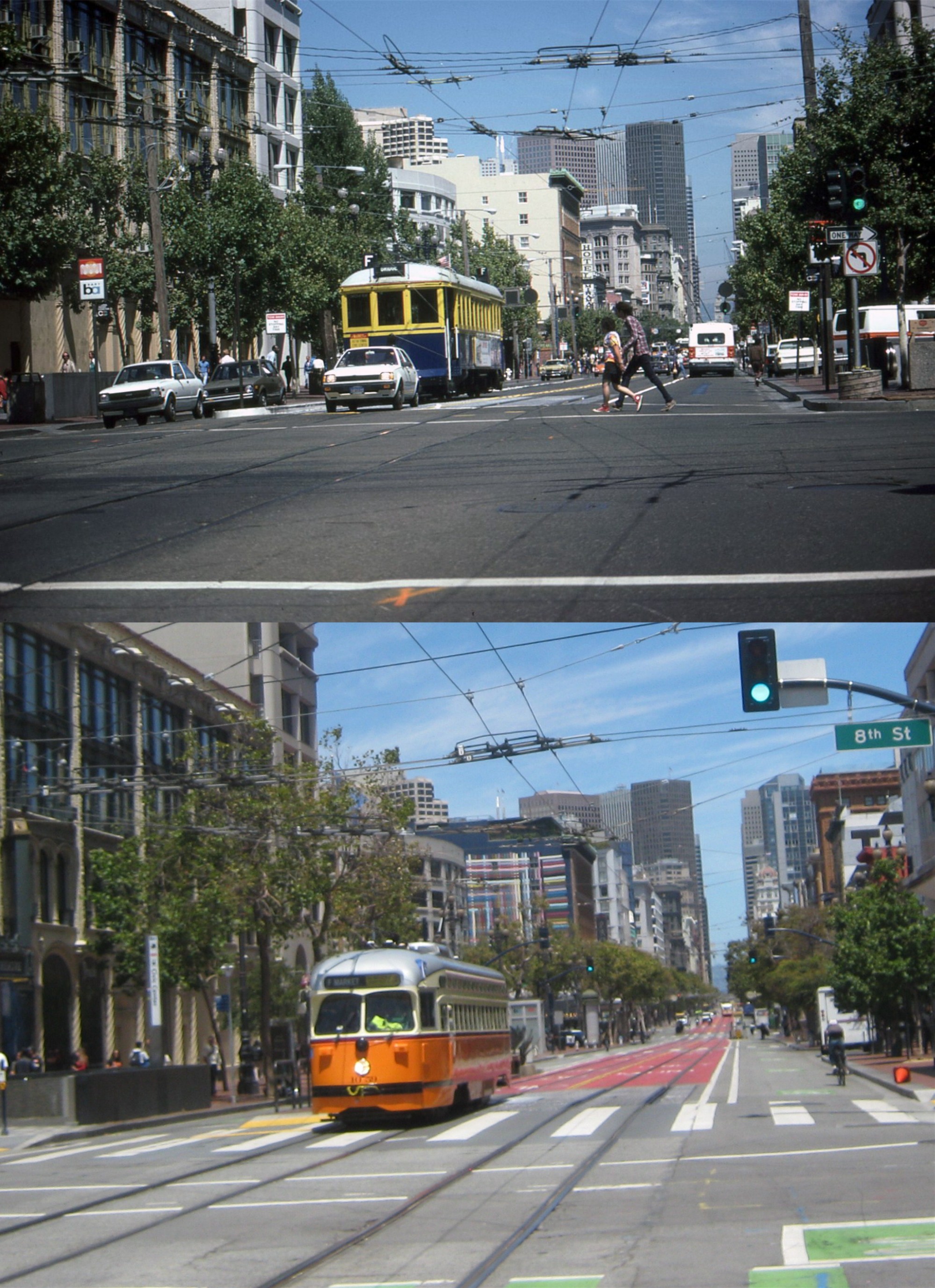
Market Street at Eighth: That’s the Orpheum Theater on the left.


A day at the Beach

It’s the 4th of July weekend, and a perfect day to head to the Beach!

“Hey, this ain’t a beach, Tim!

“You misunderstood me, I’m referring to Beach Street.”

No, there isn’t anymore beach along Beach Street, although Louis Loewenstein, in his book about the origins of San Francisco street names, writes that the beach actually did come up to Beach Street before landfill put the street a block away in the Fisherman’s Wharf area, and two blocks away in the Marina. Traveling east to west, Beach Street starts at the Embarcadero, disappears completely at Fort Mason, then reappears in the Marina District, running all the way to the Palace of Fine Arts. My walk was west to east from Fort Mason to the Embarcadero. (Thumbnail images)


We’ll start at the Polk and Beach Street, looking toward Ghirardelli Square from the Maritime Museum in a vintage 1962 picture from opensfhistory.org. The sidewalk in front of the museum still has the same waves on it.


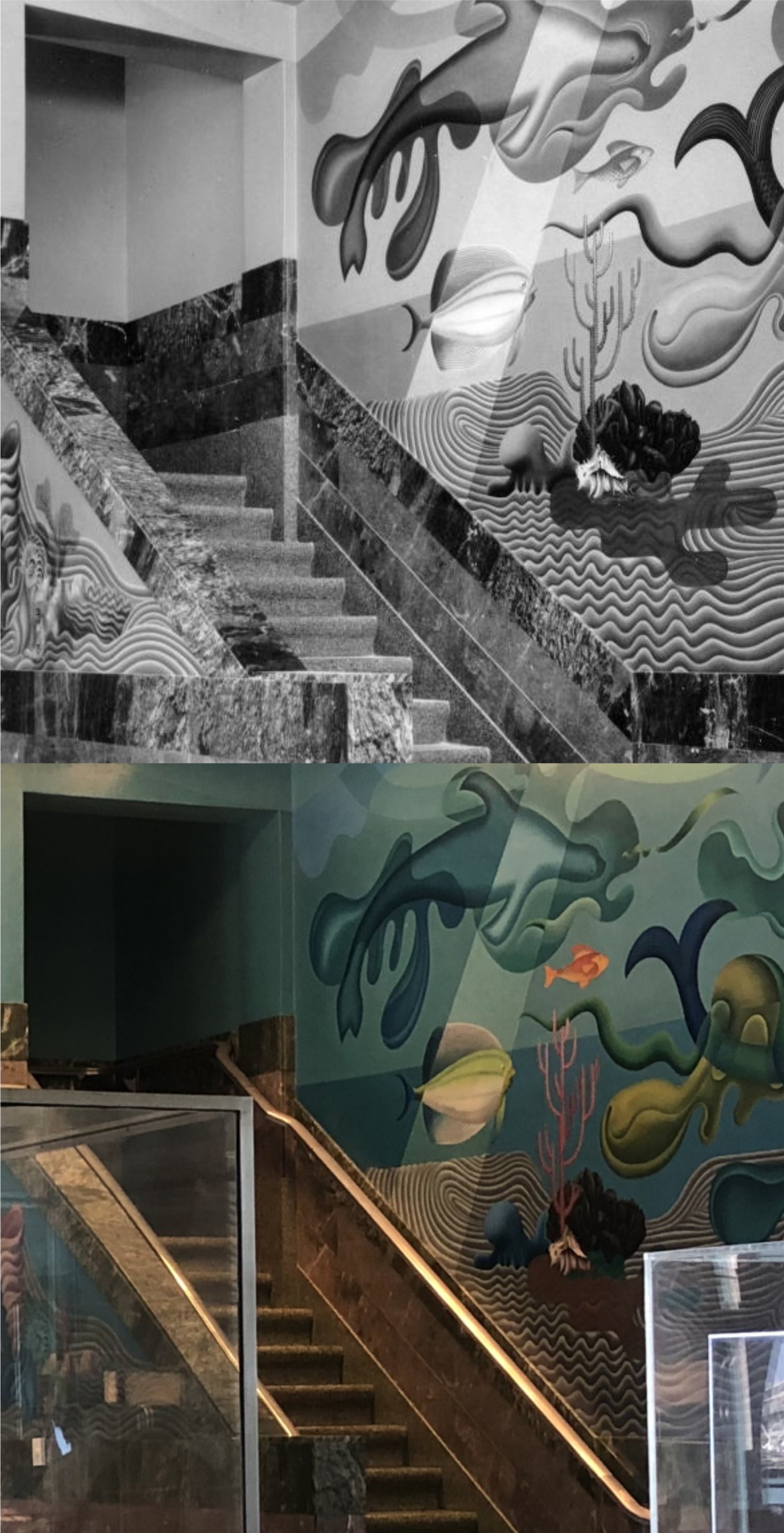
Let’s step inside the museum to look at some of the artwork on the walls, beautifully unchanged since the building opened up as a bathhouse and casino in 1939. (San Francisco Library Digital Archives)


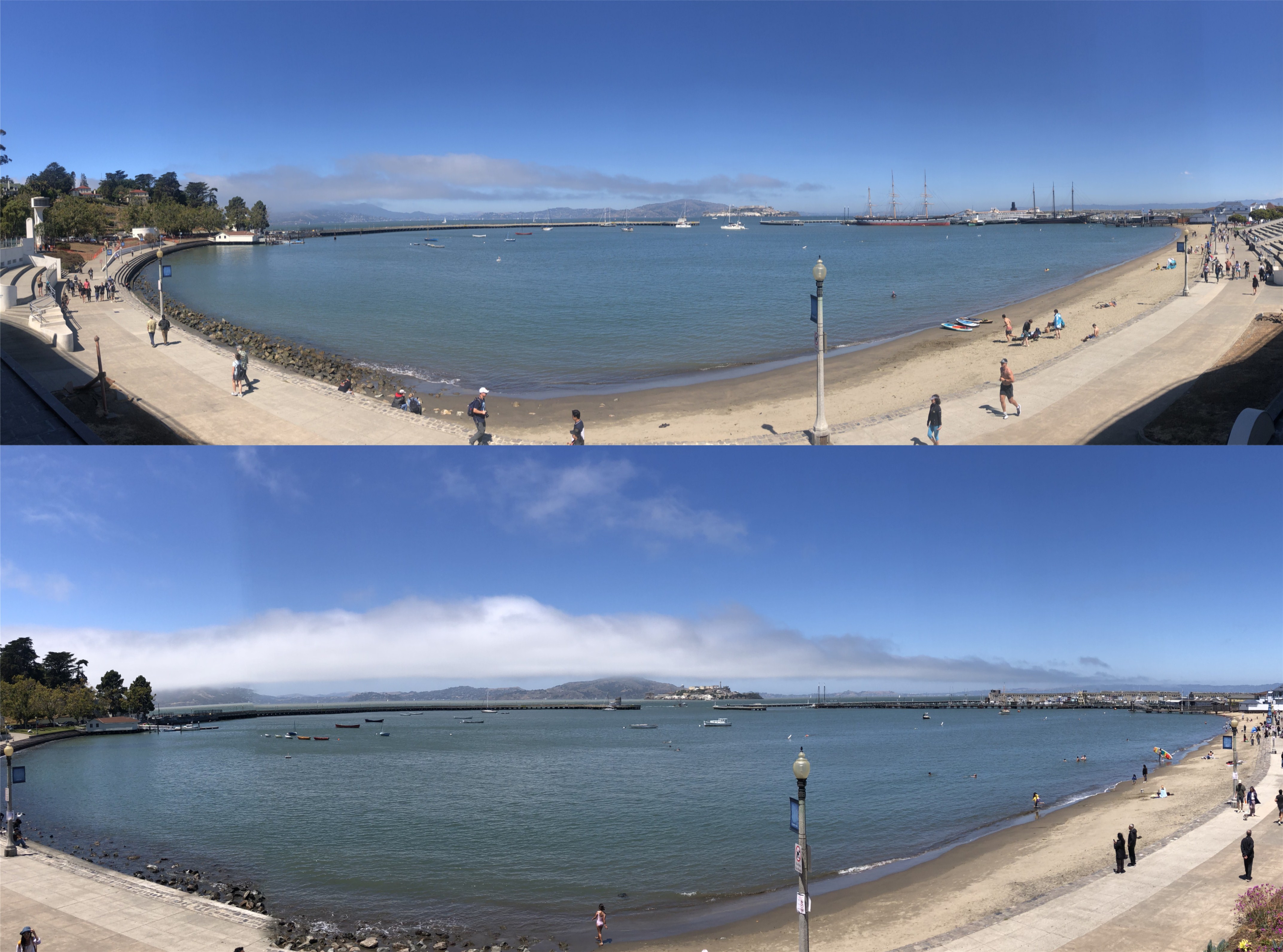
The closest you’ll get to the beach on Beach Street is from behind the Maritime Museum. The last time I visited the museum in 2023 and took the top wide angle picture, all of the historic ships at the Hyde Street Pier on the right were still there. They’ve all been moved out of San Francisco now while the pier is being restored.


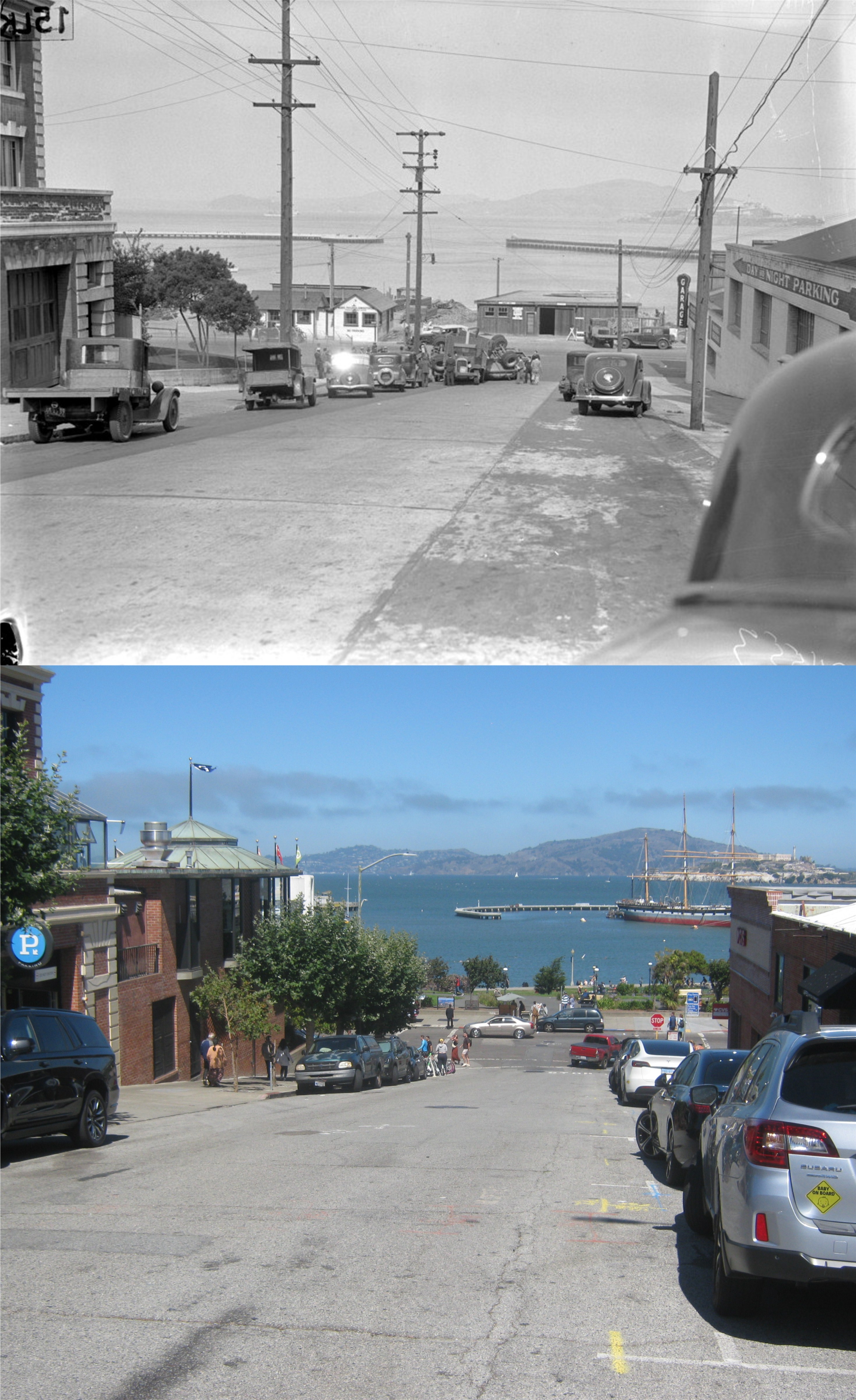
Looking down Larkin Street toward Beach at an overturned truck in a 1937 photo from the UC Berkeley Library Archives. You can see a portion of the Ghirardelli Tower Building on the left in both pictures.


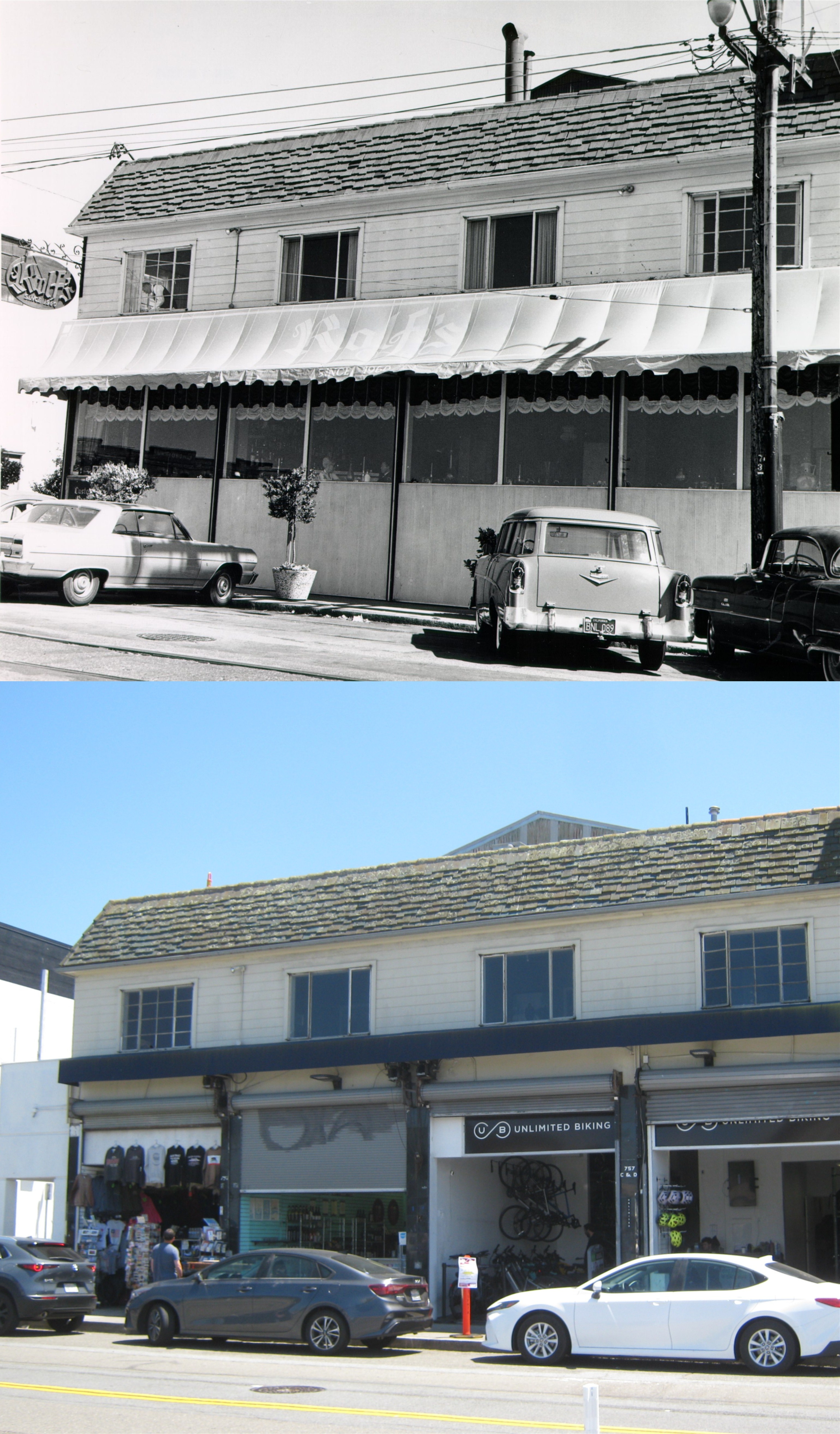
The old Rolphe’s Restaurant in a 1964 photo in June of 1964 from Alan Canterbury: Canterbury took a lot of pictures around San Francisco in 1964 that are available to view on the San Francisco Library Digital Archives. The building now houses several hobby businesses.


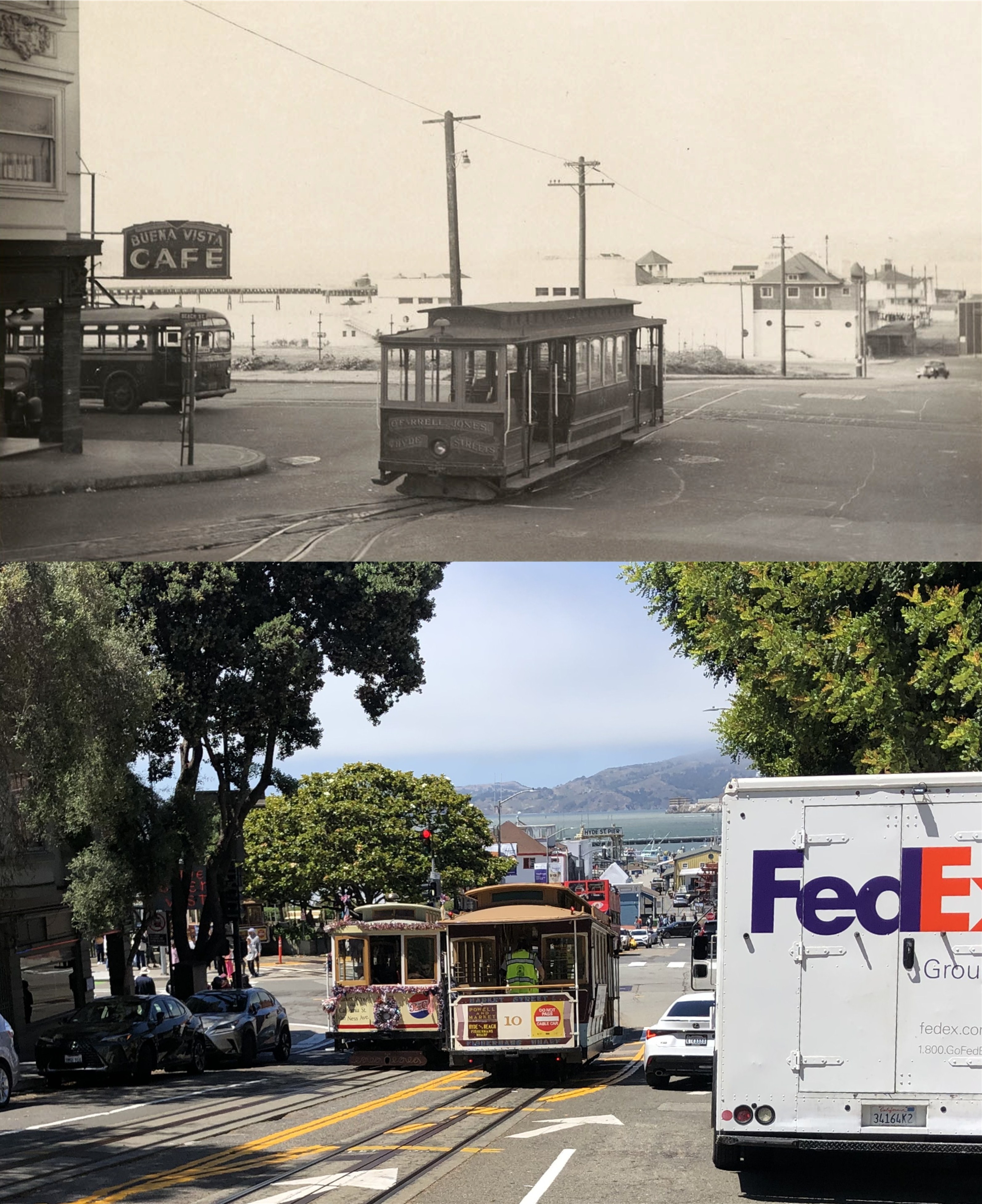
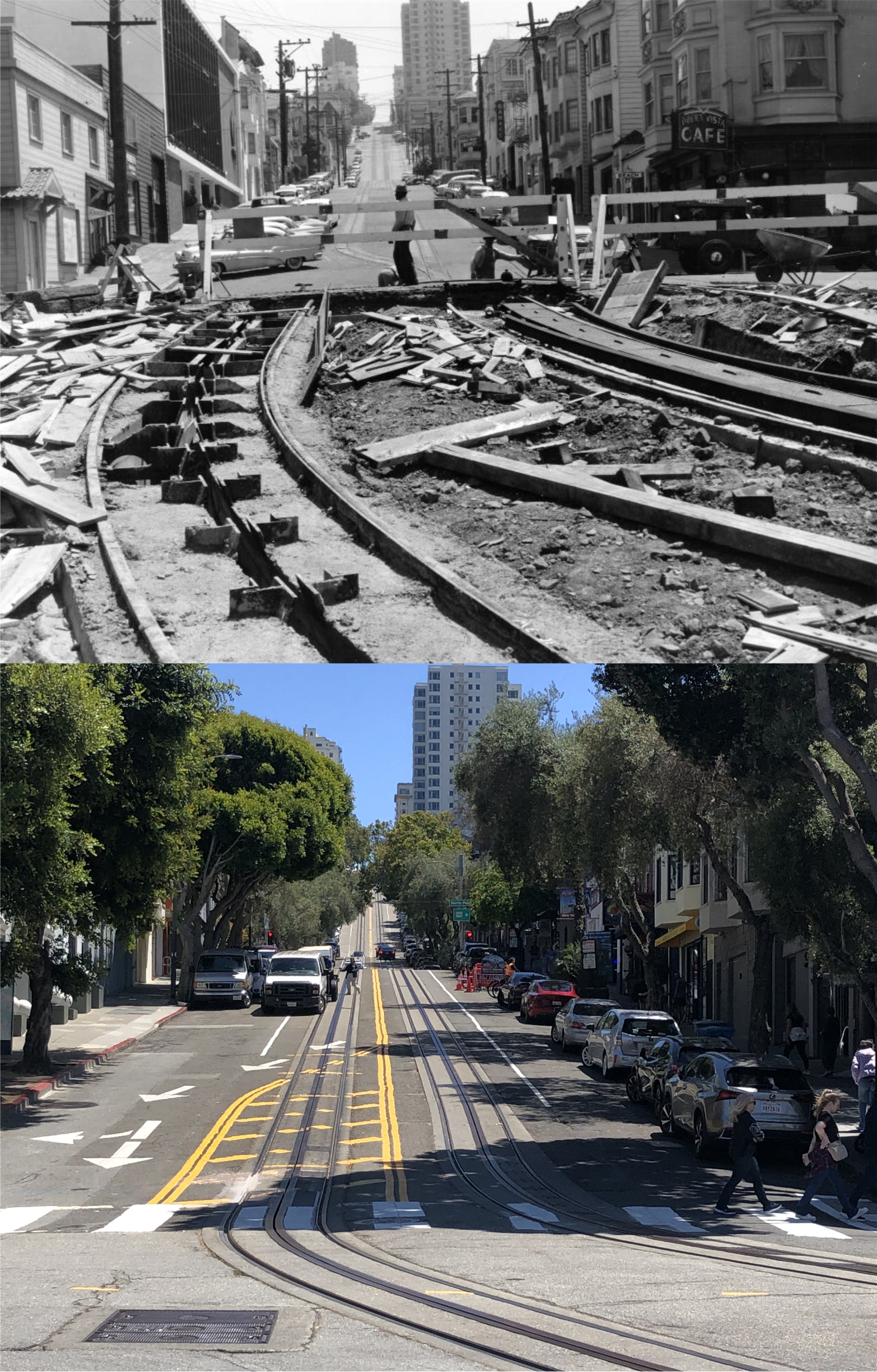
Probably the most popular portion of Beach Street is where it intersects with Hyde Street. Cable cars turn around in Victorian Square, and the Buena Vista Cafe serves Irish Coffees. The Buena Vista sign is barely visible through the tree on the left. The vintage picture from the UC Berkeley Library Archives is from 1950.


In May of 1956, they ran the Hyde Street cable car line into the Victorian Square portion of Aquatic Park. In 1983 the turn in the tracks to the turntable were moved closer to the intersection of Beach and Hyde Streets. (San Francisco Library Digital Archives)


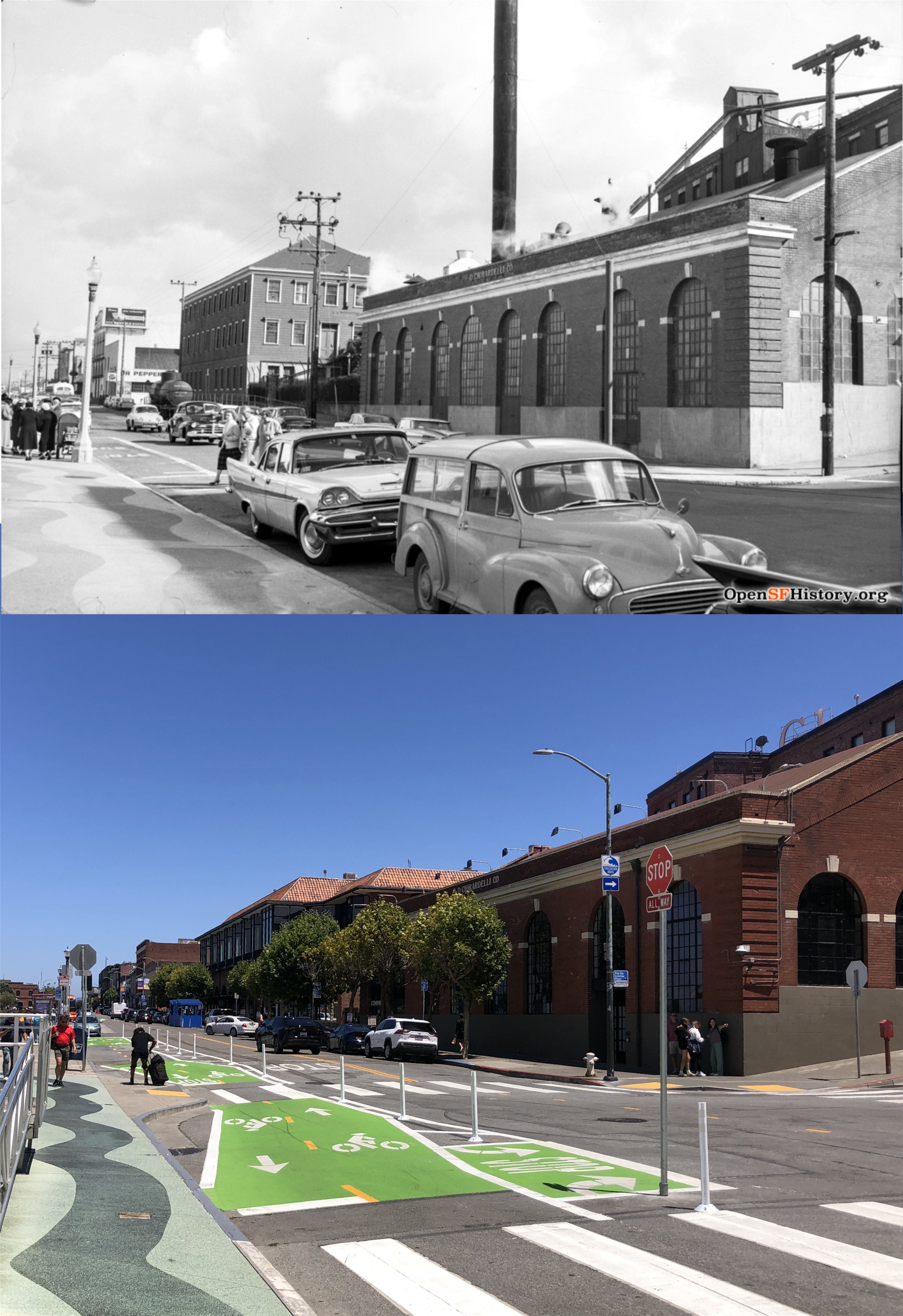
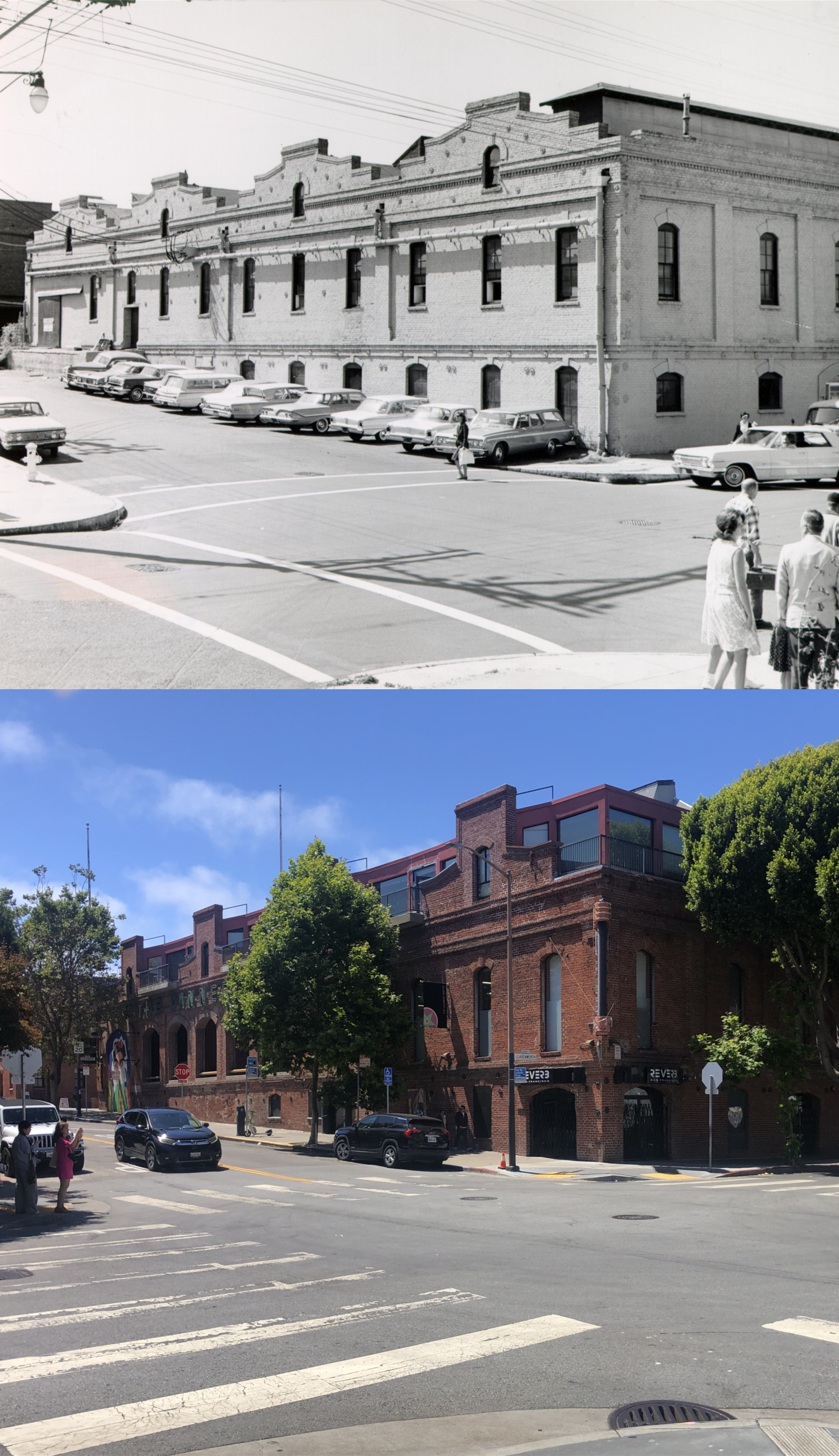
The Beach Street at Leavenworth side of the old Del Monte Cannery, in another Alan Canterbury picture from 1964: The Cannery opened in 1907, and is said to have been built on bricks from buildings destroyed in the 1906 Earthquake and Fire. (San Francisco Library Digital Archives)


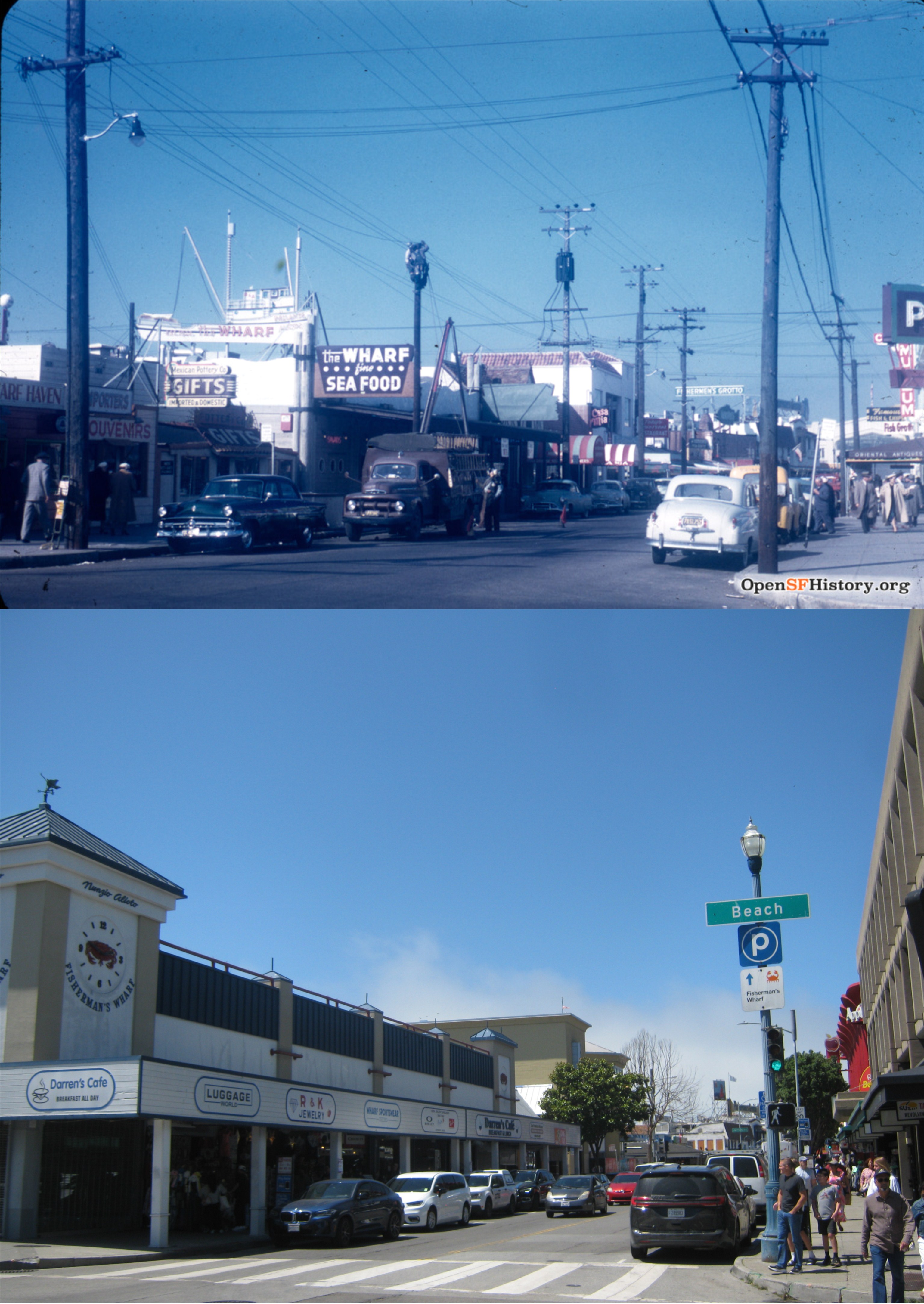
Beach Street at Taylor, looking northwest toward Fisherman’s Wharf in 1953, the way it used to look. Now it looks more like a gigantic model. You can see Fishermen’s #9 Grotto in the right background. (opensfhistory.org)


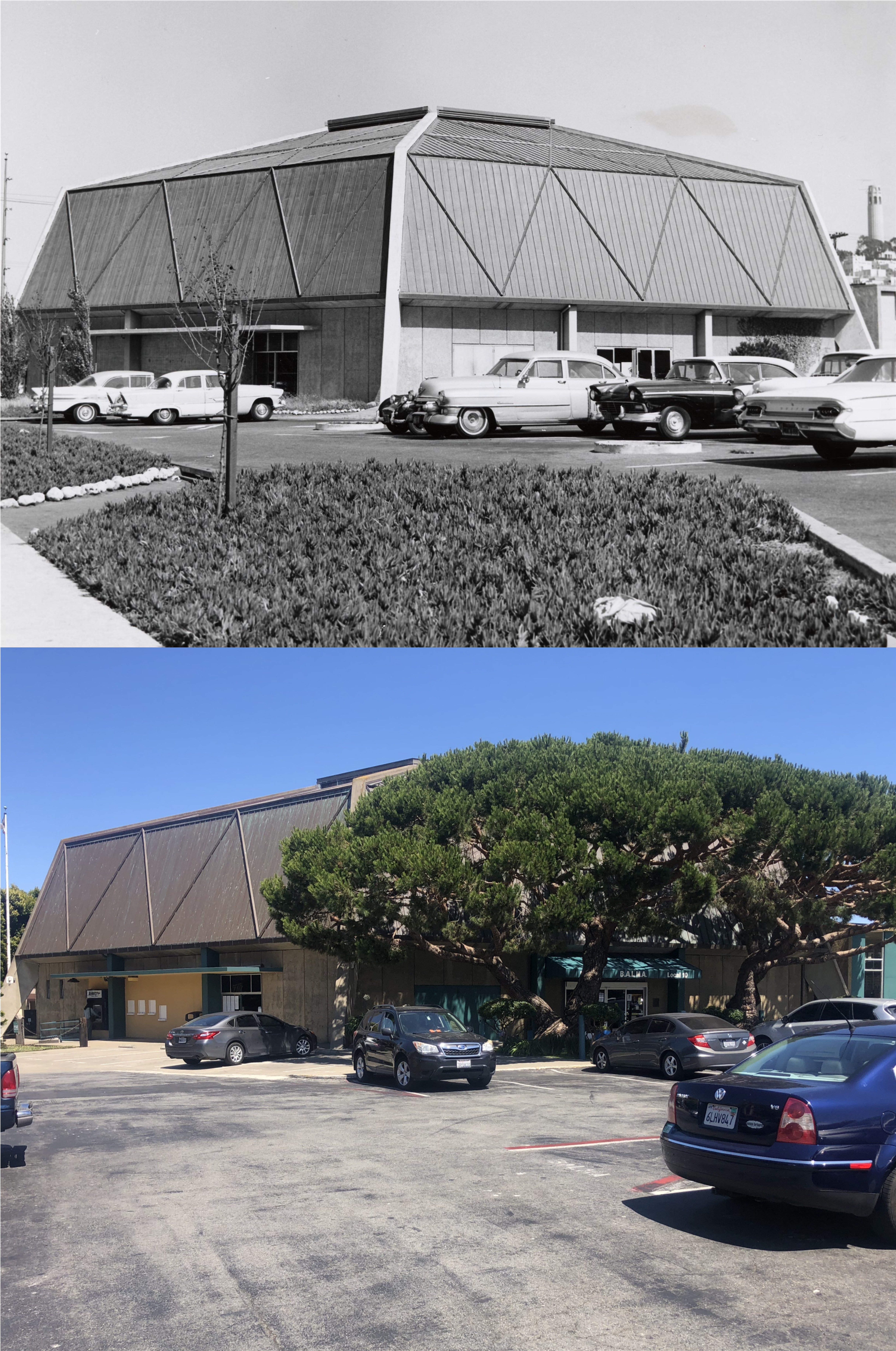
The Longshoreman’s Hall in a 1964 picture from…. you guessed it, Alan Canterbury. I discovered his pictures last fall, and have enjoyed updating many of his photos since then. You can’t see Coit Tower from here through the trees now. (San Francisco Library Digital Archives)


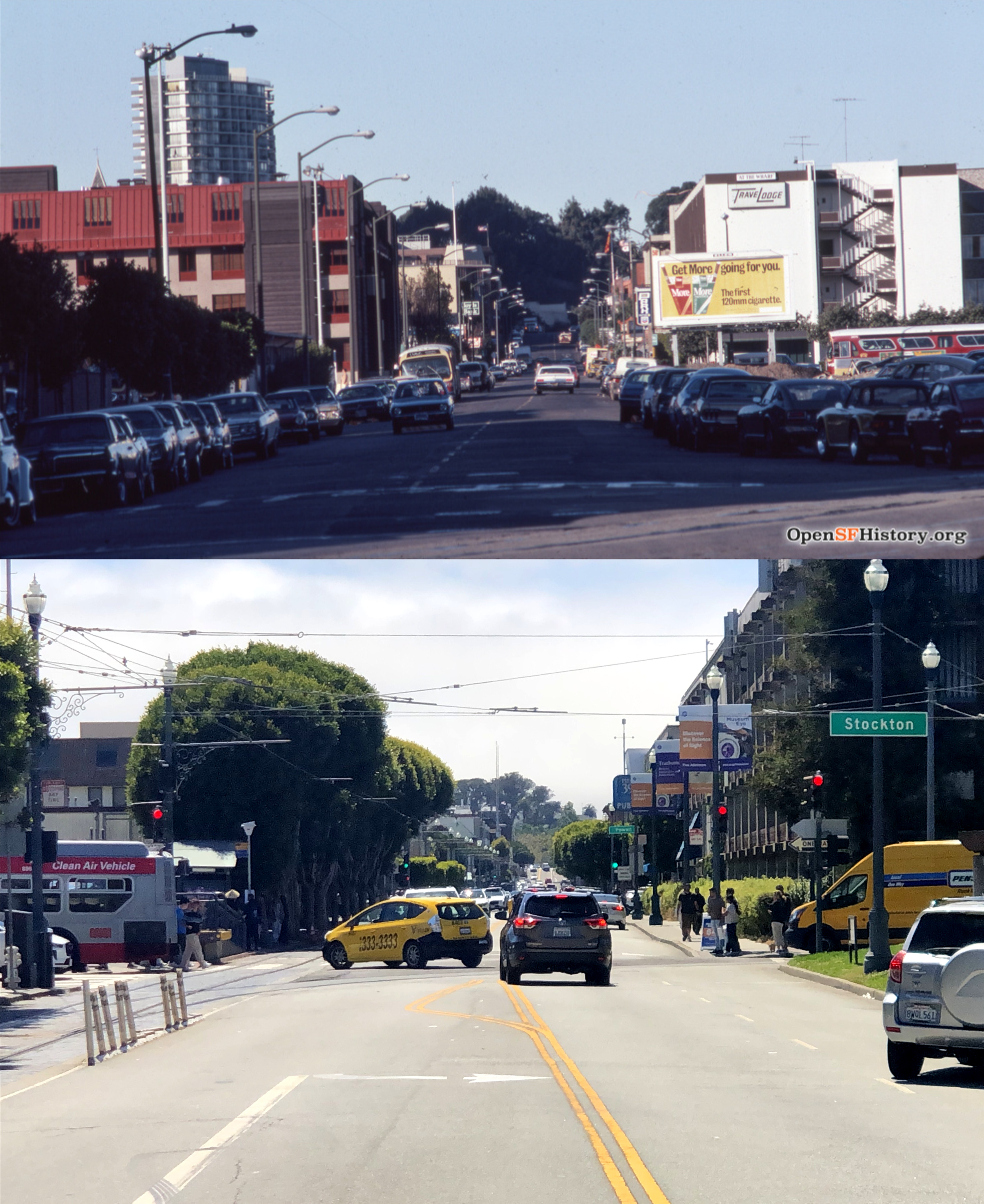
Looking west along Beach Street from Stockton Street in 1975: About the only thing noticeable still in my picture is the remodeled Riu Hotel building on the left. (opensfhistory.org)