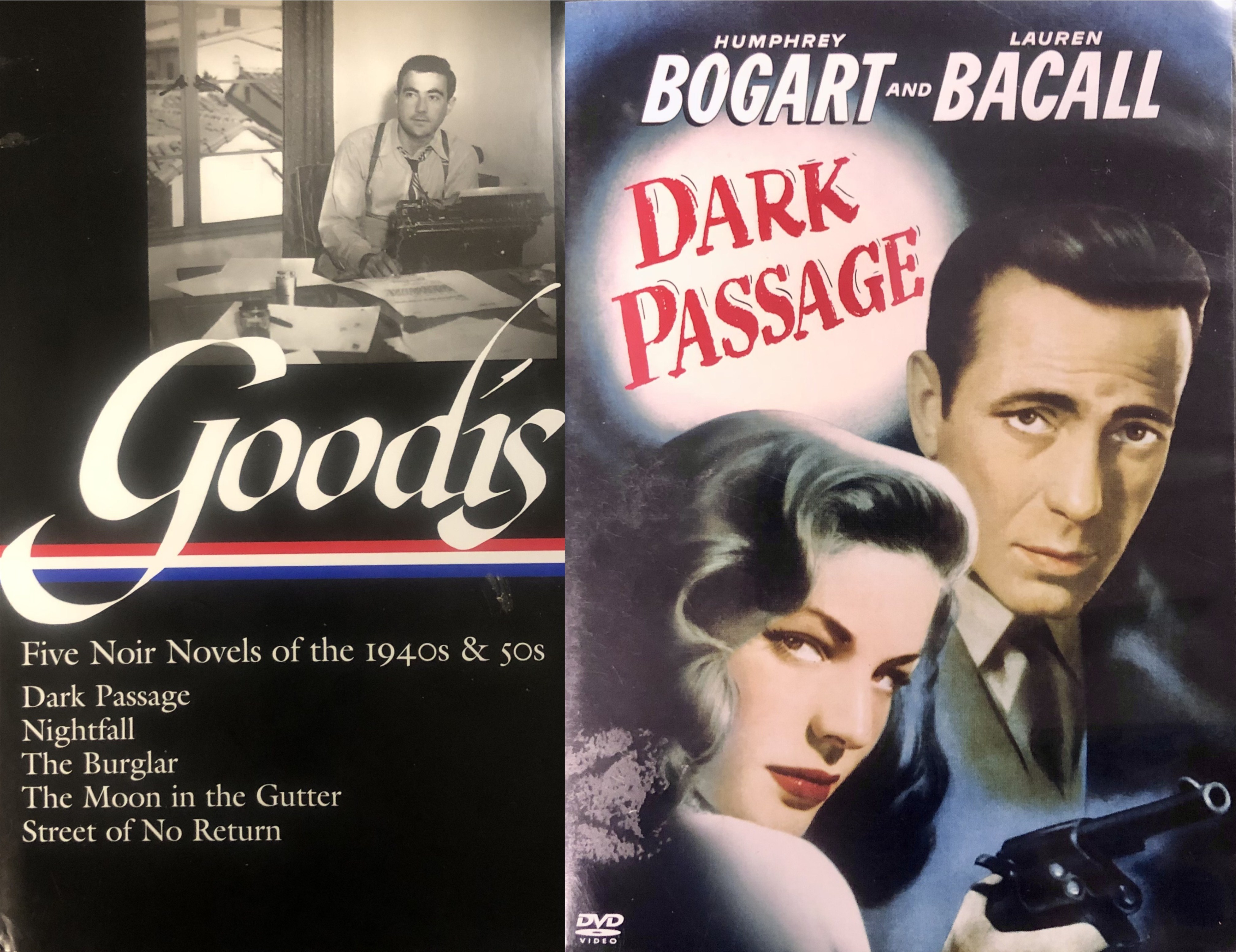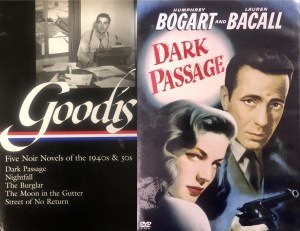
I finally got around to reading ‘Dark Passage’ by David Goodis. The famous movie based on the book, like the film ‘The Maltese Falcon’, stays very close to the plot of the novel. Both the mystery story and the movie are set in San Francisco, but the novel mentions almost no identifiable locations, whereas the film is practically a city tour. Much of the story takes place in Irene Jansen’s apartment. In the book, Irene gives a vague description of where she lives. However, in the movie, Irene lives at what is now one of the most famous film locations in San Francisco. So, get in the mood for some intrigue and romance as we take a visit to 1360 Montgomery Street on Telegraph Hill. (Thumbnail images)
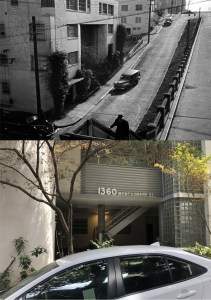
To set up the plot for people who haven’t seen the movie, and there can’t be that many, Vincent Parry, a convicted murderer, and played by Humphrey Bogart, escapes from San Quentin Prison. Parry knocks out a passerby who has stopped by in a car and recognizes the prisoner, takes some of his clothes and is about to steal his automobile, when Irene Jansen (Lauren Bacall) stops her car and tells Parry to get in. She knows who Parry is, and her reason for helping him is a little contrived, as she takes him to her apartment. That’s about all you need to know at this point. I’ll use passages from the book in brackets as we go along.
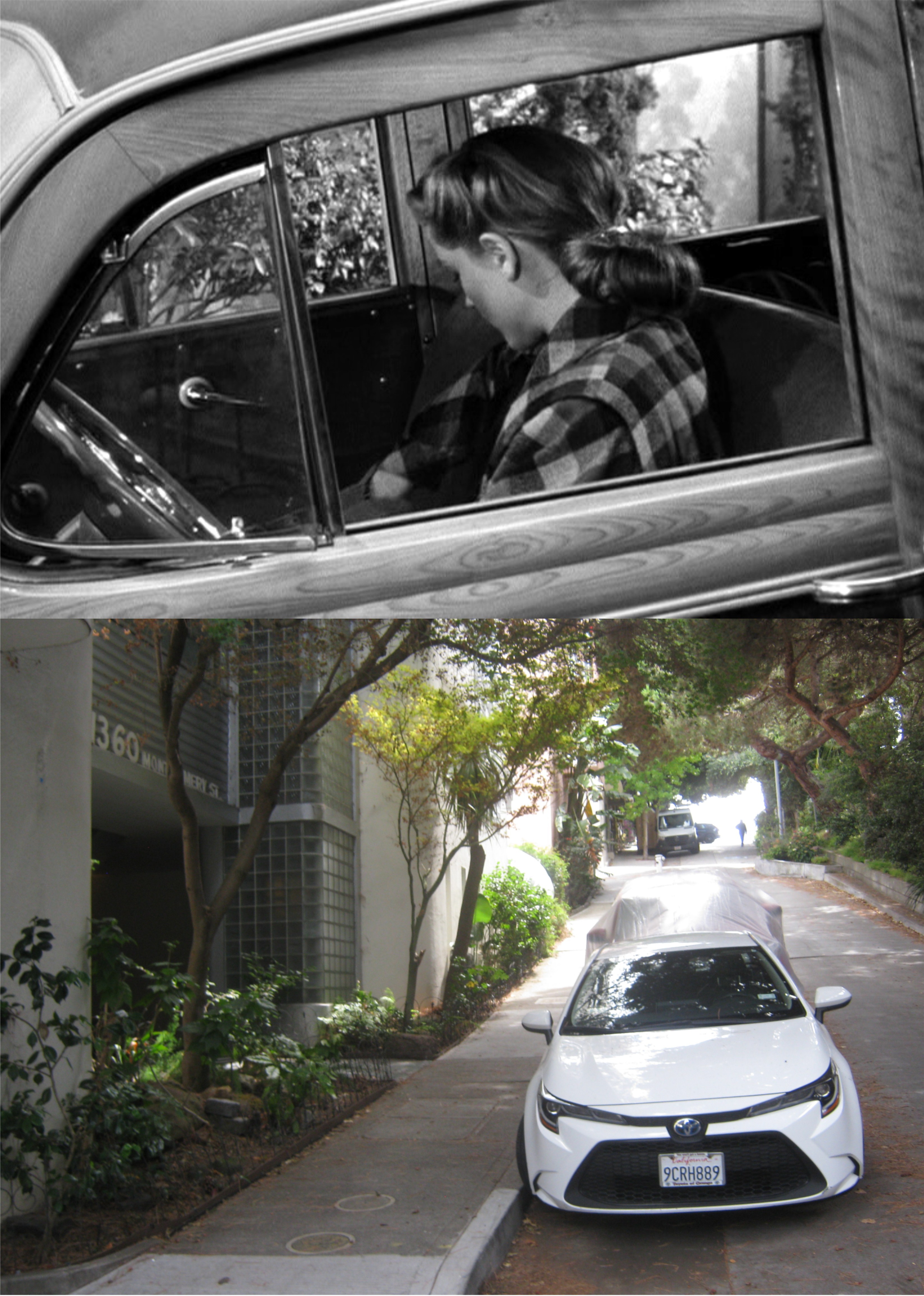
{“We’re at my place. It’s an apartment house. We’re on Geary, not far from the center of town. Are you ready?”}
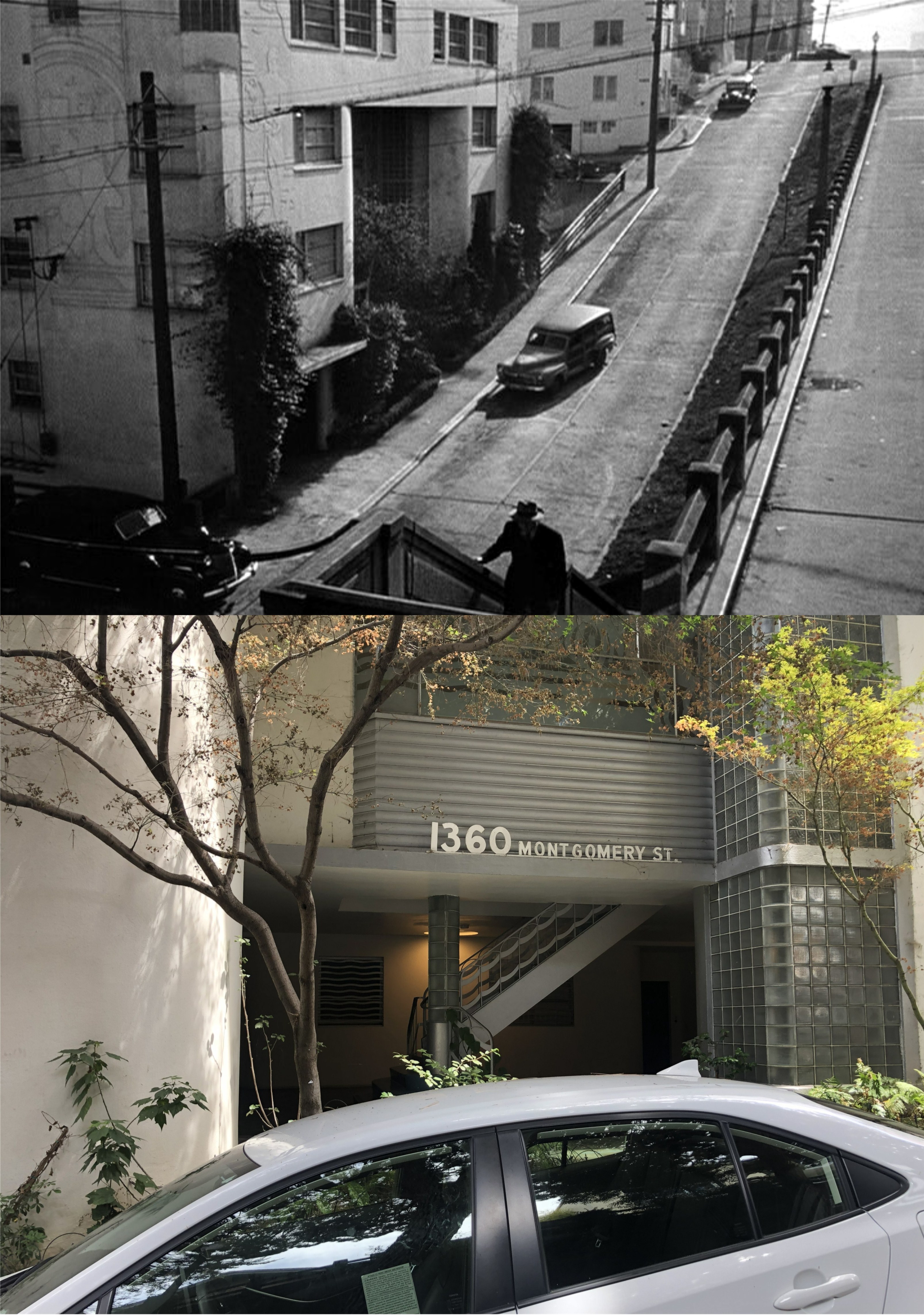
In the movie, Rene pulls up to Art Deco apartment building at 1360 Monterey Street.
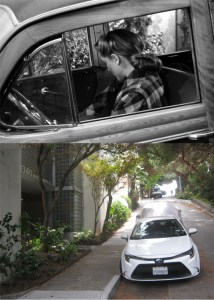
Irene tells Parry to count to fifteen and follow her into the building.
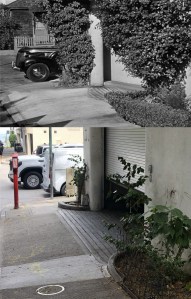
Parry looks north toward where the black car is, and goes into the apartment house. The perspective in the movie will only be from his point of view until he has his plastic surgery operation.
{He got out of the car and faced a six-story apartment house. The front door was half way open.}

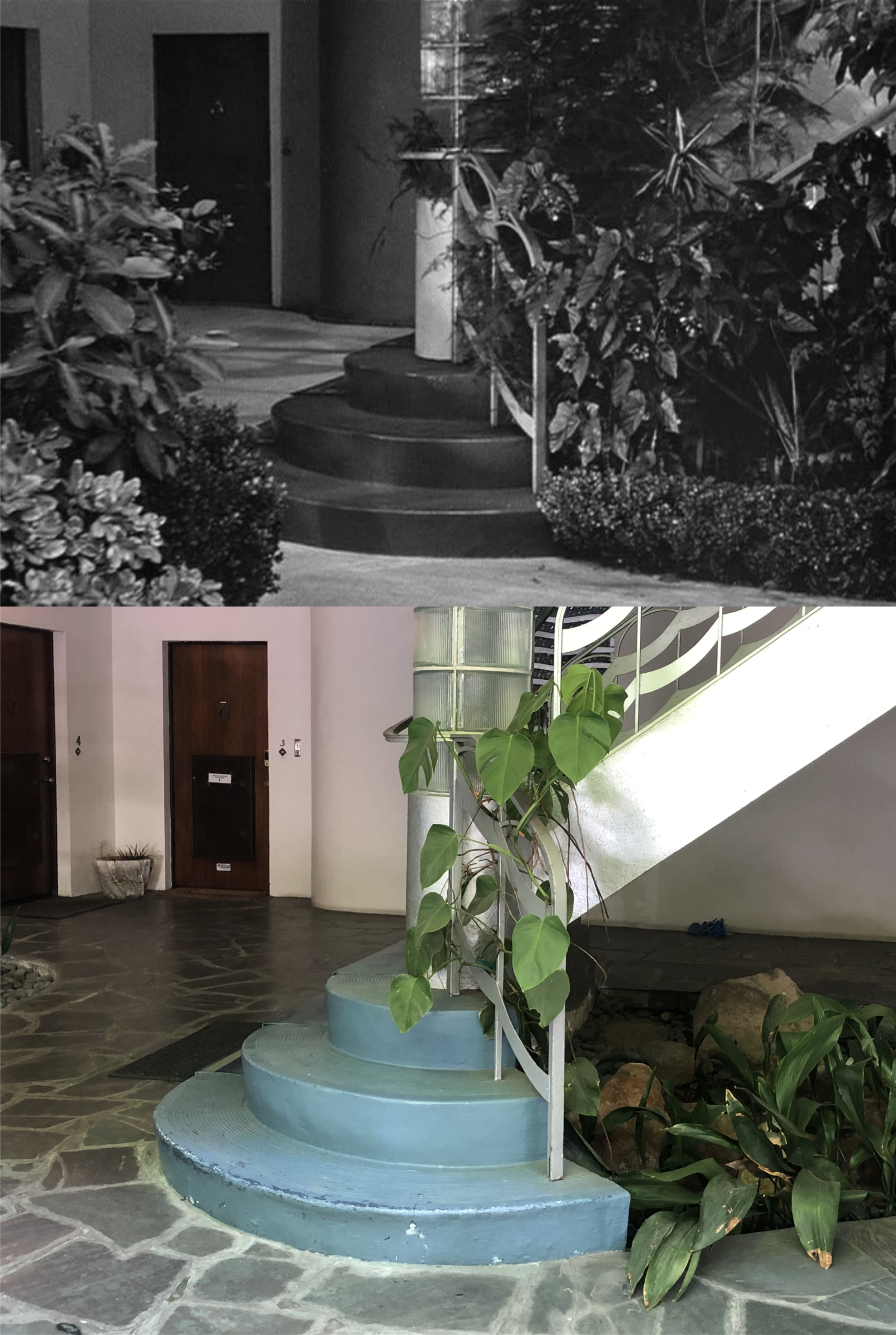
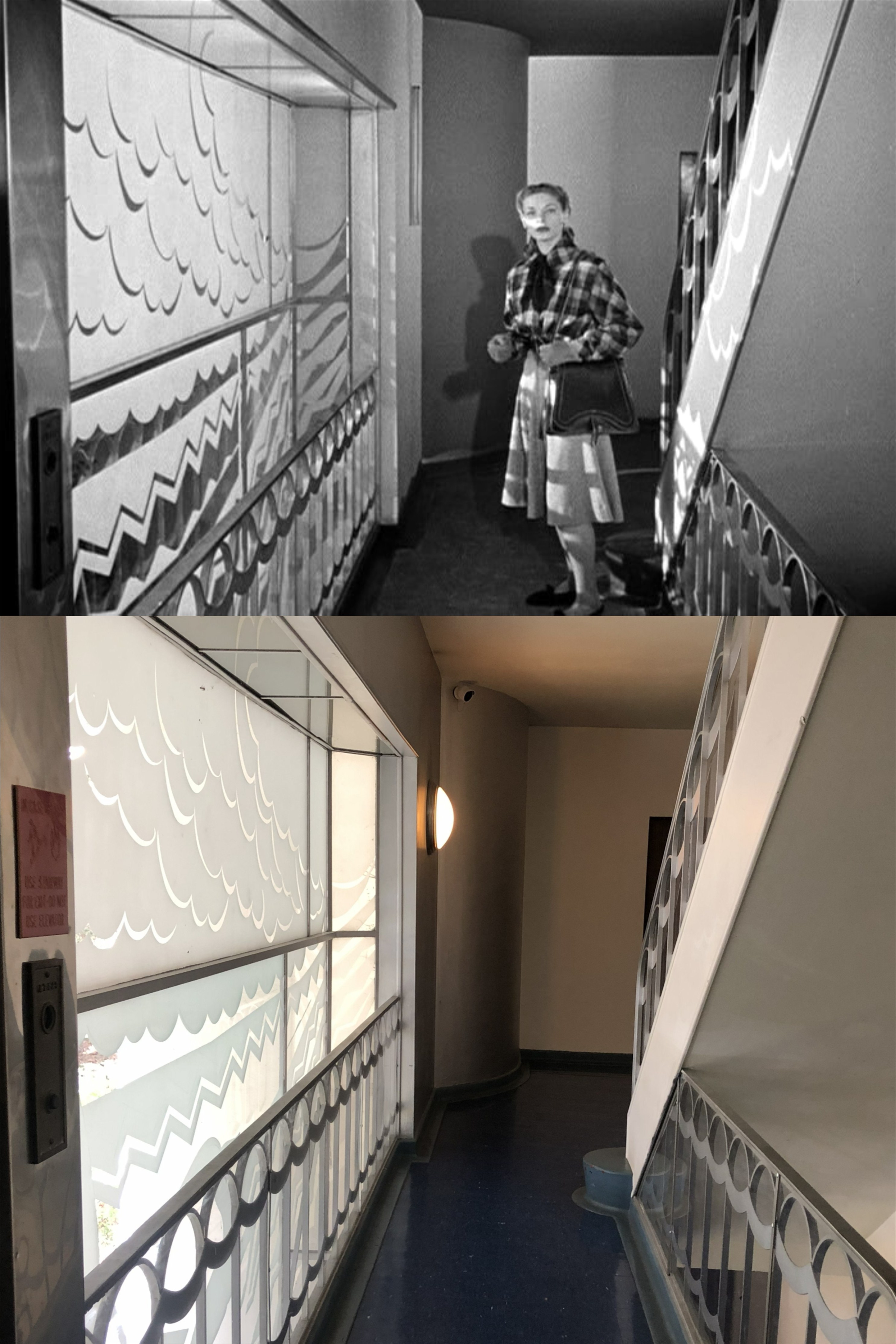
Parry enters the building here where the stairs are. In both the book and in the movie, they take an elevator to the third floor. The number of Irene’s apartment in the film is 10, in the novel it was 307.
{Then they were in the elevator and it was going up. It stopped at the third floor.}
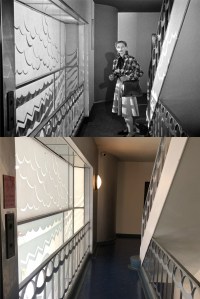
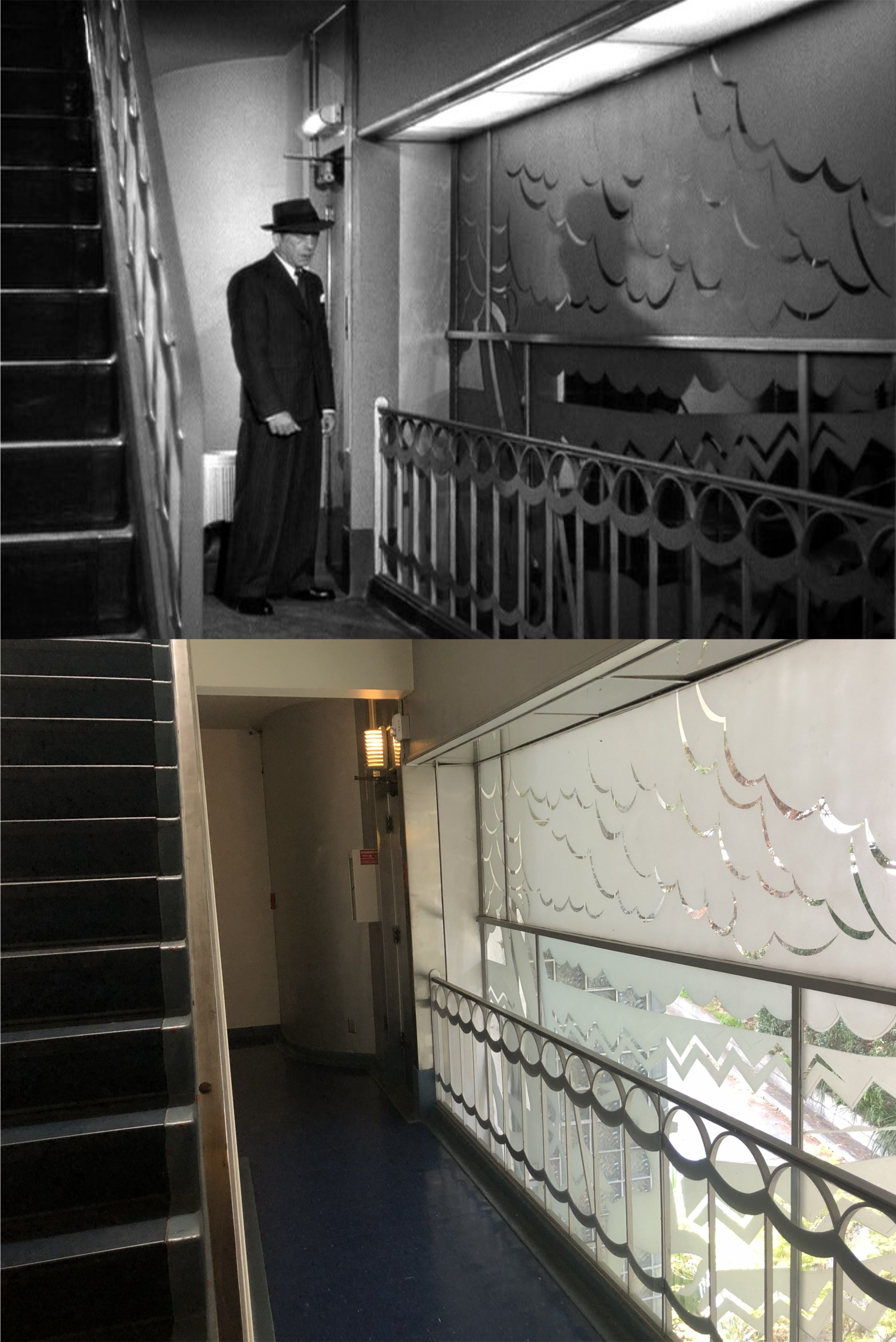
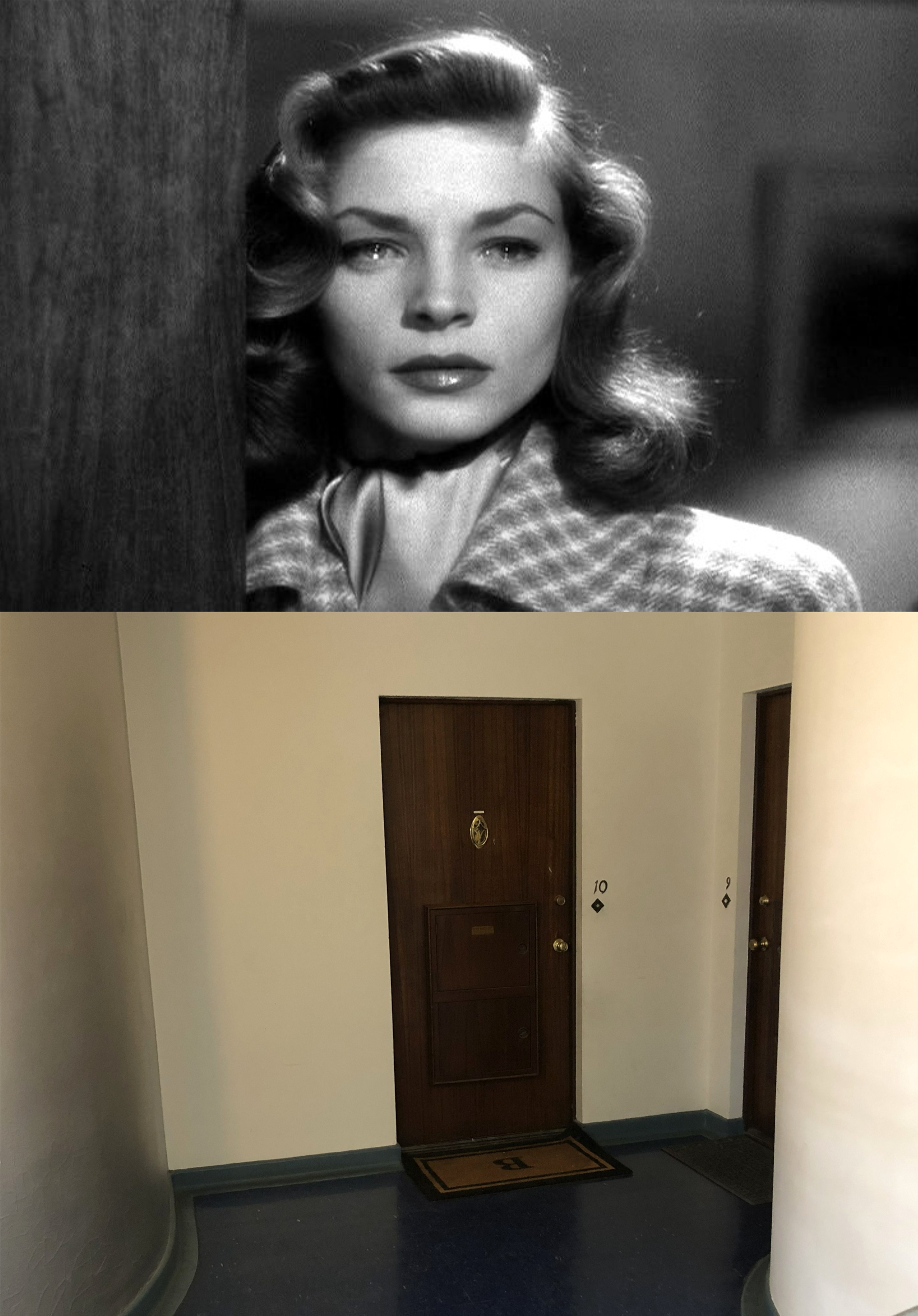
On the third floor, Irene motions Parry to follow her into her apartment.
{The corridor was done in dark yellow. The door of her apartment was green. The number on the door was 307.}
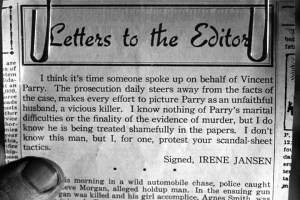
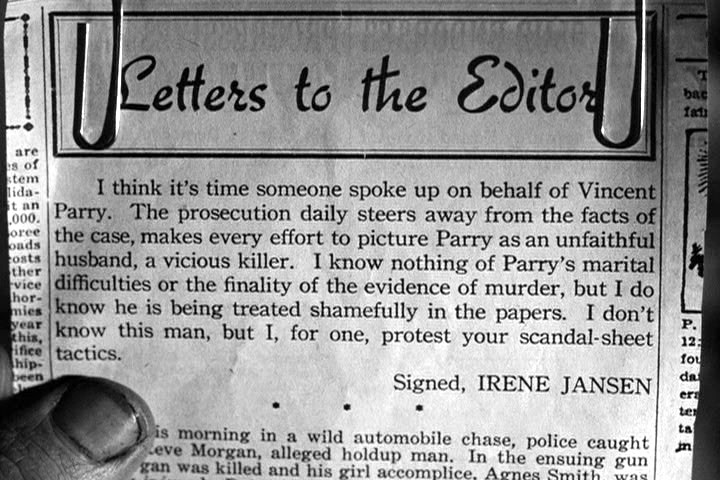
Inside her apartment, Irene shows Parry a newspaper editorial she wrote, and tells Parry that she does not think that he got a fair trial. People will be getting killed around Parry throughout this movie, but Irene will still fall in love with him.
. 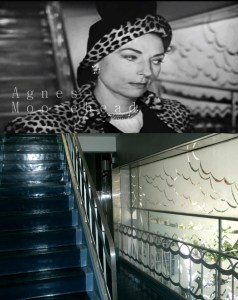
When Irene goes out to buy some clothes for Parry, Madge Rapf (Agnes Moorhead) comes to Irene’s apartment and knocks on her door. Parry recognizes her voice and knows her. Here is a description of Madge from the novel; you tell me if it’s Agnes Moorhead or not.
{She had an ordinary face without anything pretty in it. She had eyes the color of an old telegraph pole. Her nose was short and wide at the base and too wide for her face, and her mouth was too large. But she wasn’t really ugly. It was just that she wasn’t pretty.}
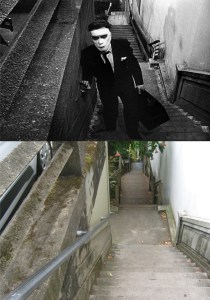
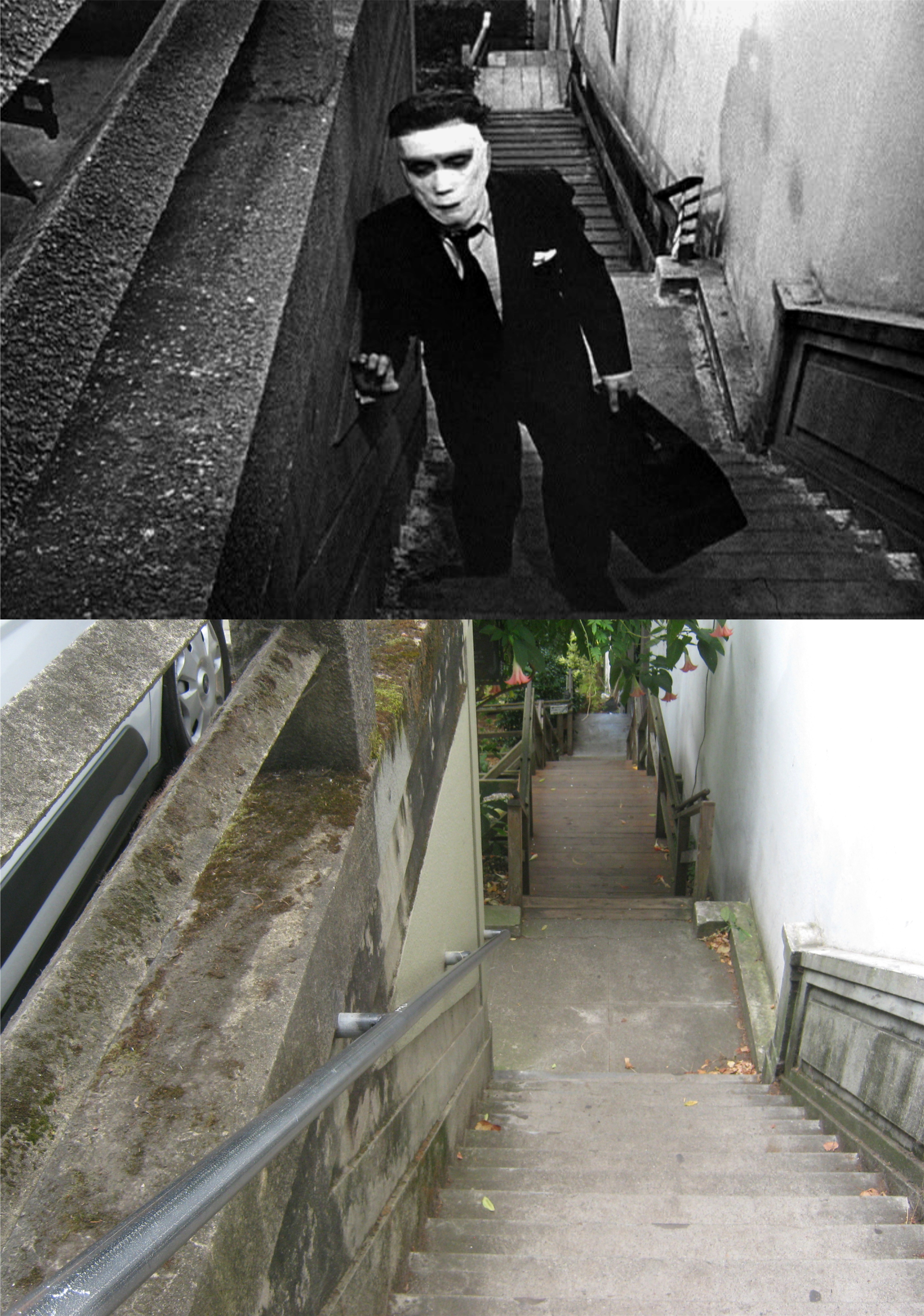
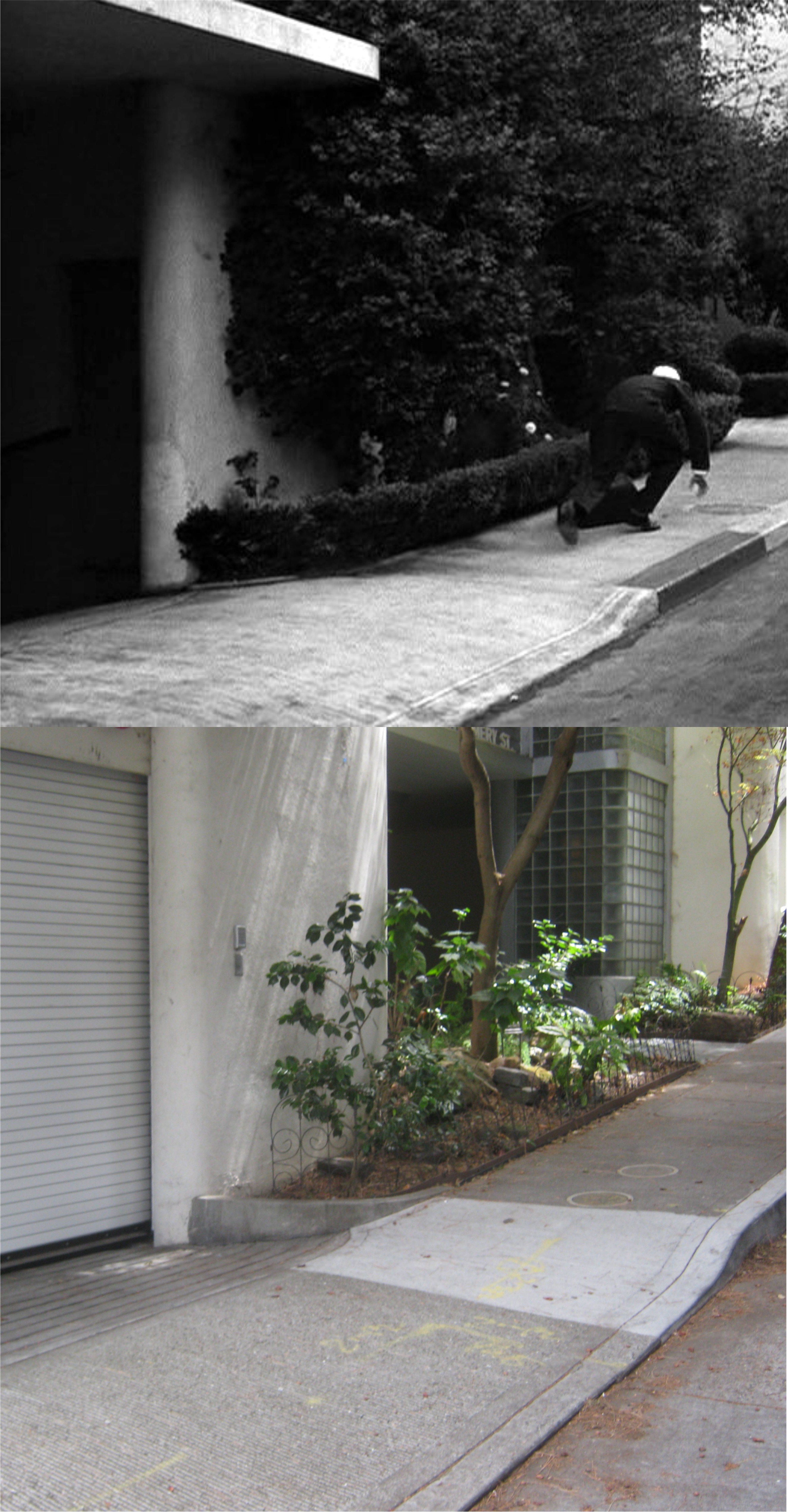
Realizing that he is going to be in Irene’s way if he stays with her, he decides to leave, even though she wants him to stay. He tells her that he has a friend in San Francisco he can stay with, and says goodbye to her. On the way to his friend’s place a taxi driver recognizes him, but instead of turning him in, the driver sets him up with a surgeon who can give him a different face. During the surgery, Parry’s friend is murdered and he has no place to go. So tired and sore from his operation he begins a five mile walk back to Irene’s In the film, his walk back takes him up the steep Filbert Steps on Telegraph Hill.
{The pain in his face mixed with the pain in his arms and he wanted to get down on the pavement and sleep. He kept walking.}
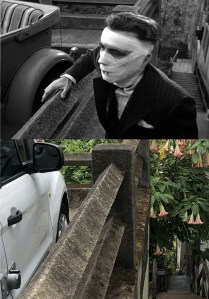
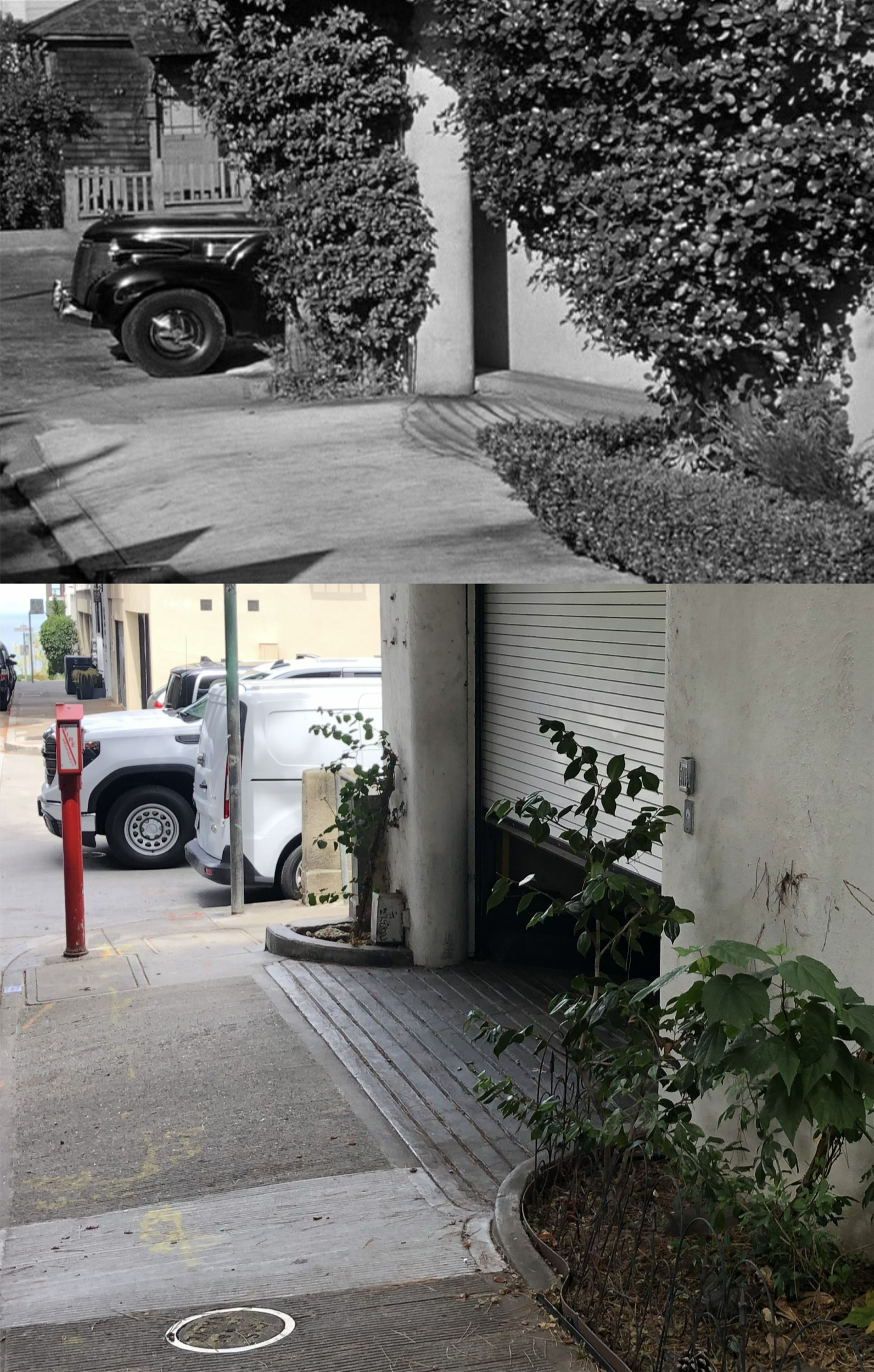
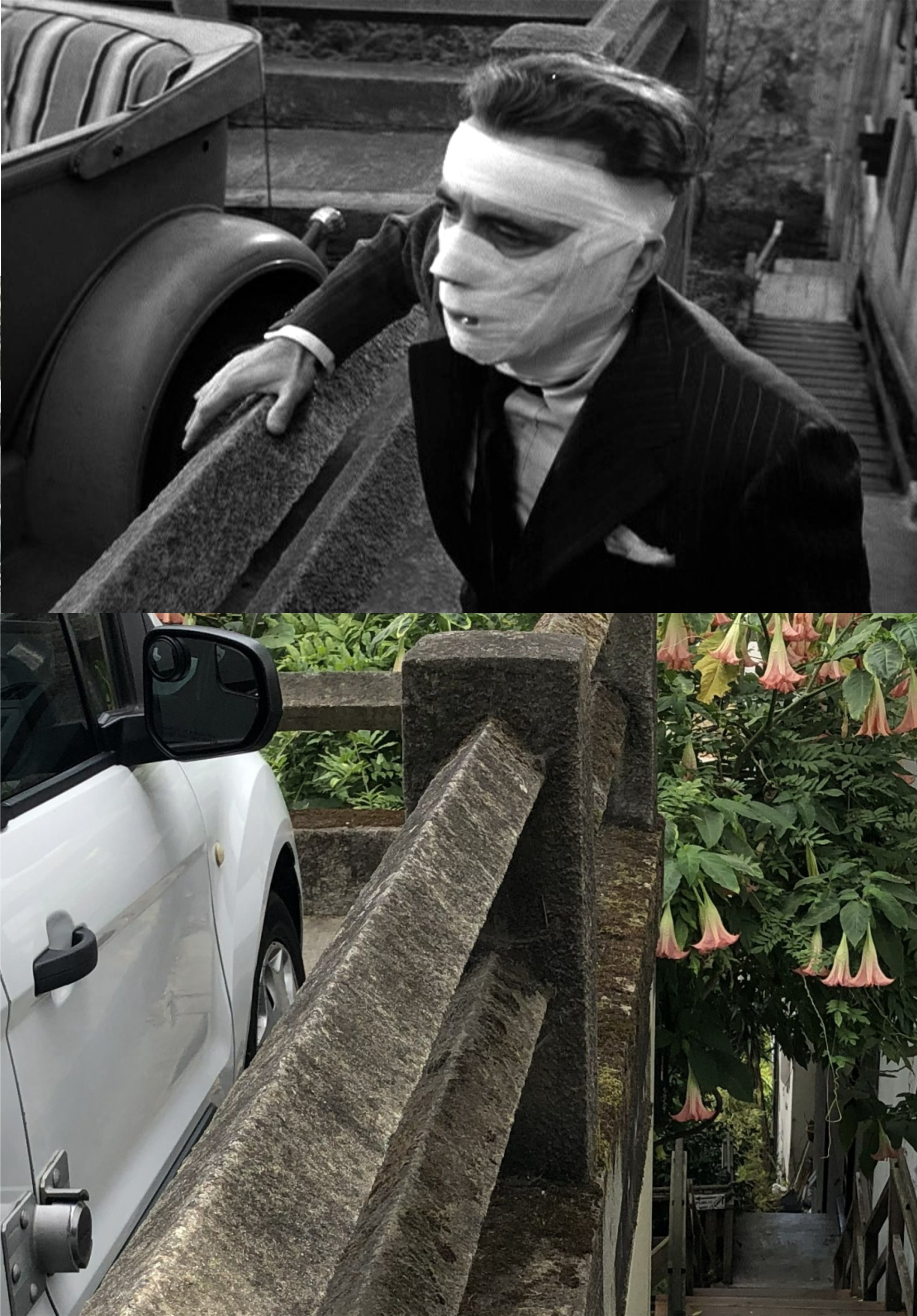
When he gets to the top of the steps, he finds the car there of the man he beat up after his escape.
{It was the same Studebaker. The same hunk of junk that had picked him up on the road. It couldn’t be. It just couldn’t be. And yet it was.}

Parry continues on to Irene’s apartment.
{Parry turned and went toward the apartment house. He was staggering now. On the steps he stumbled and fell.}
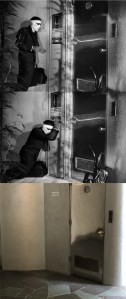
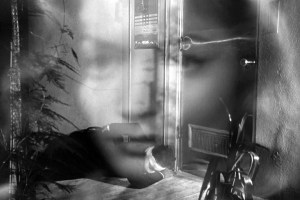
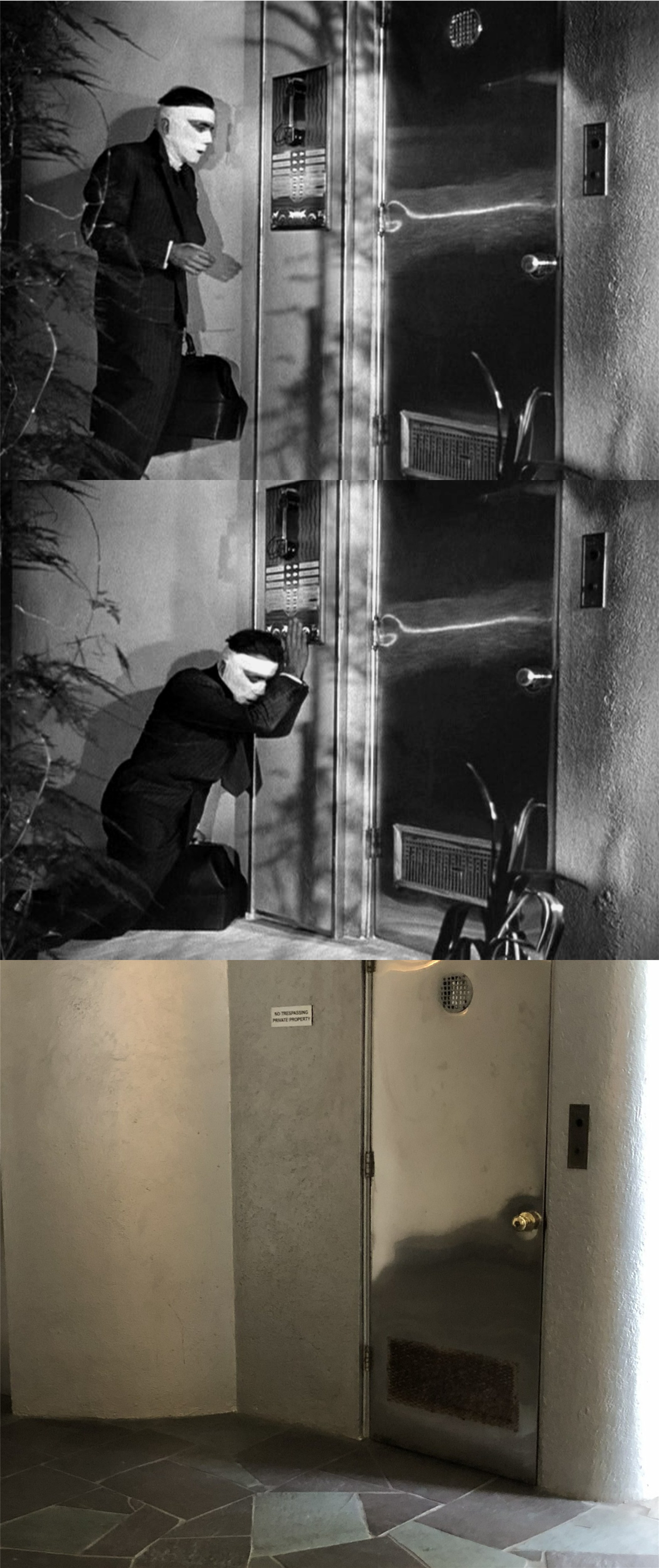
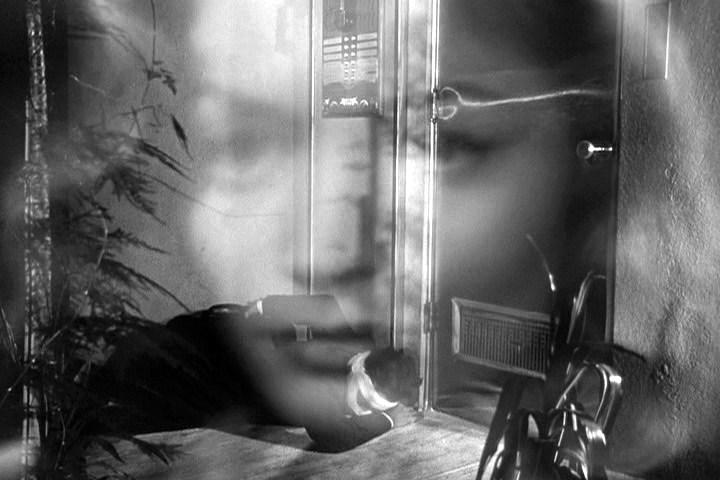
He presses the button for the elevator and begins to pass out. In the book he passes out in the elevator, but in the film he collapses before getting into the elevator, and wakes up to the sight of Irene, who was able to get him into her apartment.
(As the elevator went up he kept going down and his eyes were closed now.}
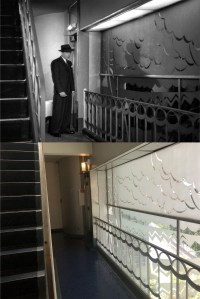
Parry stays with Irene long enough for his face to heal and have the bandages removed, but realizing the danger he’s putting her in, he decides to leave her for good. As he waits for the elevator, he says his goodbye to her.
{He was going toward the door. He turned and looked at her. She was all alone. He had a feeling she would always be alone.}
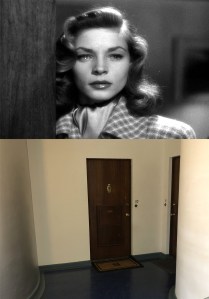
Irene watches him leave from the door of her apartment number 10.
{She would be all alone here in her little apartment. Her father was dead, her brother was dead, she really had nobody.}
I don’t know, looking at that face I personally don’t think she would have been alone for too long. Well, this is the last we see of 1360 Montgomery Street, but not the last we see of Irene. Two more people are killed after this, and Irene will faithfully keep believing in Vincent Parry.