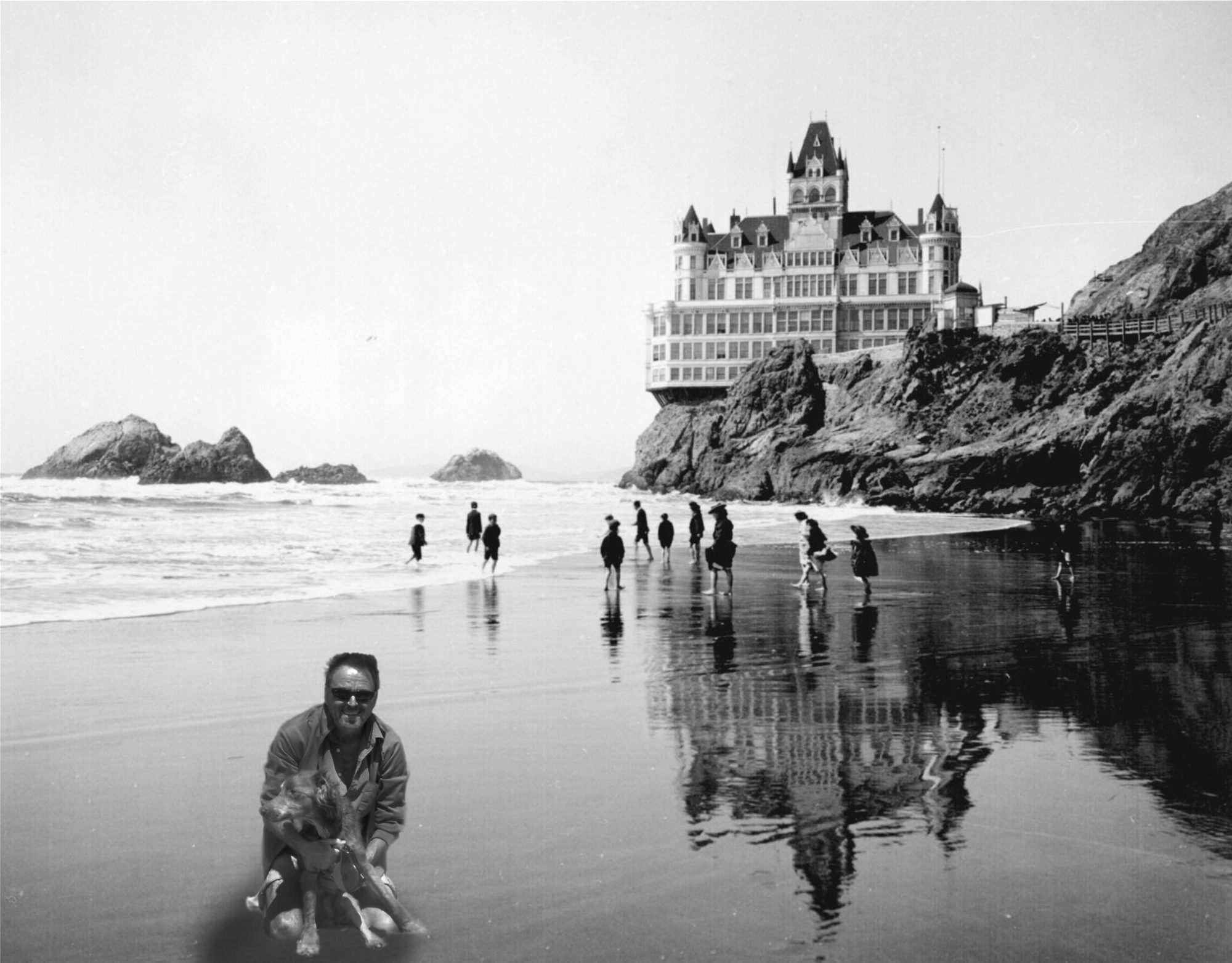
Yesterday, I got a chance to explore Golden Gate Park from end to end. My main idea was to visit some of the lesser know areas of the park, although I stopped at some of the high traffic locations, as well. There’s always some new history to discover there through the courtesy of http://opensfhistory.org/, where these vintage pictures are from, as well as revisiting interesting or beautiful locations in the park that have stories that I’m familiar with.
 We’ll start out on the eastern side of the park at the McLaren Lodge. That’s a 91 year old John McLaren at the entrance to the lodge in 1937 where he lived until his death in 1943. McLaren was the Walt Disney of Golden Gate Park where he was superintendent for 53 years, and we have him to thank for what’s there today. He looks a little grumpy! Possibly some foolish subordinate was telling him he was too old for the job.
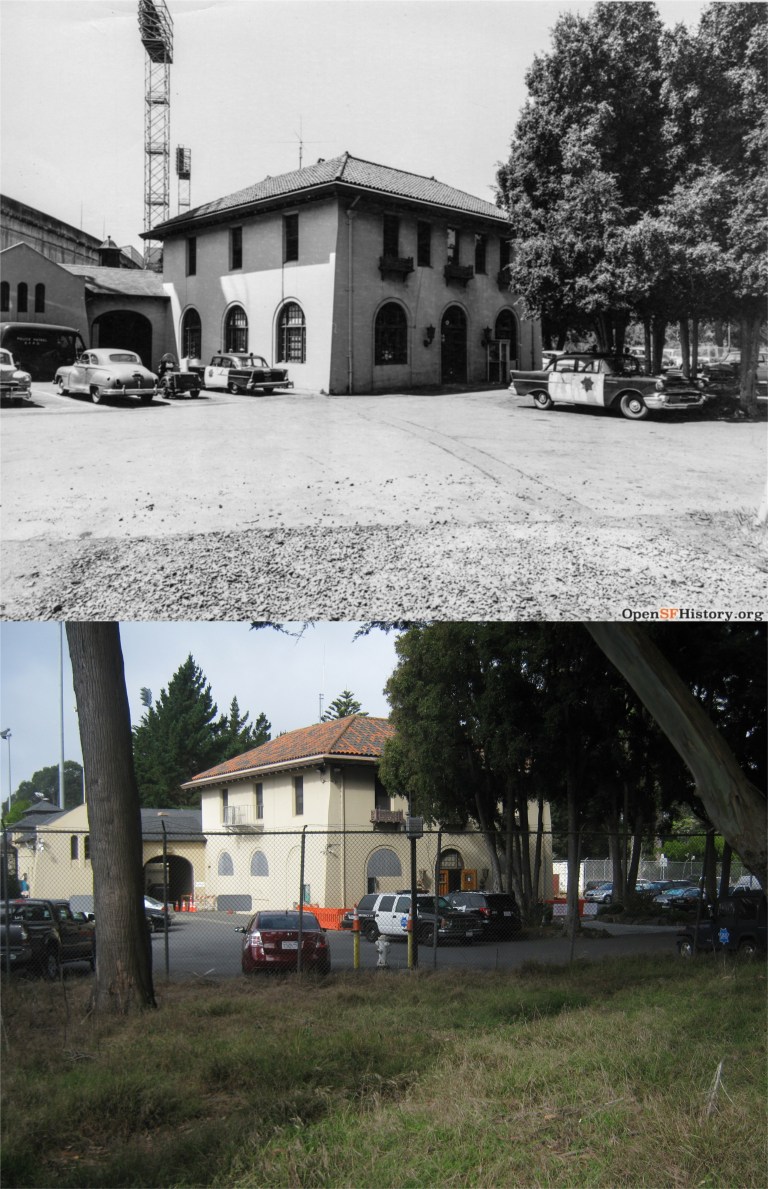 The old Police Station on the southeast side of the park in 1957: I wanted to be carefully quiet when I took this picture; I couldn’t remember if I paid that parking ticket that I got 10 years ago in San Francisco.
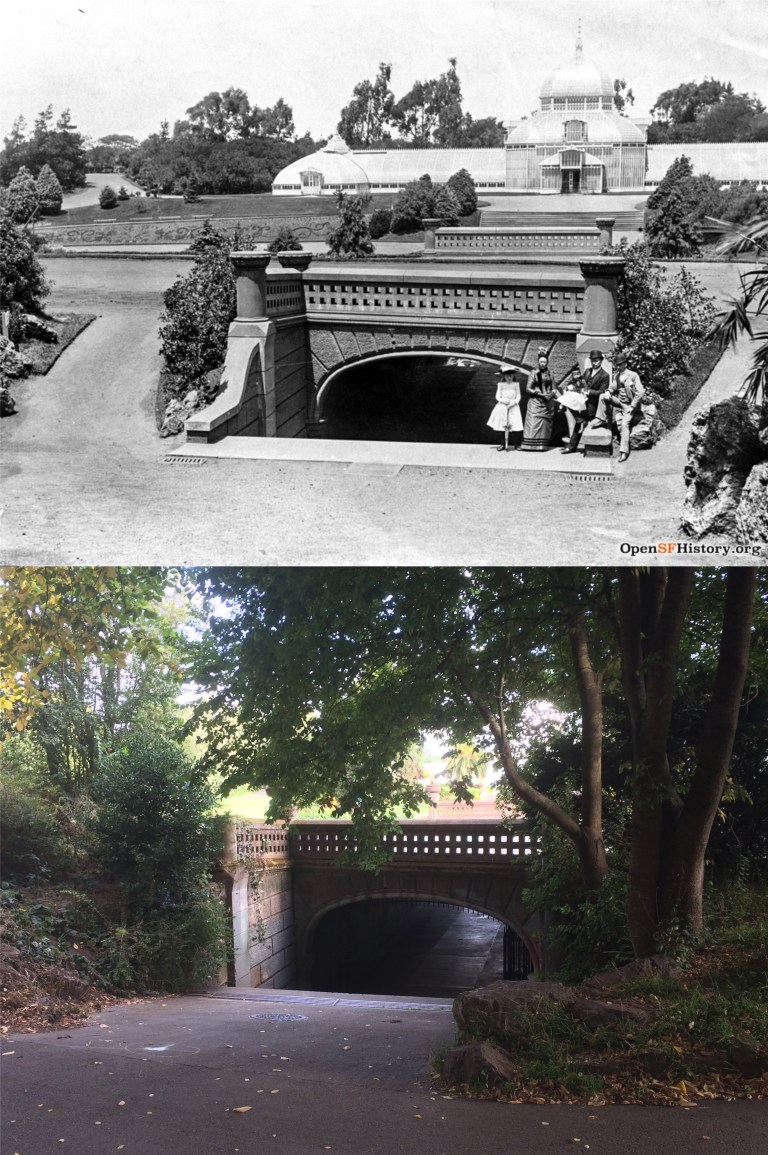 The tunnel that crosses under John F. Kennedy Drive to the Conservatory in the 1890’s when the road was called the North Drive.
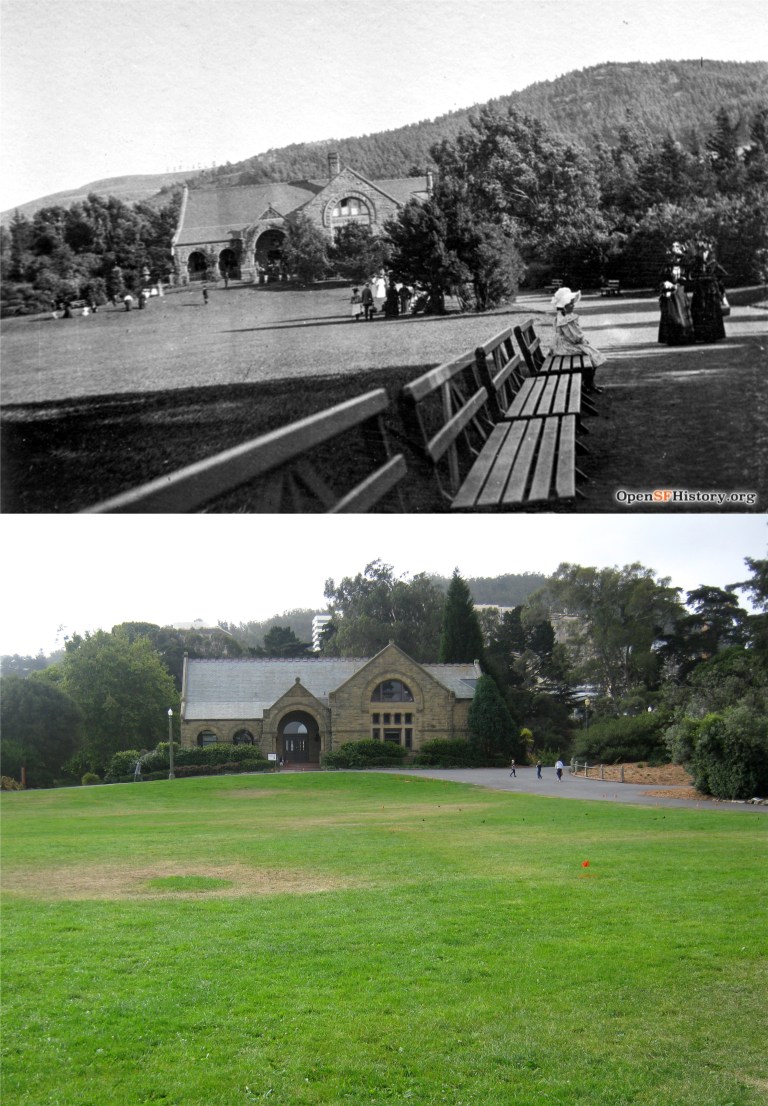 The old Sharon Building and the Sharon Meadow circa 1900: Sharon Meadow was renamed Robin Williams Meadow in September of 2017. Today, while I’m posting this, they are having the 38th annual Comedy Festival in the meadow where Robin Williams performed many times.
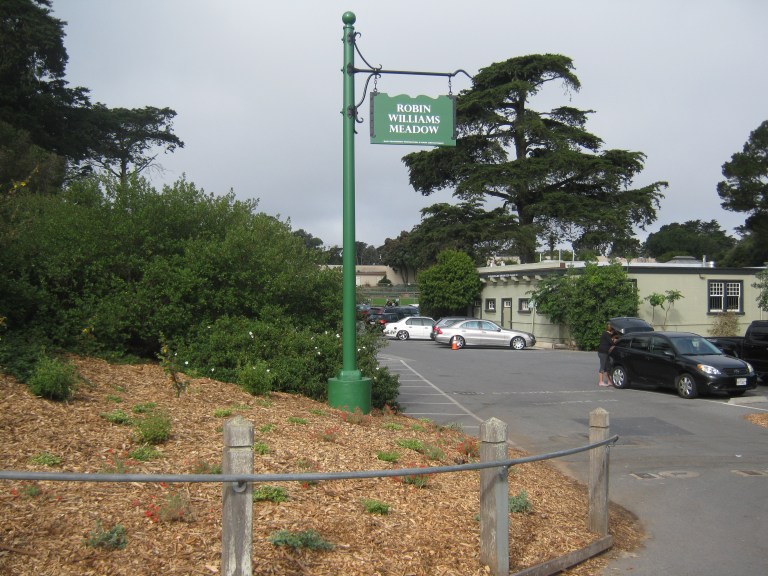 This past Friday, the new sign was unveiled officially completing the name change of Sharon Meadow.
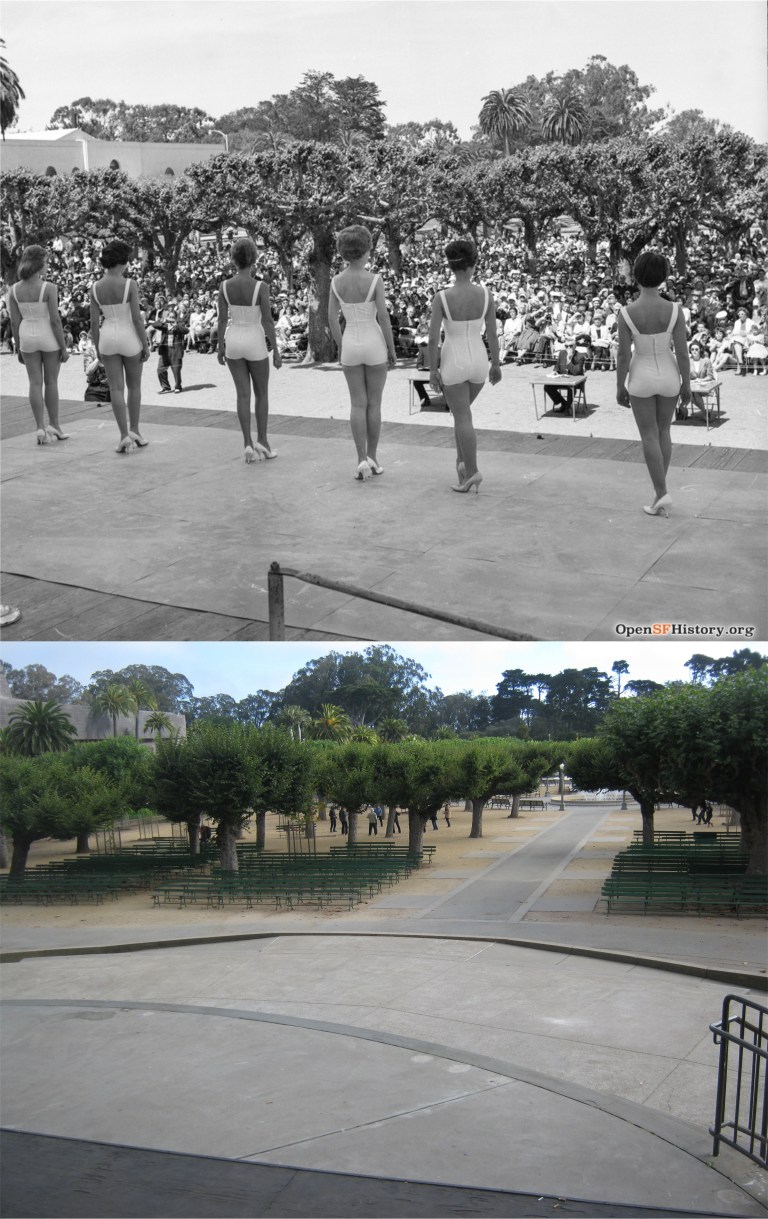 The 1961 Miss San Francisco beauty contest at the old Music Concourse: That ain’t gonna happen anymore!
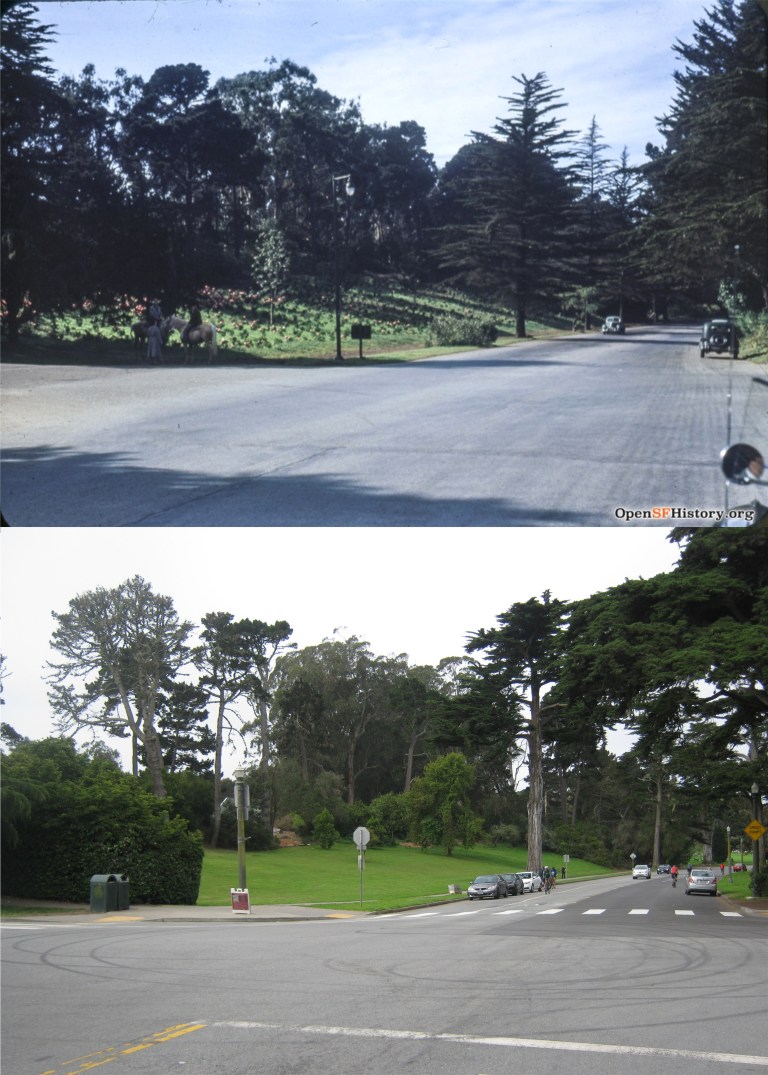 Transverse Drive at North Drive (John F. Kennedy Drive) looking west in 1950:
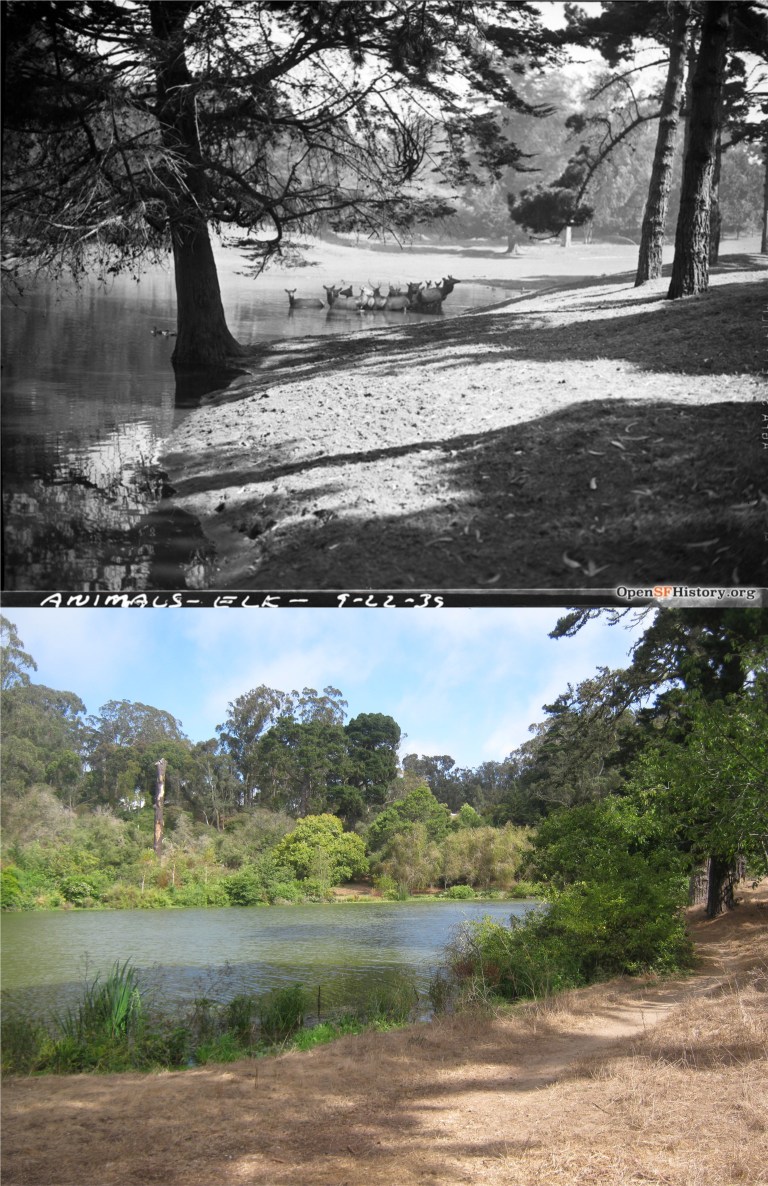 There really were elk in Elk Glen Lake once, at least in 1939.
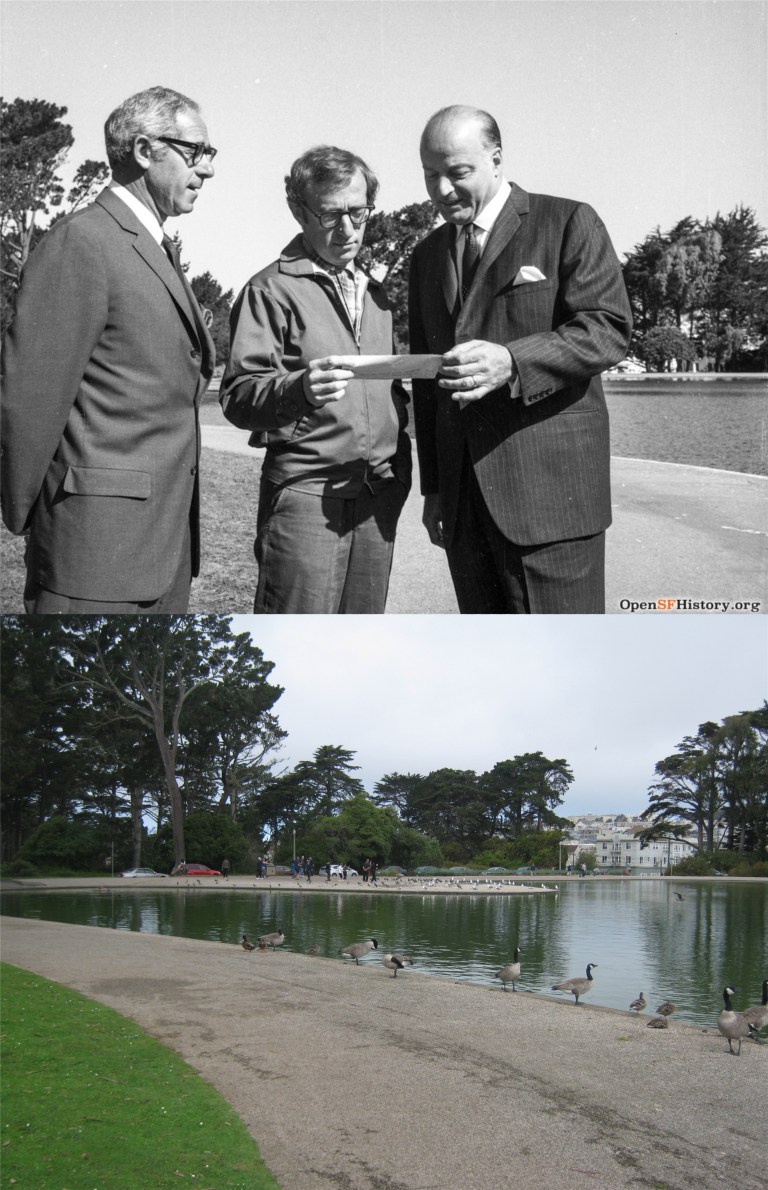 Woody Allen with Mayor Joseph Alioto on his left at Spreckels Lake in 1969: It’s hard to think of anything weirder than that! Woody Allen was in town filming scenes for his movie ‘Take the Money and Run’ at the time.
 “Can you hear me now?”
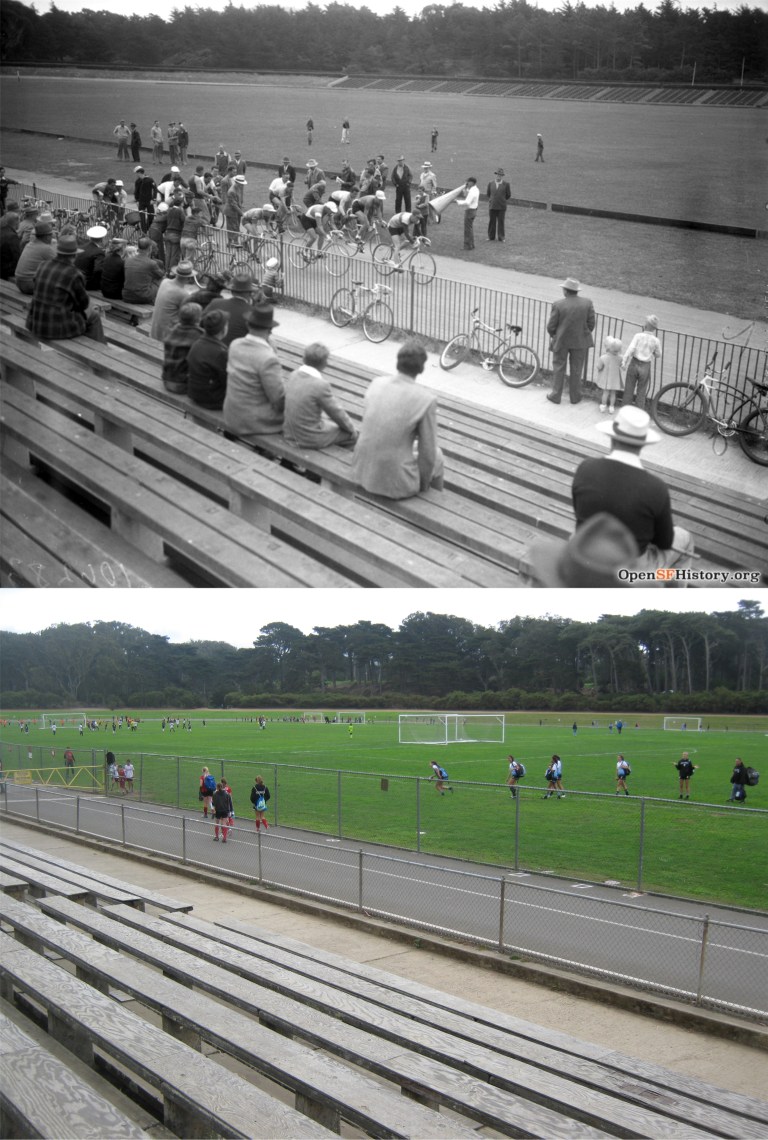
A bicycle race at the Polo Fields in July of 1945: It looks like there was some type of seating across the field on the south side once, as well.
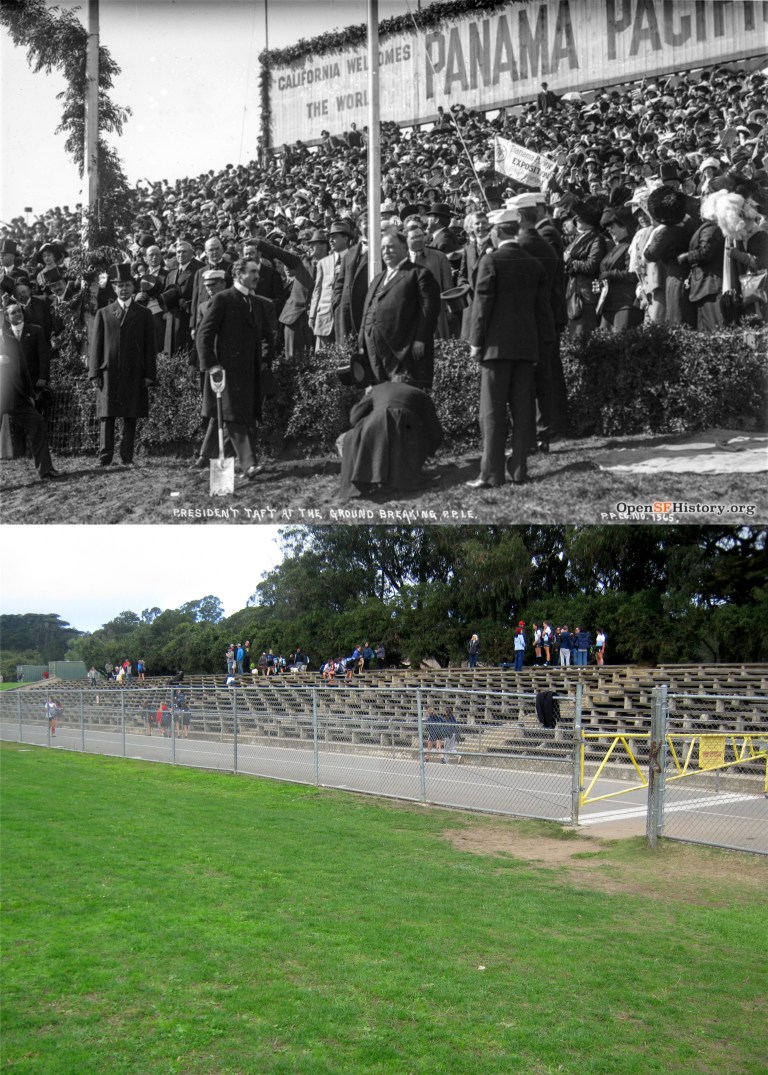 Hey, he really was fat! In 1911 President William Howard Taft broke ground for the upcoming 1915 Panama Pacific International Exposition on the north side of the Polo field in Golden Gate Park. The reason for this was because the official site for the approved fair hadn’t been selected yet.
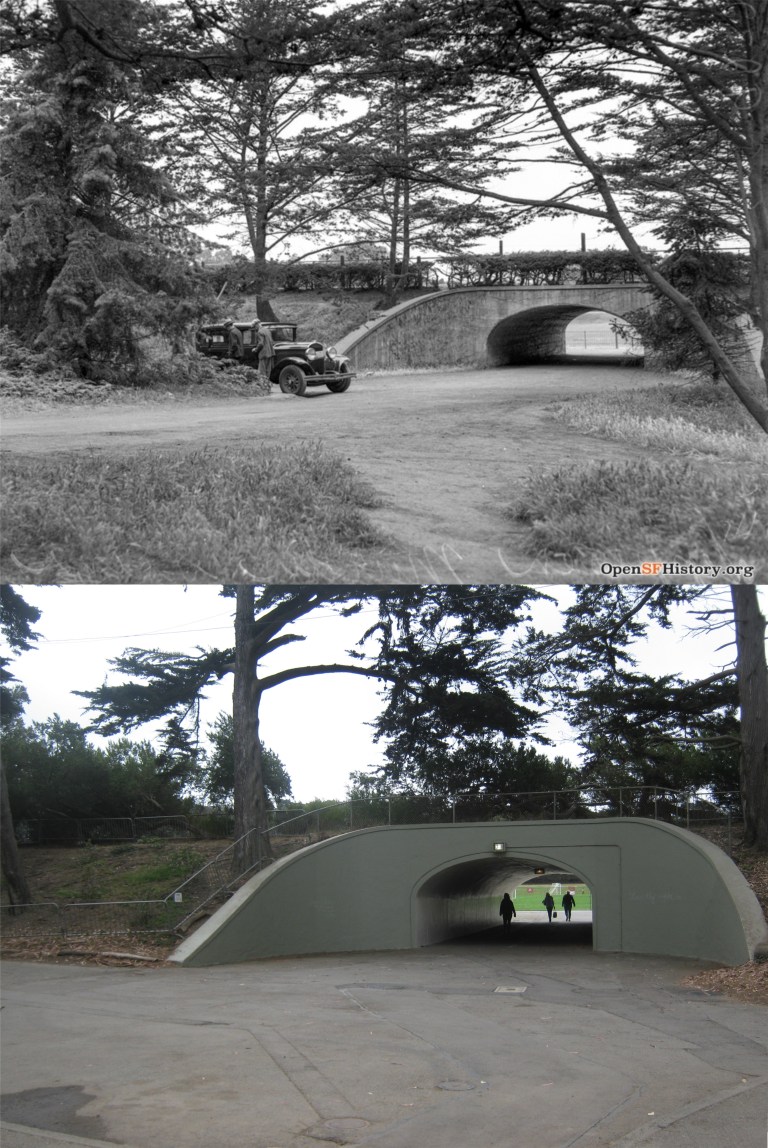 And there’s a grim history to the park, as well. In May of 1934, 23 year old Louise Jeppensen (some accounts state age 24) was raped and murdered here at the entrance to the north side tunnel to the Polo Field. An engineer named Millard Hickman was arrested but later acquitted. Her body was found by a caretaker in the park; that may be the caretaker and an investigator looking down at her body. Sadly, in October of 2015 another 23 year old, Audrey Carey, was murdered in Golden Gate Park not far from this spot. Three suspects have been arrested in that case.
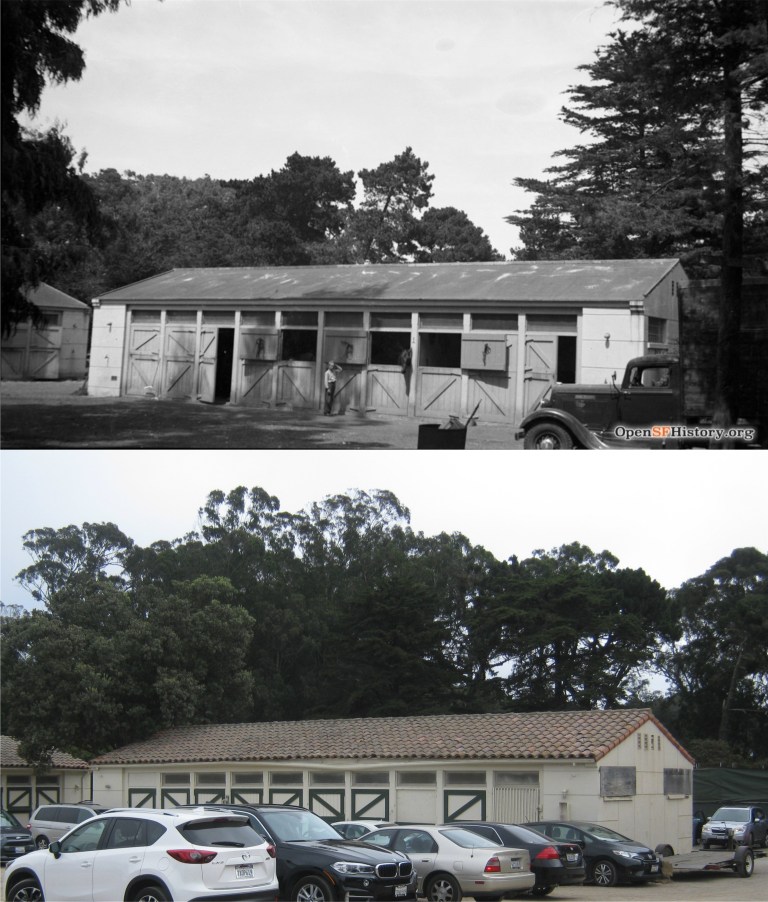 “They (stable) horses, don’t they?” Not anymore at the old horse stables seen here in 1947, although, there still is a small stable for police horses here.
 A 1943 photo looking out from the tunnel that ran under North Drive near the Dutch Windmill as a streetcar passes. That’s the roller-coaster at Playland-at-the-Beach in the background. The tunnel is still there, but Playland and the streetcar line that ran across the west end of Golden Gate Park are gone.
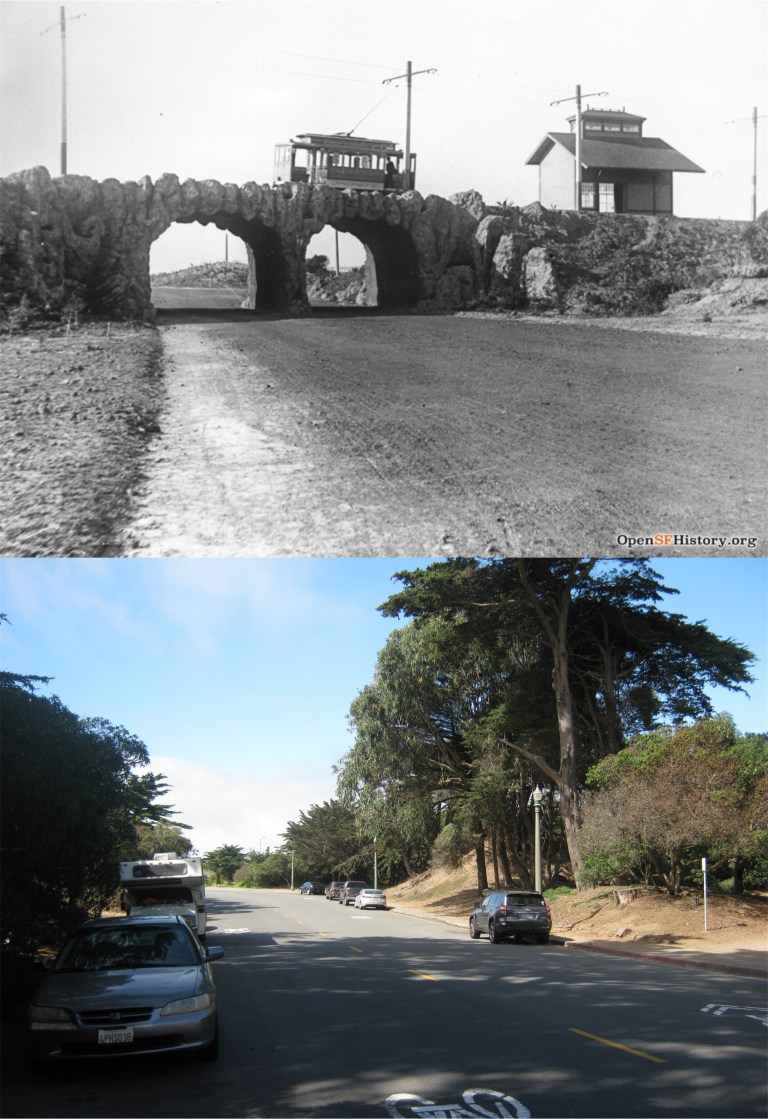 We’ll end up on the southwestern side of Golden Gate Park with a westerly view of the old streetcar bridge that crossed over South Drive (now Martin Luther King Jr. Drive) near the Murphy Windmill, seen in 1900. The hill behind the tree on the right was where the north side of the bridge was anchored.
 A cable car at O’Farrell and Powell Streets late on a summer afternoon in 1958: (Shorpy Archives)
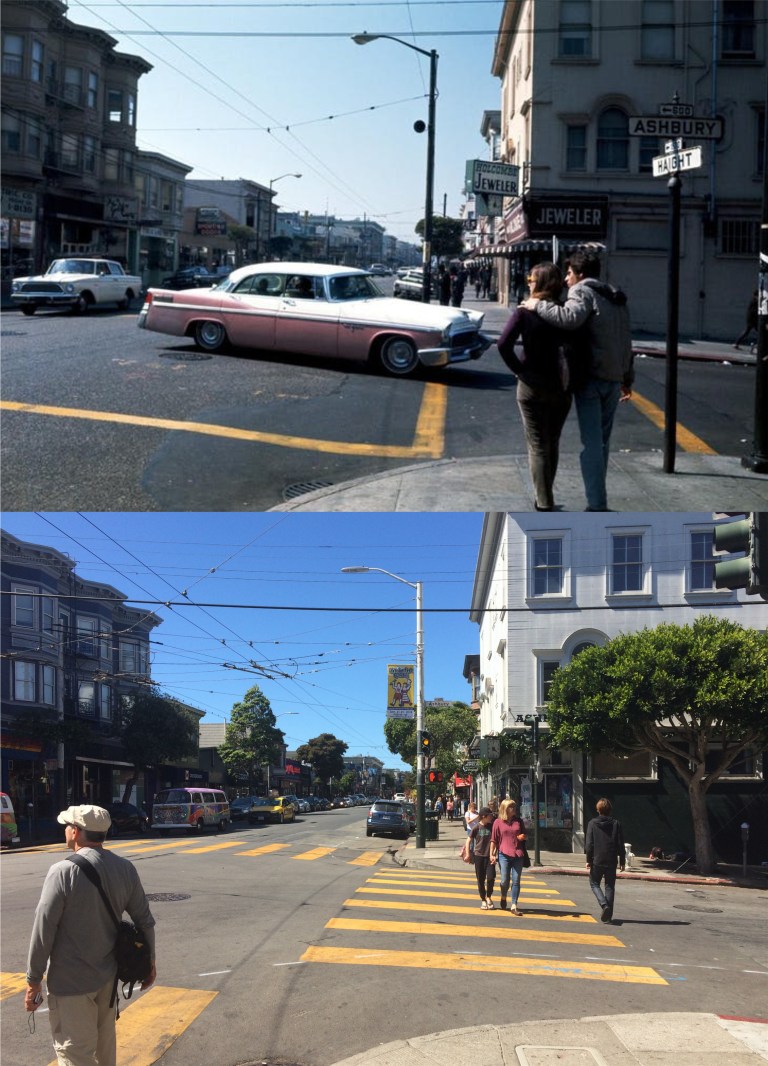 Obviously, the most famous San Francisco summer was the 1967 “Summer of Love”. The vintage photo from that year was at the intersection that more than any place in the world epitomized the Summer of Love, Haight and Ashbury.(National Geographic)
 Hippies and, possibly grandbabies of hippies at the northeast corner of the Haight-Ashbury intersection in 1967 and 2018: (Vintage Everyday)
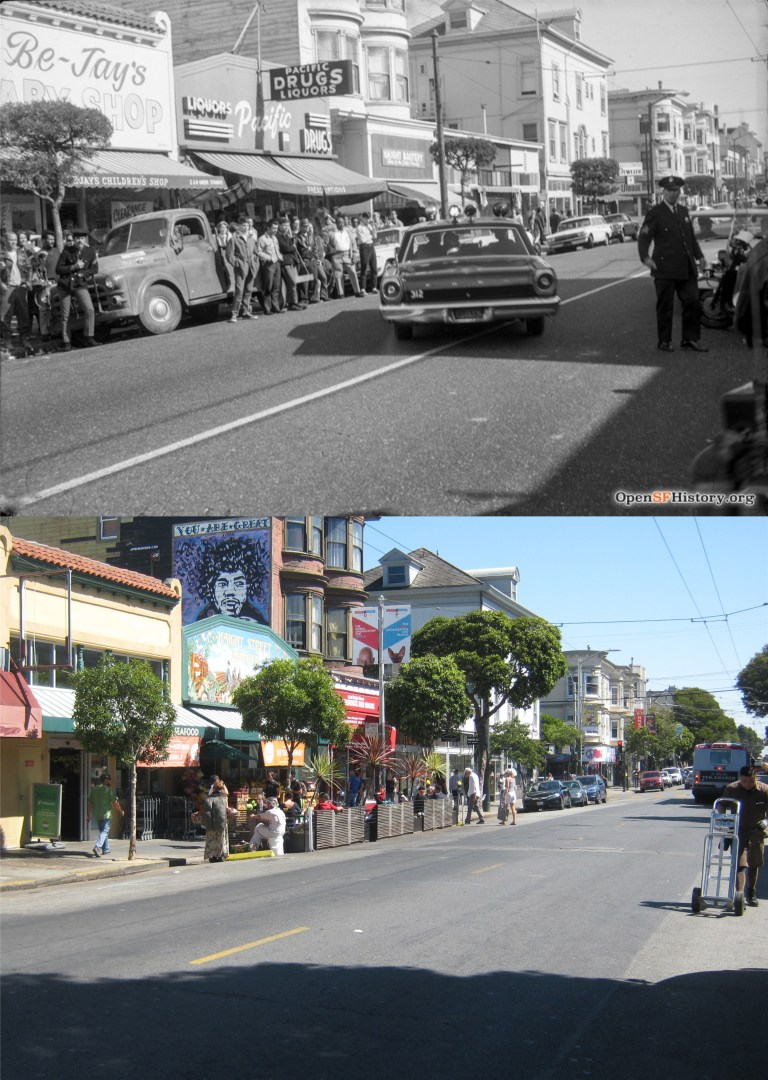 “Cop’s face is filled with hate. Heavens above he’s on a street called “Love”.
 Hippies on top of “Hippie Hill” in Golden Gate Park during the “Summer of Love” in 1967, and neo-hippies on top of Hippie Hill today: (National Geographic)
 51 years is a long time ago to try and find an exact spot, but the only tree on top of Hippie Hill that remotely matches the one behind where those hippies were sitting in the previous picture is the one in the center of this photo.
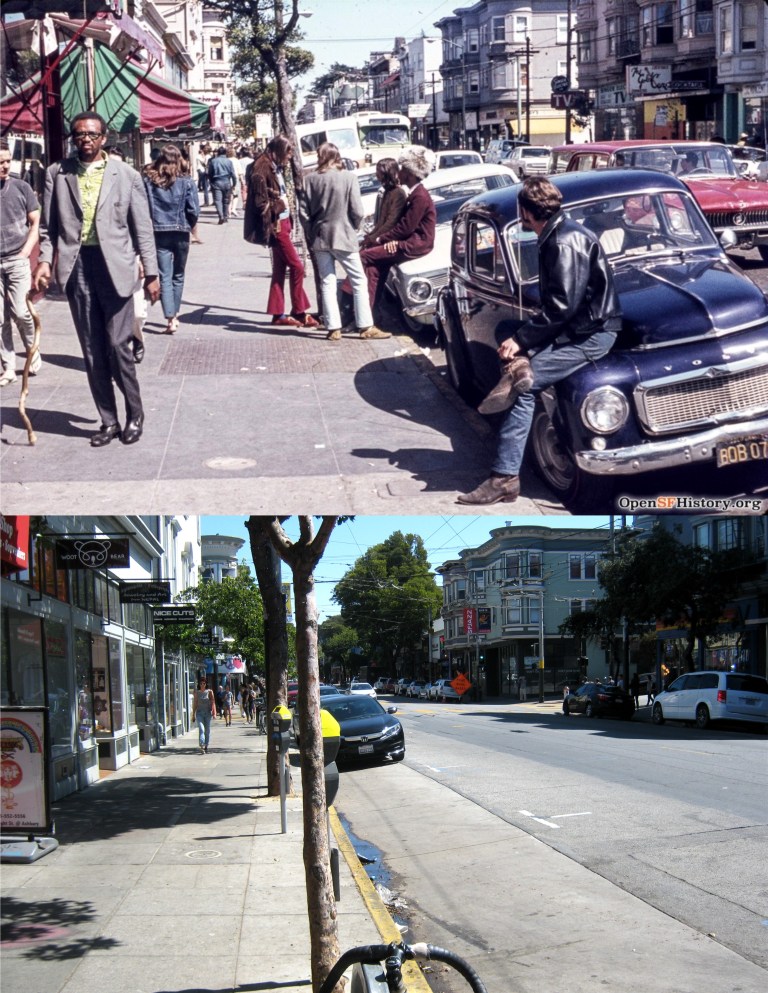 Although still resembling the Summer of Love by the summer of 1969 when the vintage photo was taken, the dream had faded out due to multiple drug overdose problems and a rising crime rate in the area. (opensfhistory.org)
 The northeast corner of Haight and Cole Streets in 1969: Wow, dig that groovy peace symbol wreath in the modern picture! Far out! What a trip, huh? #pseudohippie (opensfhistory.org)
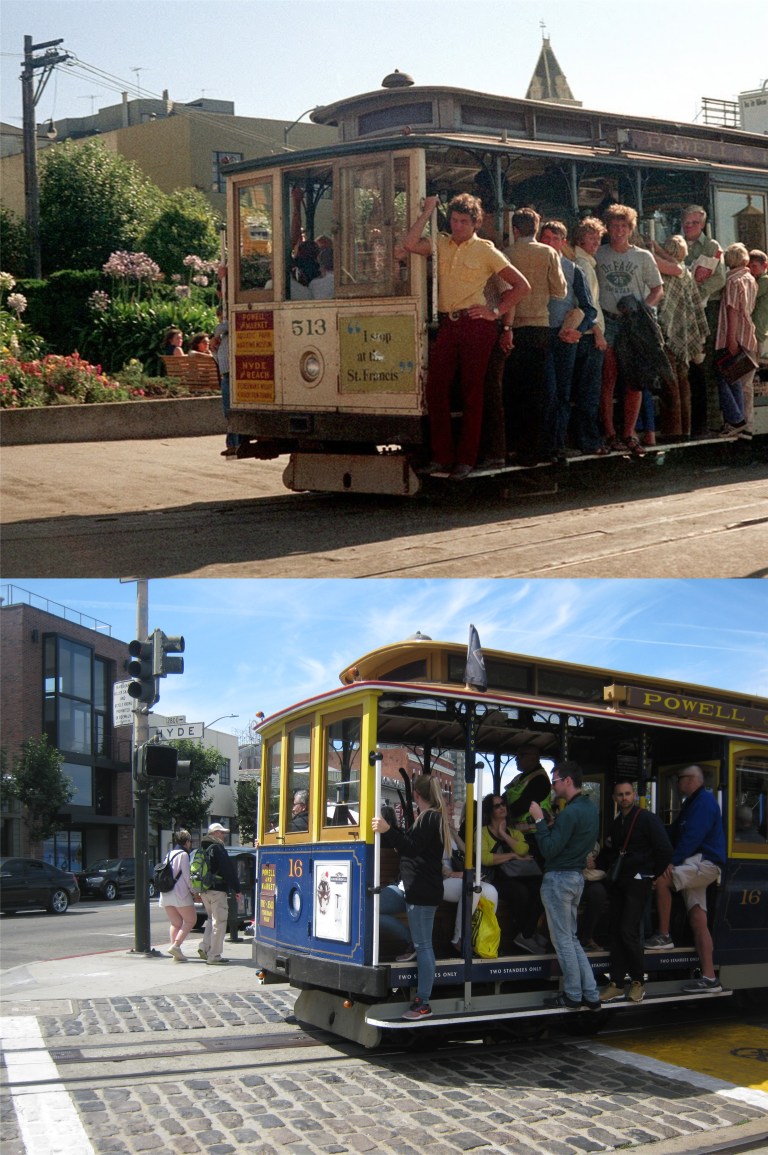 Moving forward to the summer of 1971, a cable car leaves Aquatic Park to climb Hyde Street. That’s the Ghirardelli Square tower behind the cable car in the vintage picture. (Vintage Everyday)
 Children Playing at the Mermaid Fountain in Ghirardelli Square in the summer of 1971: That was 47 summers ago; they’ll all be approaching senior citizenship by now. Oh, well, if I can handle it so can they. (Vintage Everyday)
 The vintage photo from the Huffington Post is dated May of 1939. The “Lubrication Service” Garage has been overhauled now, and the Larkin Theater is now the Century Theater.
 A St. Patrick’s Day parade on O’Farrell Street in March of 1968: Well, Jasper O’Farrell was born in Ireland so it’s fitting, but they don’t hold the parade here anymore. (opensfhistory.org)
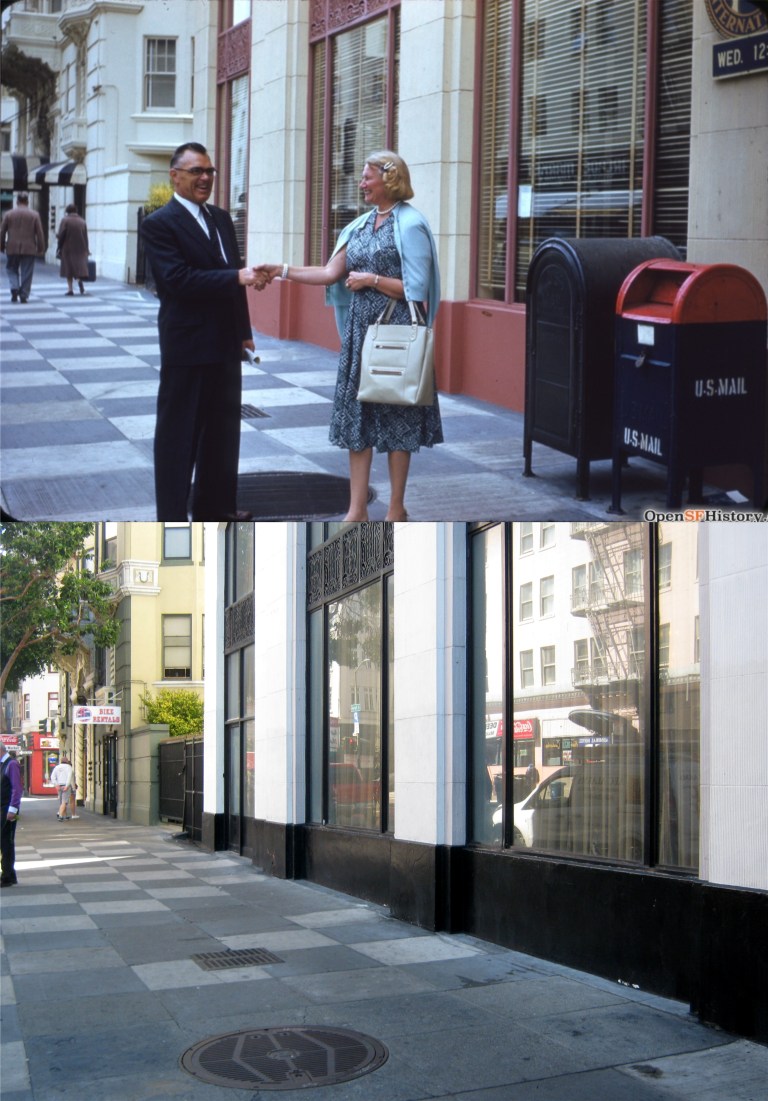 A circa 1958 picture in front of the Alexander Hamilton on O’Farrell Street: It’s interesting that the checkered sidewalk is still there. (opensfhistory.org)
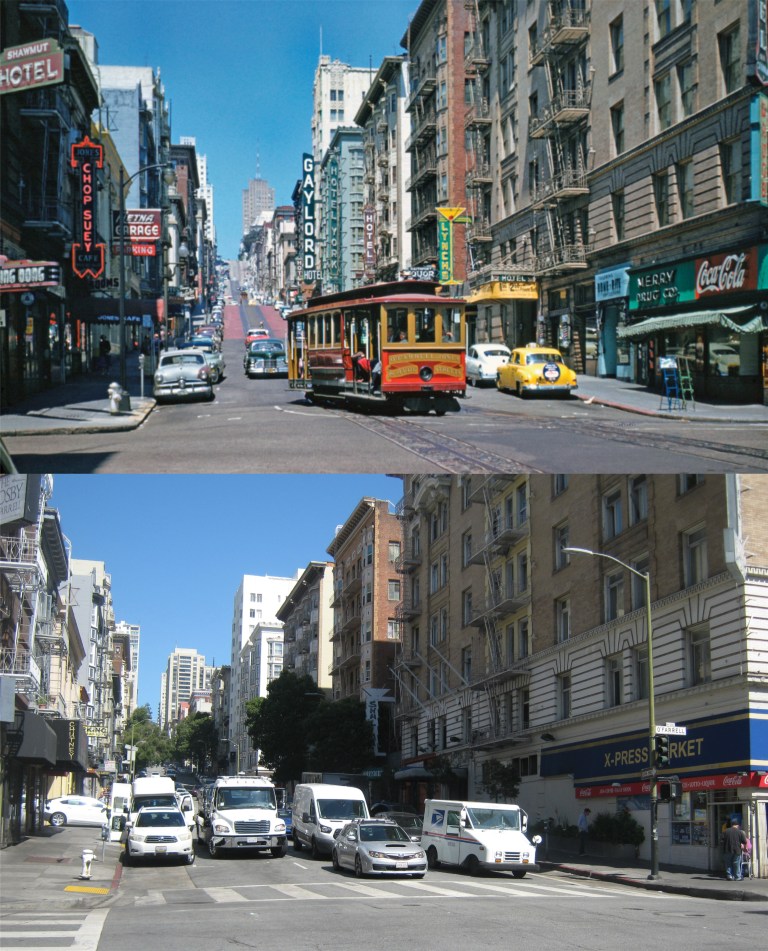 A cable car from the defunct O’Farrell & Jones cable car line on, appropriately, Jones Street at O’Farrell: The line was closed in 1954. This weekend they are running an old O’Farrell – Jones cable car along Hyde Street. If I can get a picture of it, I’ll update this post. (Market Street Railway)
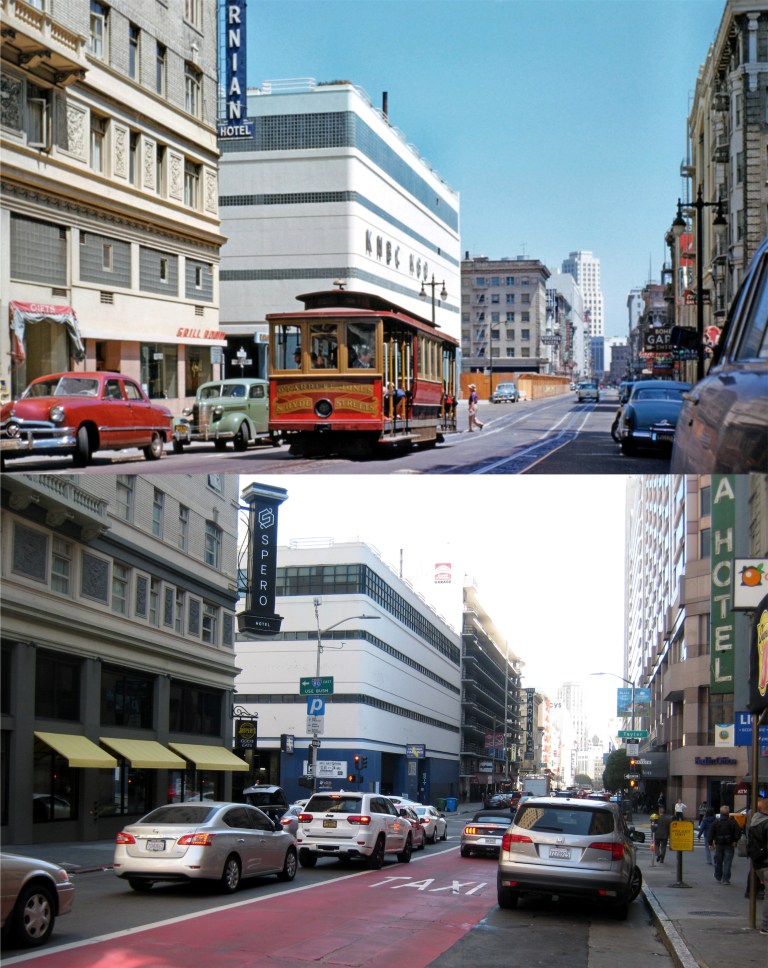 O’Farrell Street near Taylor looking east with the old KNBC Building in the background: (Market Street Railway)
 We’re one block east from the opposite picture on O’Farrell and looking west. That construction work on the right would eventually be the O’Farrell and Mason Street Garage. (opensfhistory.org)
 We’ll stop here at Turk and Mason Streets looking west. Tiny’s Waffle Shop, ‘ALWAYS OPEN’ isn’t anymore. You can see from the pictures in this post that the look of the Tenderloin District hasn’t changed much. (SF Gate and opensfhistory.org)
 This is another interesting story from Found SF about the “B-girl menace” in Tenderloin history. B-girls used their “charms” to get male customers to buy overpriced drinks in Tenderloin bars. This girl shown her, Connie Collins, was arrested in May of 1938 for “vagrancy” in an attempt by police to discourage b-girl activity. Today, there are not enough police officers in all of San Francisco to arrest the vagrants in the Tenderloin District. I’ll include the link to the Found SF story about the b-girls below.
 An untrue blue Cliff House in 1947 from the website Everyday Life in the Western United States:
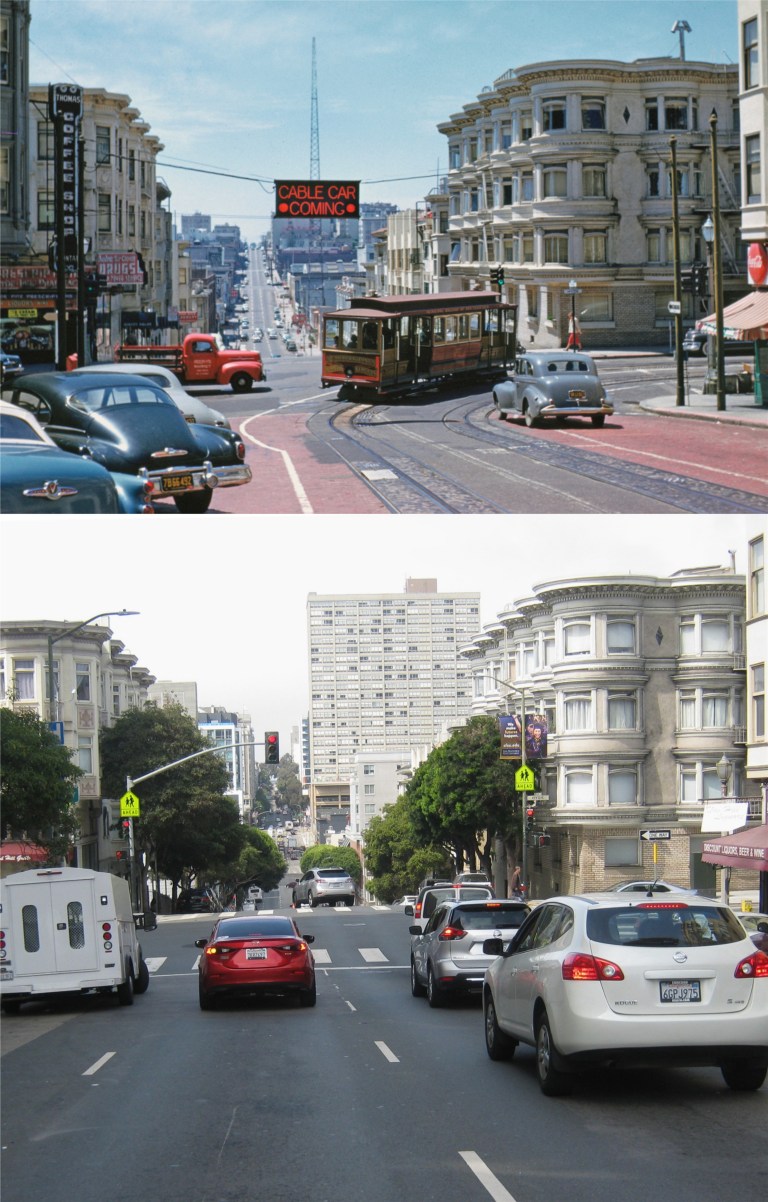 Quick, where was this taken? You have ten seconds………. If you can zoom in you’ll make out the street sign where the cable car is turning off from as Hyde Street, and if you know the cable car system, you may think of Hyde and Washington Streets. Actually the undated picture is at Pine and Hyde Streets, and has to have been taken before 1954. This was along the Jones – O’Farrell- Hyde Line that was discontinued during that year. You could board one of the cars at Jones or O’Farrell Street where the cable cars would move along Jones Street turning west at Pine Street and then north onto Hyde Street. What a lovely view of the Tenderloin that would offer today! The cars had front and back benches for passengers like the California Street Line. Here’s some interesting history from the Market Street Railway, where the vintage picture is from. The cable car warning sign is because when the cars turned east off of Hyde Street here, they traveled against one-way traffic for two blocks before turning south onto Jones Street.
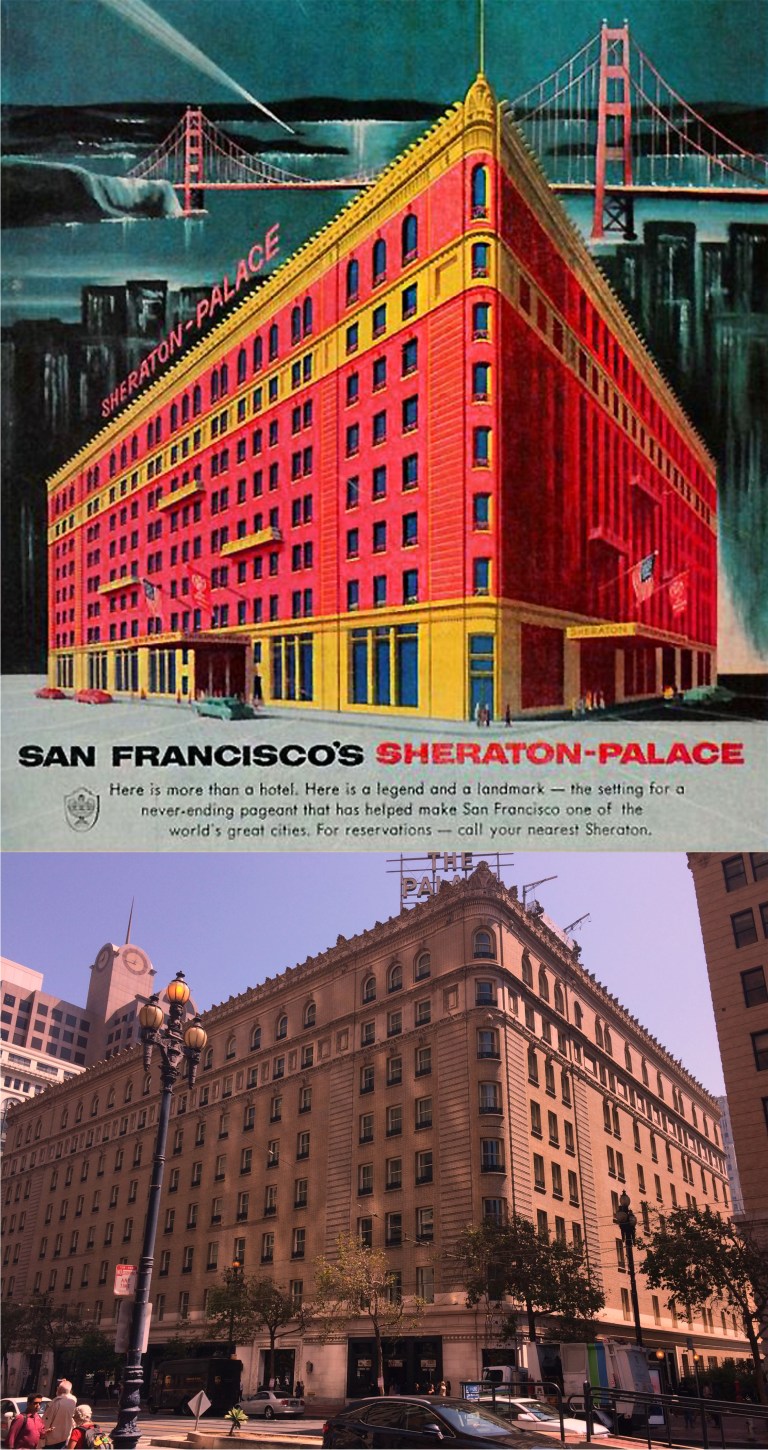 The Palace Hotel on Market Street is not red like in this old travel poster, and never was, but I couldn’t resist dimming it red to see what it would look like. I like it!
 A few more people and a lot more sunshine on Ocean Beach, south of the Cliff House, in the 1960’s than on Labor Day Weekend, 2018. There seldom are crowds on Ocean Beach, like in the vintage picture, since Playland-at-the-Beach was demolished in 1972. (Charles Cushman)
 Another bluer than blue photo from Everyday Life in the Western United States of the City Hall in 1947: These were taken looking east from Franklin Street; I couldn’t get a perfect lineup because of construction work on Franklin.
 The intersection of Geary Blvd. and Powell Street from Union Square during the 1940’s:
 Another wonderful vintage picture looking north along Grant Avenue from Sacramento Street in Chinatown during 1957: (Everyday Life in the Western United States)
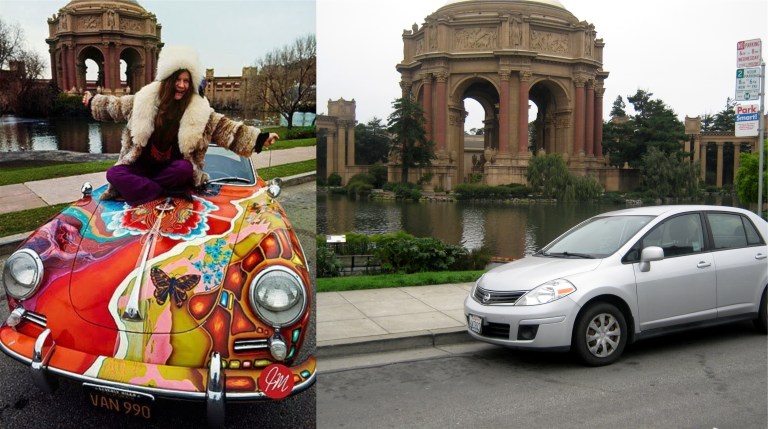 There was probably never a more colorful period in San Francisco history than the 1967 “Summer of Love”, and certainly no more suitable of a candidate for the queen of the Summer of Love than Janis Joplin, seen here at the Palace of Fine Arts.
 IF YOU ONLY HAVE TIME TO VISIT ONE ATTRACTION IN SAN FRANCISCO………. then you should have stayed home! Actually the historic World War Two Liberty Ship, the SS Liberty O’Brien should be on top of your list.
 A vintage photo of a radioman on the ship during World War Two getting a message warning of U Boats in the area: Not really, that was my tour guide.
 “Where’s this, Kevin?”
 A Saturday Afternoon Mutiny.
 “Who sleeps here, Kevin?”
 Now, a circular look from atop the ship, starting with a view toward the Golden Gate: They don’t always let visitors up this high.
 Looking northwest toward the aft of the ship:
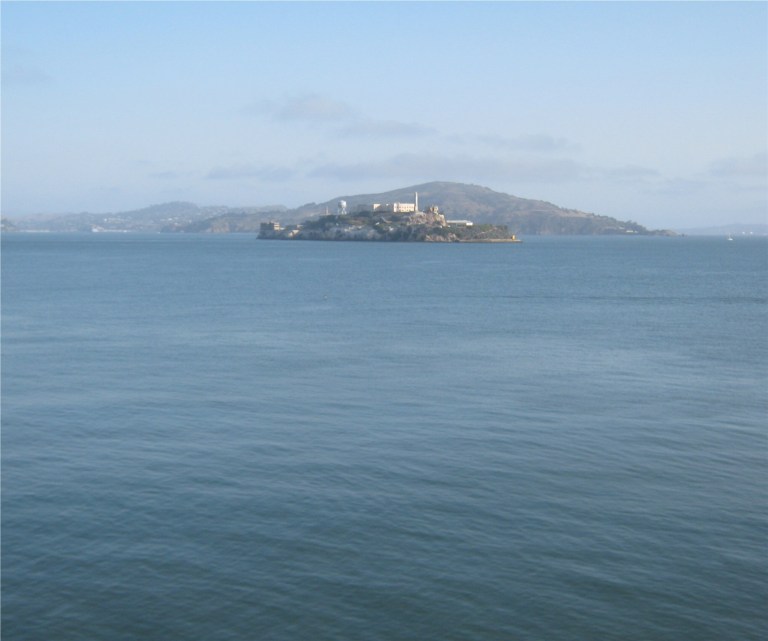 “The Rock”
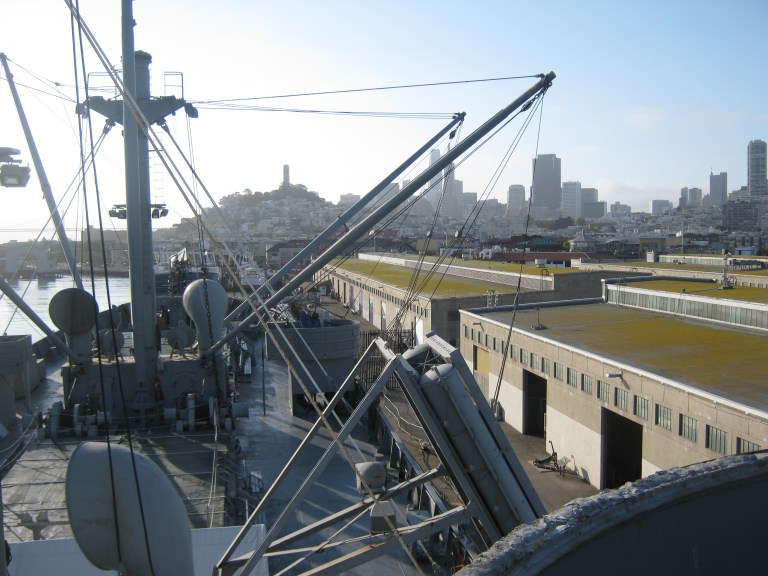 Looking toward the forward side of the ship for a view of Telegraph Hill and Downtown San Francisco:
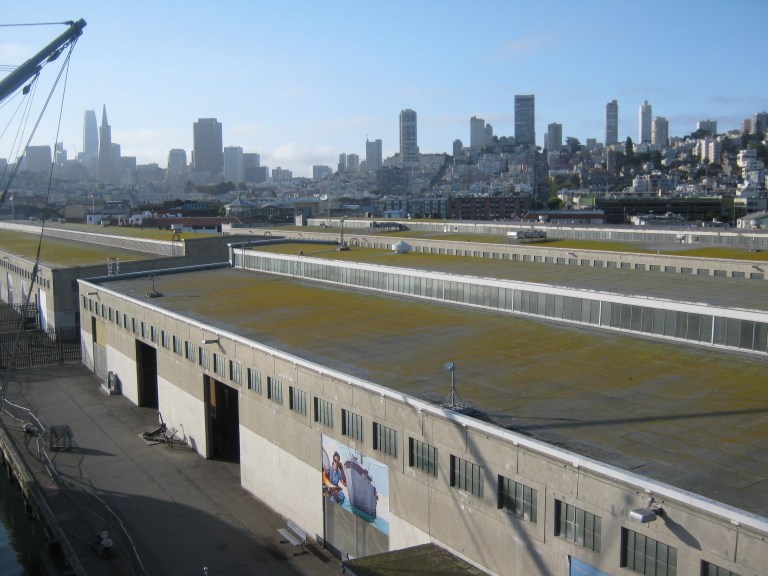 Looking directly toward Nob Hill over one of the most historic surviving piers on the San Francisco waterfront, Pier 45:
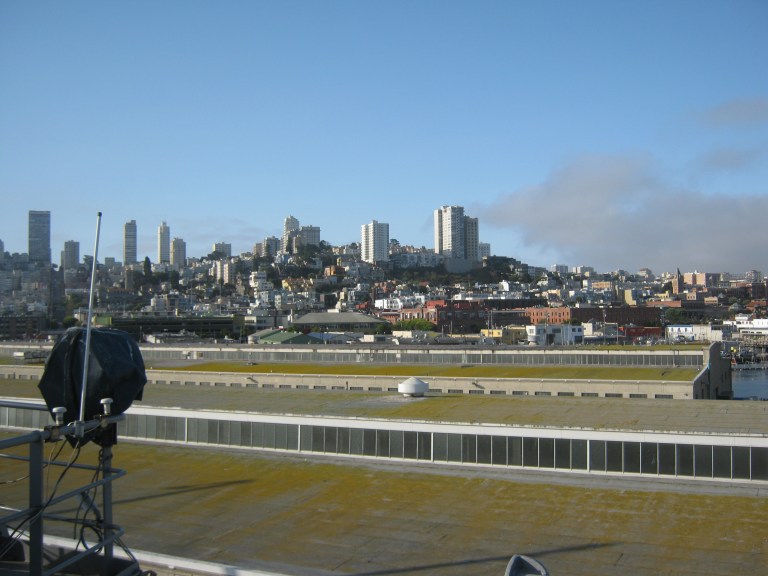 The view toward Russian Hill:
 Coming back around again; Ghirardelli Square, the Maritime Museum, and the Hyde Street Pier:
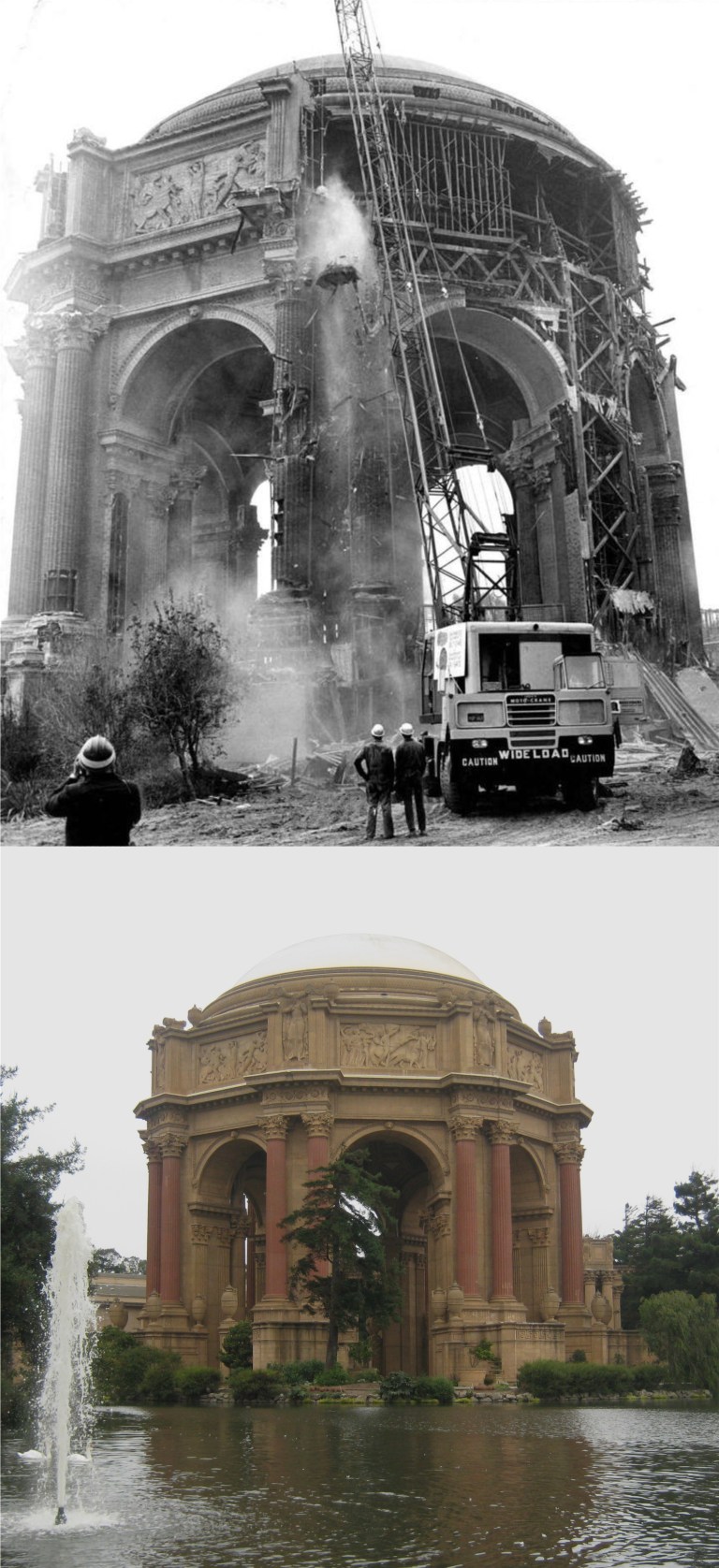 This was a big work order out at the Palace of Fine Arts. In 1964 the 1915 survivor from the Panama Pacific Exposition of the same year was demolished and rebuilt. The moat was drained so the vintage picture is closer to the structure. (SF Gate, San Francisco Chronicle)
 Street cars and a Belt Line Railroad train look like their racing under the pedestrian walkway of the Ferry Building in what must have been a busy work day in the 1940’s. (San Francisco History Center)
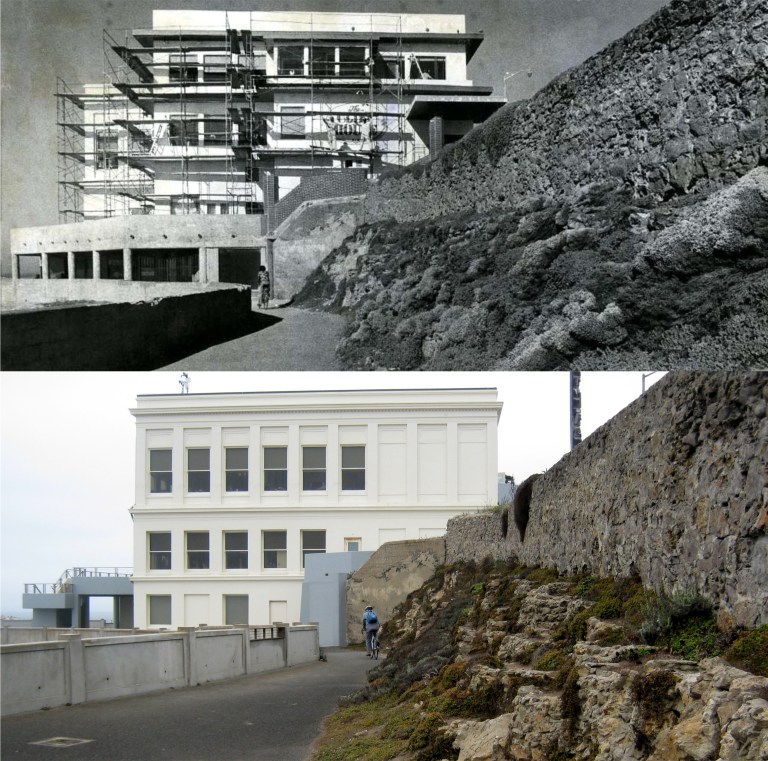 A facelift or maybe just a painting being done on the Cliff House in 1978: This was the Cliff House that I loved the best and have the fondest memories of.
 Sometimes, it’s not about working in the City, but about looking for work, which this lady at Eddy and Powell Streets in the 1960’s may have been doing. Or, she may have been looking for the address of an ex boyfriend she was stalking! I’ll give her the benefit of the doubt. Eddy doesn’t cut through to Powell anymore, but stops at Hallidie Plaza. The Flood Building behind her was the location of the flagship San Francisco Woolworth’s Department Store which had covered up the building with some kind of neo-deco look, if there is such a thing, at the time. You can see the Powell Street cable car tracks in the vintage picture but no lines, and the cable cars were only 25 cents a ride then, and a lot of times they didn’t even take your money. (SF Chronicle)
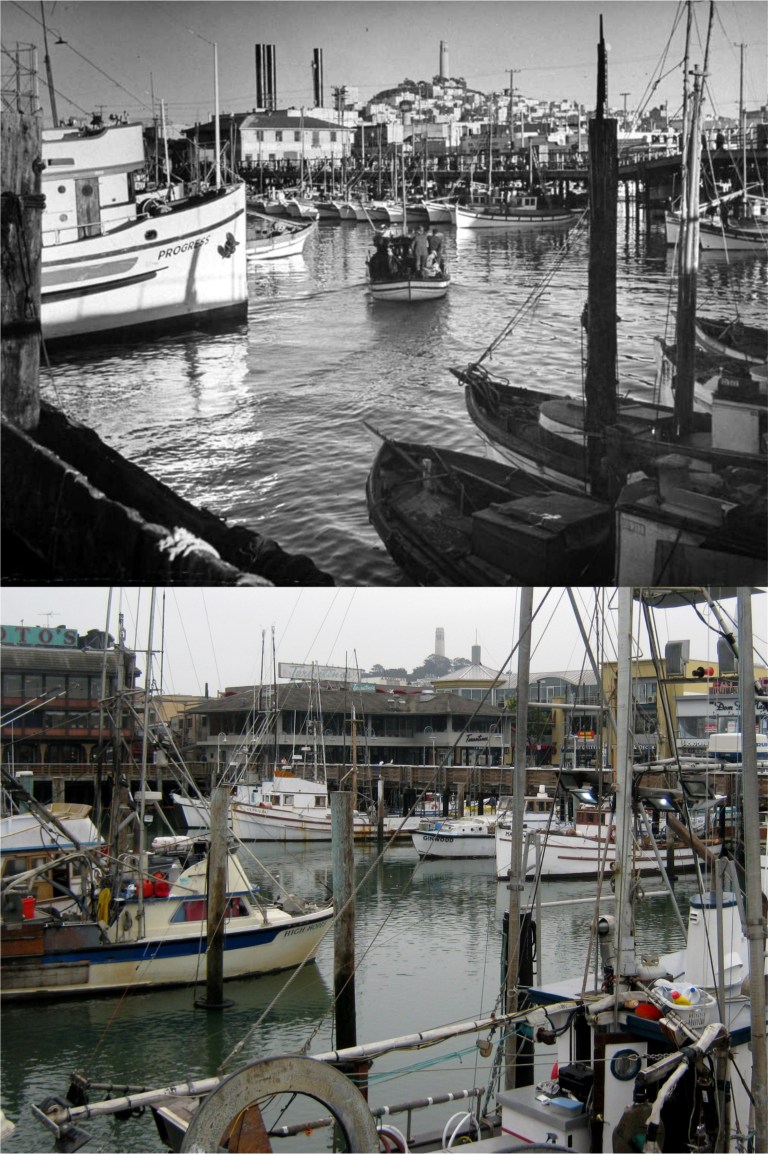 Fishermen bringing in a haul on an early workday morning at Fisherman’s Wharf in the 1930’s: They go out to sea in the middle of the night and bring in their catch long before the tourists get to Fisherman’s Wharf.
 This picture I took for a previous post of a guy selling crabs at Fisherman’s Wharf makes a nice comparison with this 1940’s photo at Fisherman’s Wharf. (SF Chronicle)
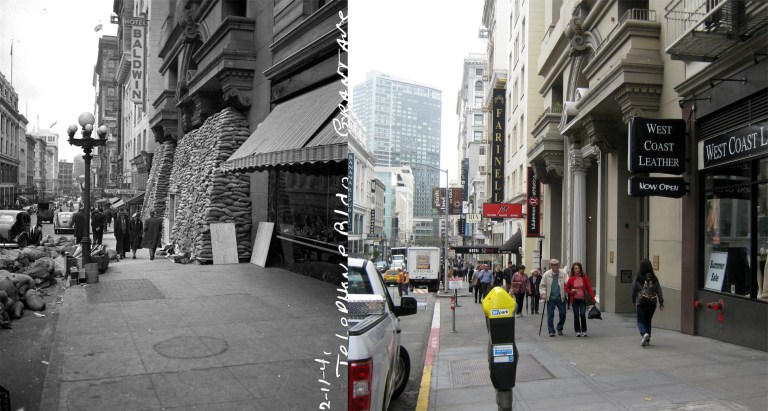 If you don’t think that was a lot of work stacking up those sand bags in front of the old Telephone Exchange Building on Grant Avenue in December of 1941 then you’ve got a job here with me! This building routed most long distance calls in and out of San Francisco at the time, and was considered so important that the sand bags were piled up to protect it from bomb damage just after Pearl Harbor. There was a real concern at the time that San Francisco would be bombed by the Japanese soon.(SF Chronicle)
 A little further down Grant Avenue near Market Street, probably near the same time as the previous picture, some type of delivery work is being done. Maybe they were putting sandbags in front of the wrong building!
 “Working girls” in San Francisco: This is an interesting story I learned of recently. On January 25th 1917 approximately 300 prostitutes stormed the Central Methodist Church at Leavenworth and O’Farrell Streets to confront Reverend Paul Smith, one of the main crusaders against prostitution in San Francisco. “Hell hath no fury like a harlot scorned!” The ladies told the Reverend most of the women needed the money to support their children, and they could not survive on wages they could earn at other work. The confrontation became heated, and also a little fantastic! One of the ladies said that “it was men who were to blame for the prostitutes’ lot in life. It was men who sought out prostitutes and other men who profited from their trade.” When Reverend Smith asked them if they would be willing to do housework, one of the ladies answered, “What woman wants to work in a kitchen?” Although Reverend Smith appeared to be sympathetic, he wasn’t a “forgiving” pastor, and it was clear that the ladies weren’t going to change his mind. A crowd had gathered outside the church as the “fallen angels” stormed out, many of them covering their faces. (Found SF, and the San Francisco Chronicle)
 The San Francisco Chronicle issue of the incident and the “Magdalenes” leaving the church:
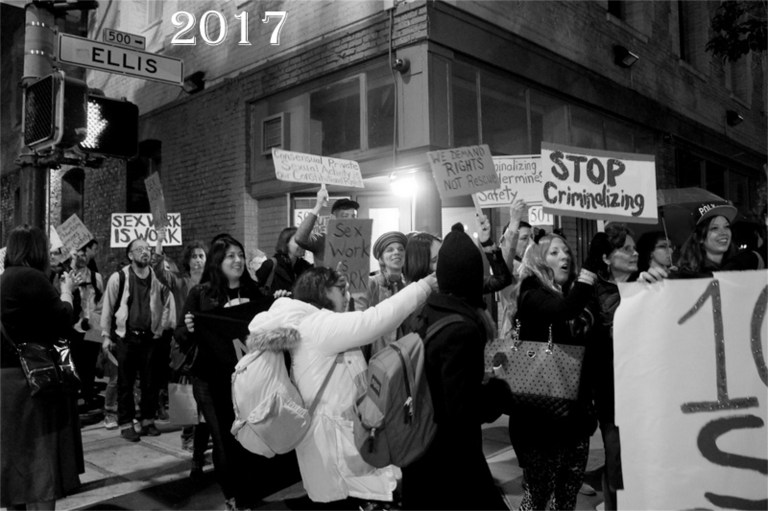 On January 25th 2017, a march was held on the 100th anniversary of the prostitutes’ demonstration. (Nation Reports)
 The demonstrators marched to the intersection of Leavenworth and O’Farrell Streets where the church once stood. (static1.squarespace.com) . Below is a link to the Found SF site and an article about the original demonstration.
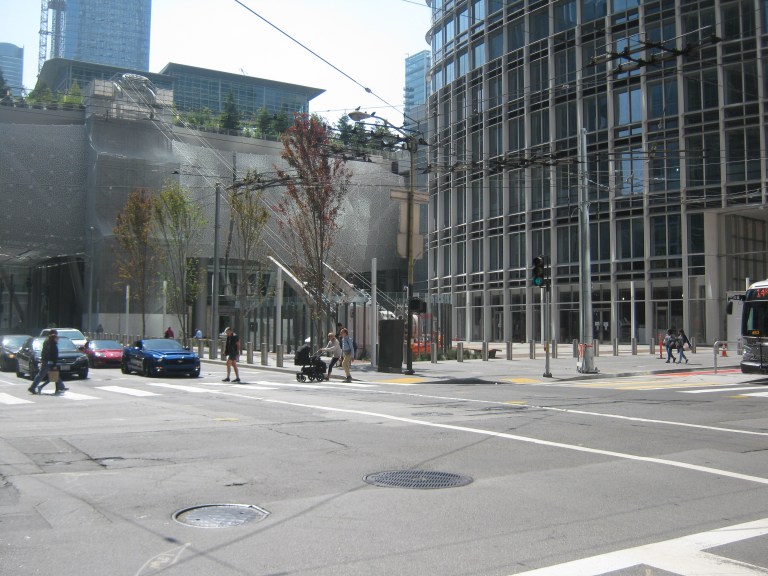 We’ll start at the northeast corner of Mission and Fremont Streets looking toward the two terminals on closing day in August of 2010 and this weekend, as all of these pictures will be.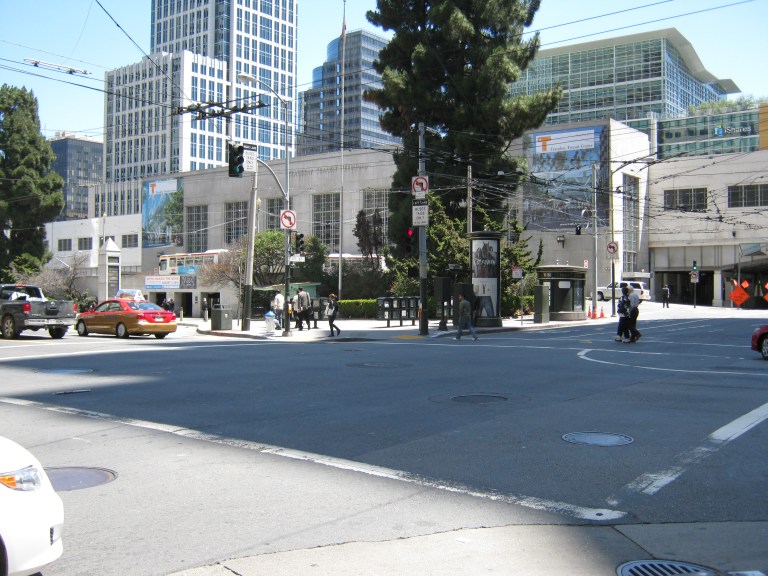
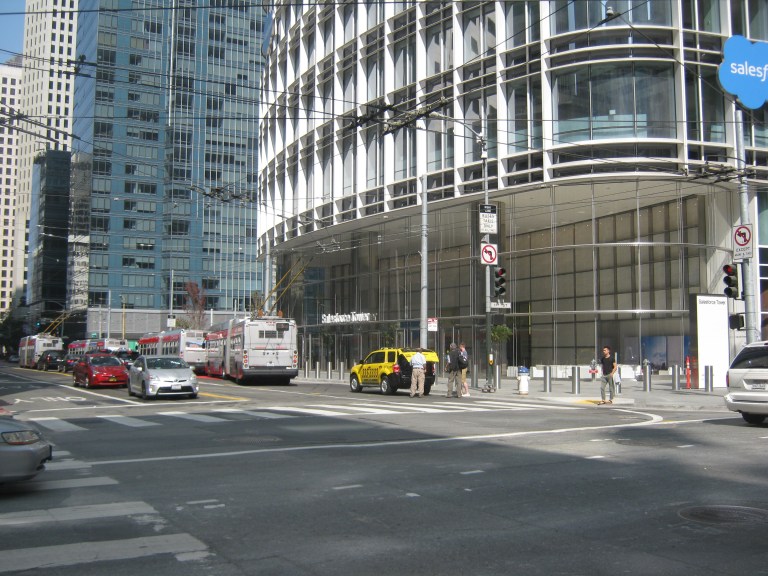 We’ll move down Mission Street one block to the northwest corner of Mission and 1st Streets.
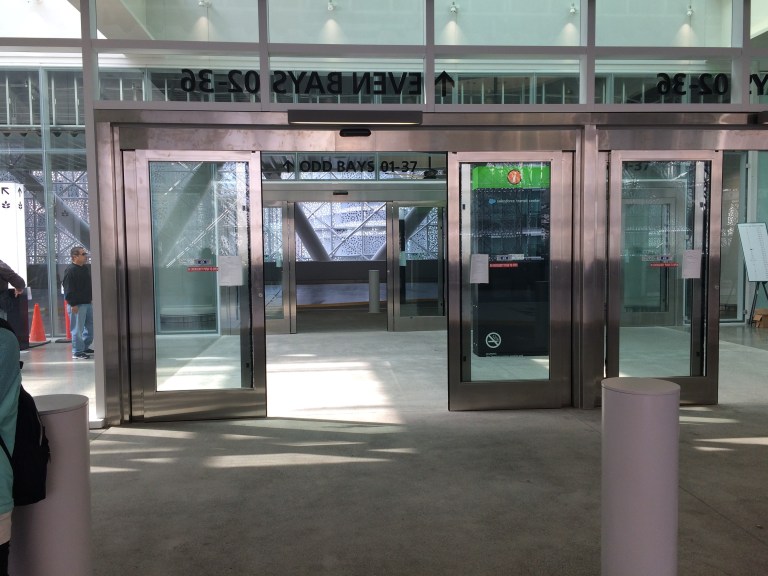
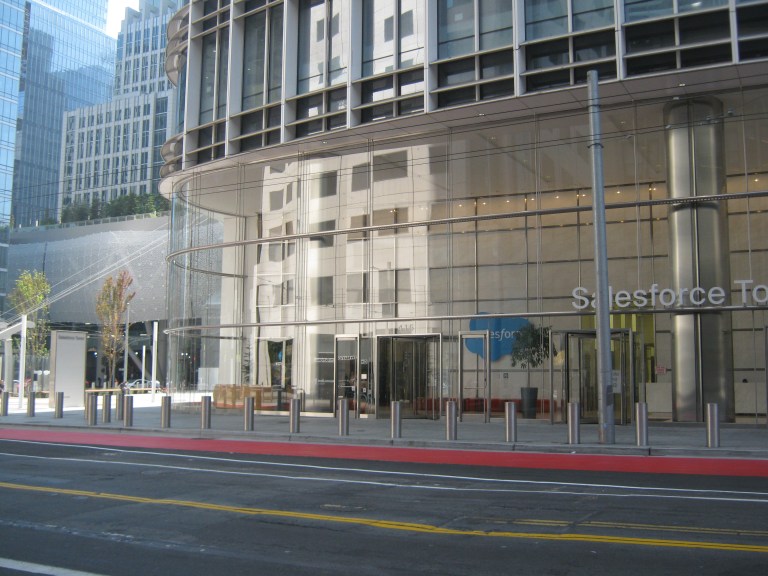
 The main entrance to the Transit Terminal then and now: Although the Salesforce Building and Terminal were built where the old terminal was, the entrance to the new building is a little further back from Mission Street and closer to Fremont Street.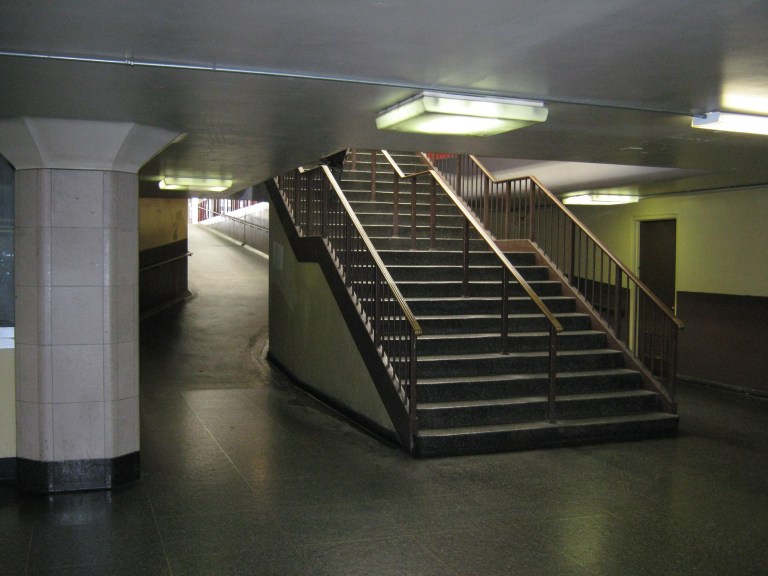
 These are one of the old stairs and ramps that went from the second level to the third floor where buses arrived and departed and today’s escalator to the second level where buses travel to and from the Bay Bridge in the new transit center.
 These were the old benches at street level where you waited for your bus to depart and if you were like me, fell asleep some times and missed it. The stairs in the back took you to the second floor, where you went up to a third level for the buses. The bottom picture is looking down to street level from the escalator that goes to the second level today.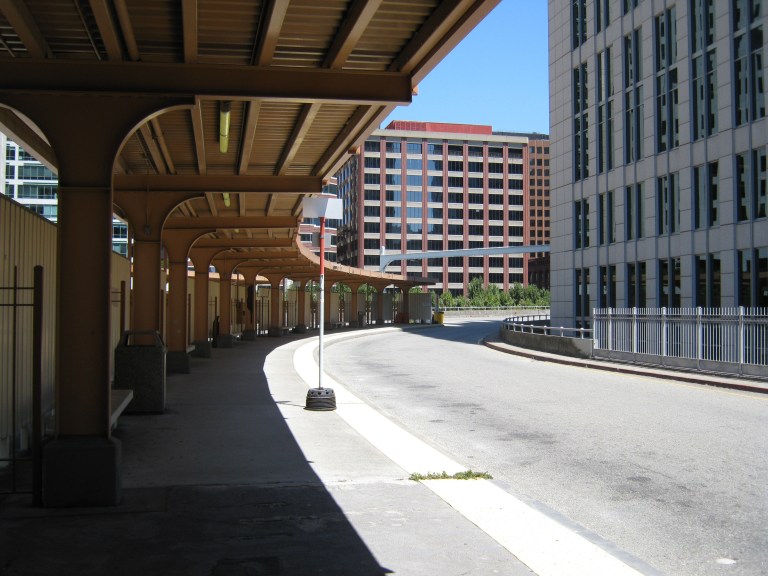
 Buses from the East Bay arrived on the eastern side of the terminal here, and left for the Bay Bridge on the western side of the building. Now, buses arrive and leave on the bus bridge to the Bay Bridge on only the west side shown in the bottom photo.
 This is the western side of the old terminal looking toward the Pacific Telephone Building on New Montgomery Street, and from the park on the roof of the Salesforce Transit Terminal.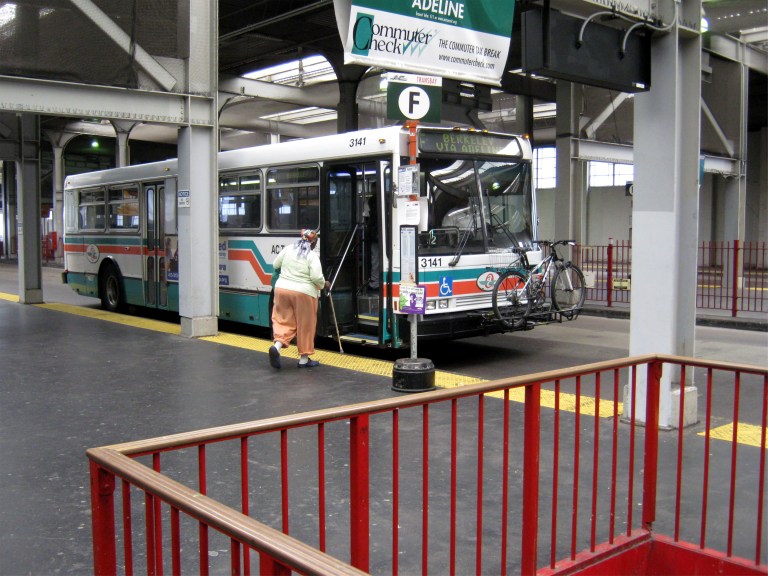
 There wasn’t as many people leaving by bus in 2010 or this weekend, but there will be eventually.
 Getting ready to depart in 2010 and today: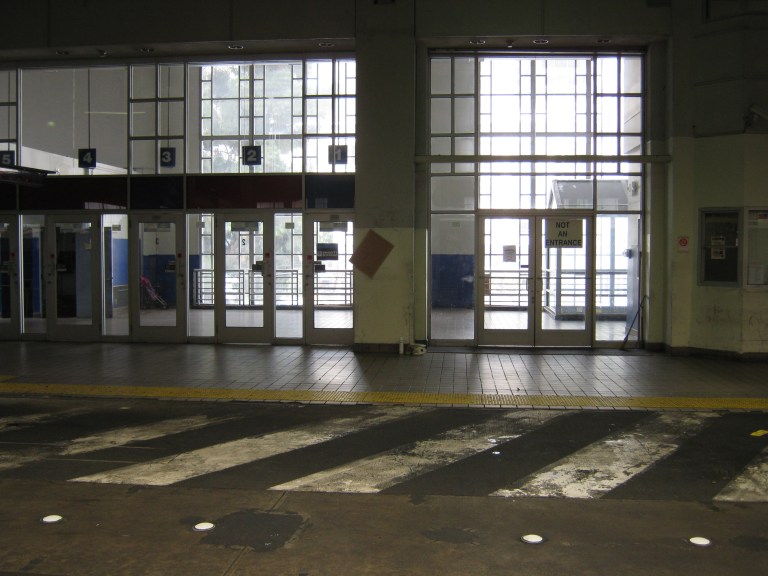
 Both of these images are looking toward the north side of the two terminals. In the old Transbay Terminal picture on top, this was where passengers used to catch the Key Systems Trains that crossed the lower deck of the Bay Bridge.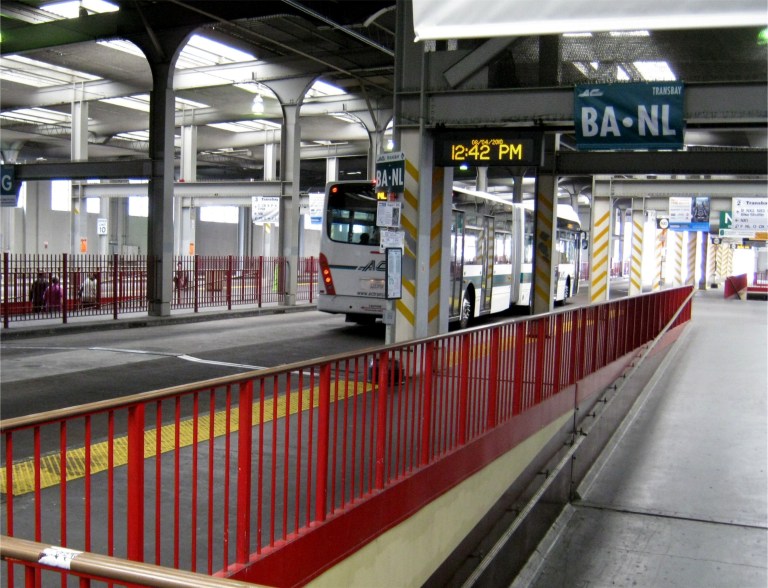
 Two buses off, back across the Bay Bridge: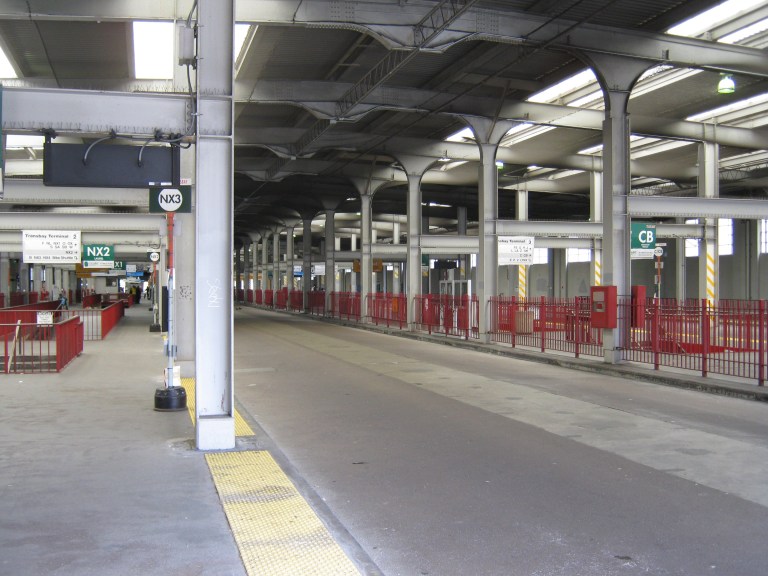
 What was lost and what was gained: I guess the thing to say is that they are and were both beautiful in their way.
 Happy passengers, I hope, arriving at the terminal then and now.
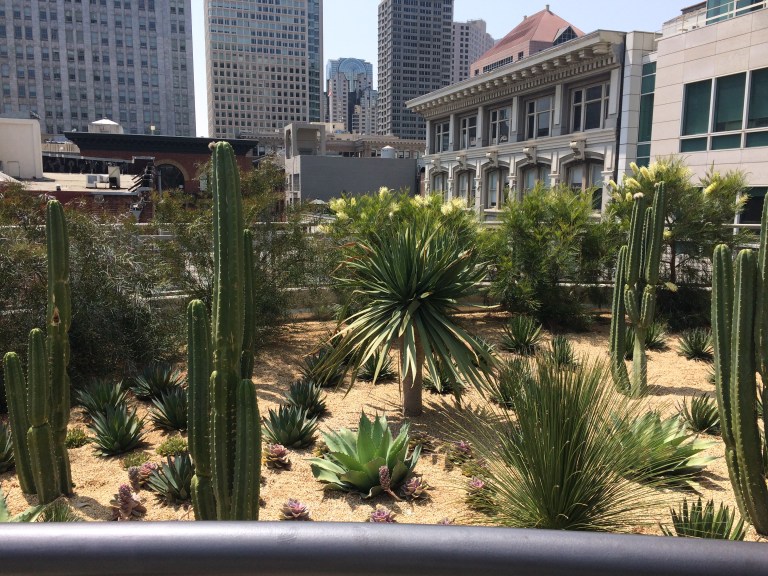 Now let’s look at some of the civic attractions of the two transit terminals. The rooftop park in the new transit terminal is very beautiful, complete with interesting things to see, like the desert garden on the northwestern side of the park.
 And, there’s the incredible Salesforce Tower.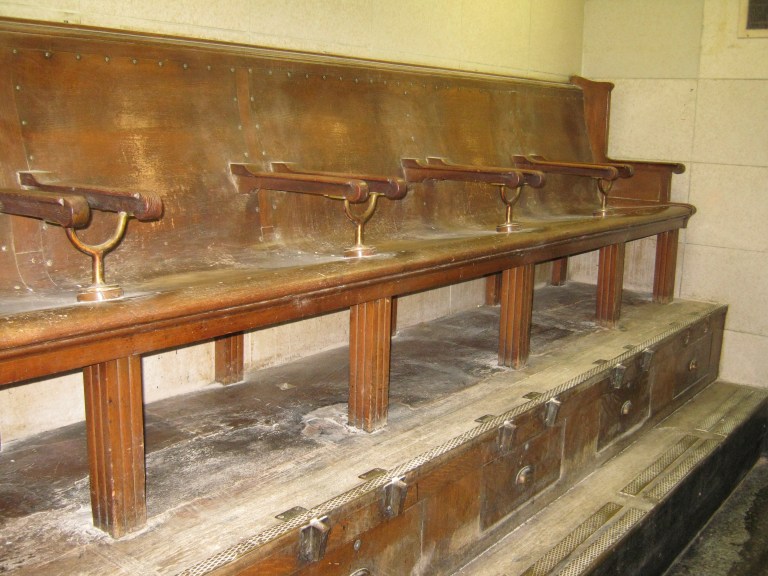
 Of course, there isn’t anything today like the vintage shoe shine stand in the old building. I image, however, that they probably have a more efficient heating system today.
 Also, I didn’t see any ticket booths in the Salesforce Terminal like this one, long closed by 2010.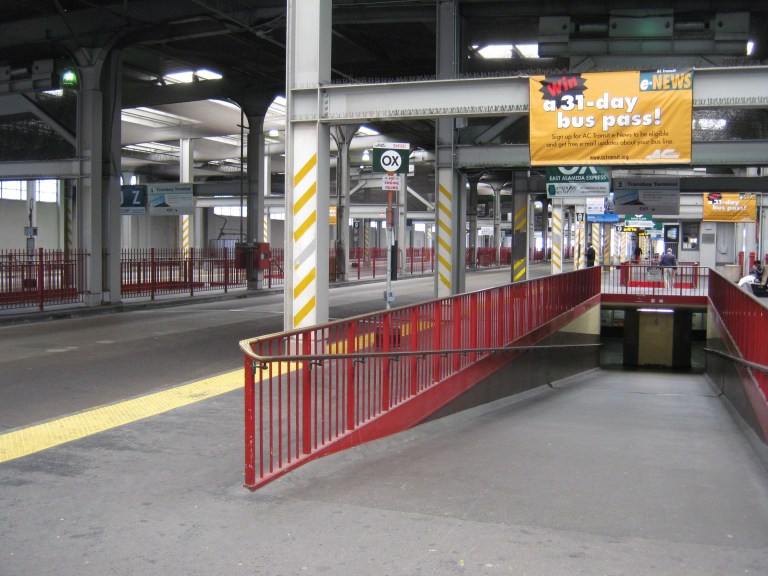
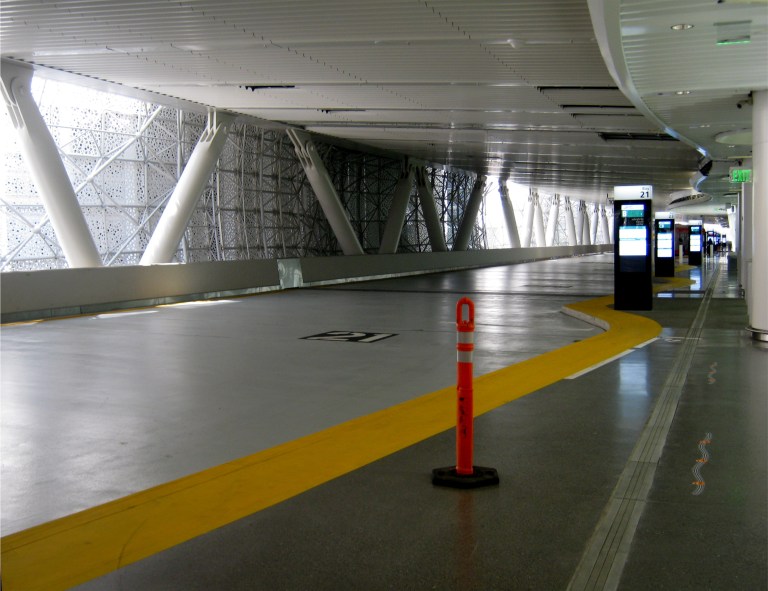 Let’s take a last look at what was, and what is.
 When I came back a few days later in August of 2010, the old Transbay Terminal was closed up forever.
 I walked up the ramp in 2010 where the old streetcars used to arrive, and looked back to Mission and 1st Streets. I thought about all of the people, including friends and I, who came and went here. Buses are starting to come back here now, and a lot more will.
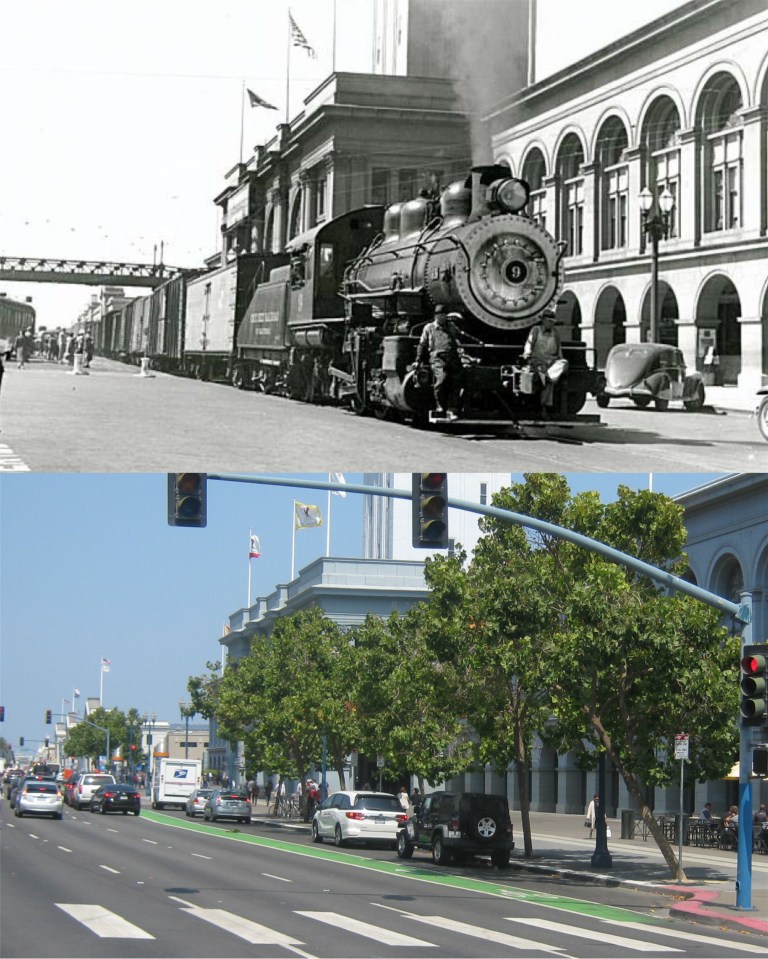 This is at the Ferry Building, where this old Belt Line Rail Service train was passing in the 1940s. It seems so antiquated nowadays! I’m used to the normal traffic you see here these days, like on Naked People on Bikes day. (Vintage picture from SFGate)
 This is looking northeast toward Sansome Street from Market during the 1940s. This is a great picture from Market Street Railway. The blue-green curtained Crown Zellerbach Building blocks out the view of the Shell Building from here today. The building behind the one with the TYPEWRITERS sign in the vintage picture has been remodeled and is the copper colored building behind the Zellerbach Building. The Ferry Building can be seen at the far right in both photos.
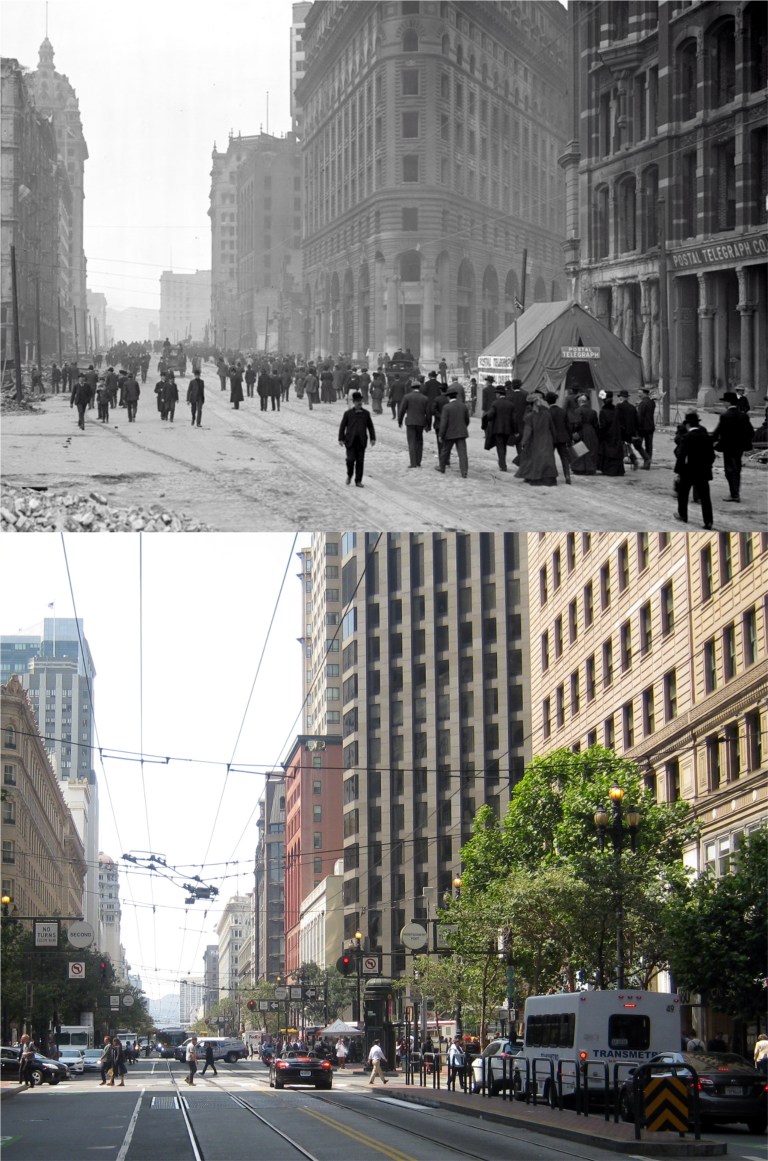 This is Market Street looking west near Montgomery Street just after the 1906 Earthquake and Fire. The damage looks light because the fire that destroyed most of San Francisco hadn’t spread yet. The crowned Call Building and old Palace Hotel are on the far left. The Palace Hotel was destroyed in the fire, but the Call Building survived. The rebuilt Palace Hotel and remodeled Call Building are on the left in my photo, as well. (San Francisco Library History Center)
 This is on 3rd Street, south of Mission Street near Minna, in 1939. The Call building is in the background in both pictures. The building to the right of the WORK CLOTHES sign is in the center of my photo, as well, and is having some type of facelift now. (retrosnapshots.com)
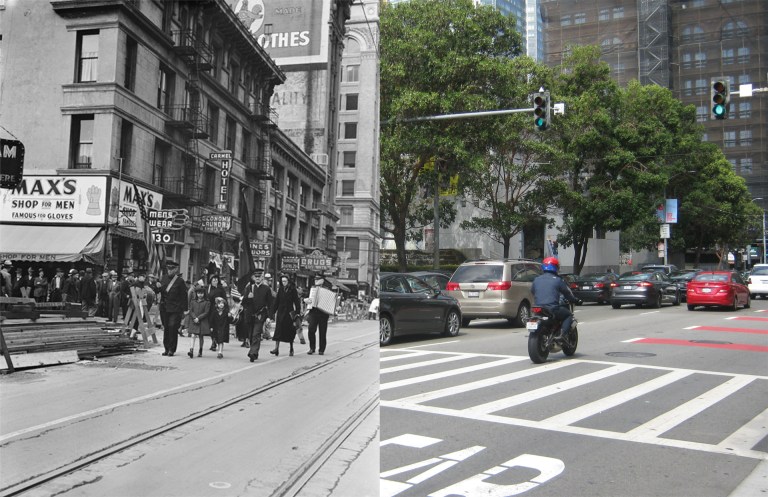 A Salvation Army Band is marching along the same spot as the previous photo, and was probably taken on the same day in 1939. The buildings directly behind the band have been demolished and the location is now part of the Yerba Buena Gardens. (retrosnapshots.com)
 Looking west from the north side of Market Street toward the old Humboldt Building in the late 1960s: (Vintage Everyday)
 This is an antiwar protest near Union Square on Post Street, looking east toward Stockton Street, at the end of the 1960s. That was probably a police motorcycle on fire. (Vintage Everyday)
 I parked in Pier 45 at the Wharf. Sometimes I can get a parking pass there, and that’s worth gold in the summer for parking at Fisherman’s Wharf. This is the view from the west side of Pier 45 today and in a rather blurry image from 1935. I probably could have got a perfect line up, but I didn’t want to cut out the Ghirardelli Tower on the right in my picture.
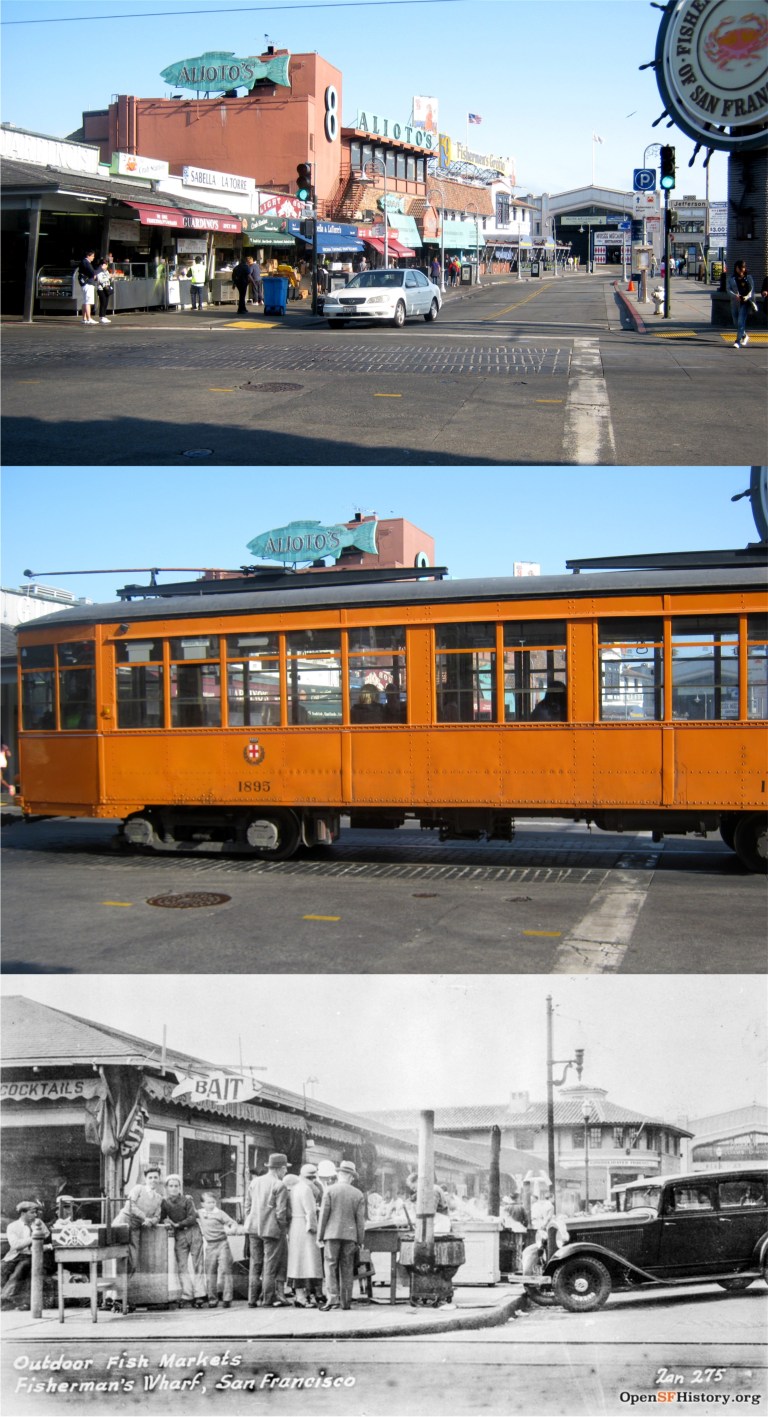 A cable car was my first choice, but it was 8:30 AM when I got to Fisherman’s Wharf, and the cable cars don’t run until 10:00 AM. I was taking a couple of pictures at Jefferson and Taylor Streets when an inspiration from Milan, Italy, the old #1895 streetcar built in 1928, rattled past. The bottom picture is the same spot in 1937.
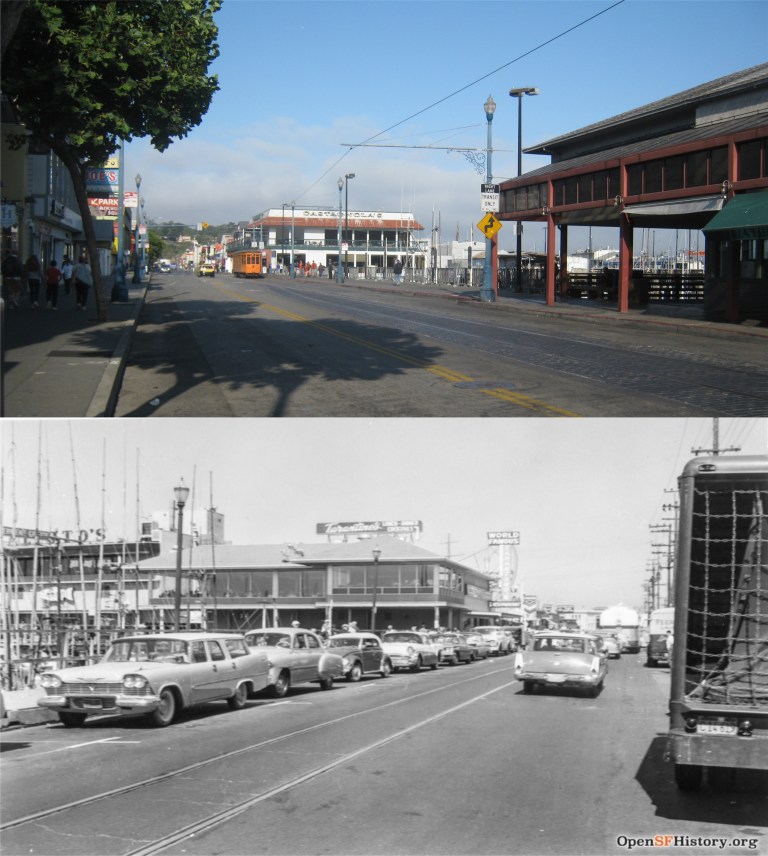 The F Line of vintage streetcars that travel along the Embarcadero and Market Street was running, so I figured that if I ran fast enough I could catch it. This is a reverse then and now looking to and away from Taylor street past the Fisherman’s Wharf Lagoon on Jefferson Street today and in 1960.
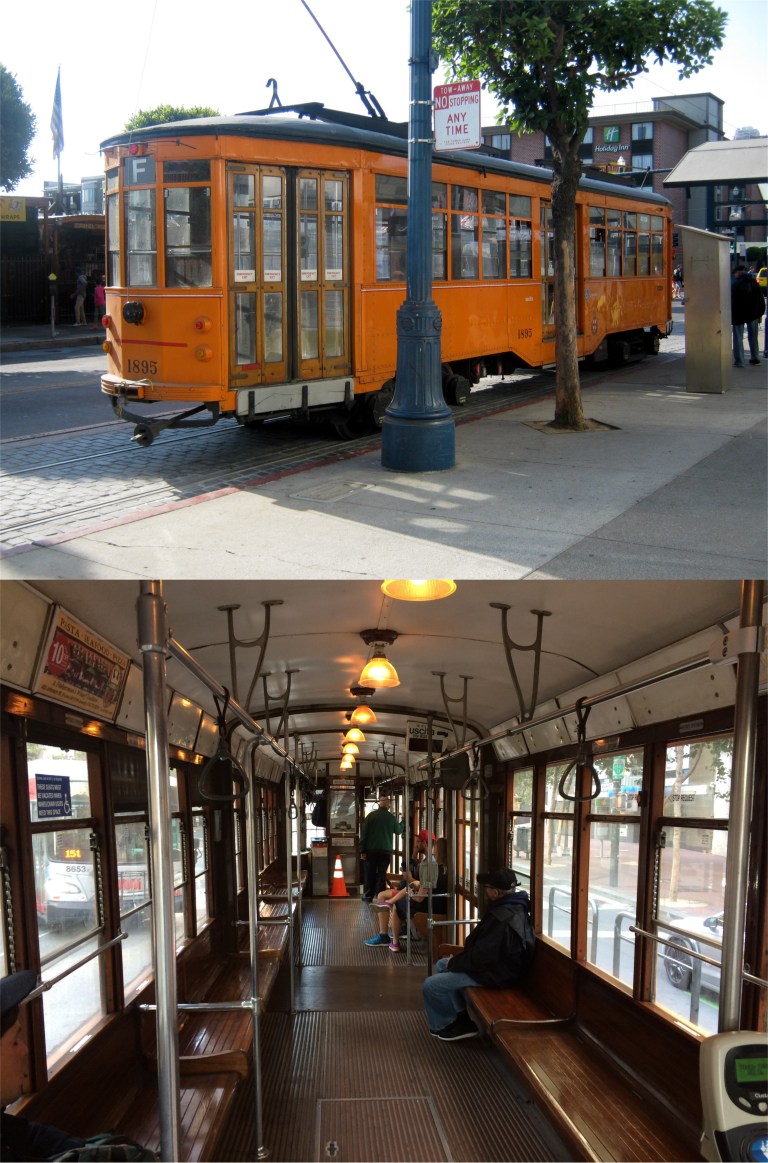 How was I to know that the motorman was going to take a ten minute brake at the stop? Oh, well, good exercise! I stood at the back of the car where the letter F is to get my pictures. You can see from the bottom photo there aren’t a lot of people heading away from the Wharf in the morning. Before long, “Clang, clang, clang, went the trolley.” and I was off, sans a high-starched collar and high-topped shoes like Judy Garland wore.
 This is where Beach Street approaches the Embarcadero today and in 1930. Notice the Eagle’s Restaurant. When Pier 39 was demolished in 1978 for the amusement center that’s there today, they decided to save the old café, which was going to be torn down for a garage, and moved it across the street to the second story of Pier 39. It’s the white peaked building in the right center of my picture.
 We’re rolling down the Embarcadero past Pier 17, where the Exploratorium is now housed. The bottom picture is Pier 17 seen from Telegraph Hill in 1957. (San Francisco Library History Center)
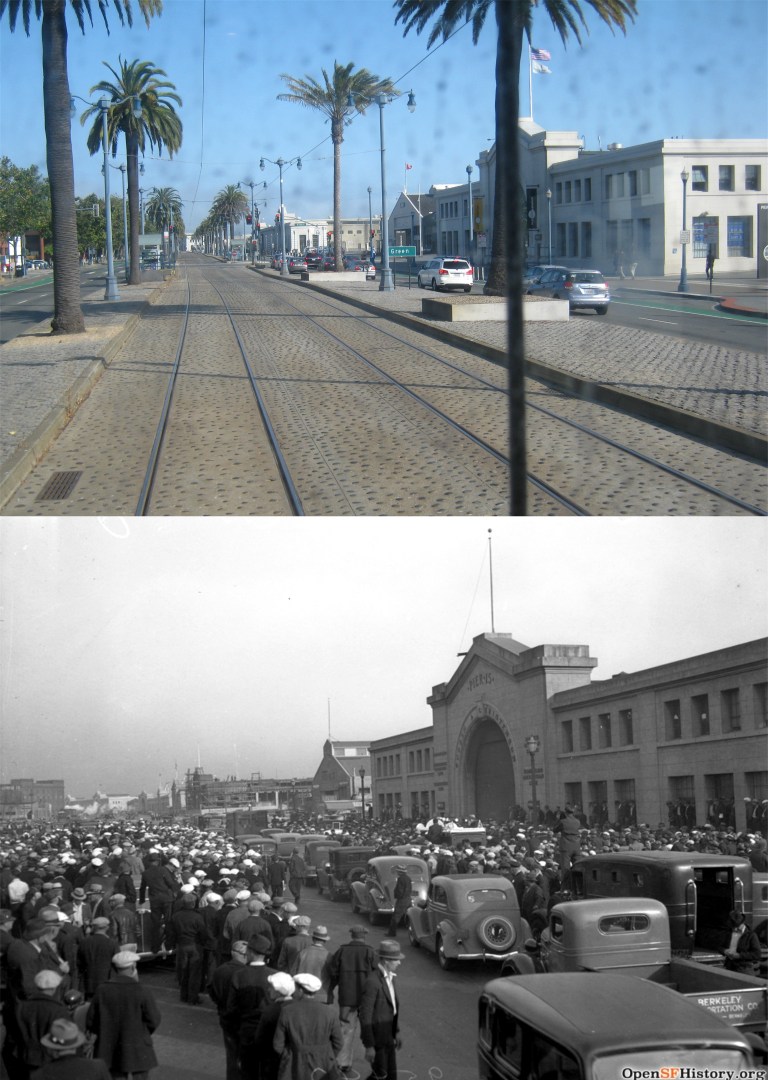 We’ve passed Pier 15 and Green Street, where an organized labor strike was happening in 1937 in the bottom photo.
 This is where Broadway comes into the Embarcadero looking toward Telegraph Hill. The bottom picture was taken just after the 1906 Earthquake and Fire.
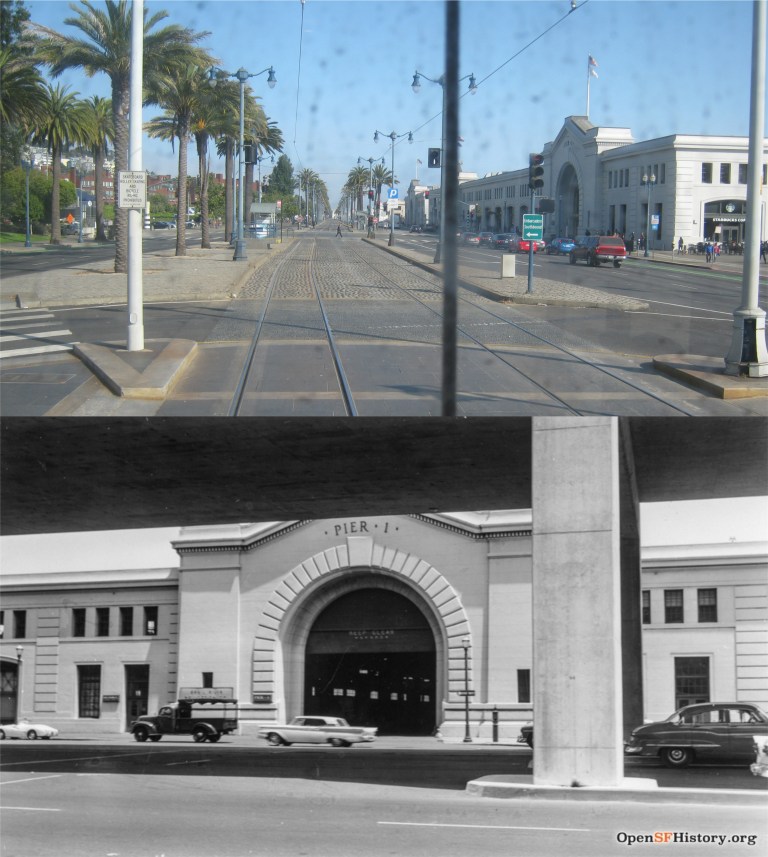 Now we’ve passed Pier 1 as we near the Ferry Building. If we were at this spot in 1960, like in the bottom picture, we’d be directly under the Embarcadero Freeway.
 As we rattled past the Ferry Building, something inside my subconscious mind was telling me to keep my head and arms inside the car. The bottom picture was taken in 1905. Look at all of the streetcars in front of the Ferry Building. They look like cable cars but they’re not; they only have two tracks and no middle slot.
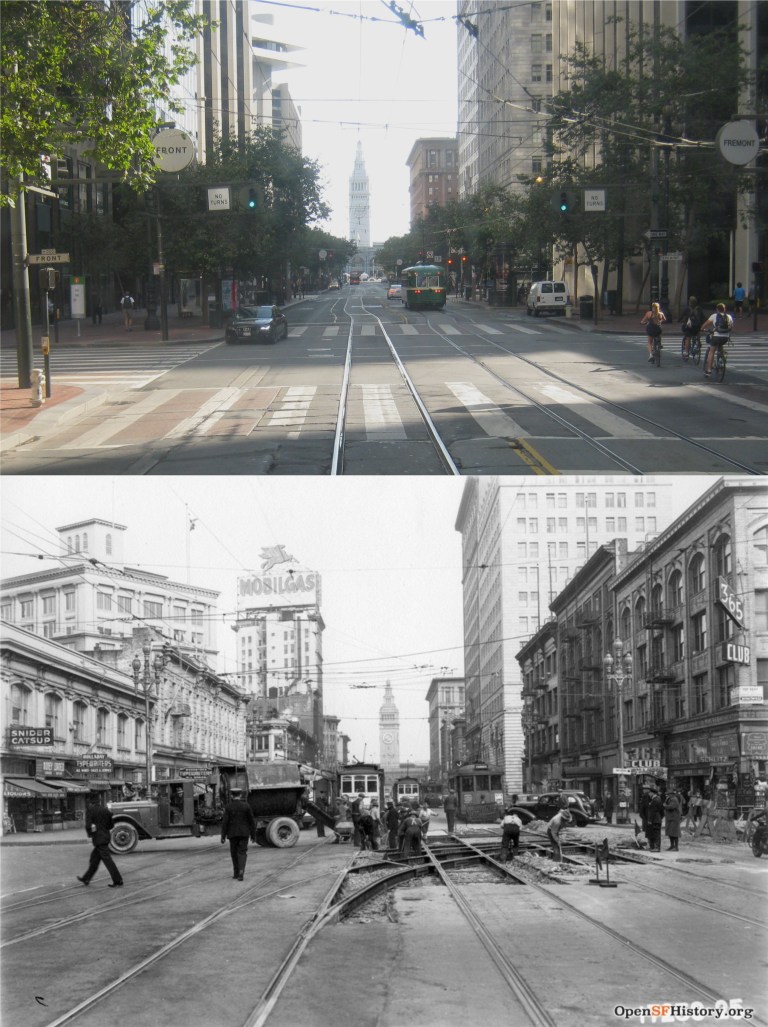 When we rounded the turn to Market Street I got off where Front and Fremont Streets merge into Market to head over to see the new Trans Bay Terminal, but that idea didn’t fly! “There are 894,363 people in the naked city” and every one of them decided to visit the new transportation center too, while all of the out-of-towners were at the Outside Land Concert. I’ll get around to it. The bottom photo was taken at this spot in December of 1938.
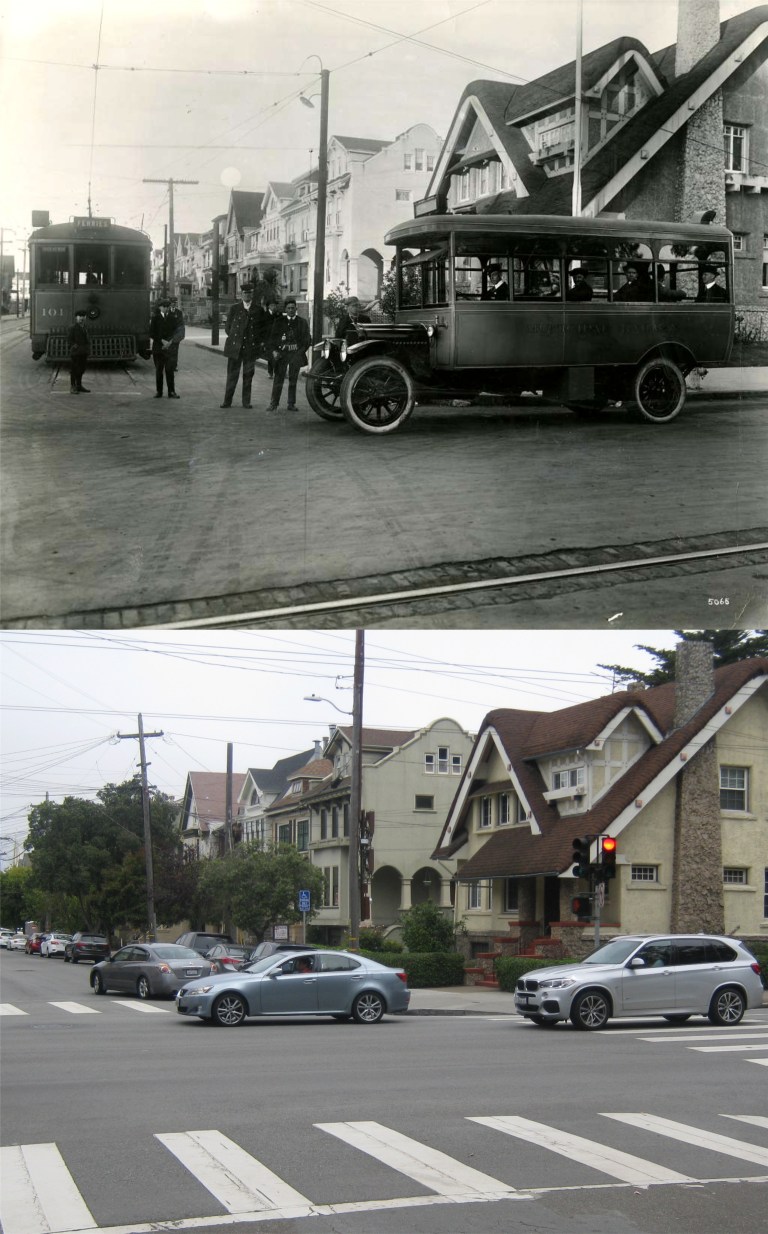 Fulton Street: A streetcar and a motor bus at Fulton and 10th Avenue next to Golden Gate Park around 1920. I’ll bet MUNI would like to have that in their vintage streetcars and buses collection! (SFGate)
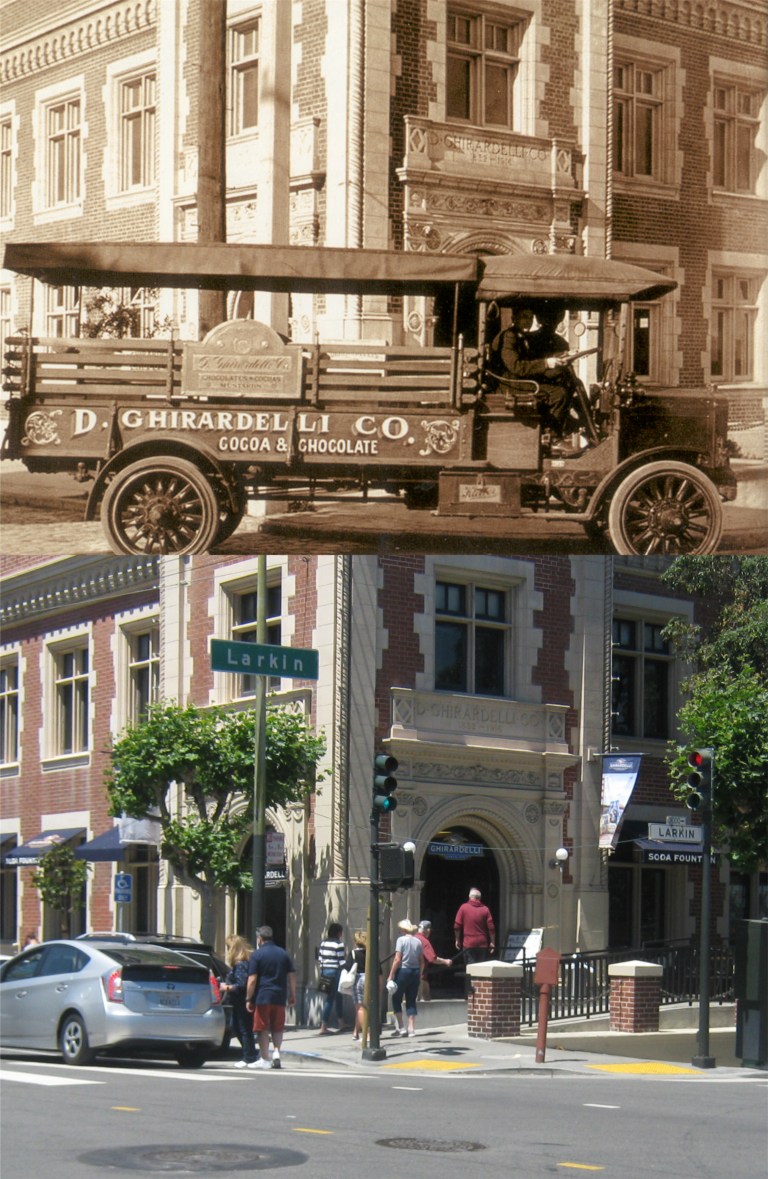 A chocolate truck at the Ghirardelli Building: This was taken at Larkin and North Point Streets, probably around the same time as the previous picture:
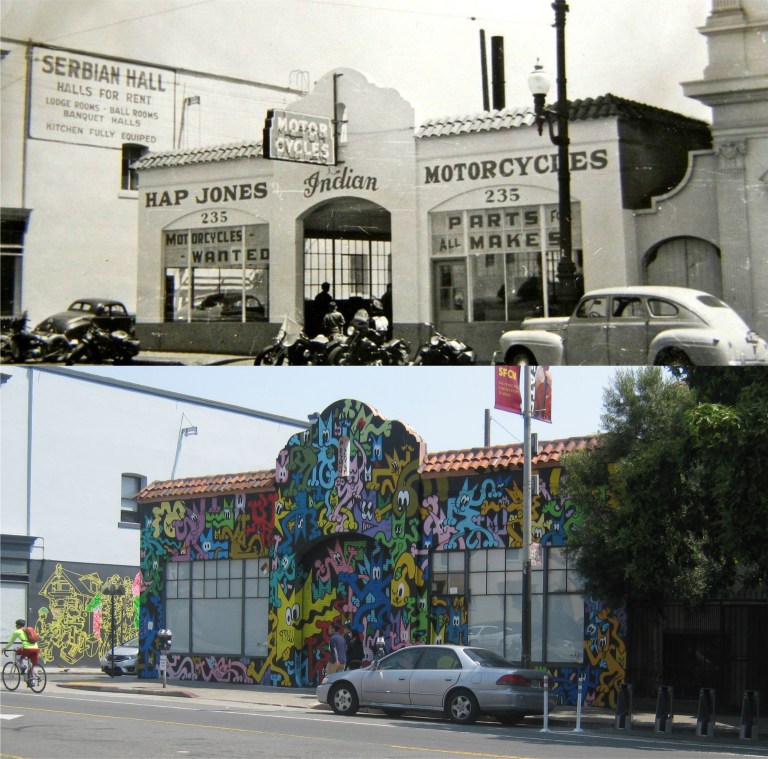 Hap Jones legendary motorcycle dealership on Valencia Street, south of Market Street in the 1940’s. Hap opened his motorcycle sales business here in 1937. The motorcycle shop is gone now, and the building certainly does have a different look today! I hesitate to admit it, but I like it! (Imageshack.com)
 Market Street at Grant Avenue looking east on August 14th 1945: San Francisco celebrates VJ Day ending World War Two. Next week will be the 73rd anniversary of this day. (San Francisco Library)
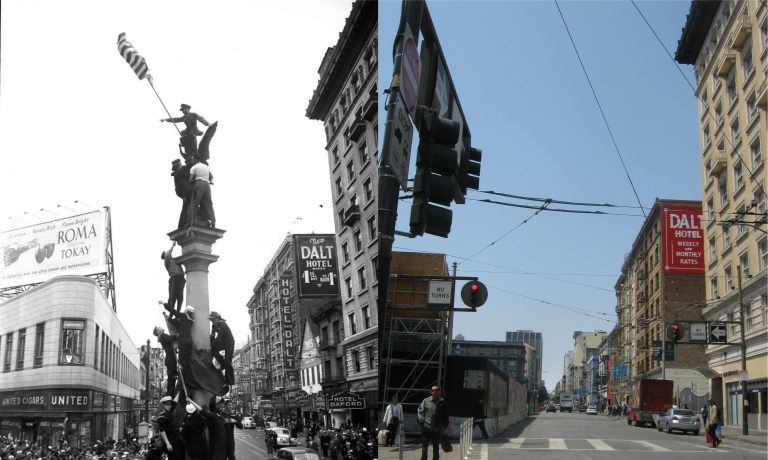 Turk Street Looking west from Mason, August 14th 1945: On the same day as the previous picture revelers climb the Winged Victory Statue that used to be about where I took the modern picture from. The triangle shaped building on the left in the vintage picture has only recently been demolished.
 The Winged Victory Statue is now on the corner of Market and Montgomery Streets.
 A cable car heading north on Mason Street near Greenwich in a Charles Cushman picture taken in 1957:
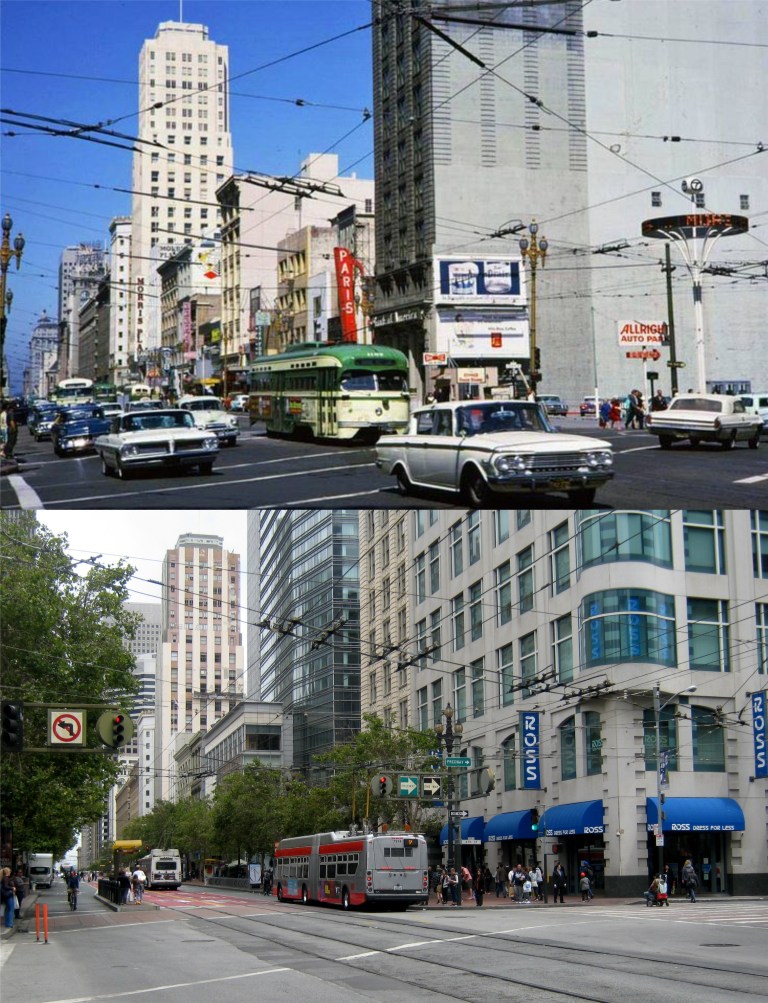 Market Street looking east near 4th Street in the mid 1960’s:
 Another view of Market Street looking east in 1967: These were taken between 4th and 5th Streets. That’s a lot of buses! I only got one in mine. (SFGate)
 Polk Street looking north from California Street in 1974: Mug Root Beer ads were on MUNI buses all over town back then, including one in a scene from the 1971 film ‘The Organization’ starring Sidney Poitier. (SFGate)
 San Francisco Film Locations Then & Now