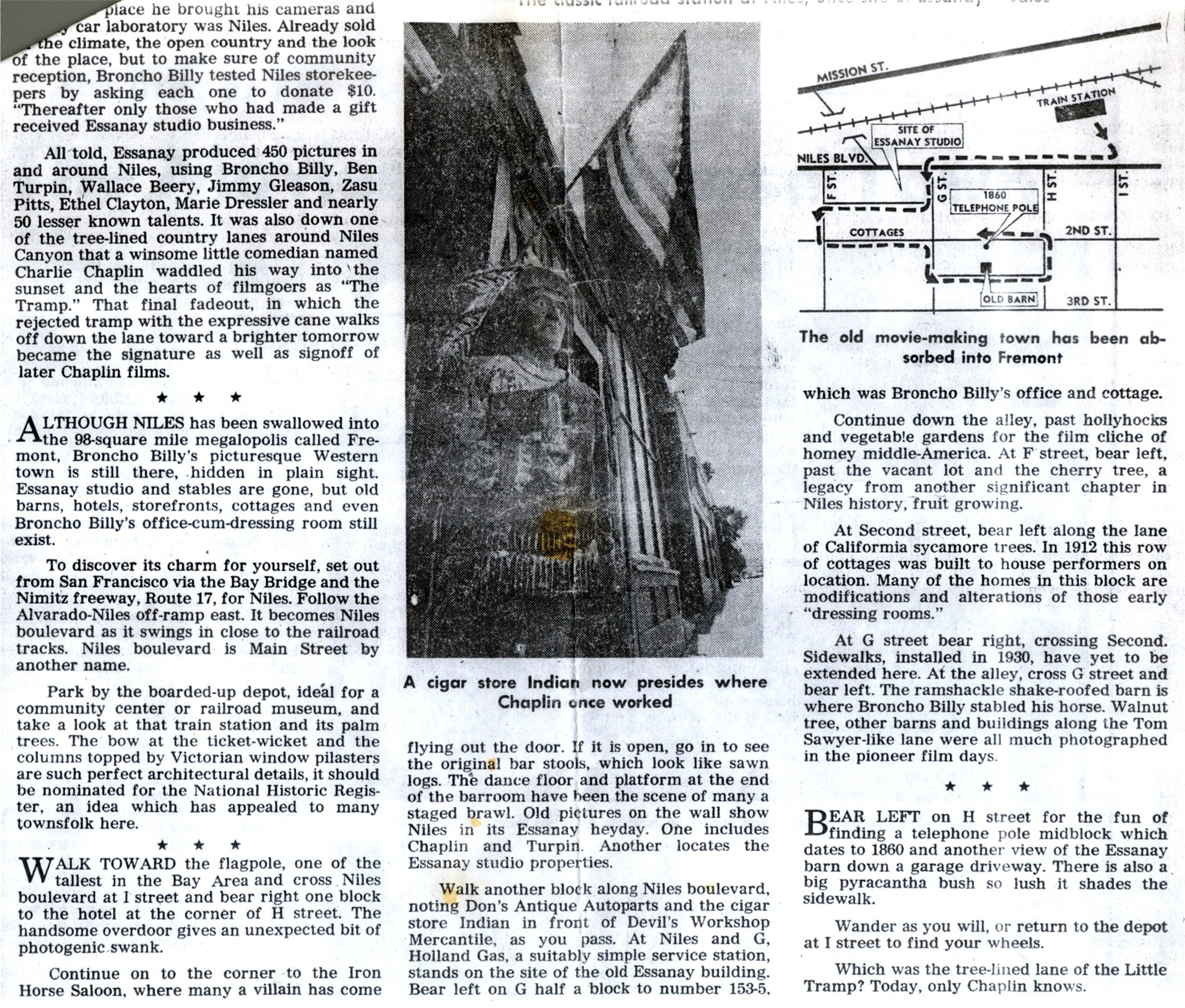
Margot Patterson Doss was a columnist who wrote wonderful articles for the San Francisco Chronicle under the title of ‘San Francisco at Your Feet’ and later in her career ‘The Bay Area at Your Feet’. In 1978 she wrote about the history of movies in Niles in her column entitled ‘The Movies’ One-Horse Town’. There wasn’t a lot of information available at that time about the history of Niles, and the article was a real treat for me. Margot’s articles were always a walking tour, complete with map, and I took her walking tour long ago and kept the article. I retook her Niles walk again this week. Some of this chapter of hers’ is outdated now, but it’s still the best single article I’ve seen concerning the film history of Niles. Margot Patterson Doss died in 2003; let’s take an internet walk with her around Niles and I’ll post some of her comments in brackets.

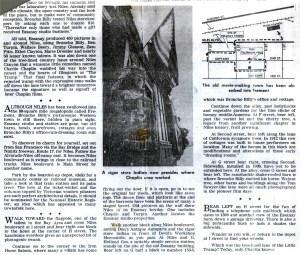
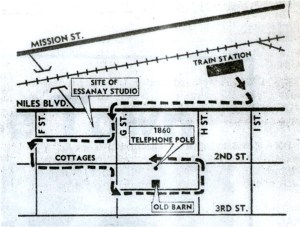
Much of the historic buildings in Niles are temporarily closed now due to the COVID-19 Pandemic, and a lot of the places I love to visit can only be seen from outside right now. Like Margot did forty two years ago, we’ll start at the train station.

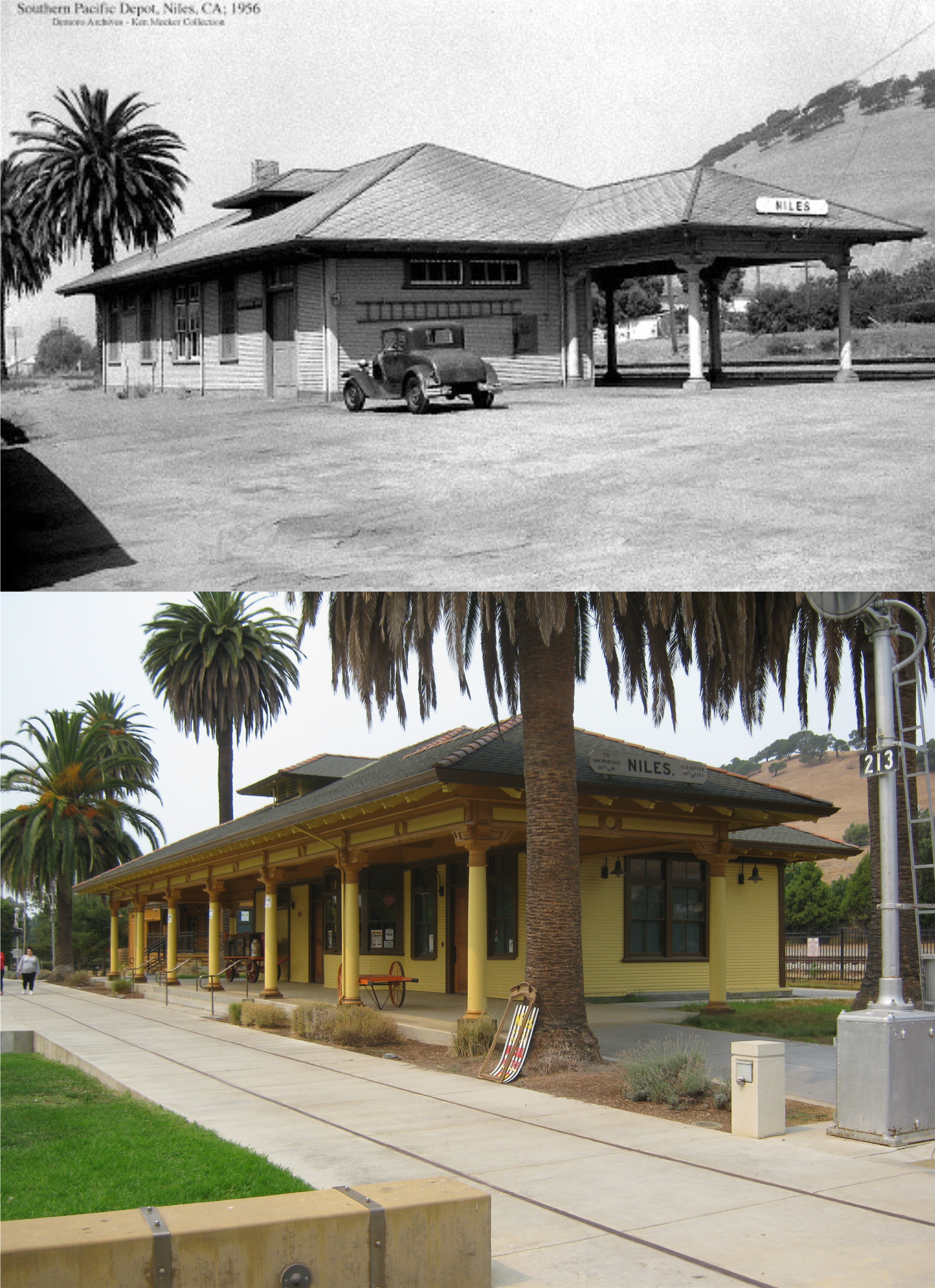
{Park by the boarded up depot, ideal for a community center or railroad museum, and take a look at that train station and its palm trees. The bow at the ticket-wicket and the columns topped by window pilasters are such perfect architectural details, it should be nominated for the National Historic Register, an idea which has appealed to many townsfolk here}
The Train Station, which was moved to Mission Blvd. in 1982 and in 2009, back to the spot where it originally stood when it was built in 1911, is a railroad museum now.
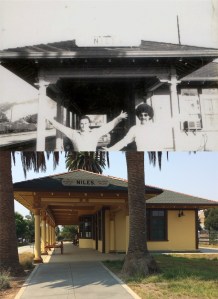
My older brother David and I posed in front of the train station when it was boarded up before Margot wrote her article. You can tell the vintage picture was long ago because of my brother’s hair.

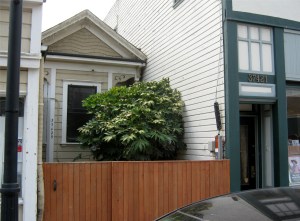
{Walk another block along Niles Boulevard, noting Don’s Antique Autoparts and the cigar store Indian in front of the Devil’s Workshop Mercantile, as you pass.}
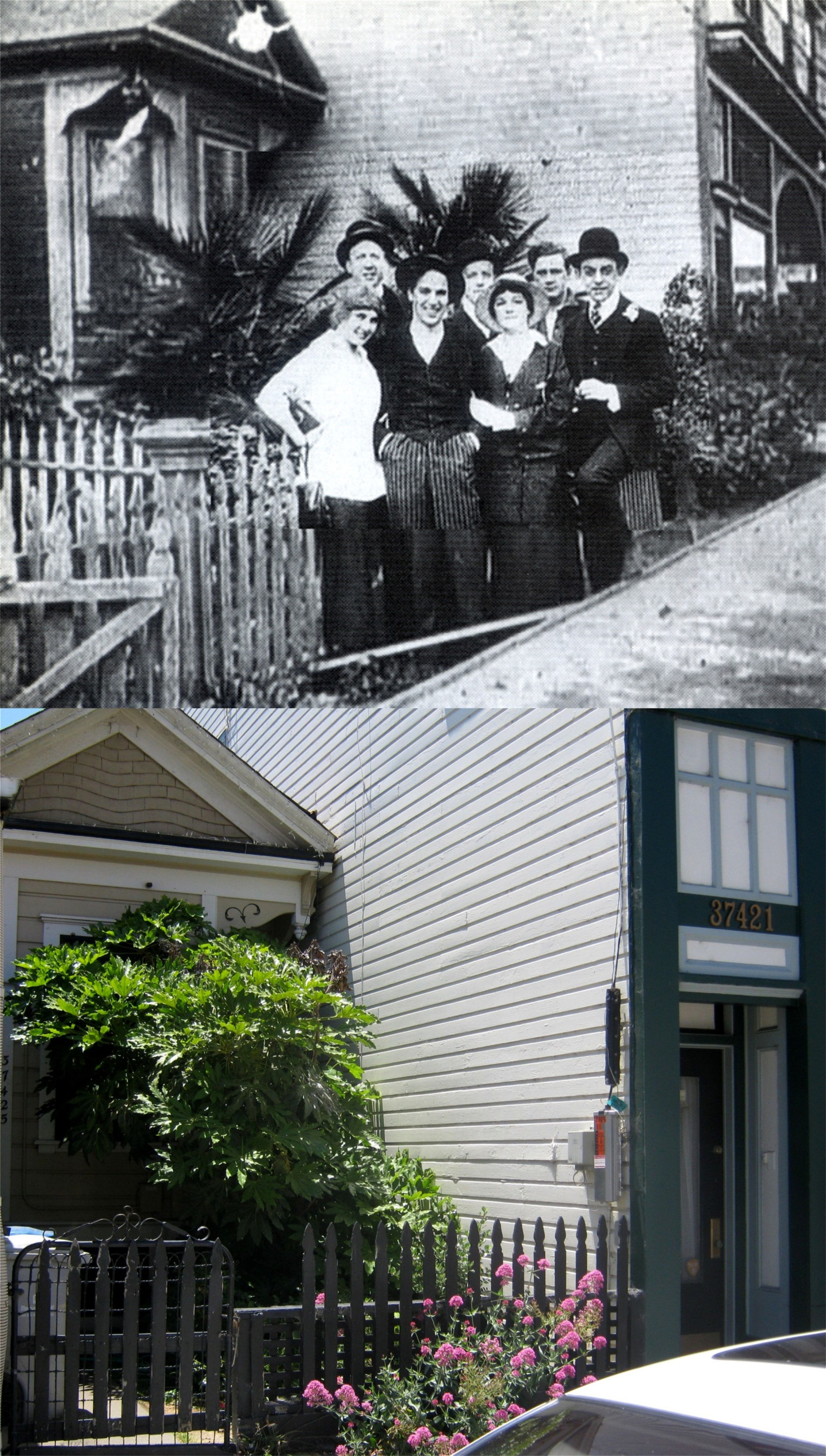
I think Don’s Antique Autoparts is still there, but the cigar store Indian is gone. Two things Margot doesn’t comment on along this stretch because they may not have been known to her then, are the old movie theater where Charlie Chaplin premiered the five movies he shot in Niles and the house where Edna Purviance, Chaplin’s leading lady in the films he shot during his stay in Niles, used to live in. They’ve replaced the old fence now that was in front of Edna’s house when I took the top comparison in 2016.
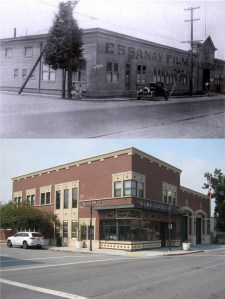
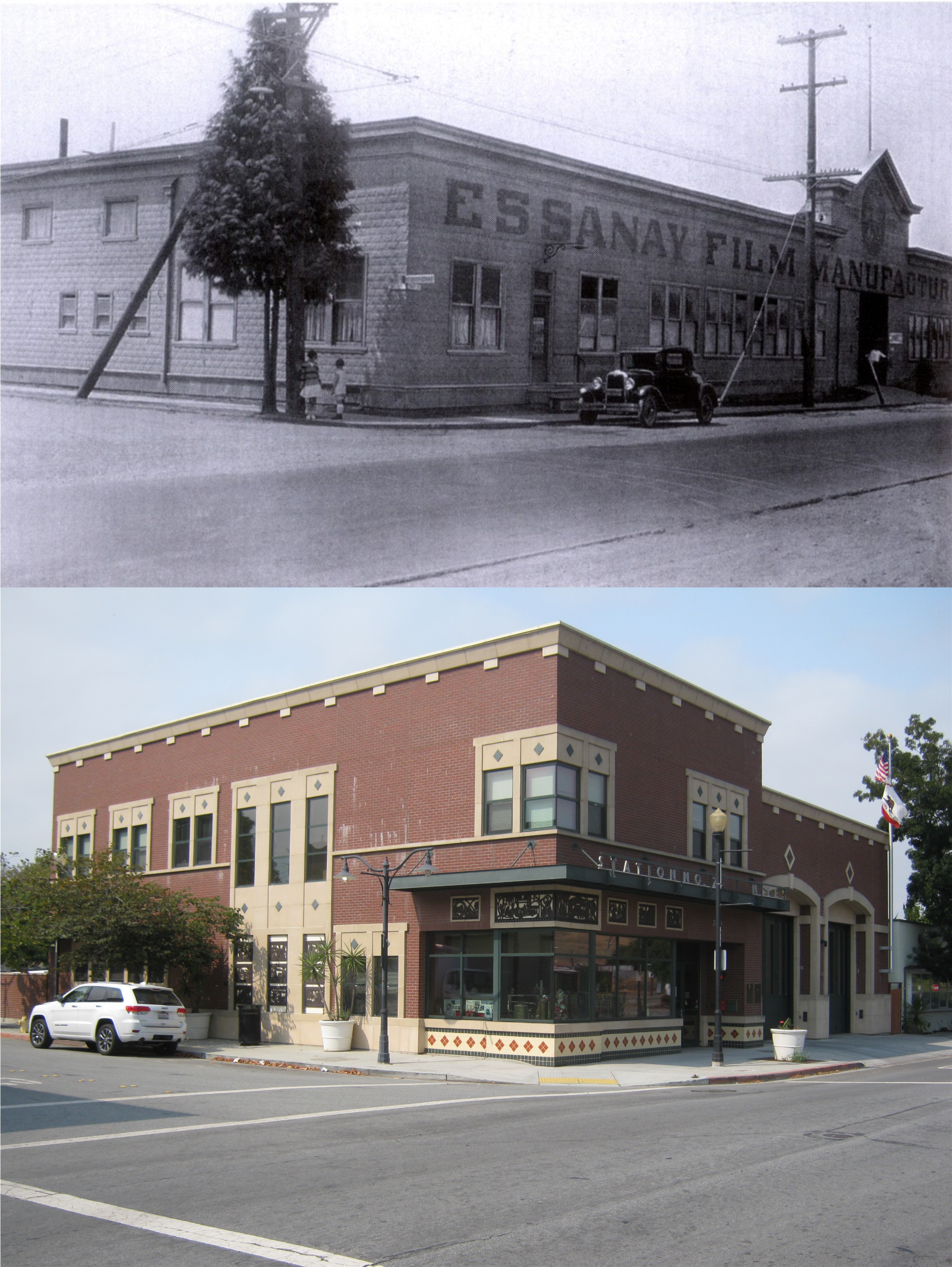
{At Niles and G, Holland Gas, a suitably simple service station, stands on the site of the old Essanay building. All told, Essanay produced 450 Pictures in and around Niles, using Bronhco Billy, Ben Turpin, Wallace Beery, Jimmy Gleason, Zasu Pitts, Ethel Clayton, Marie Dressler, and nearly 50 lesser known talents.}
Holland Gas is gone now, and a fire station is now on the corner where the Essanay Movie Studio once was. The vintage photo of the studio taken in the late 1920s after the studio closed is from John Bengtson’s book ‘Silent Traces’.
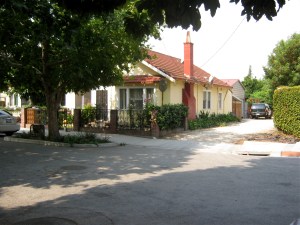
{Bear left on G half a block to number 153-5, which was Broncho Billy’s office and cottage.}
This is where Broncho Billy stayed in Niles today. You’ll read more about him shortly.

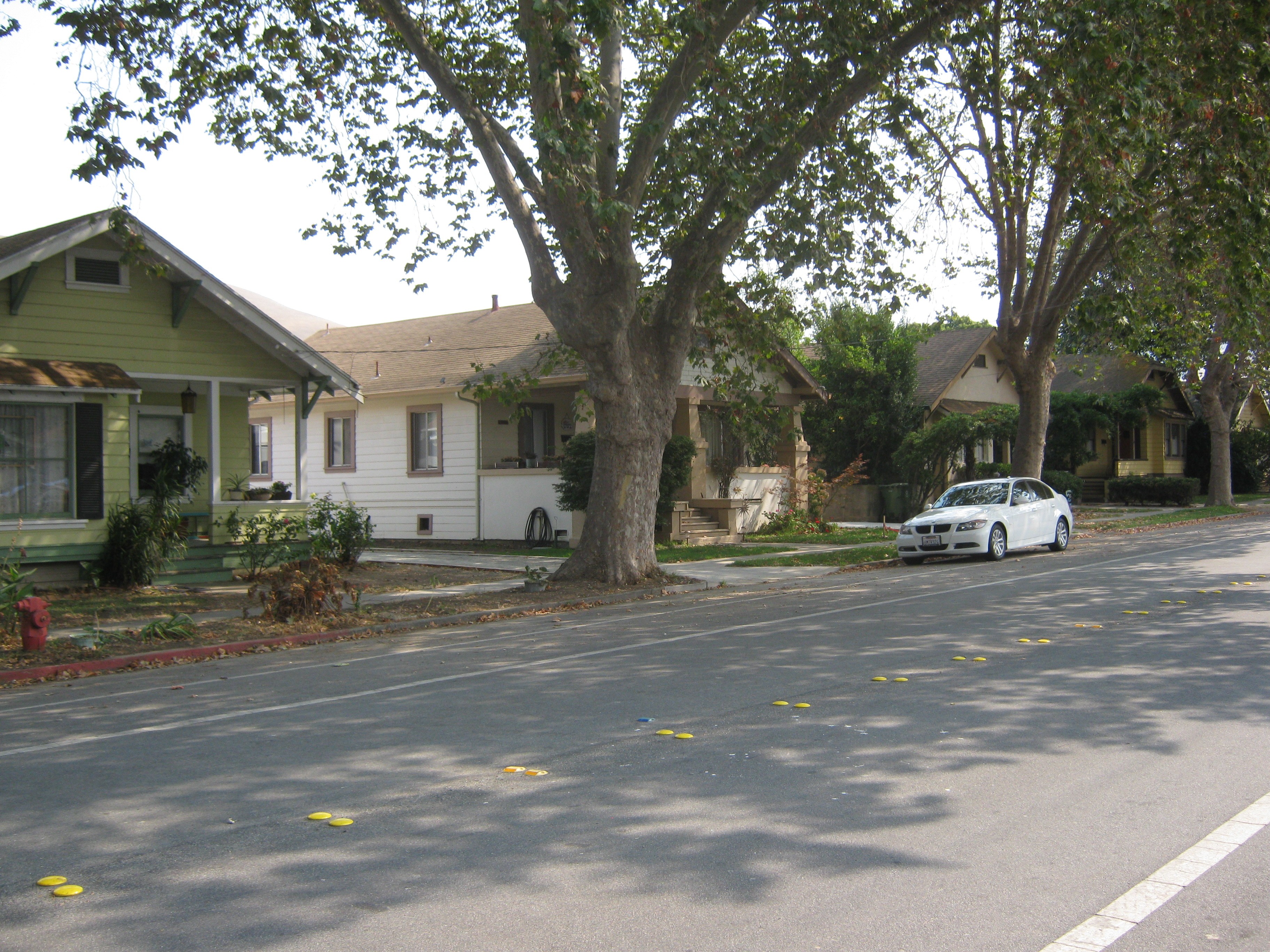
{At Second Street, bear left along the lane of California sycamore trees. In 1912 this row of cottages was built to house performers on location. Many of the homes in this block are modifications and alterations of those early “dressings rooms.”}
This is the row of cottages today.

{At G Street bear right, crossing Second. Sidewalks, installed in 1930, have yet to be extended here.}
42 years after Margot’s article, and they still haven’t extended sidewalks here.
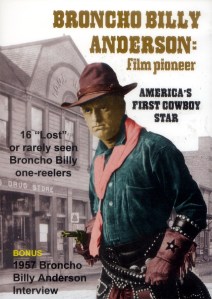

{At the Alley, cross G Street and bear left. The ramshackled, shake-roof barn is where Broncho Billy stabled his horse.}
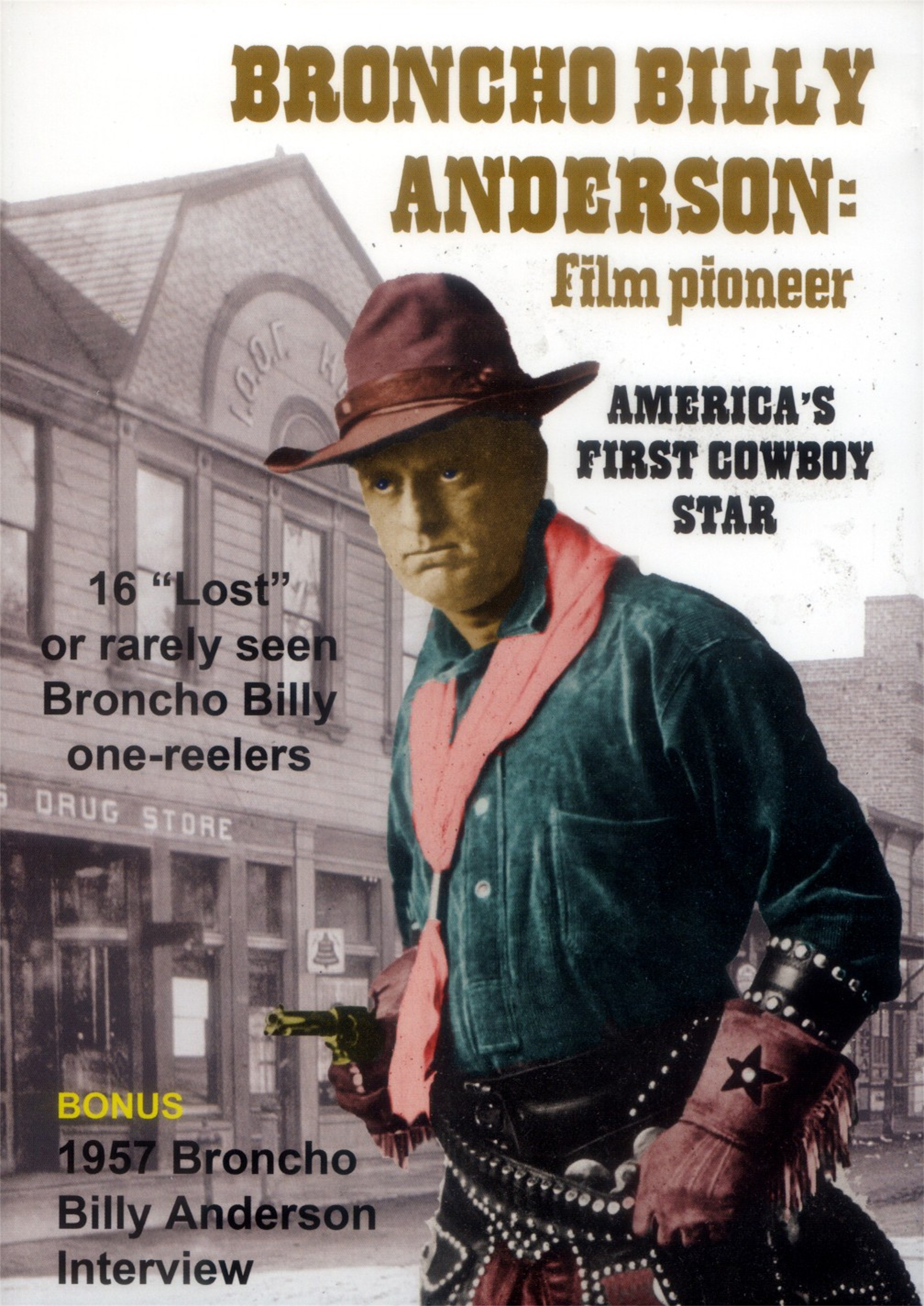
Broncho Billy was the movies first major cowboy star. Demolished in the 1980s, I remember looking at that barn when I first traced Margot’s map, fascinated by its history, but alas, alack, and Alaska, I didn’t have a camera to take a picture of it. “It is to weep.” Billy’s barn was right here behind the fence with the blue dawn flowers.

The rest of my visit was not on Margot Patterson Doss’s route. The old Niles Jail here now houses an insurance company. I’d like to think that Broncho Billy threw a bad hombre or two in here during his stay in Niles, but the building may have been built after his films were made in Niles.

East of the city of Niles is Niles Canyon, where Broncho Billy filmed most of his outdoor action scenes. It was also out in Niles Canyon, before the main highway ran through it, where Charlie Chaplin’s little tramp wandered off into folklore. Above, is a vintage picture posted on Pinterest of a train on the old Sunol-Niles Railroad route crossing the highway. You’re not allowed to stop on the highway here, so I had to take my picture as quick as I could. I didn’t get a train in my shot either.

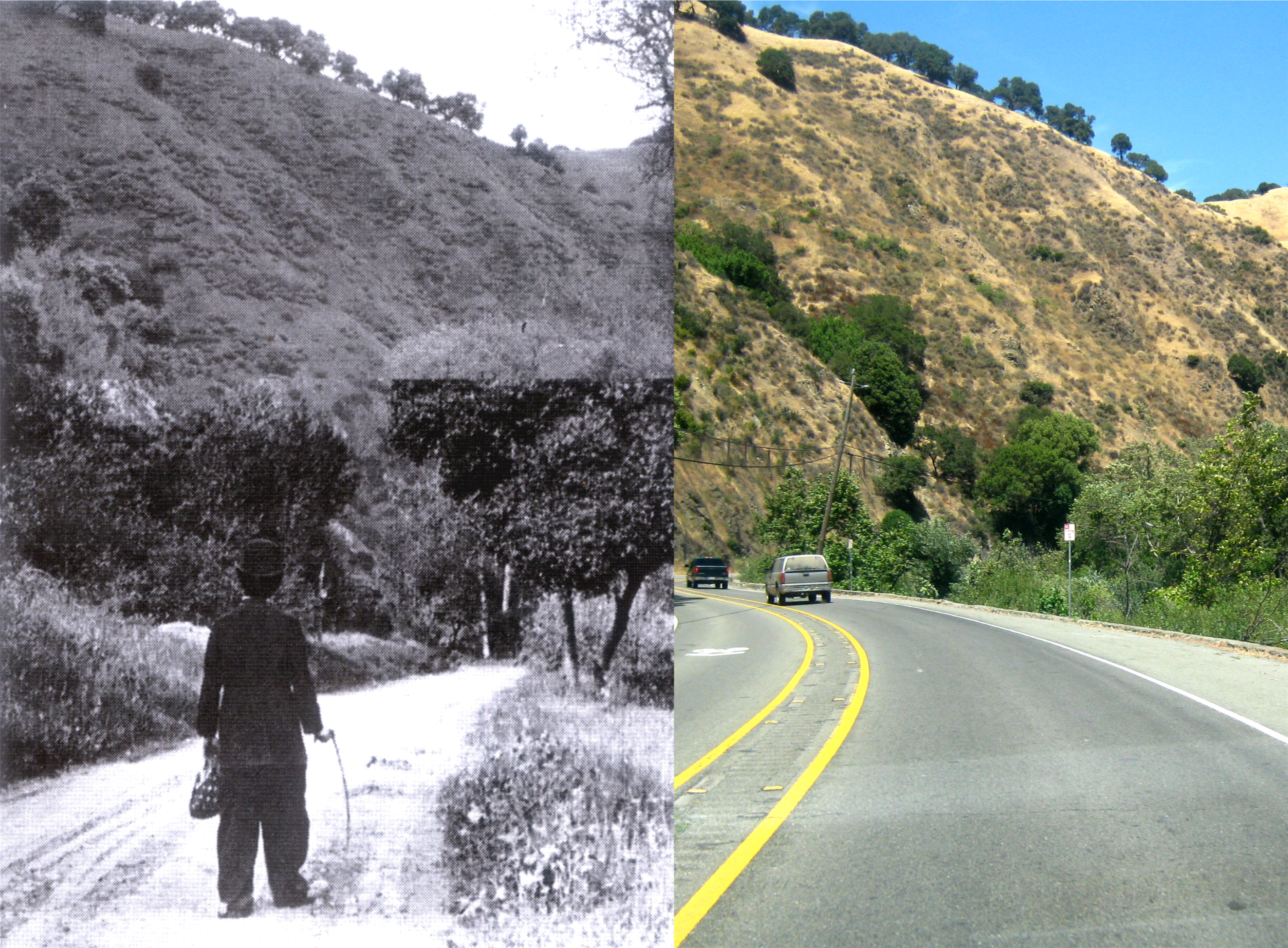
Margot also wrote, {It was also down one of the tree-lined country lanes around Niles Canyon that a winsome little comedian named Charlie Chaplin waddled his way into the sunset and the hearts of filmgoers as “The Tramp.” The final fadeout in which the rejected tramp with the expressive cane walks off down the lane toward a brighter tomorrow became the signature as well as sign off of later Chaplin films. Which was the tree-lined lane of the little tramp? Today, only Chaplin knows.}
Not anymore, thanks to the historians at the Niles Museum who located the spot and directed me to it to get this comparison picture back in 2018. Also, Margot writes of the tree-lined lane, “Today, only Chaplin knows.” Charlie Chaplin died on Christmas Day, 1977, so Margot may have taken her walk before the article was published in 1978, or my recollection of the 1978 date of the column may not be accurate; “only Chaplin knows.”
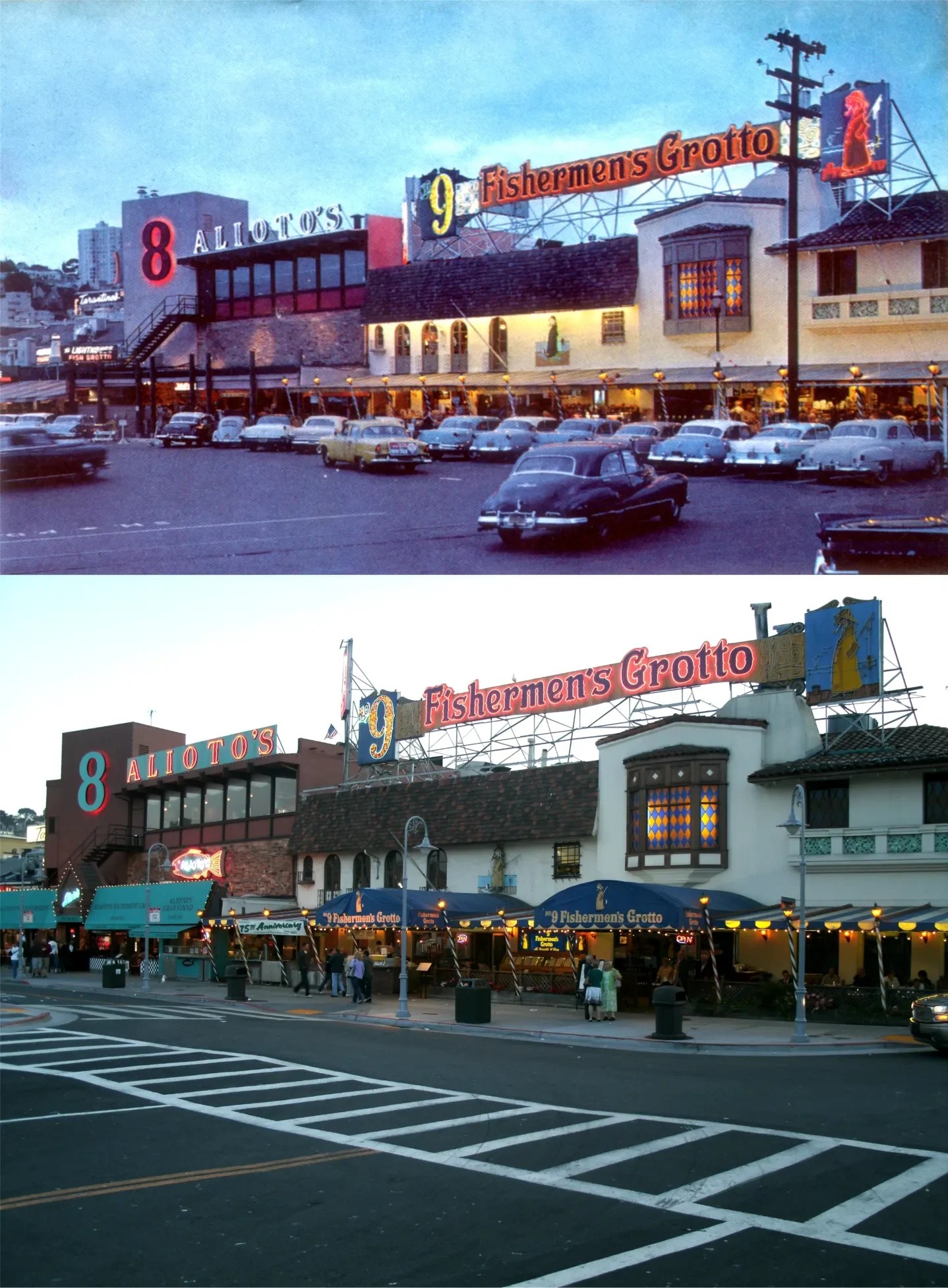






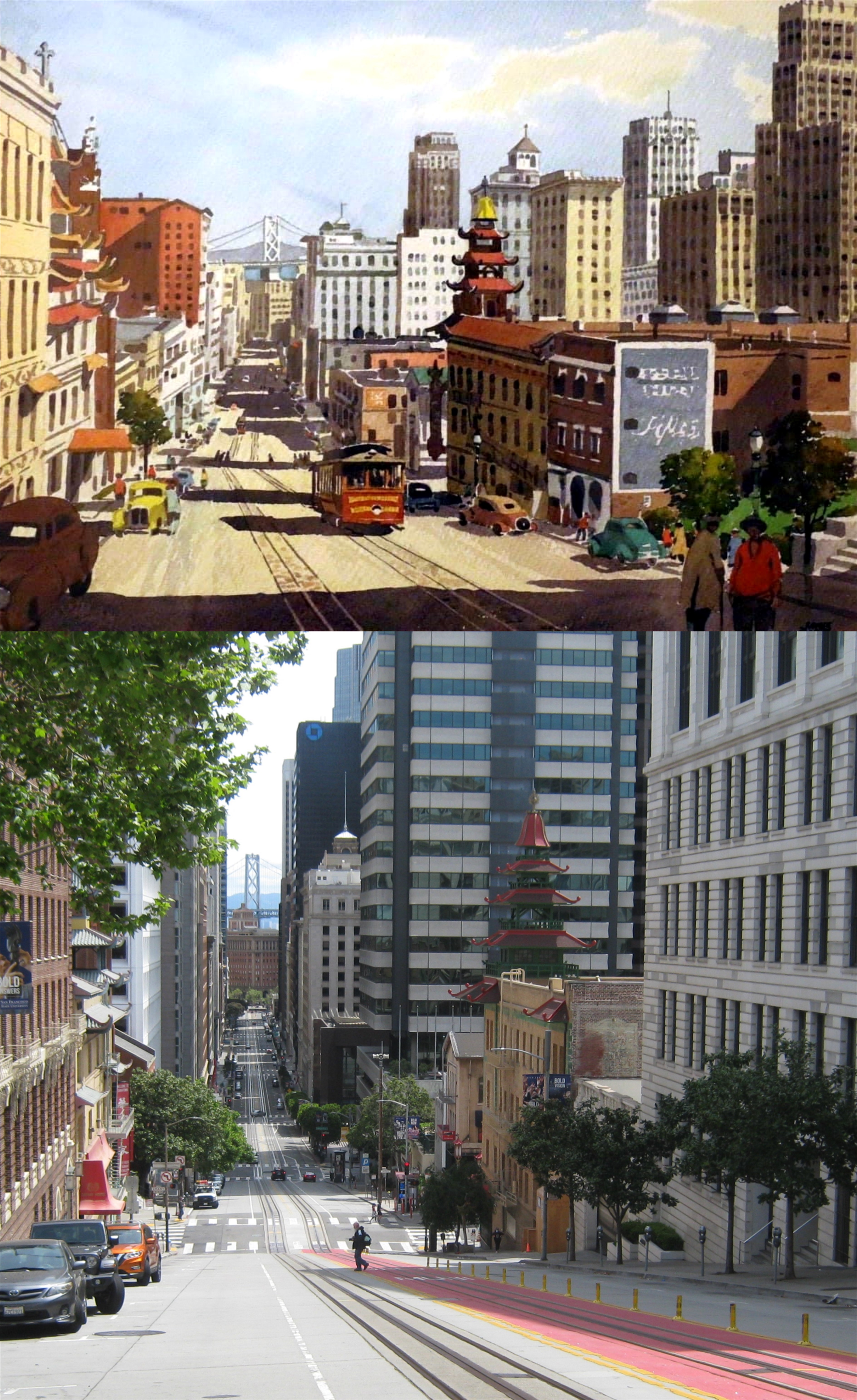


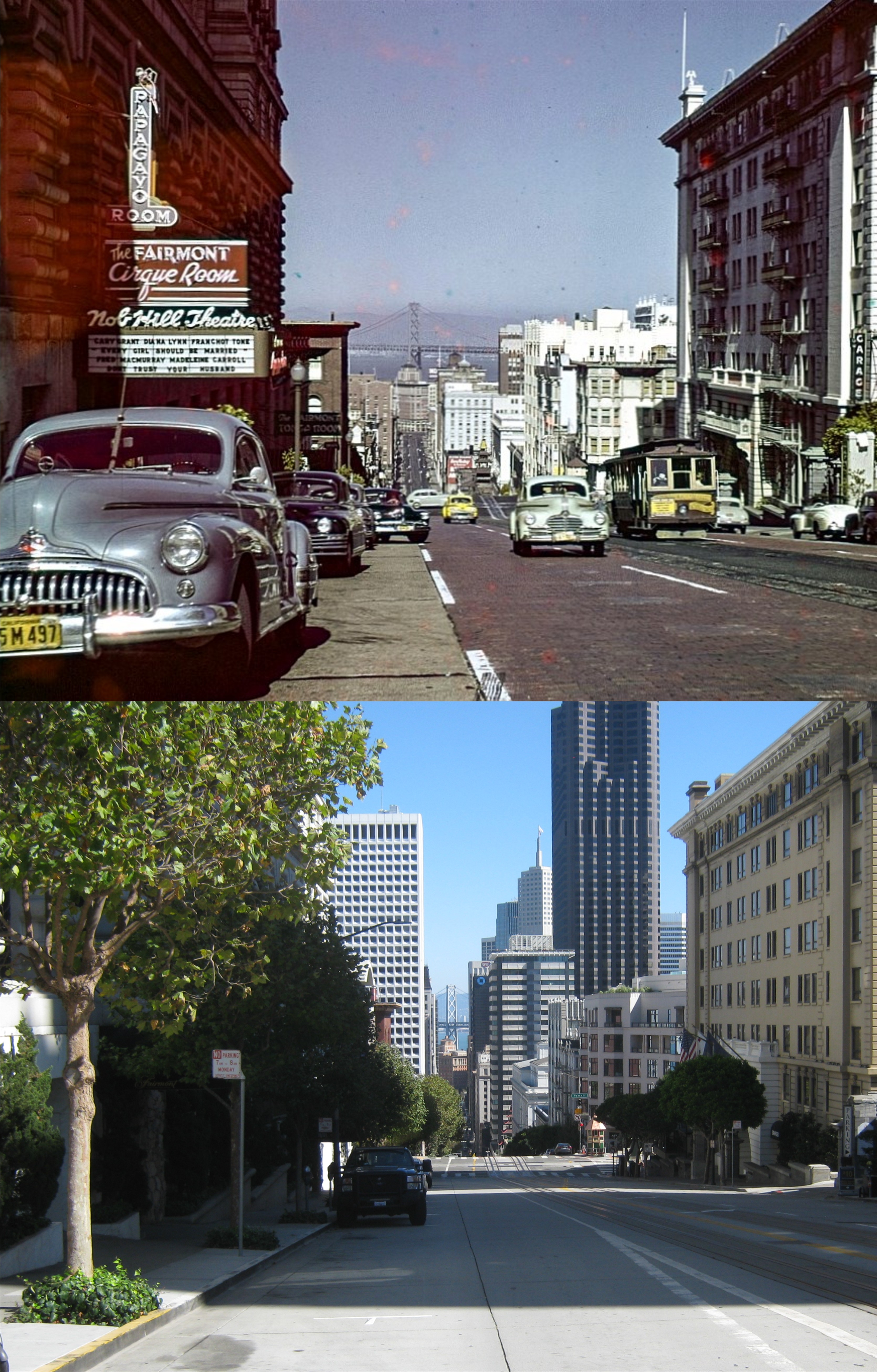

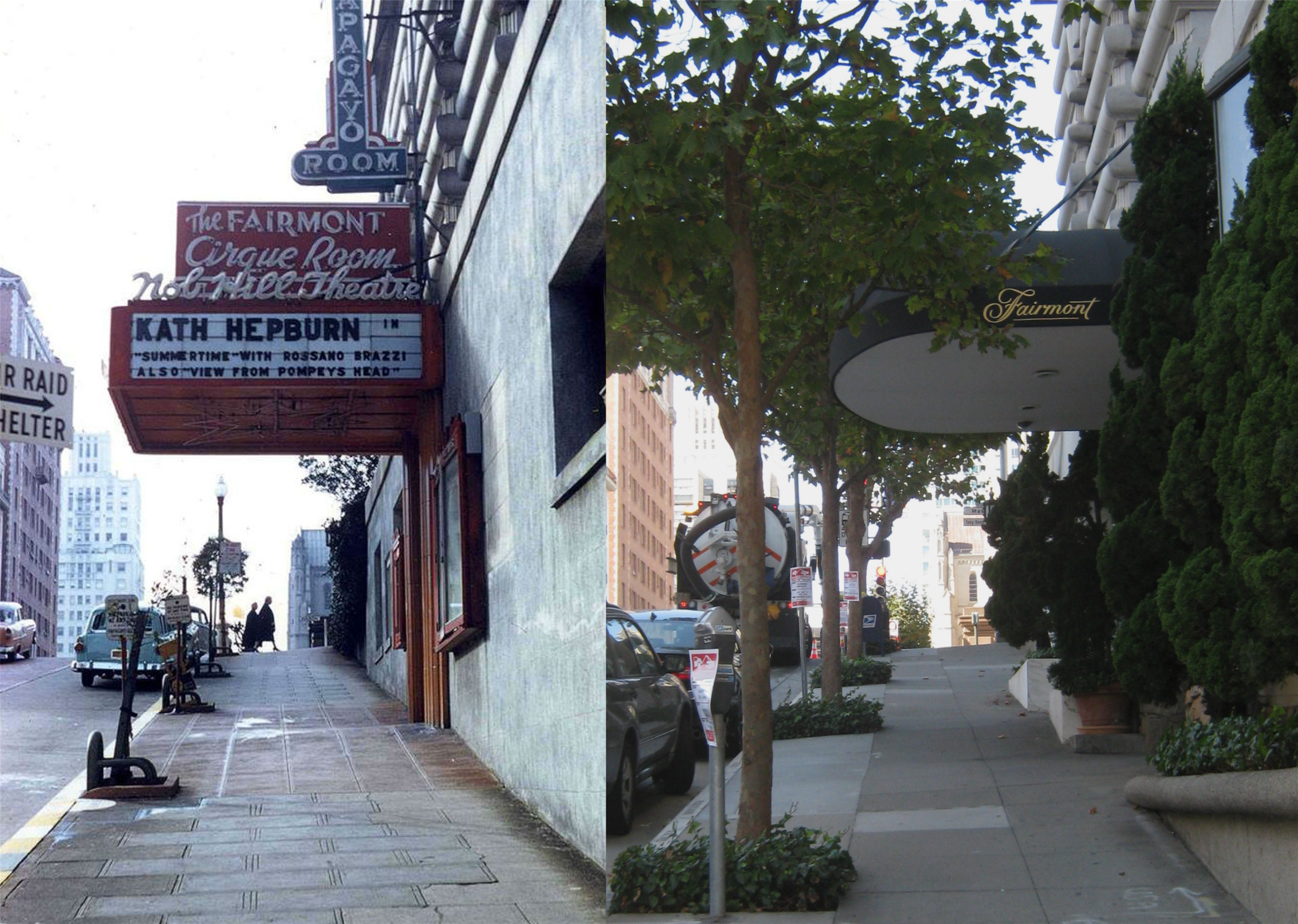
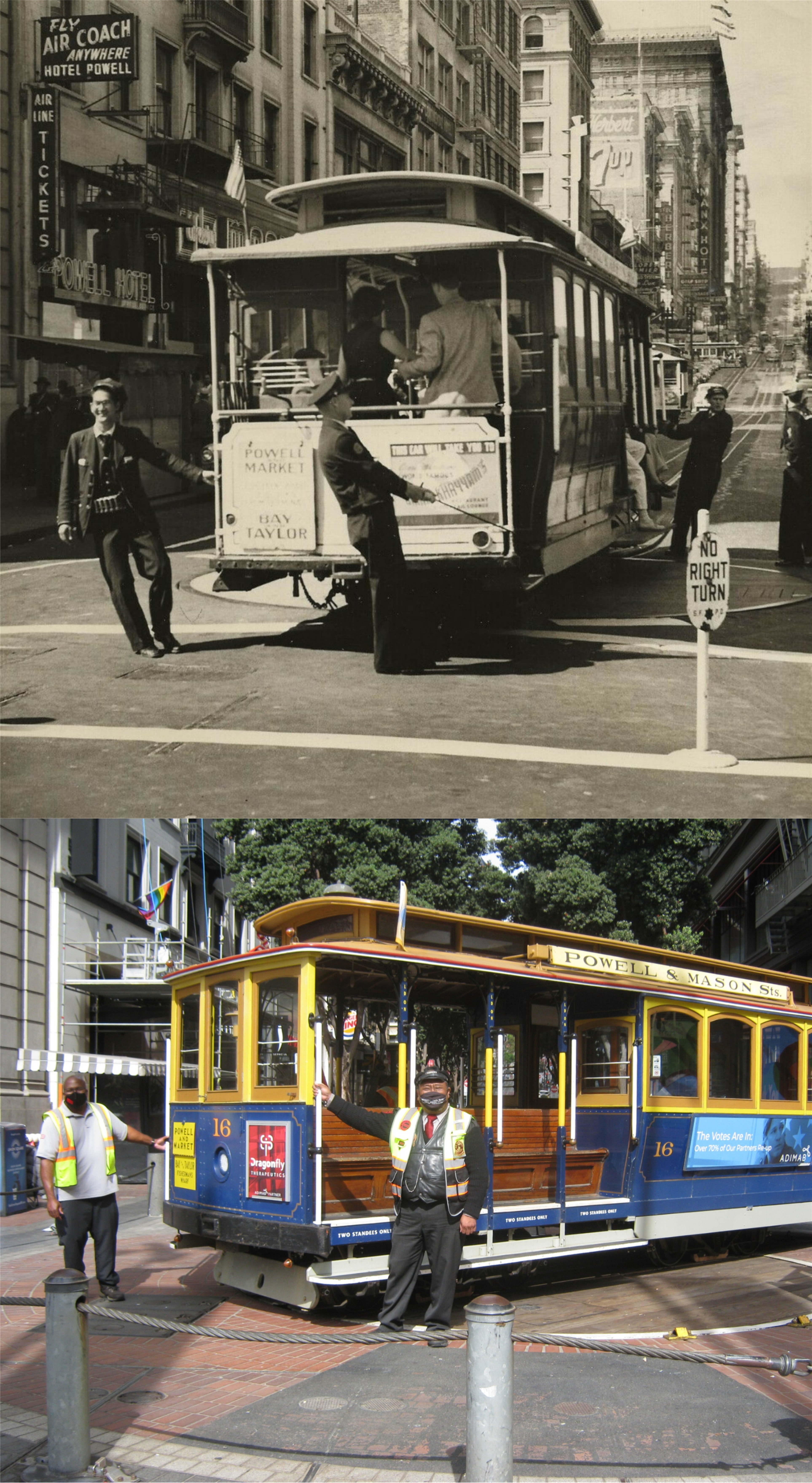

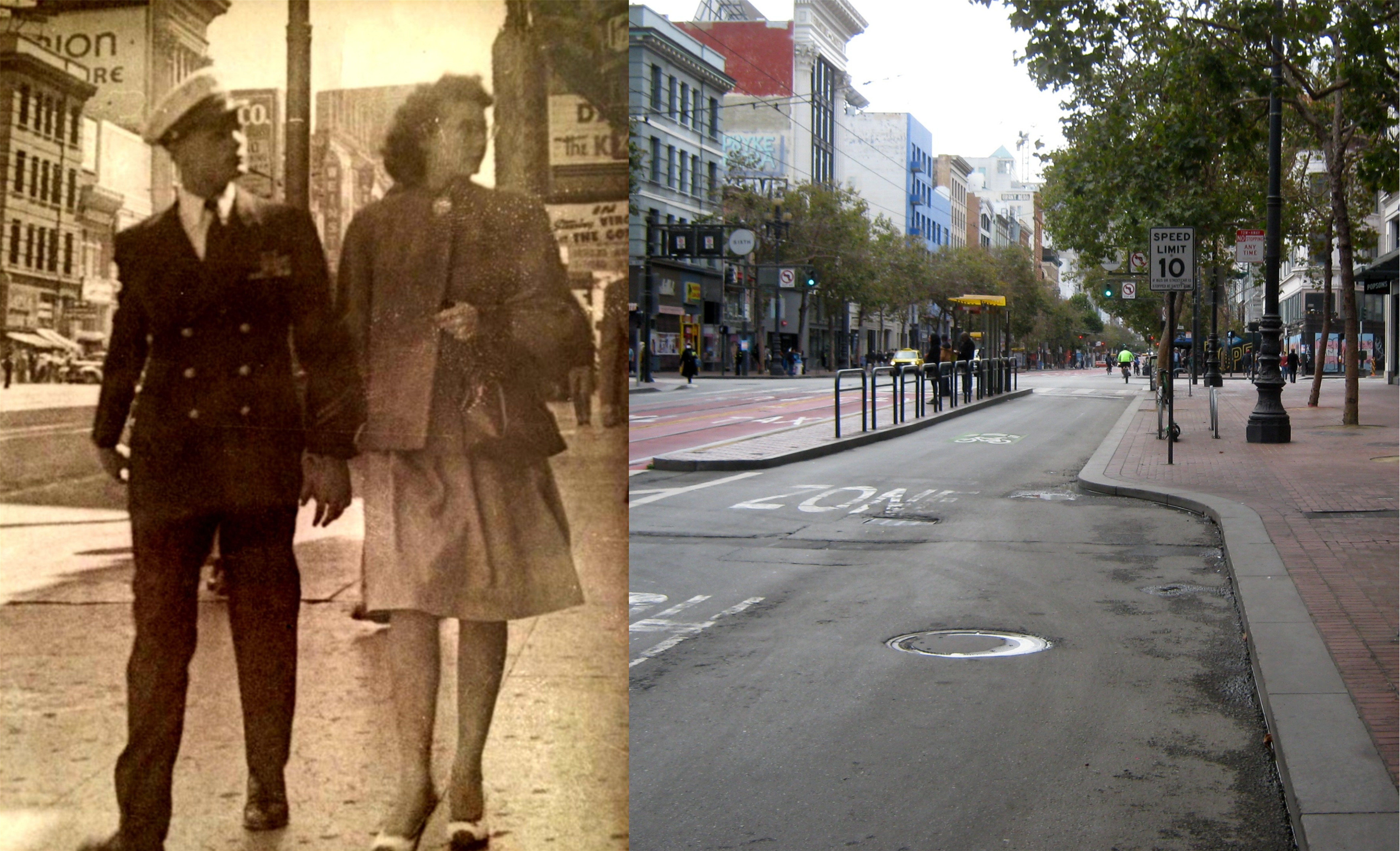





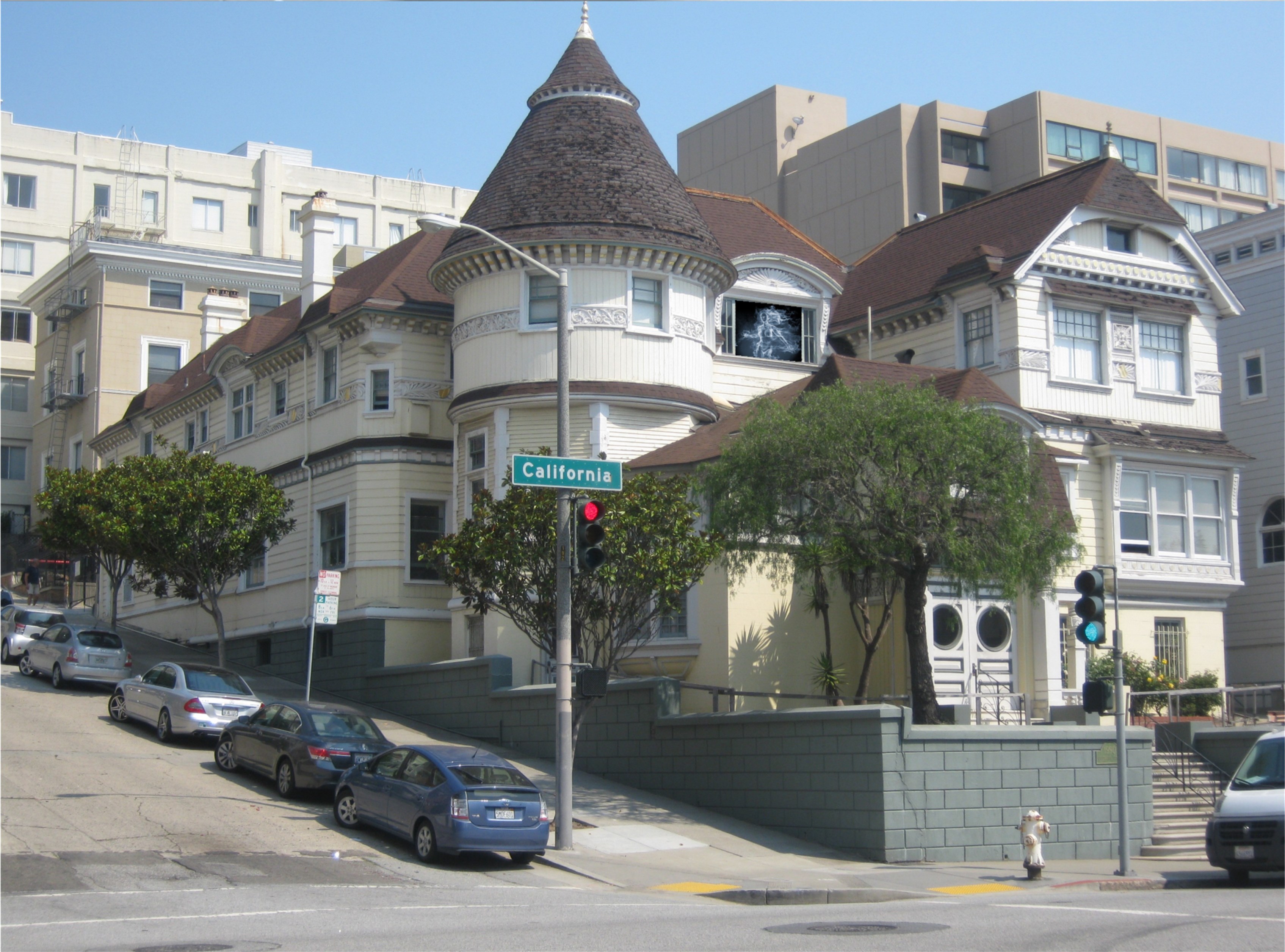
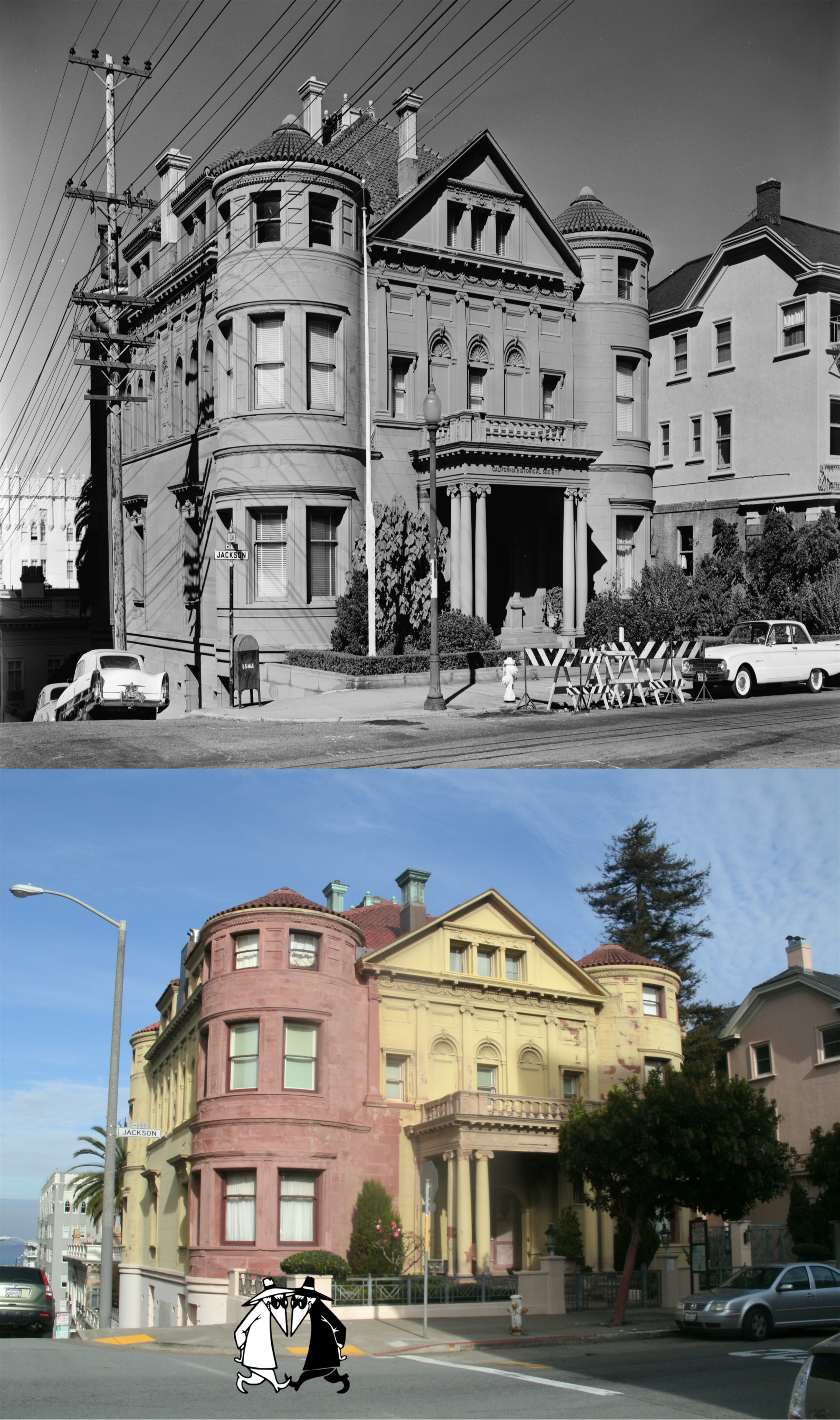

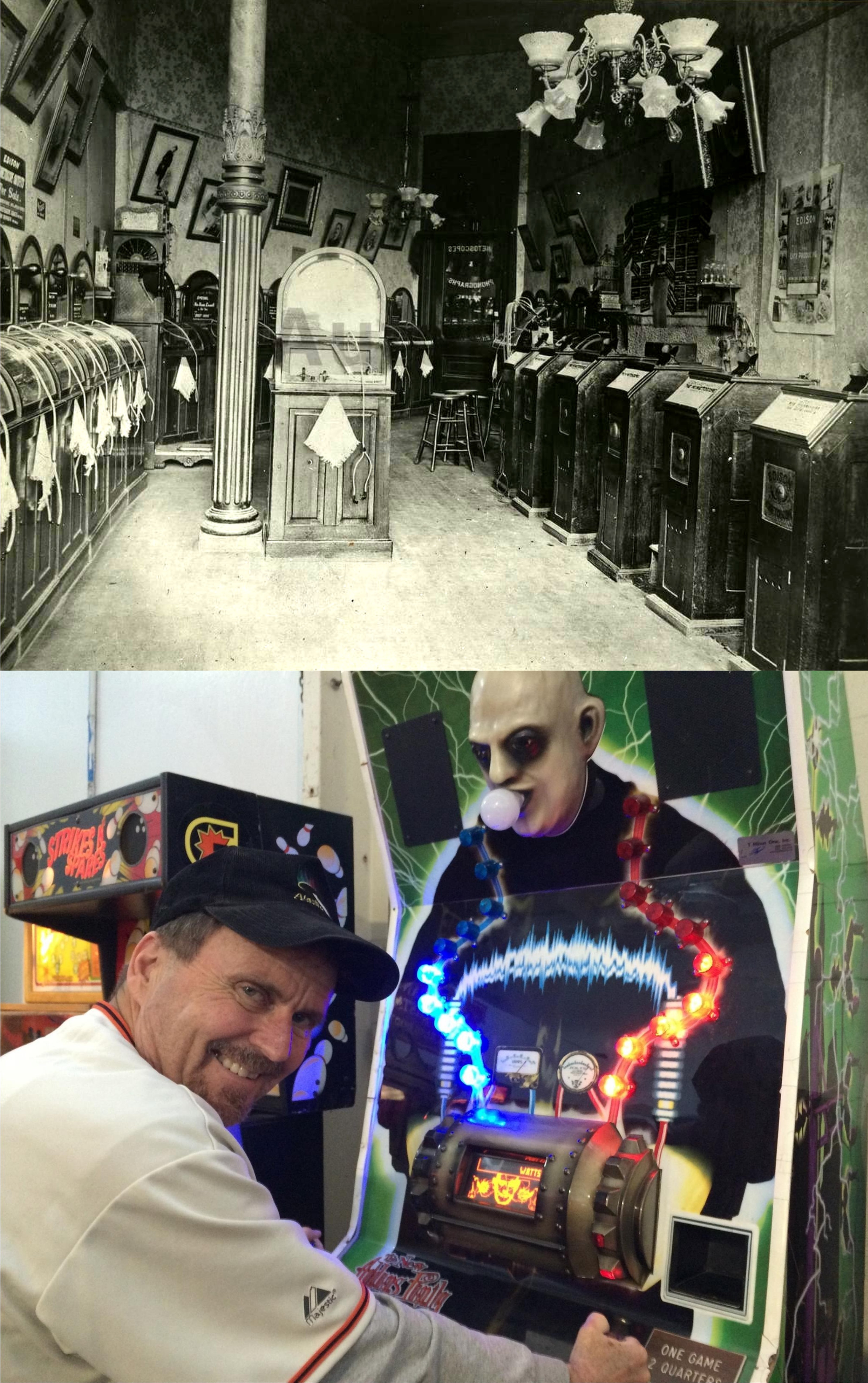
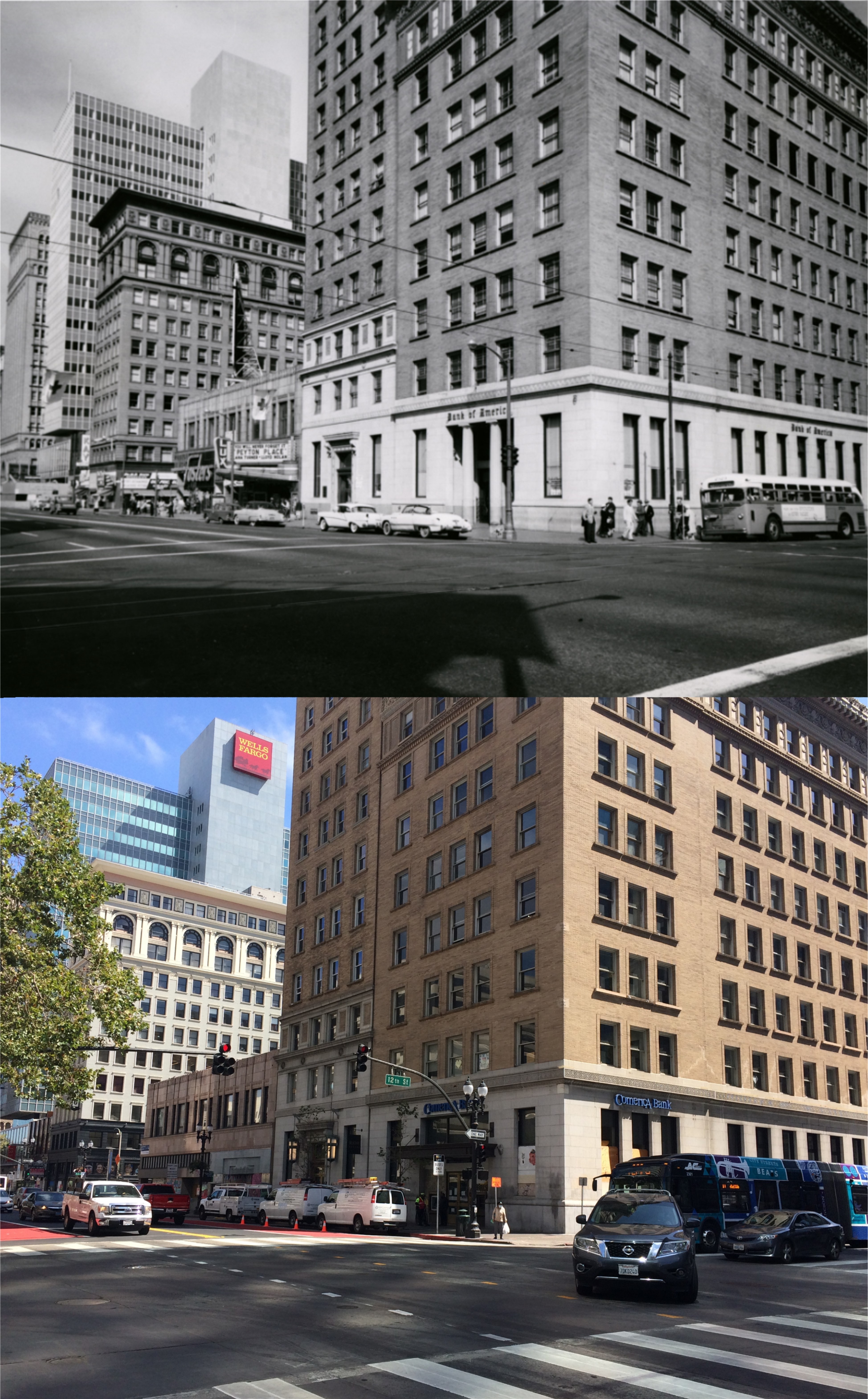



















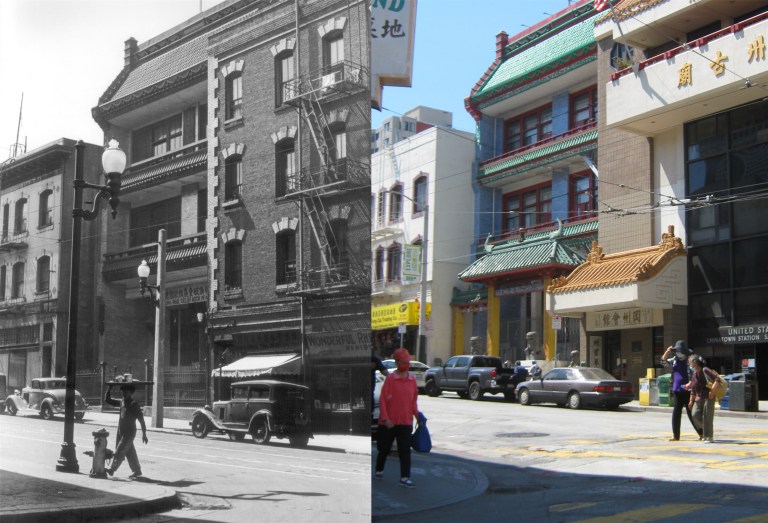
 {I headed for Chinatown. I had friends there and was certain that I could lay low until the heat was off. As I headed up Grant Avenue to California Street, I approached a young lad holding a shoe shine box.
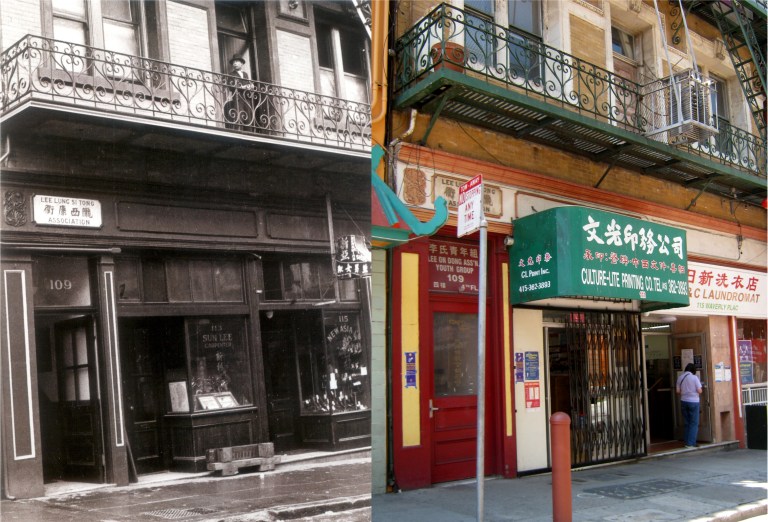 {My destination was the Lee Building at 109 Waverly Place. When I approached the temple I spotted the lookout on the second floor. He was called a “lookout” because if you didn’t look out when you were around him, you could vanish! It might be a good place to hide, but it also may be more trouble than it was worth. I decided to move on.}
 {My next stop was the Six Families Building on Stockton Street. The families associated with this building had a history of assisting people in need. When I asked them if I could find temporary shelter in the building they asked me which of the six families who owned the building was I a member of. When I asked them who the names of the six families associated with the Six Companies Building were, they replied, “Kong Chow, Ning Yeung, Sam Yup, Yeong Wo, Hop Wo, and Yan Wo.” Being Irish, I wanted to be very careful about which family name I selected. While I was trying to decide which one to pick, they quietly closed the door.}
 {The Free Mason Building in Spofford Place; just the place to hide! After all, they hid Sun Yat-sen from assassins at 36 Spofford Alley while he was in exile trying to raise money for his revolution; although the current tenants here probably aren’t aware of that. I knocked on the door and a man answered. I told him I was in danger, and asked him if I could hide out here for awhile.
 {I stopped to rest at the corner of Columbus and Kearny. I wondered if I’d shaken the people who were after me, I wondered if I could find a place to sleep, I wondered how much money I had, and I wondered if those really were female impersonators at Finocchio’s up the hill.}
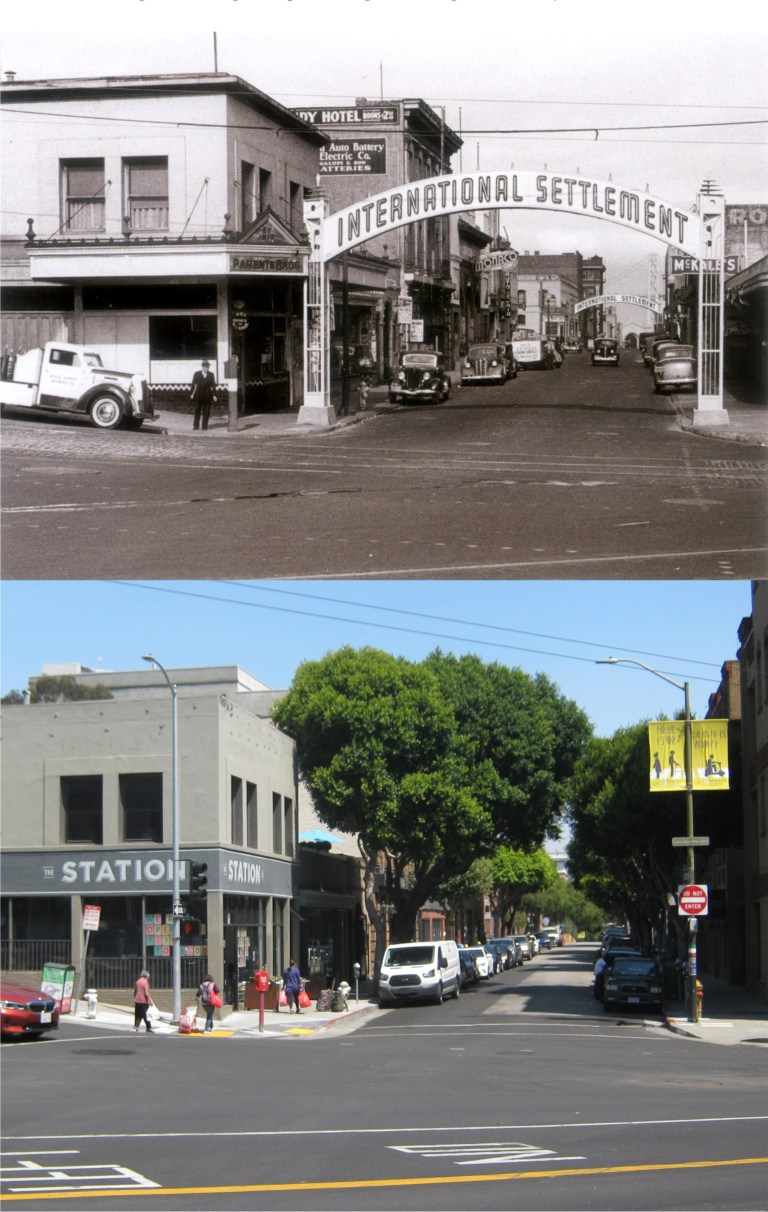 {Ah, the International Settlement on “Terrific Street”, a “terrific” place to hide out! Why, even “Baby Face” Nelson came here to hide out in July of 1934; except he died four months after that. That’s not encouraging.}
 {Well, at least I can get a meal at Diana’s Café; the food stinks, but she doesn’t charge much. She said to me when I left, “Don’t complain about my coffee, you’ll be old and weak someday too.”} *
 {Diana had told me that there was a place on the corner of Sansome and Jackson Streets where they would put me up for the night, no questions asked. However, shortly before I arrived there, the building was blown up in a terrific explosion! I knew that the bomb was meant for me. I was frightened thinking about the violent type of people who would go this far to get me. I was filled with rage over thoughts about innocent people who may have been hurt because of me. But most of all, I was absolutely delighted that I wasn’t in the building when it exploded.}
 San Francisco Film Locations Then & Now