San Francisco, after and before

These are reverse then and nows; backdates not updates. The modern pictures are photos that I took around San Francisco. Sometimes when I find vintage San Francisco pictures on the internet, I try to match them up to photos that I have in my collection. They don’t line up perfectly, but they’re a reasonable facsimile. Also, they’re fun to do; sort of my own private scavenger hunts. (Thumbnail images)

This is a picture I took in May of 2022 on the Jeremiah O’Brien Memorial Cruise, looking toward the SF skyline. The older photo is from the 1970s. The old sailing ship, the Balclutha, was still moored at Pier 43 then. (ebay.com)

Looking down to the Great Highway from Sutro Heights from a picture I took in 2018 and during the 1970s. The tide was definitely out in my picture. (ebay.com)


The Sing Chong Building and Old St. Mary’s Church in Chinatown: No guesswork needed on when the old picture was taken. (ebay.com)


I took my photo from the back of an old streetcar, looking west on Market Street near 2nd. The vintage picture is near the same spot in 1956. The Call Building, (Central Tower) the Palace Hotel, and the Humboldt are on the left in both pictures. (opensfhistory.org)

Also in May of 2022, I took this skyline picture from the new Treasure Island Ferry Service. It lines up pretty good with the picture taken during the 1970s. (ebay.com)

In October of 2014, the San Francisco Giants were in the World Series, although, the issue hadn’t been decided yet, and my niece, on a visit from Texas, wanted to see Candlestick Park. We drove around it, took a few pictures, and it was the last time I ever saw the ballpark. They started to demolish it shortly after our visit. My picture isn’t a very good one, but neither is the one from 1966. (ebay.com)

San Francisco in the 1920s

They call the decade the “Roaring Twenties”. What we’re going through now are the Boring Twenties. These are updates of a few photos taken around San Francisco locations during the 1920s. (Thumbnail images)

Market Street near 4th: Some of those buildings in the old picture are still around, like the Phelan Building in the center and the Humboldt Building on the right, among others. (icanvas.com)

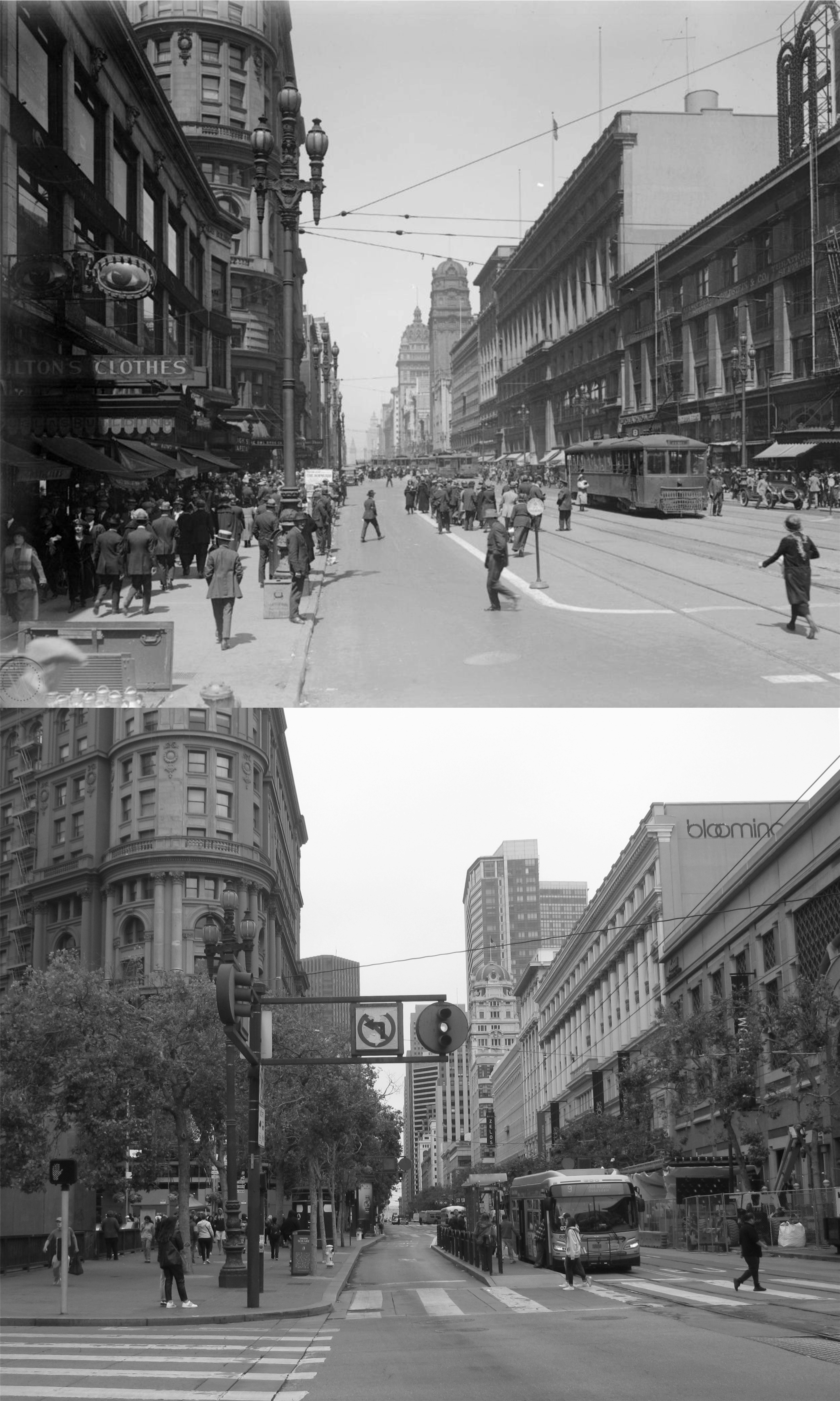
Market Street at Powell Street: The Flood Building is on the left, and the old Emporium Building, now Bloomingdale’s is on the right. On the far left in the updated picture is Hallidie Plaza. (worthpoint.com)

Ah, the Cliff House. (San Francisco Pictures Blog)

The old YMCA Building on the Embarcadero: Eli Wallach, “Dancer”, made his first kill here in the 1958 film, ‘Lineup’, one of my favorite San Francisco noir movies. (San Francisco Pictures Blog)

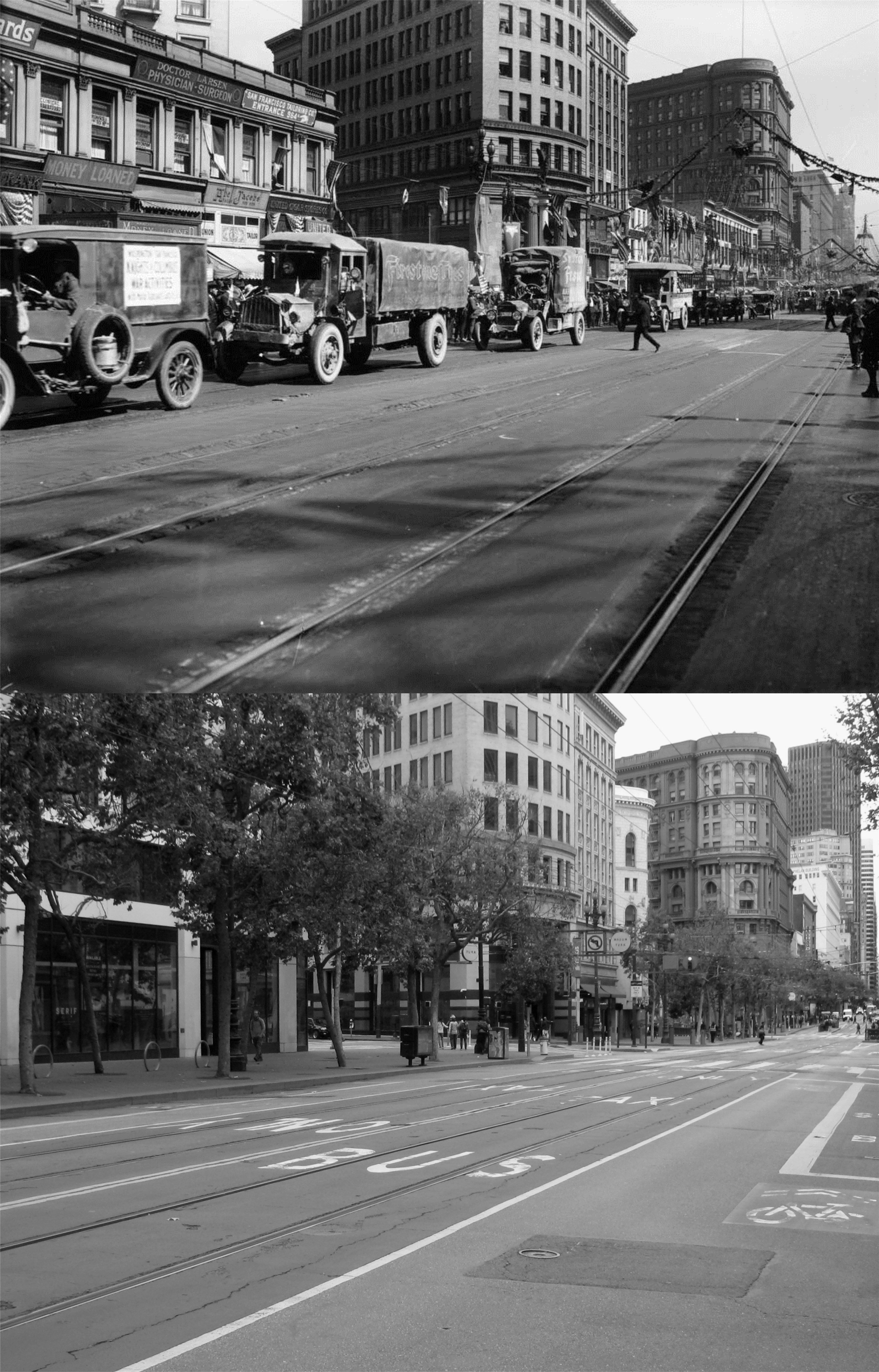
Market Street at Turk and Mason: The picture is dated 1922, but I’m not sure that’s accurate; no matter where I stood, I could not get an angle that didn’t include the white Number One Powell Street Building, built in 1920, that’s between the Mechanic’s Savings Bank Building at Mason Street and the Flood Building at Market Powell Streets. (SF Gate, San Francisco Chronicle)

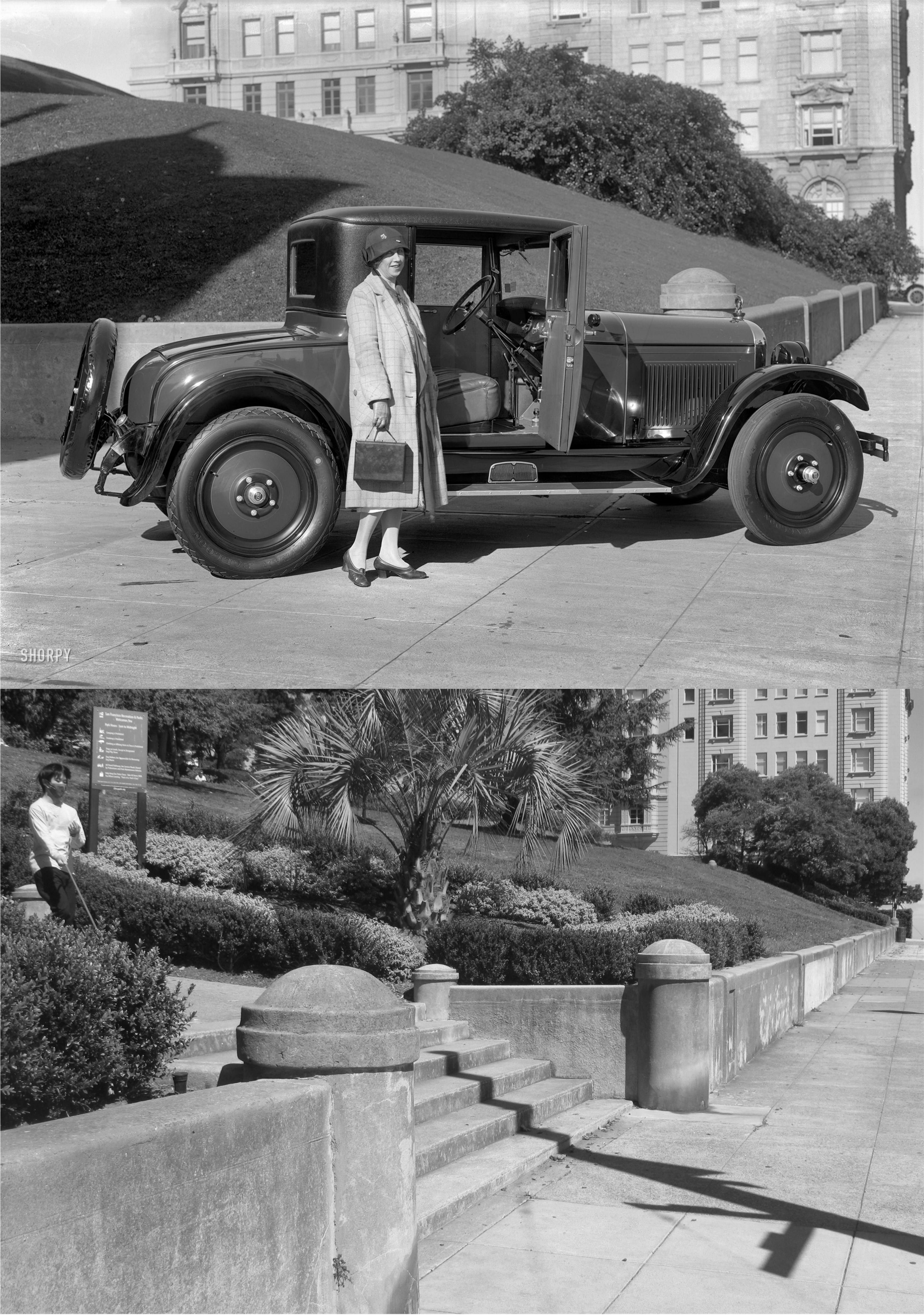
The east side of Lafayette Park at Clay Street: Some of the best photographs of San Francisco during the 1920s are from the Shorpy Photo Archive.

The Spreckels Mansion at Washington and Octavia Streets: You can barely see the mansion today because of the bushes they’ve grown around the building.

‘This is San Francisco’

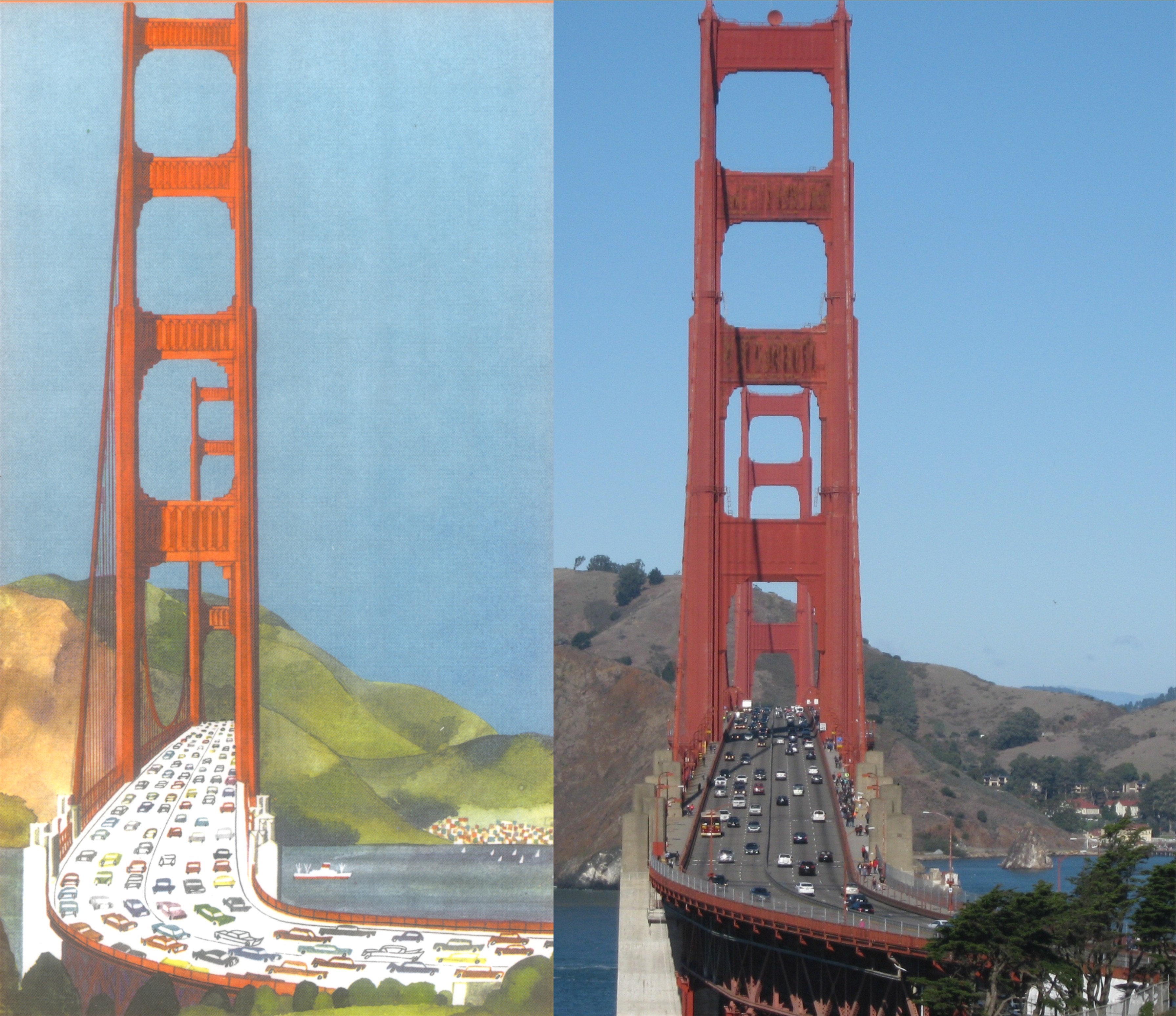
Sometimes, it’s just a big cartoon city for kids. (Thumbnail images)


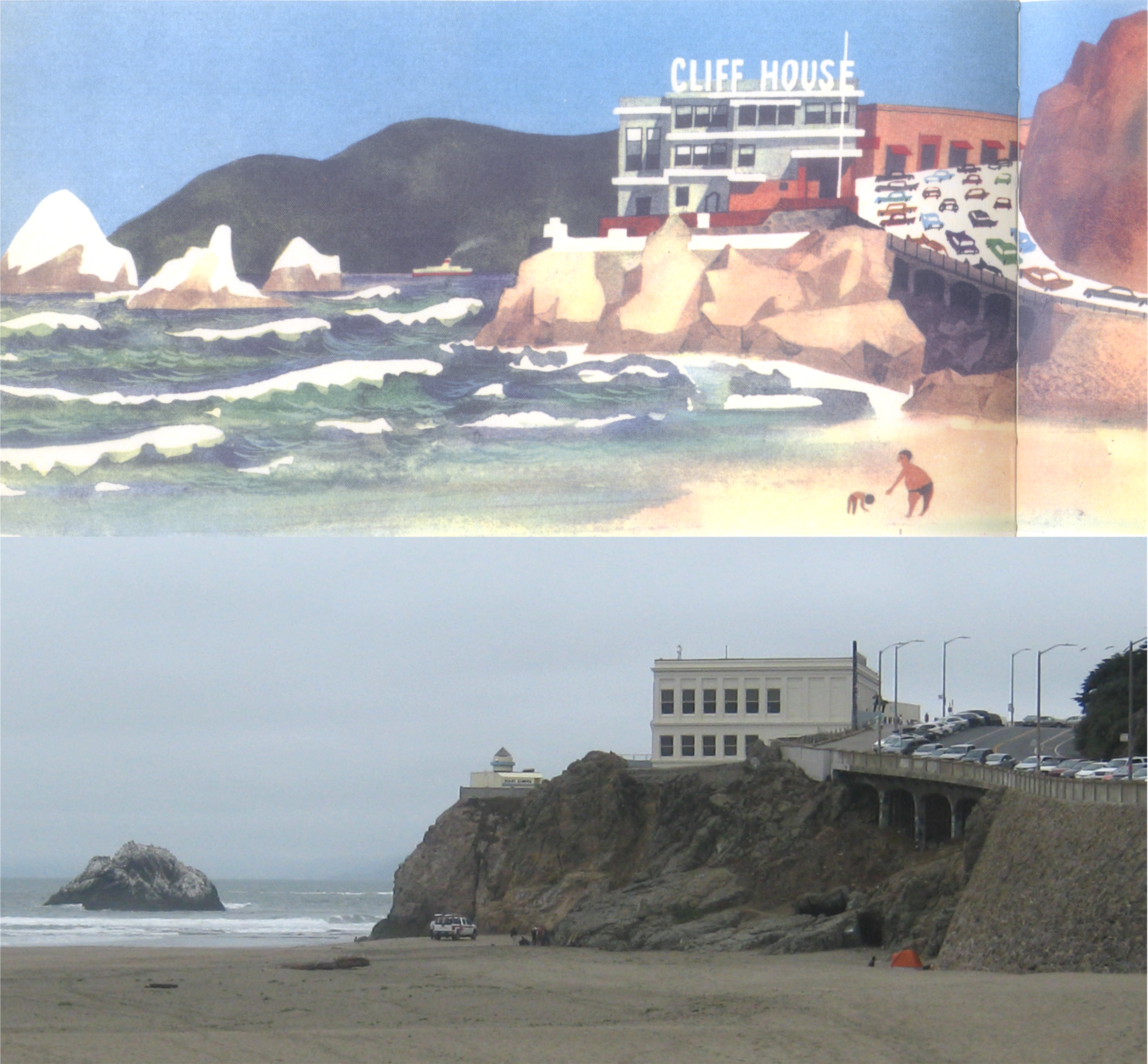
They say the Cliff House is going to reopen later this year, but it won’t be called the Cliff House.

They view of Seal Rocks from behind the Cliff House:

The view from Coit Tower: Columbus is on the outs now because he may or may not have massacred Native Americans, but I’m still glad we have him to thank for the spaghetti and pizza in North Beach.

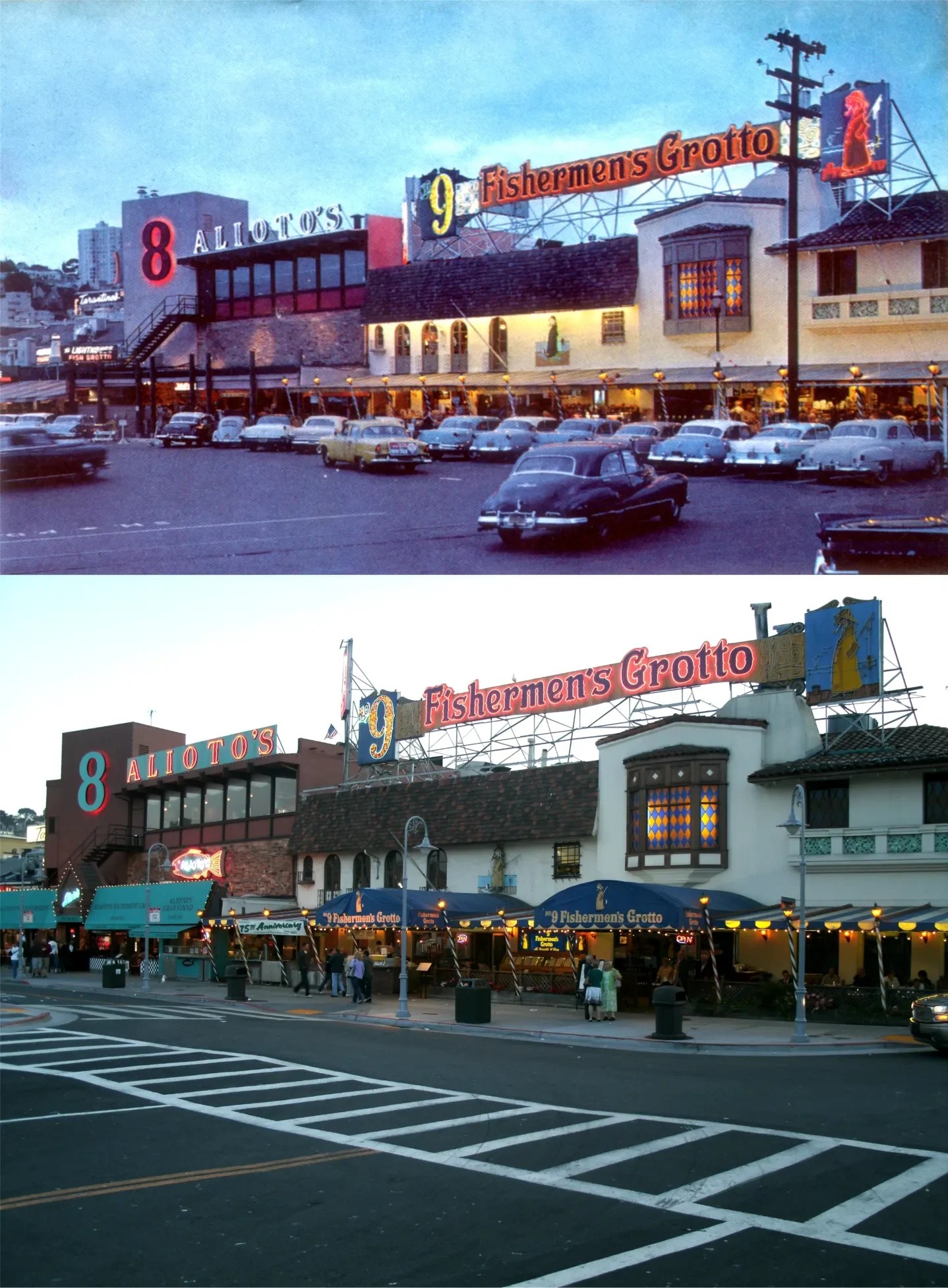
Alioto’s and Fishermen’s Grotto #9 Restaurants in Fisherman’s Wharf; both gone forever now:

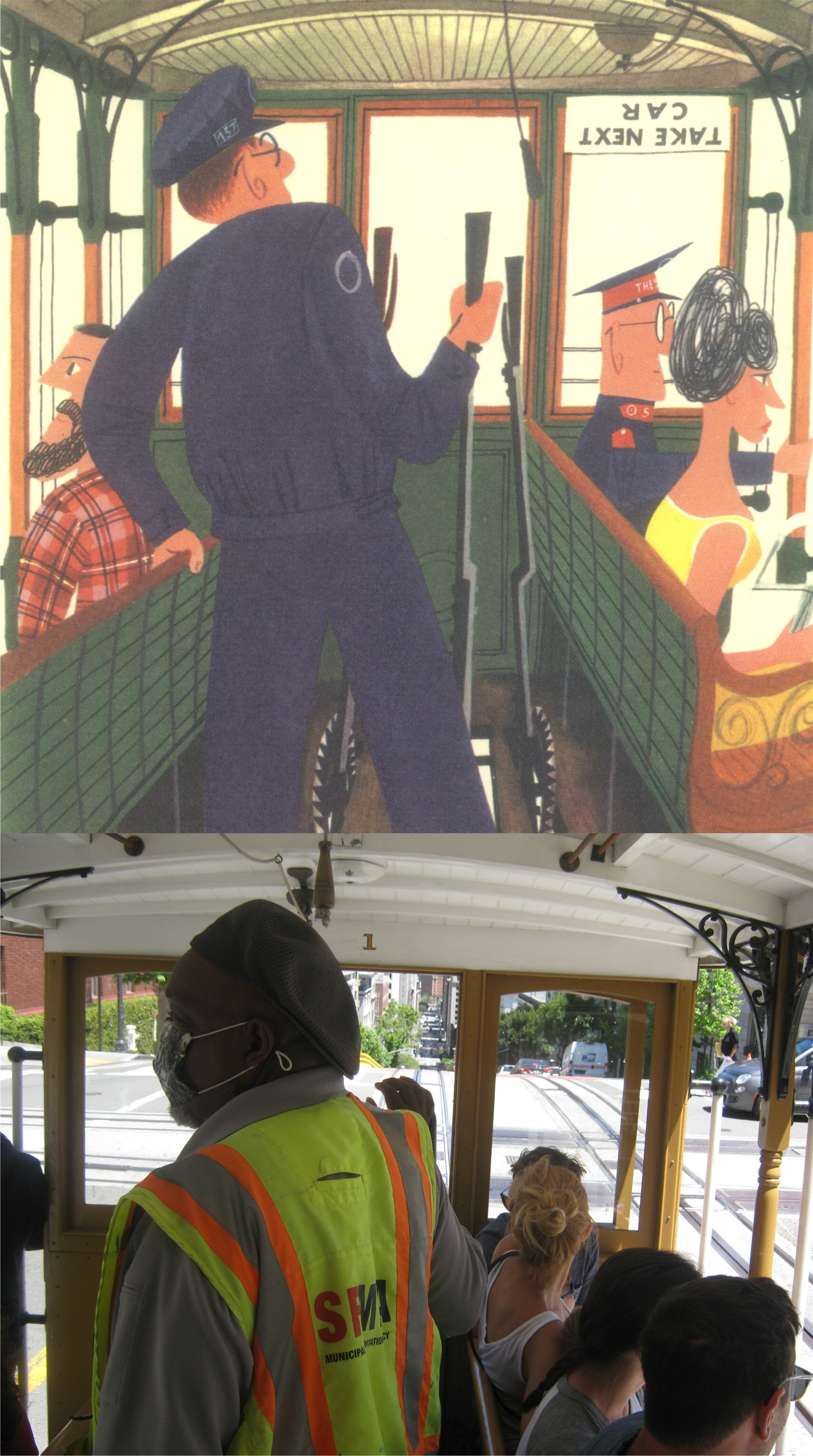
A cable car slides down California Street on Nob Hill:


I don’t think I like the looks of some of those people on the cable car in the bottom cartoon, especially that mean looking lady on the right!

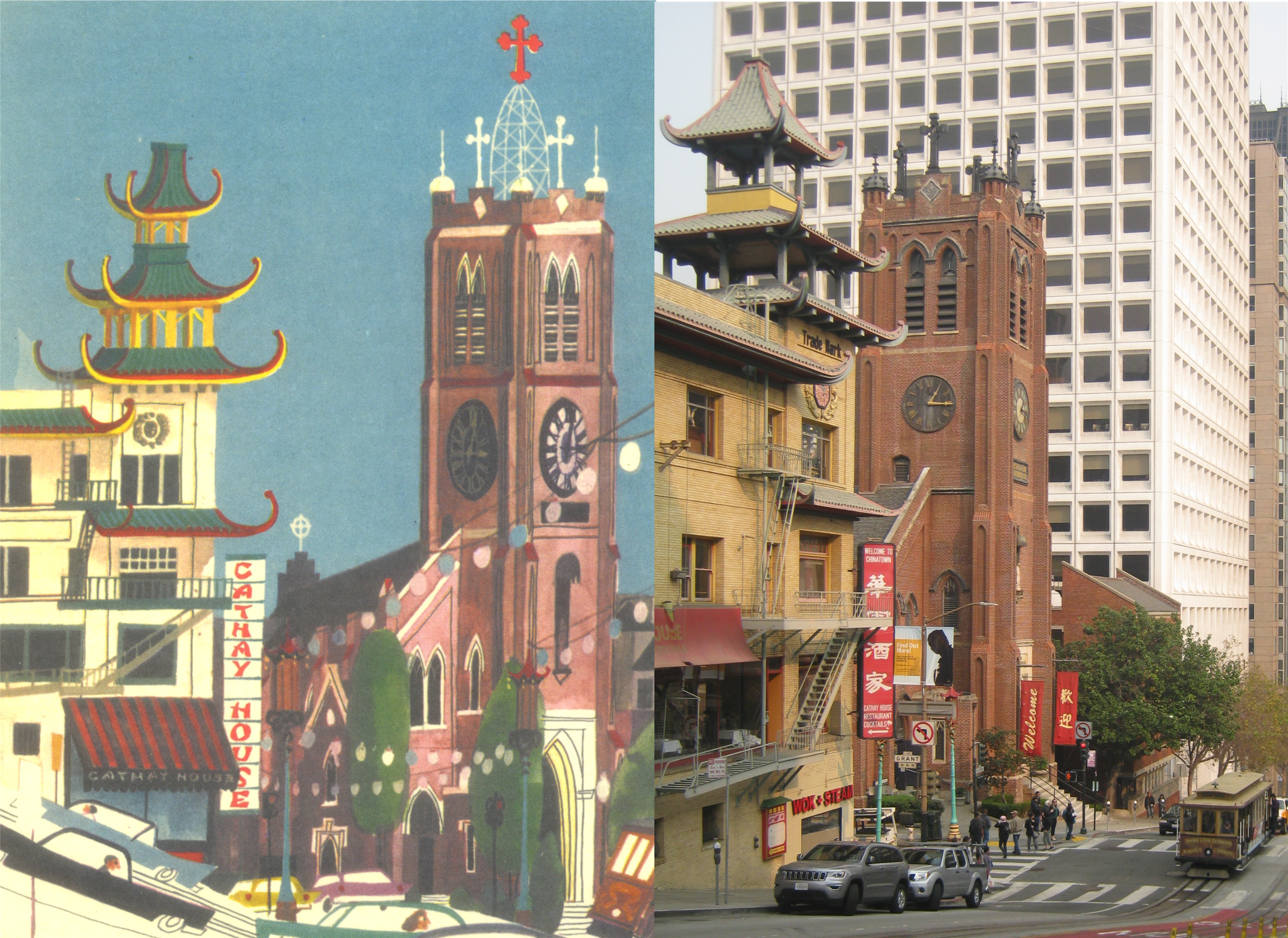
The Sing Chong Building and Old St. Mary’s on Grant Avenue and California Street in Chinatown:

The place where the traditional telephone booth used to be on the side of Old St. Mary’s Church in Chinatown:

The old streetcars that were relatively modern when the 1962 cartoon was drawn only go up to number 1080 nowadays. How dare that strikingly attractive girl on the bike get in my picture!

‘Hills of San Francisco’ (Thumbnail images)

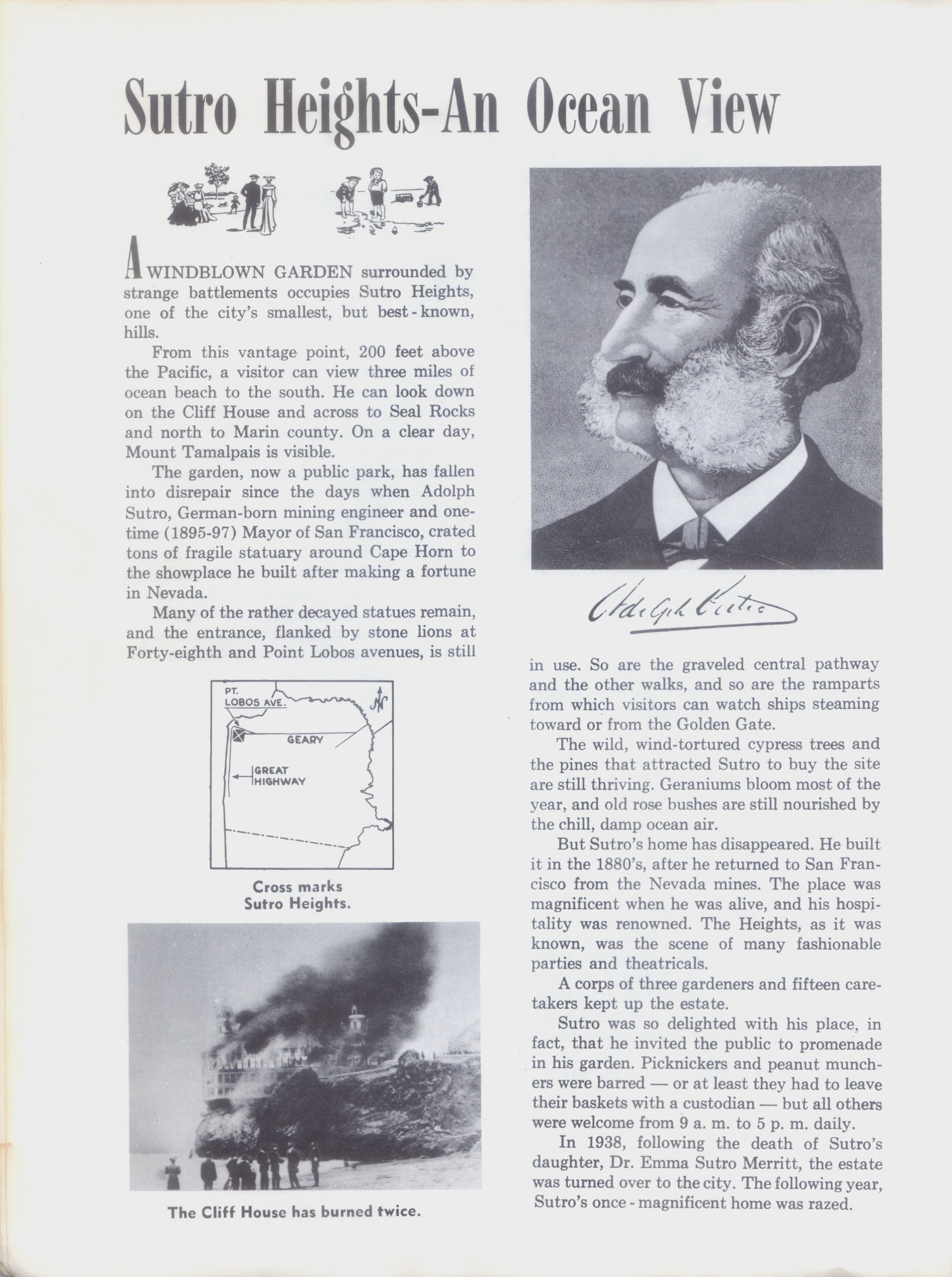
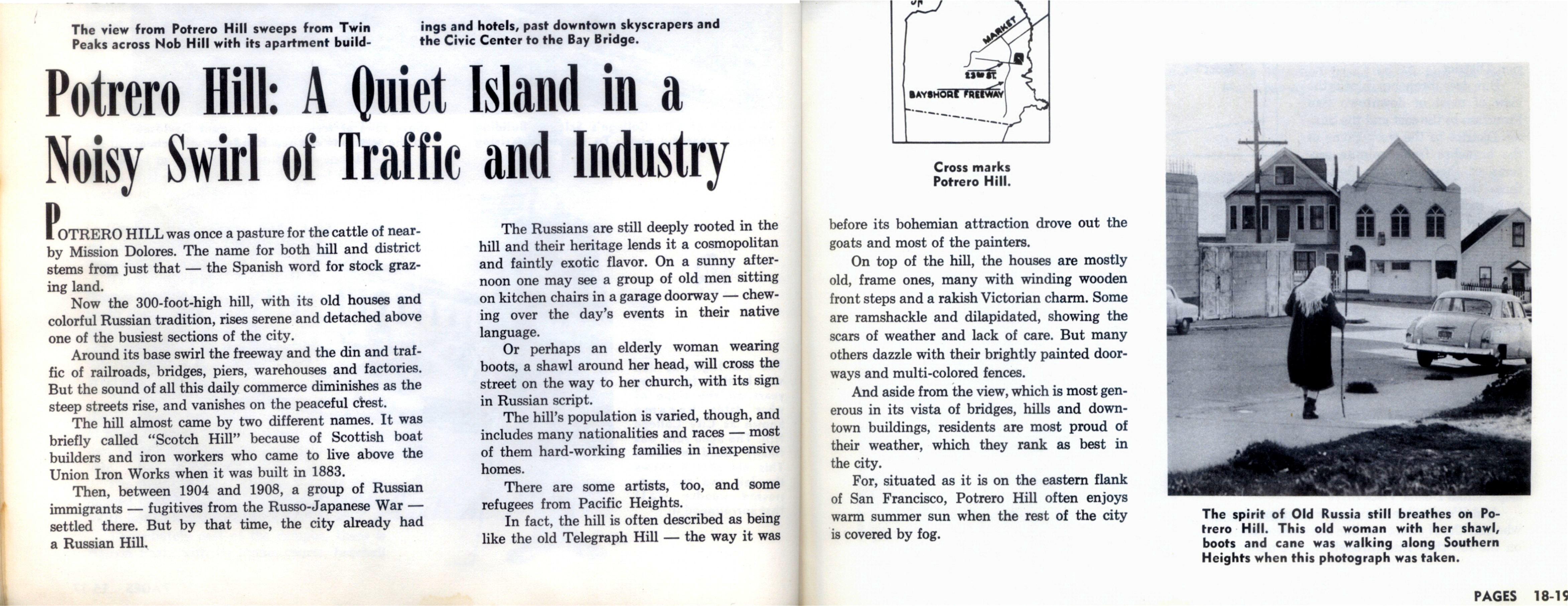
Recently, I purchased a book on the internet entitled ‘Hills of San Francisco’, published by the San Francisco Chronicle in 1959, and with a Foreword by Herb Caen.  I haven’t seen the book around for many years, and I remember it as being THE explorers guide to the forty two hills of San Francisco. Some of the hills I’ve never had a chance to visit, and some of them I’ve never even heard of. There’s a lot to read in this book, so I’ll post pictures from only a few of the hills, and let the descriptions from the book of the hills I’ve included speak for themselves. The double photos above are the front and back covers of the book. The back cover lists the hills described in the book with a map of their approximate locations. Some of the vintage pictures are from the book, and some I found elsewhere.

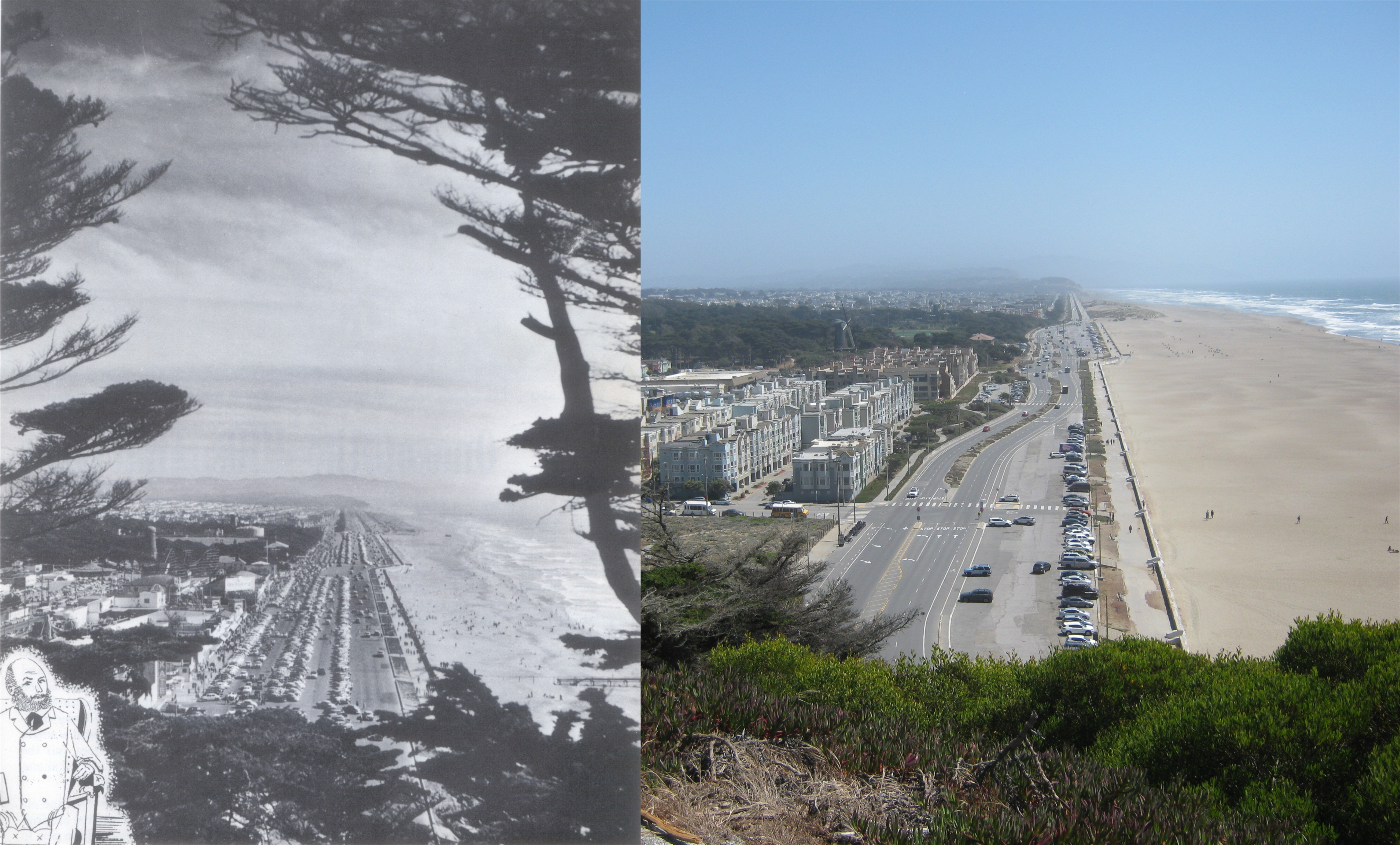
The view from Sutro Heights around the time the book was published and May of 2022: They’ve included a little cartoon drawing of Adolph Sutro at the bottom left of the vintage picture.

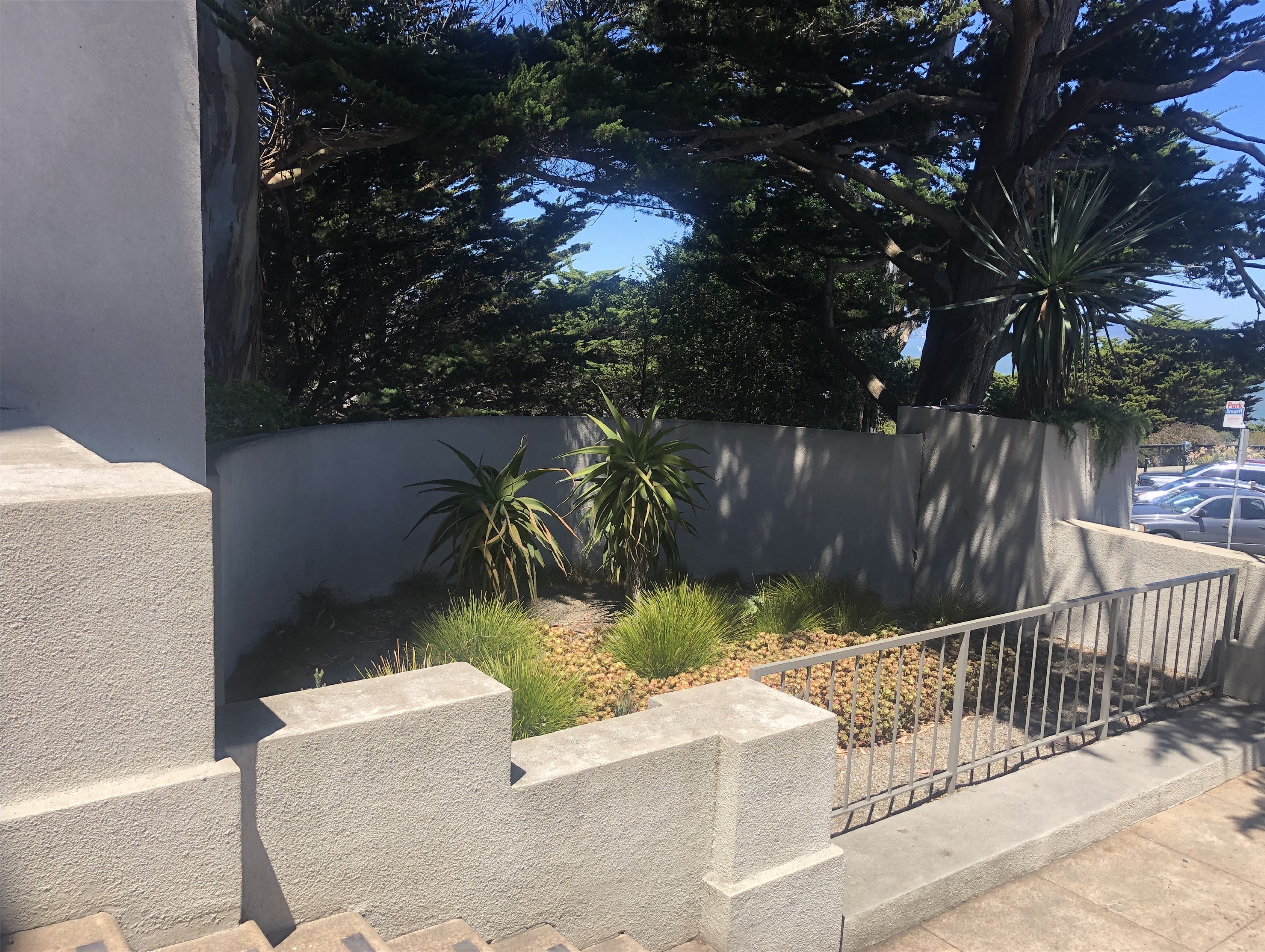
The vintage black and white photo from the book shows the northwest view from the steps of Coit Tower. Below that is a scene from the 1957 ‘Pal Joey’. Kim Novak leaves what is supposed to be the front yard of socialite Rita Hayworth. She’s frustrated over the fact that she’s falling in love with Frank Sinatra, but possibly losing him to Rita. That Hollywood garden is long gone, and so is the view from here.

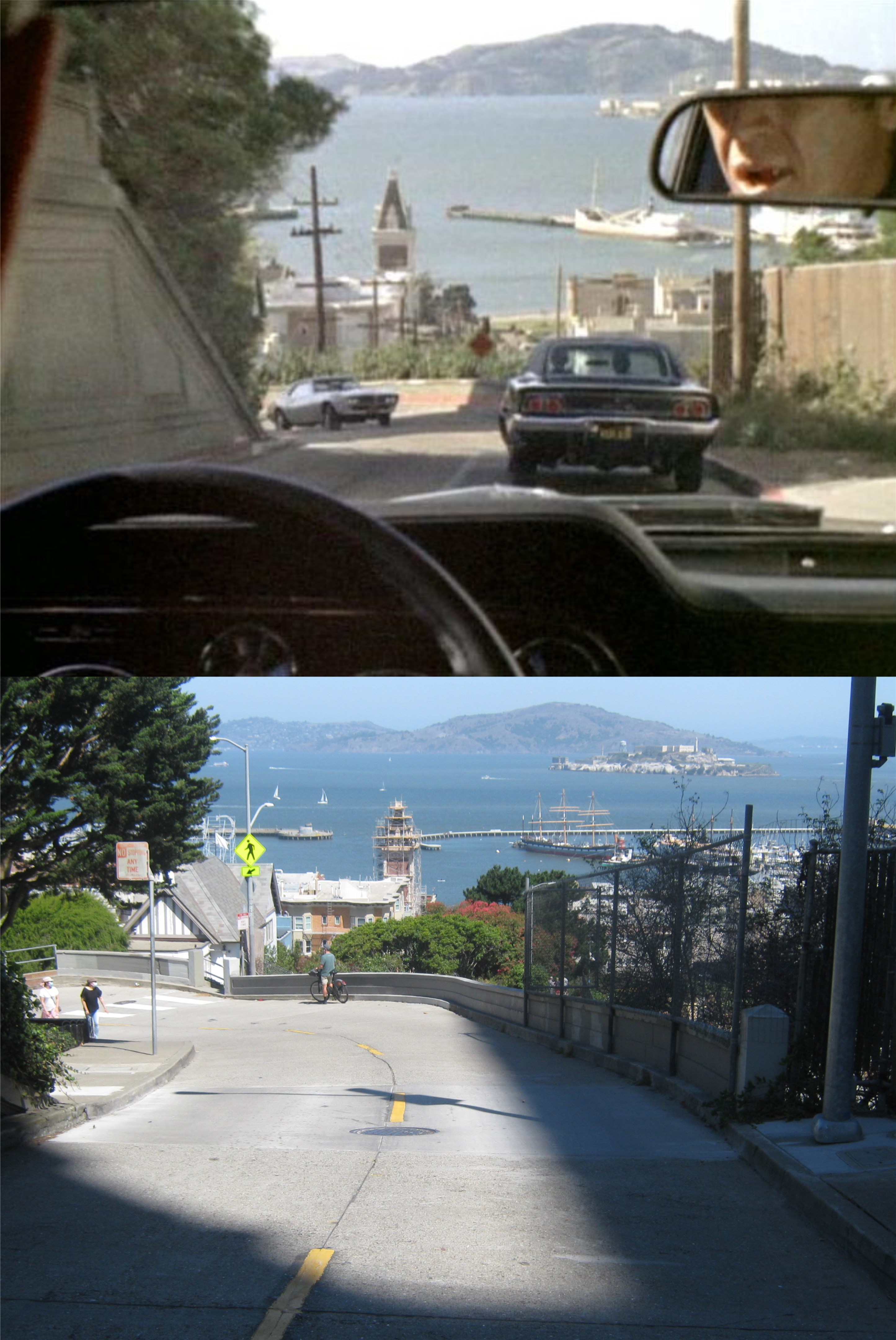
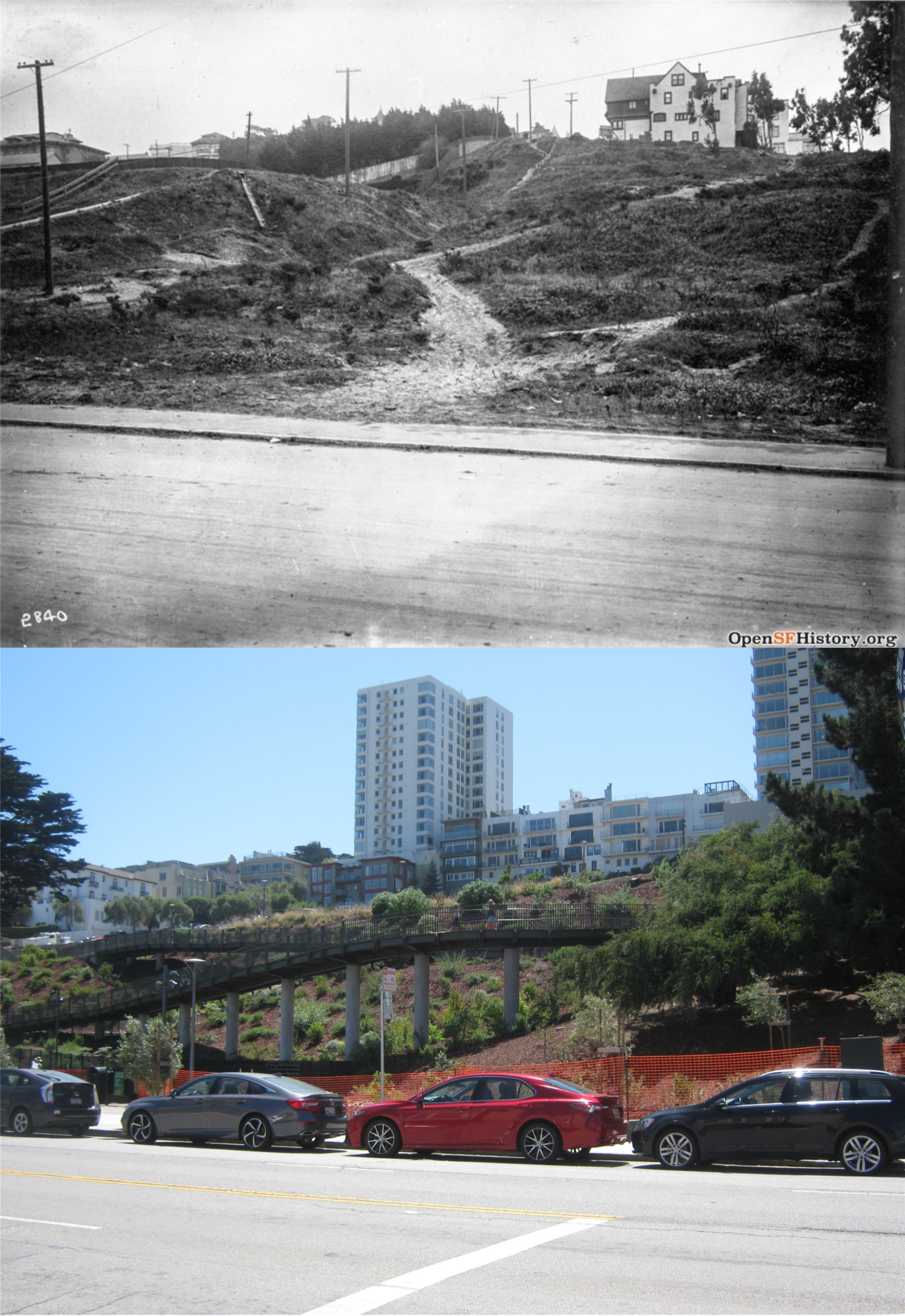
Highway 101, on the western side of Potrero Hill:

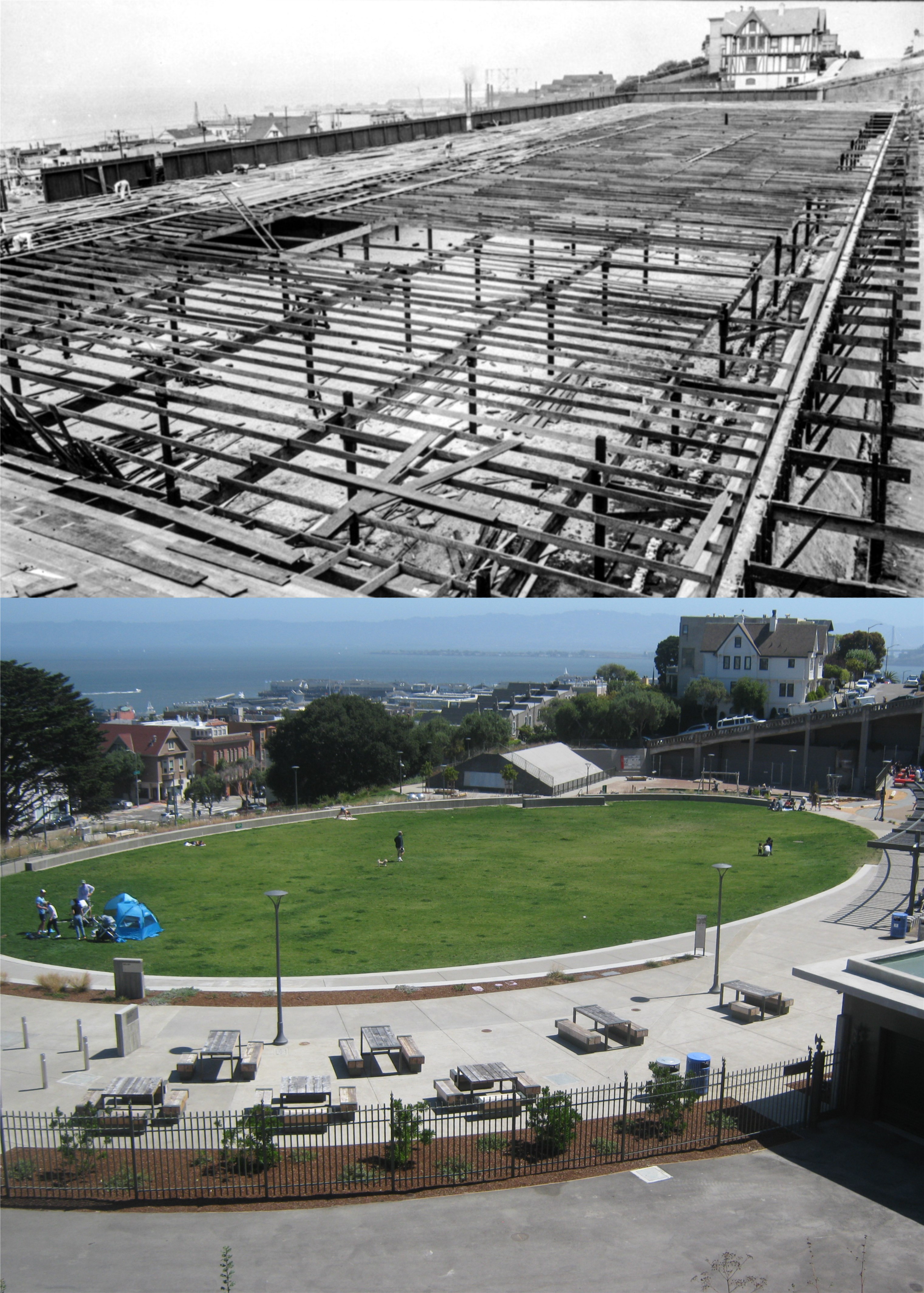
The old Reservoir being constructed between Hyde Street and Larkin Streets on Russian Hill: When I took my 2021 picture, they were just beginning work on a new park replacing the reservoir. The park opened in 2022.

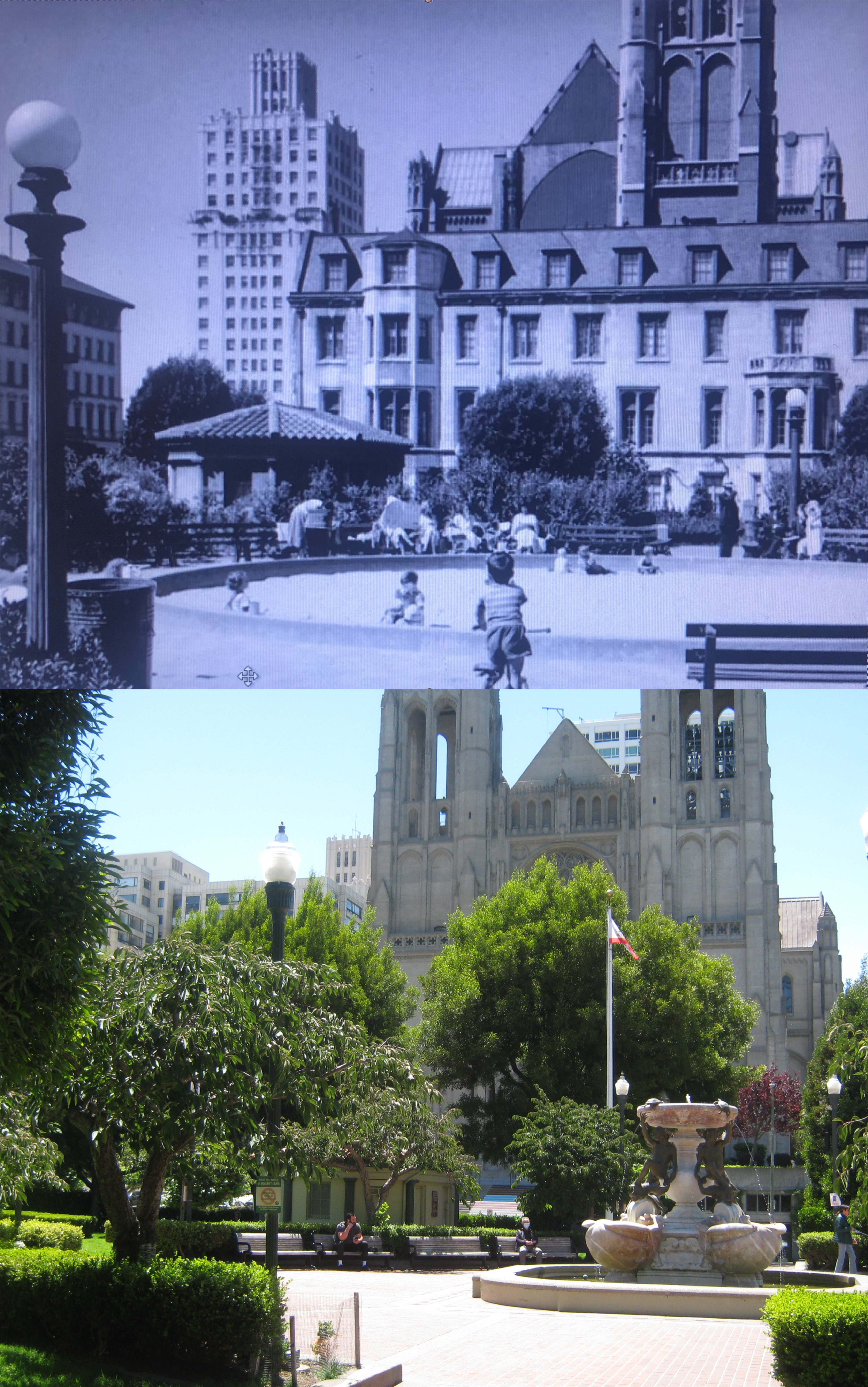
Looking across Huntington Park toward Grace Cathedral on Nob Hill: The building between Huntington Park and the church has been demolished, and the southern tower was completed in 1964.

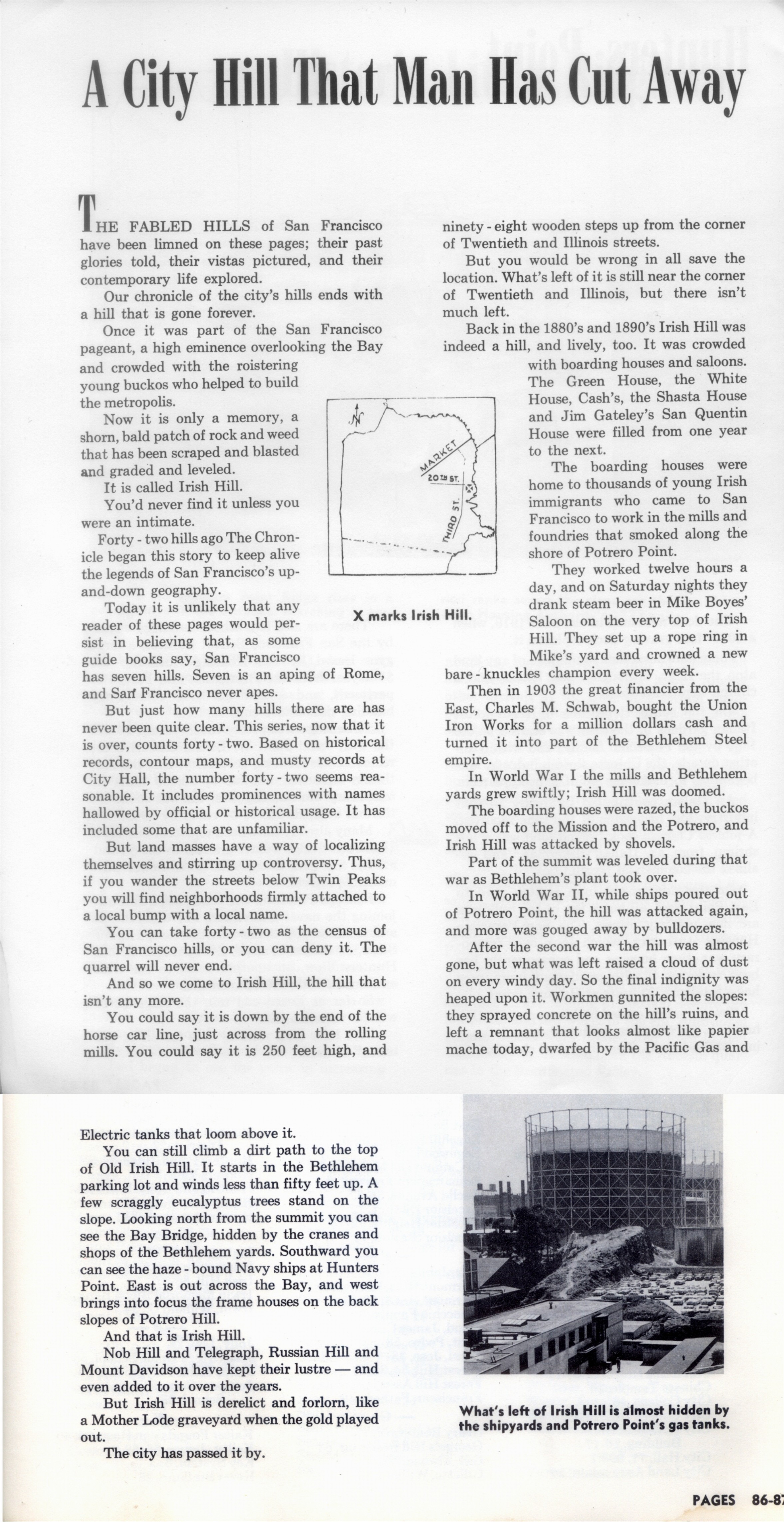
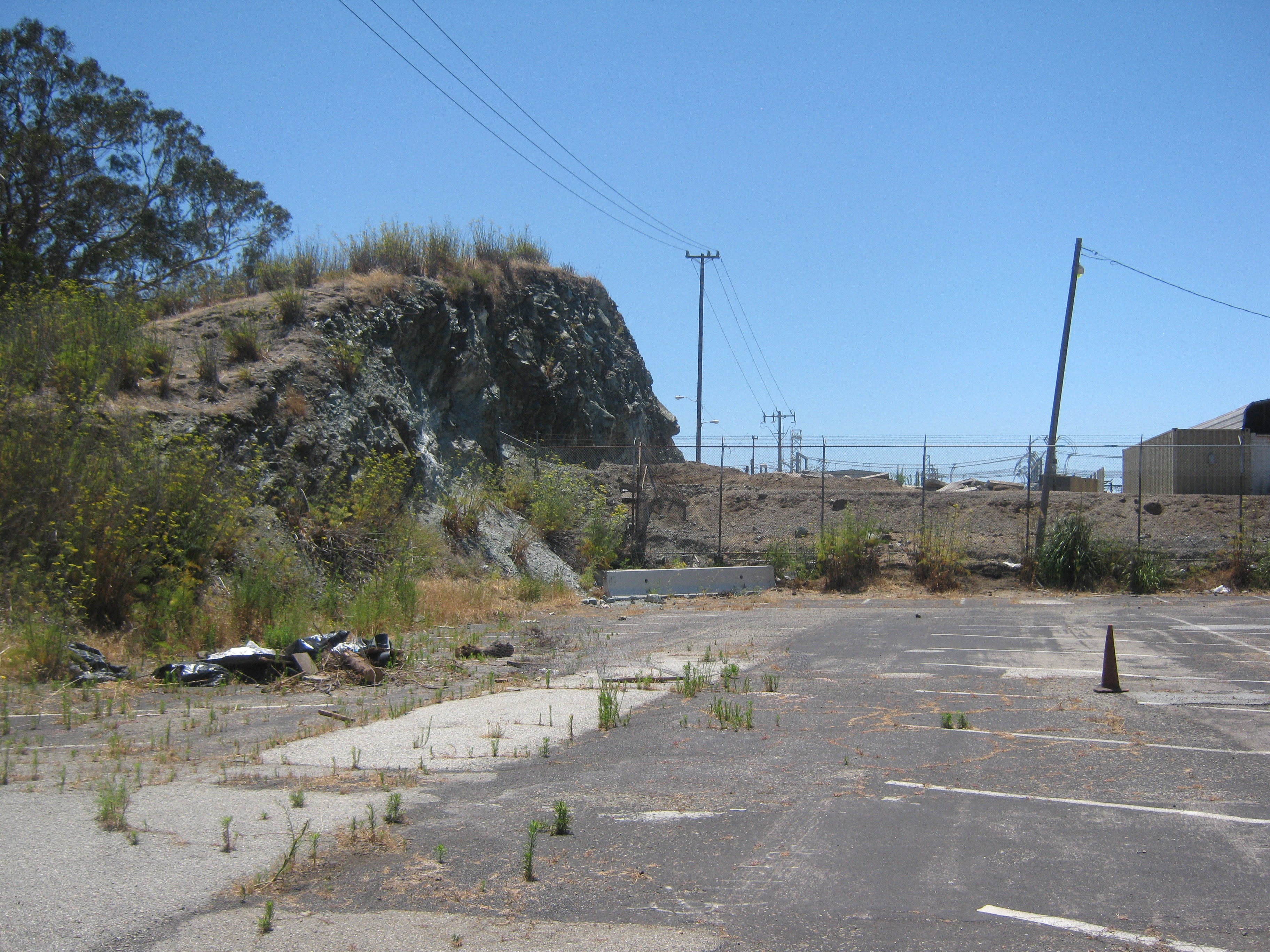
Irish Hill: Well I guess I’m an “intimate”, as mentioned in the text, because I found the hill; or what’s left of it. This was the closest I could come to updating the 1950s picture. This is all that’s left of Irish Hill; the city has indeed “passed it by”.

‘In Love and War’ (For Tom and Robin)

I found ‘In Love and War’ from 1958 to be a very enjoyable romance during a war movie. Set toward the end of World War Two, the plot concerns three Marine buddies, Robert Wagner, Jeffrey Hunter, and Bradford Dillman on shore leave in San Francisco before going overseas for fighting in the Pacific. Their three love interests are Hope Lang, unmarried and pregnant with Jeff Hunter’s child, Sheree North, Robert Wagner’s girl, who isn’t too sure about Wagner, seeing as how he’s a drunk and possibly a coward, (girls can be so particular sometimes) and Dillman’s squeeze, Dana Wynter, who’s not only an alcoholic as well, but obviously a slut! Dillman’s not too sure about their future either. The war scenes are action-packed and realistic, although nothing like the drama they’ll face on shore leave. Just kidding, the island fighting scenes are very well done. (Thumbnail images)

The film is presented in Cinemascope, so the characters are slightly elongated during the opening credits.

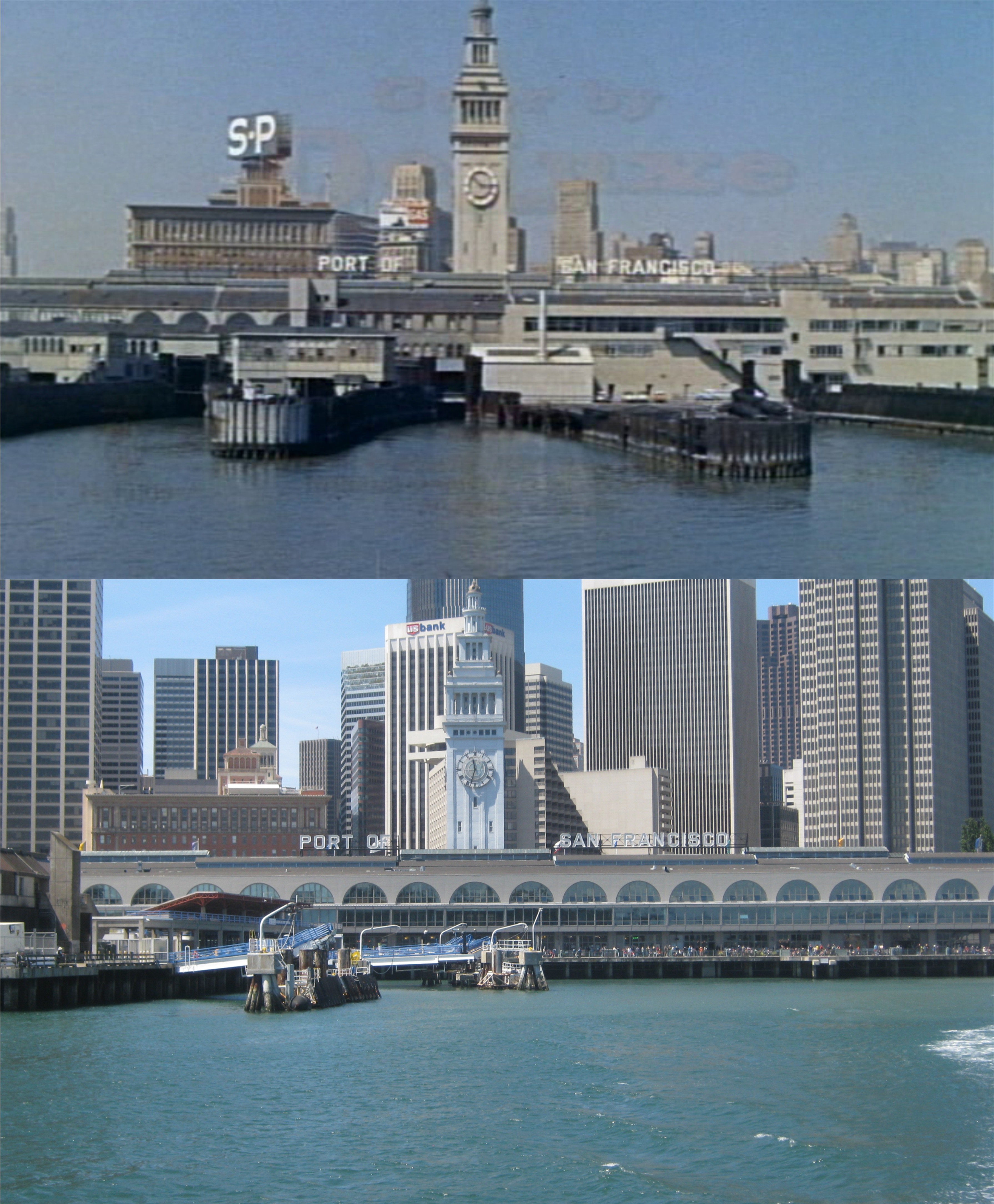
The three buddies enter San Francisco on a ferryboat from Oakland.

The credits fade out as they approach the Ferry Building.

As the ferryboat docks, the audience is told it’s 1944, although the island fighting episode shows film that looks like it was shot during the Battle of Tarawa, which was in November of 1943.

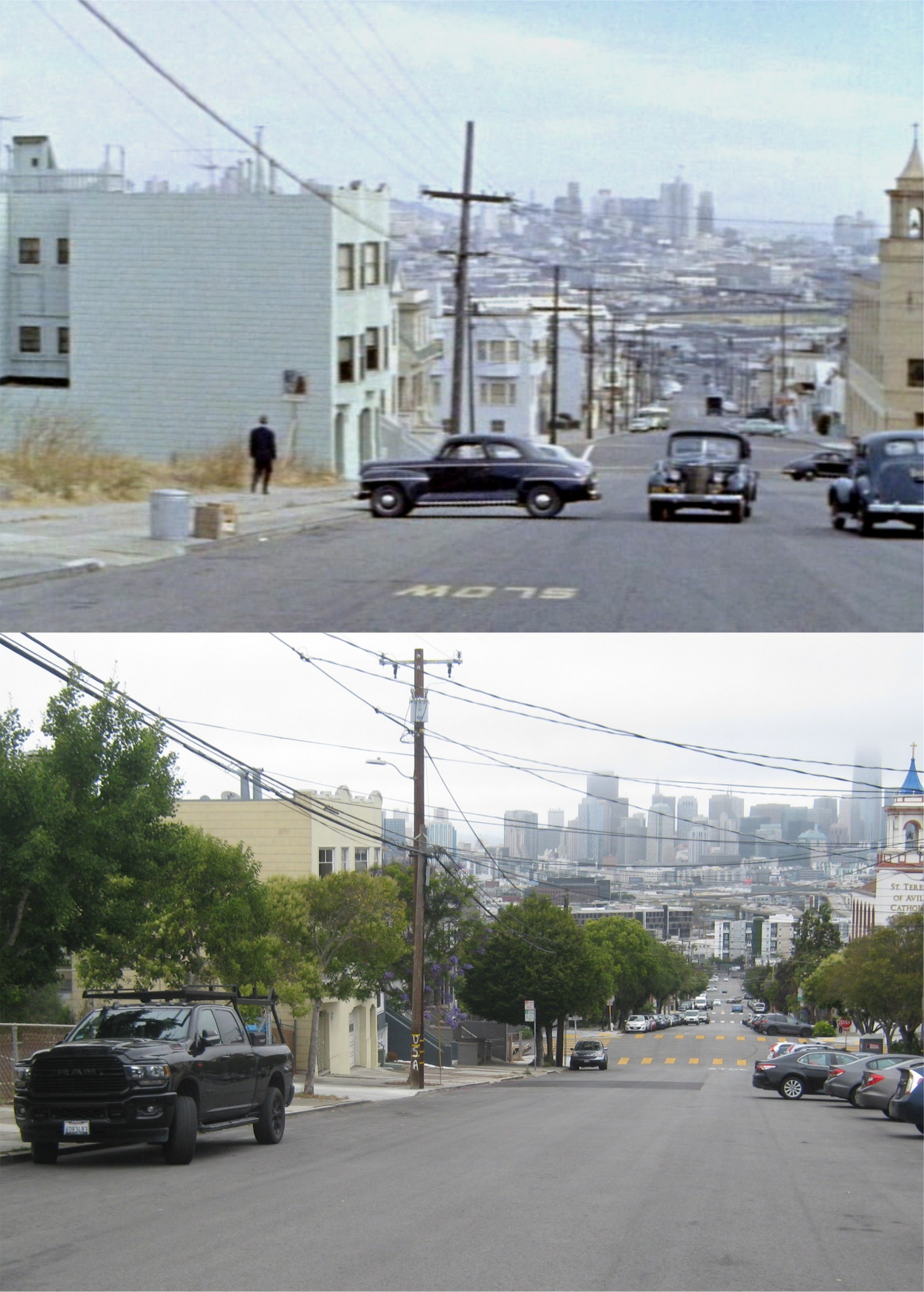
This was the most interesting San Francisco location in the movie. Robert Wagner pulls up to the home of his mother at Connecticut Street near 20th on Potrero Hill.

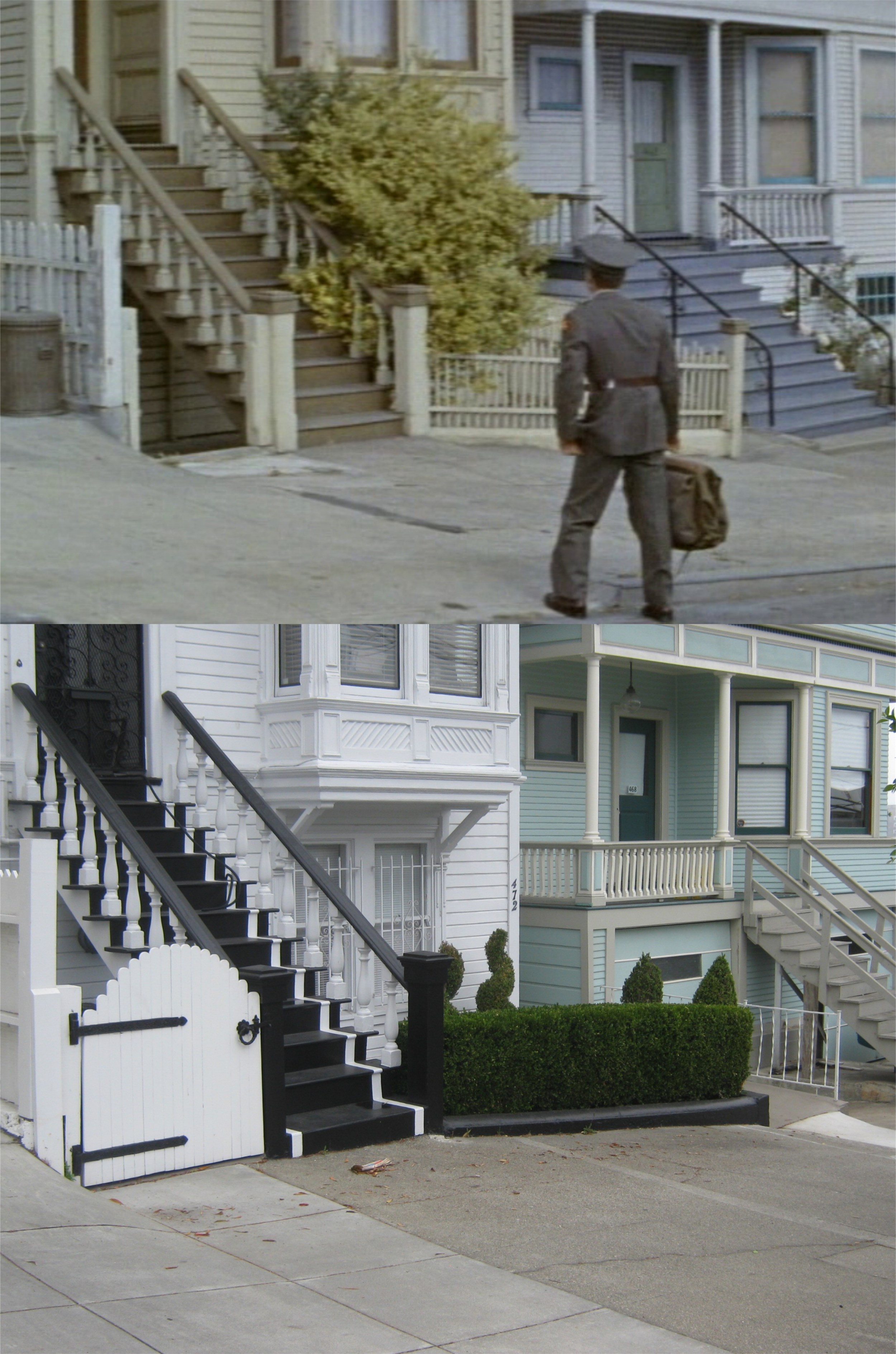
The house on the left is where his mother lives. She’s remarried to a sarcastic jerk who doesn’t like Wagner. I was able to meet the folks who live in the house on the right, and they were surprised to learn that their house is shown a number of times in the film. Tom and Robin told me that the house has been in their family for generations, and they had undoubtedly had another generation of their family members watching the film shooting.

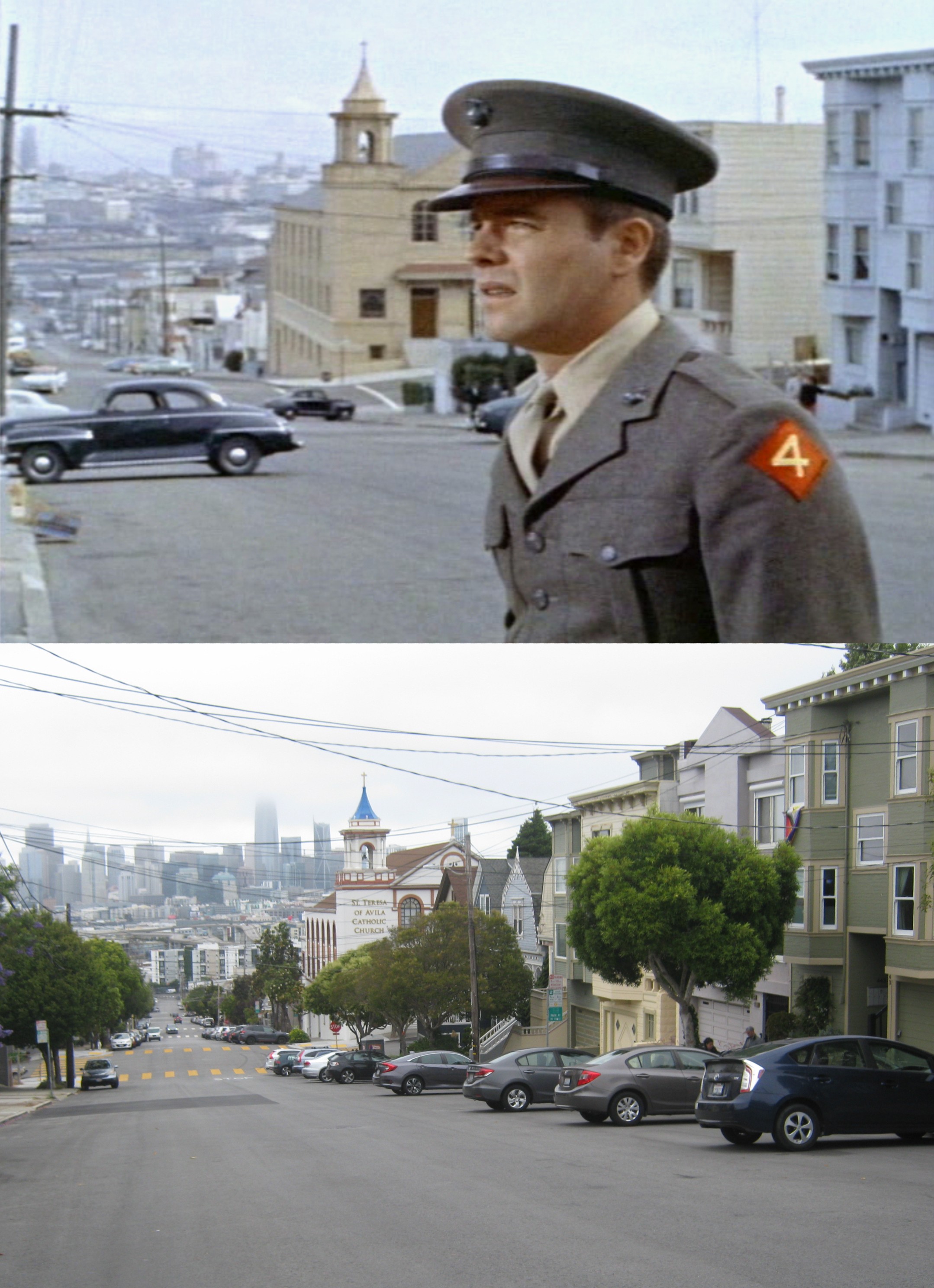
Bob hesitates before going in. The Catholic Church, St. Teresa of Avila, is in the background at Connecticut and 19th Streets.

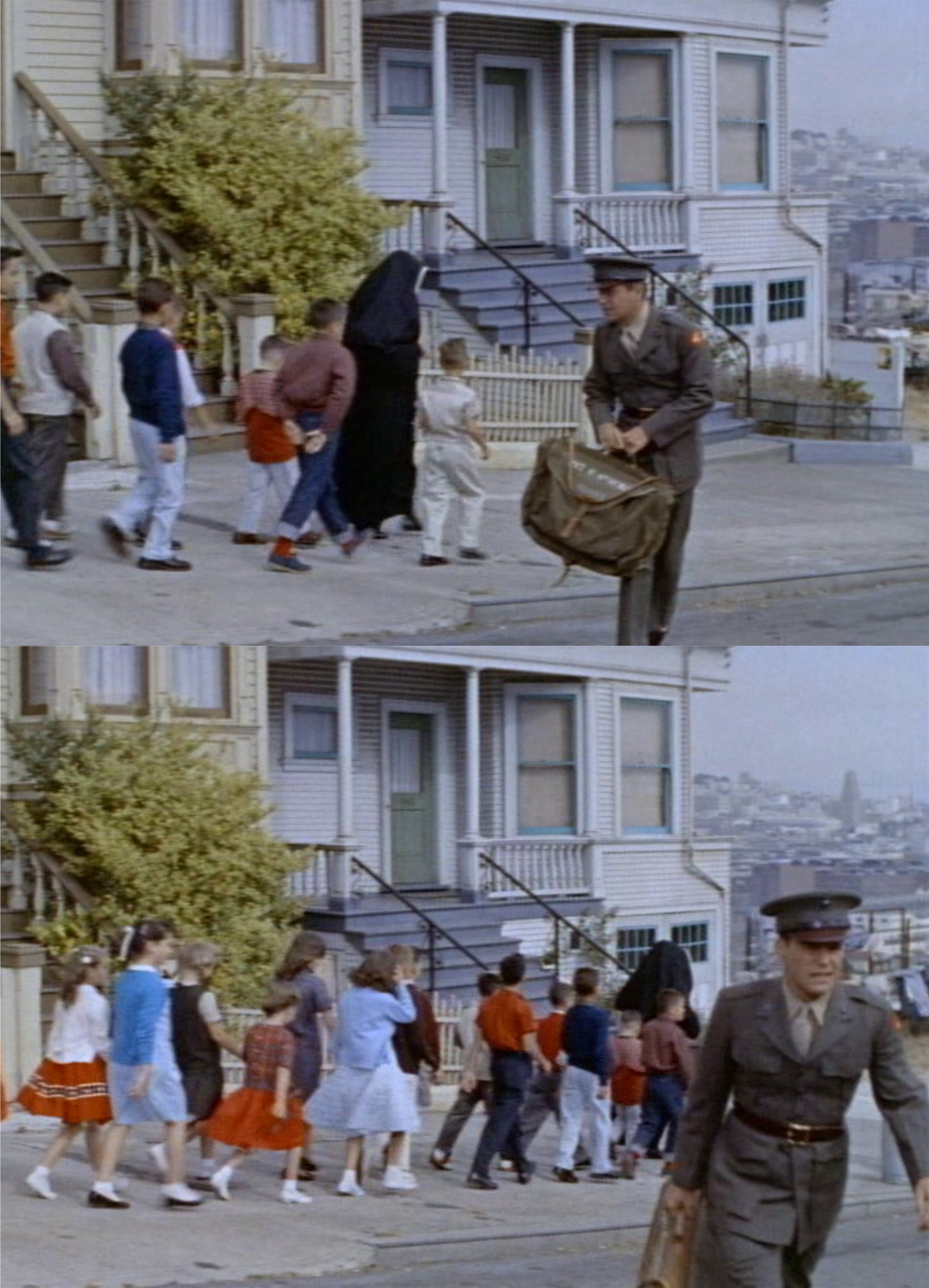
As a nun with a group of children pass by on their way to the church, Wagner decides that he’s not ready to go see mama yet.

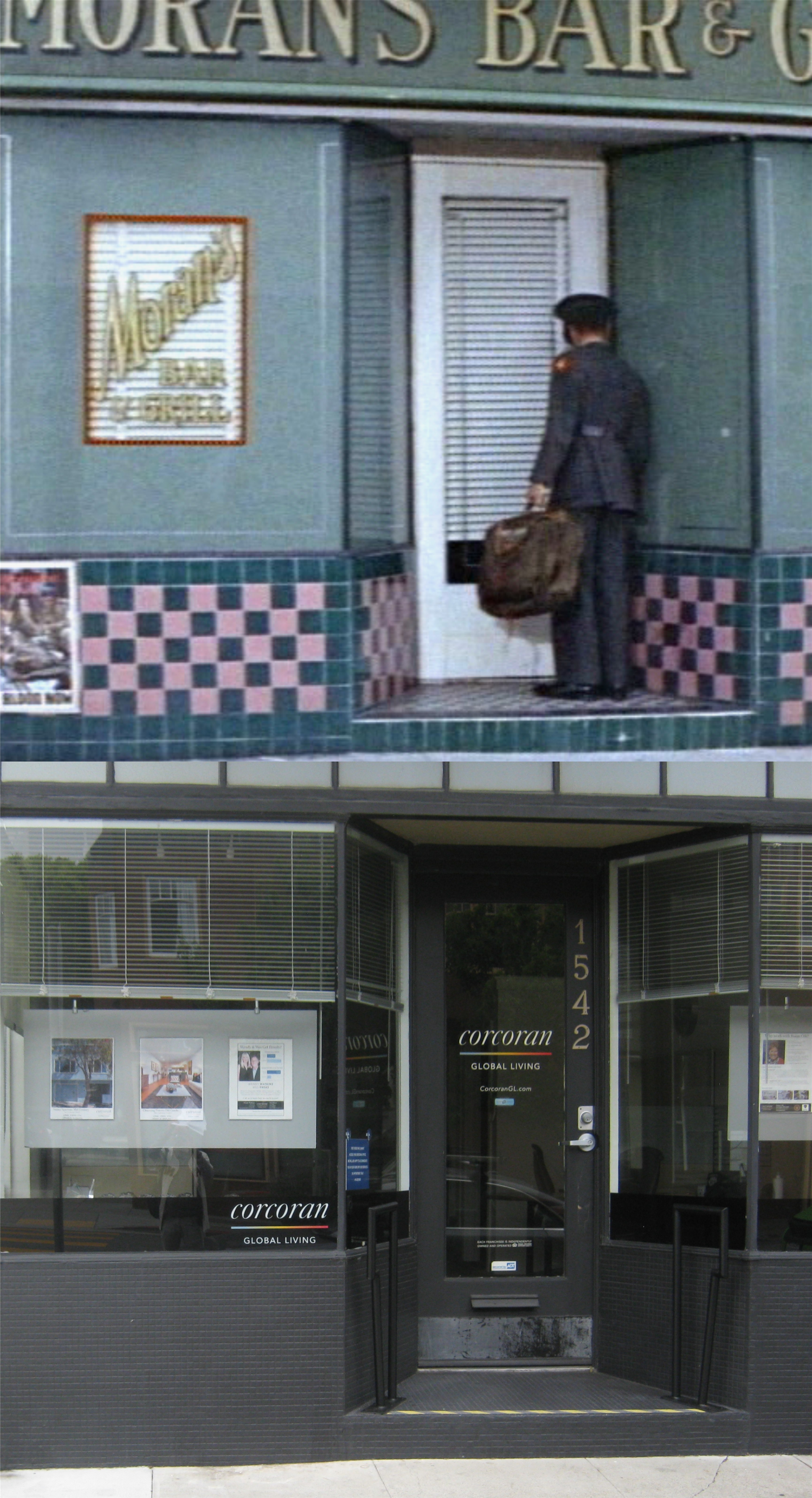
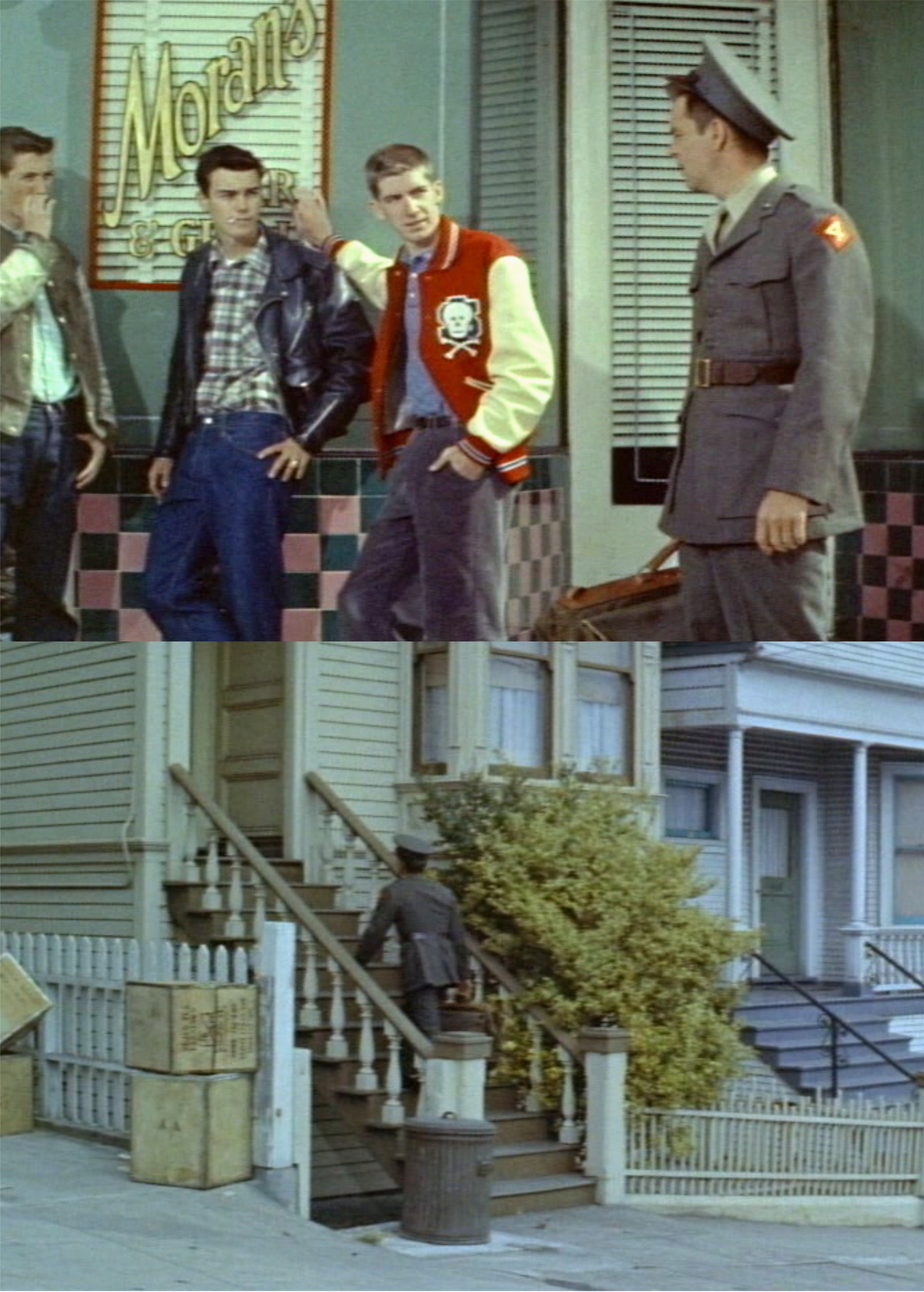
He decides to stop by for several quick ones at Moran’s Bar and Grill before going home.

The building that Moran’s was in, on the northeast corner of 20th and Connecticut Streets, is still there.

When he comes out, I thought there might be a rumble, especially since one of those punks has a skull and cross bones on his jacket, but there’s no trouble, Hey, don’t mess with a Marine, even a cowardly one! (You just know that later on in the movie Robert’s going to come through when the poop hits the stoop) Fortified with necessary medicine, Wagner goes in to visit his mother, but it turns out just as awkward as he imagined it would.

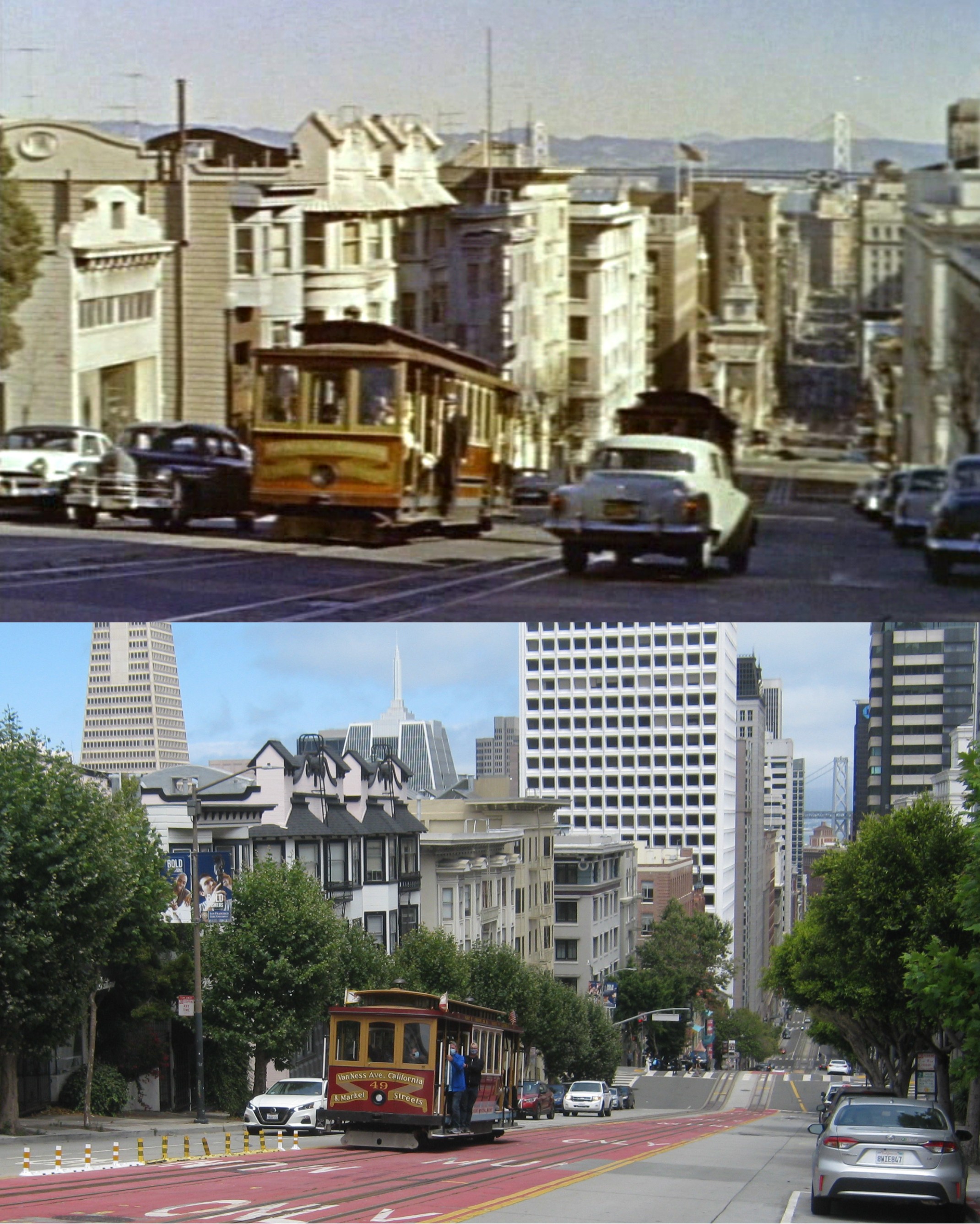
A cable car heads up California Street on Nob Hill at sunrise on the last day of shore leave for the three Marines, and the film includes the obligatory view from the Top of the Mark. Other locations in the movie that I wasn’t able to include are the Hoover Tower in Palo Alto, Monterey and Carmel.


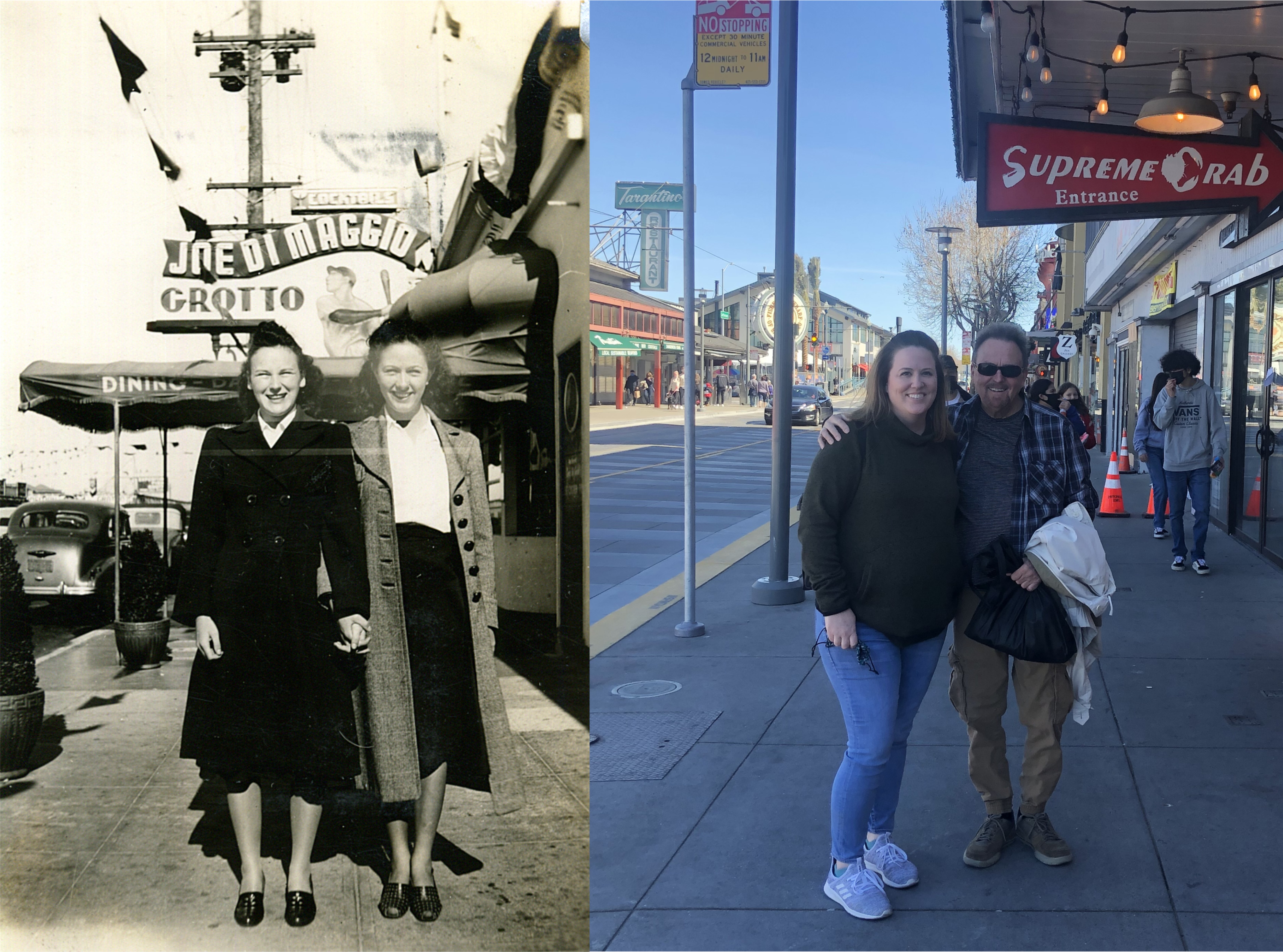
For Mom

My mom would have been one hundred years old today. She got to San Francisco long before I did. (Thumbnail images)

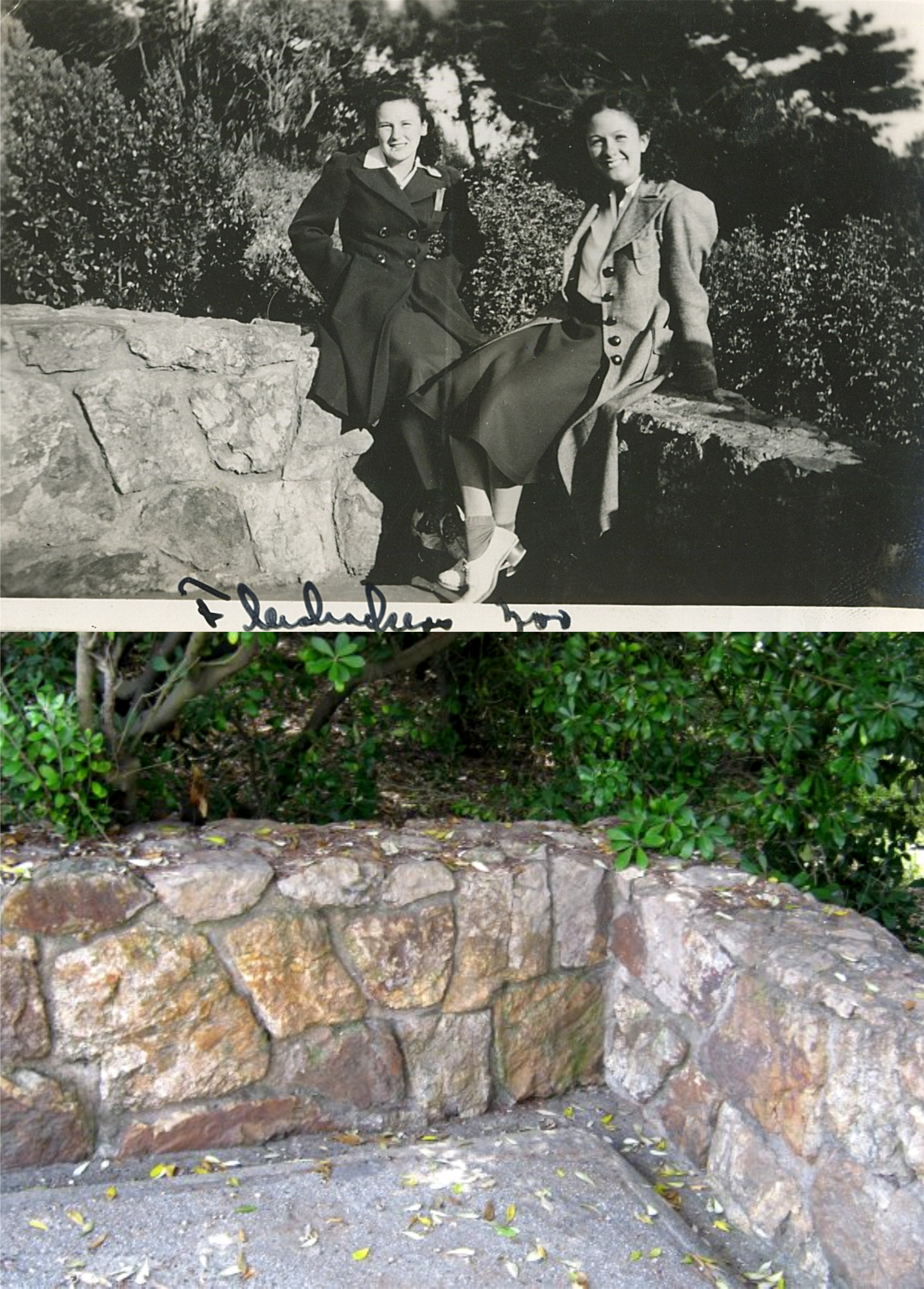
My mom, on the left with her cousin Frances, at the house at Anza and 24th Avenue, when she came out by train when from Grand forks, North Dakota:

Fisherman’s Wharf, where Joe DiMaggio’s Restaurant on Jefferson Street used to be:

Mom, on the right, at the old De Young Museum in Golden Gate Park:

At the old Sloat Blvd. entrance to the San Francisco Zoo, then known as Fleishhacker Zoo:

The Cliff House and Ocean Beach:


Alameda County Fair, 2022


Ah, the first day of summer, and a pleasant reminder that life’s not always where “little cable cars climb halfway to the stars.” About 39 miles southeast of San Francisco, the Alameda County Fair, interrupted since 2019 because of Covid-19, except for a week in October of 2021, began its 110th run. This IS what county fairs are all about. I got a chance to go out there last weekend to update some of those old pictures taken at the fairgrounds from the Images of America’s revised edition of its Alameda County Fair volume.(Thumbnail images)


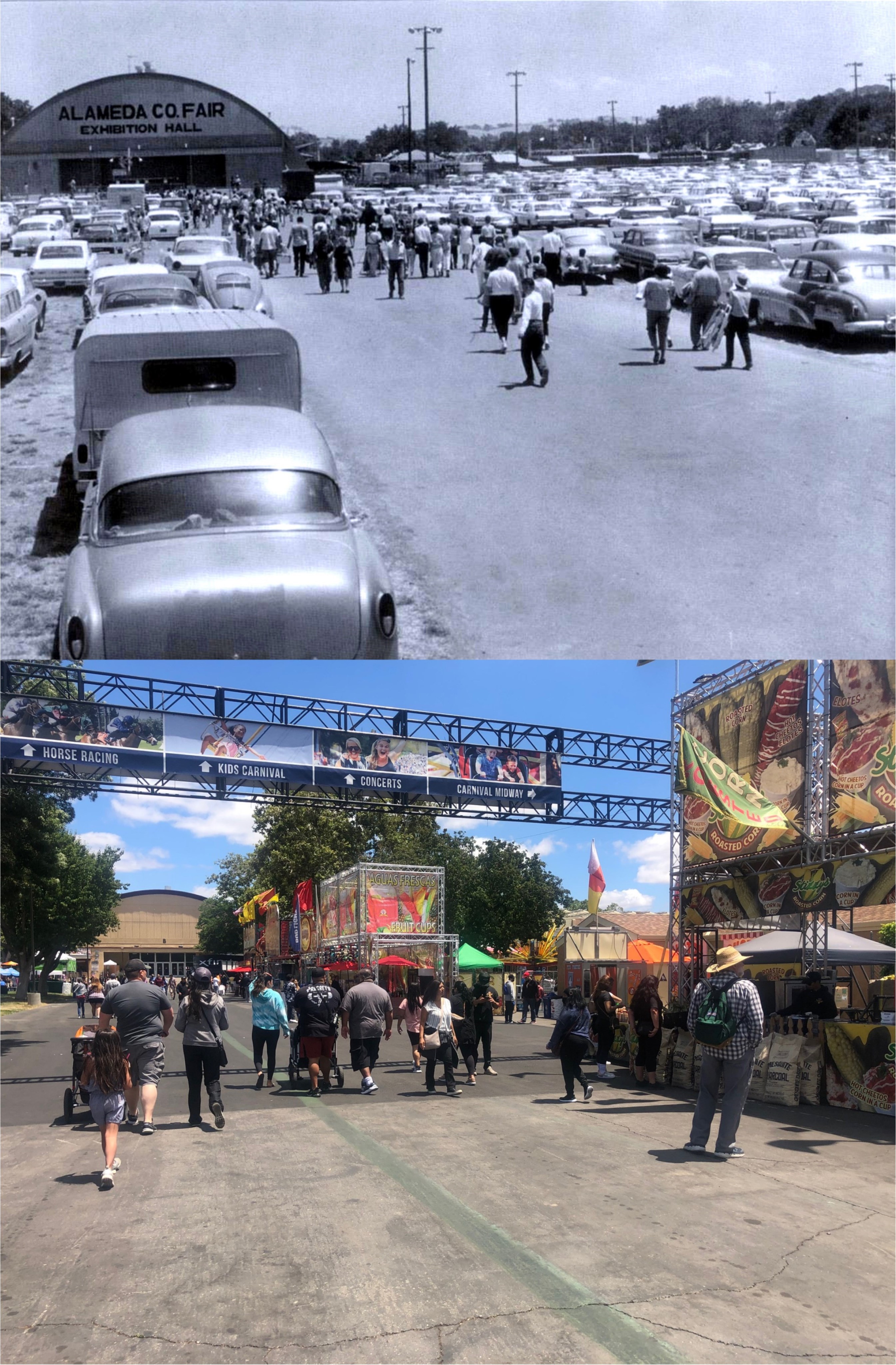
Most visitors still enter the fair at the same location that they did here in the 1960s.


Audrey Hepburn wannabes at the Midway in the 1950s:


The Model Train Exhibit has come a long way since this 1948 picture was taken.

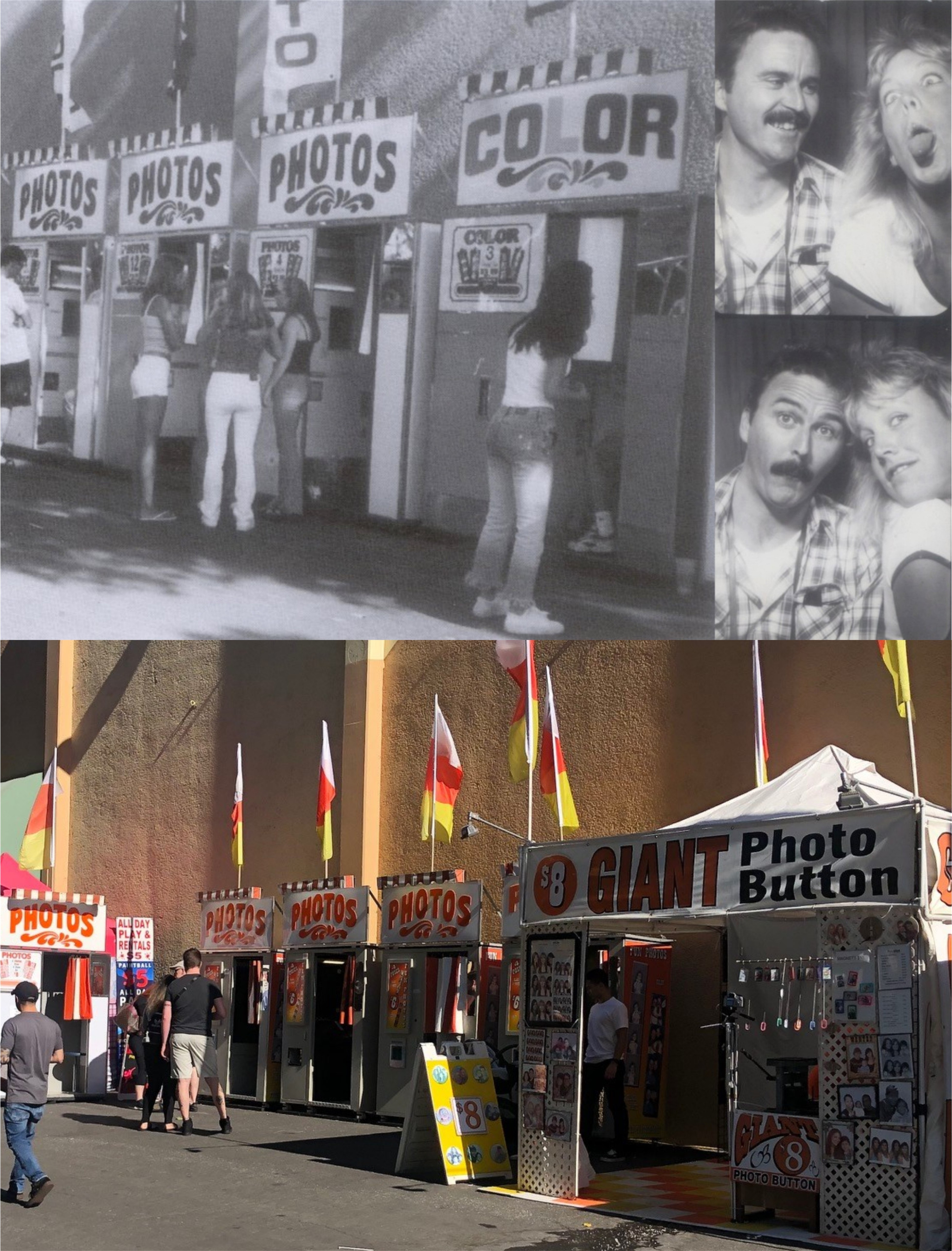
They still have plenty of the picture booths where visitors take those silly pictures of themselves. Yeah, that’s me; I was just as silly once too.


Dressed up visitors entering the old Floriculture Building, looks like the 1960s:

Tipsters at the old horse racing grandstand in the early 1960s: This grandstand was replaced in 1965.

A beauty contest on the Court of Four Seasons stage during the 1960s: This was about the only entertainment stage in the fair up until the 1970s. This is where the Court of Four Seasons stage once was.


The Chinatown Dragon Gate

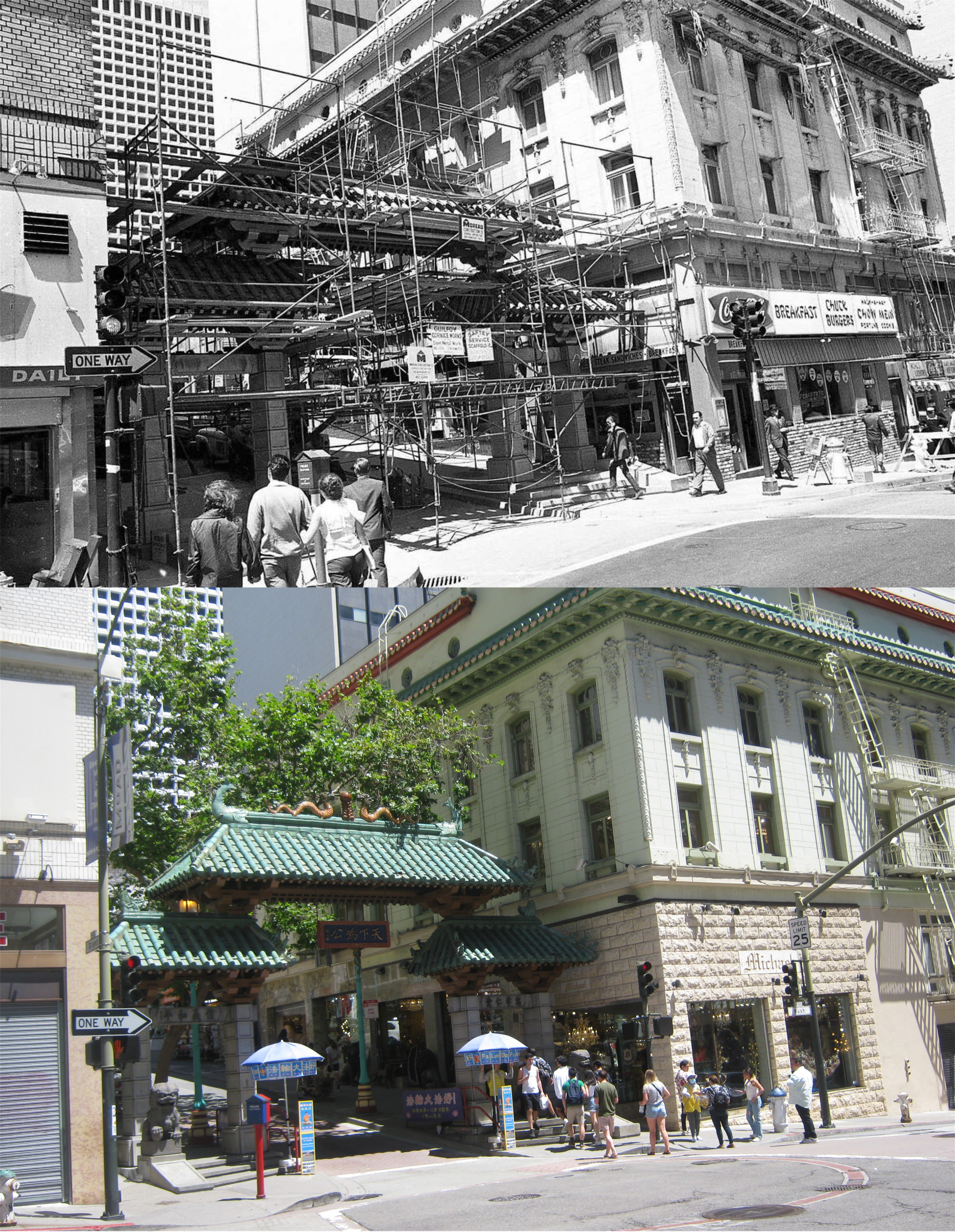
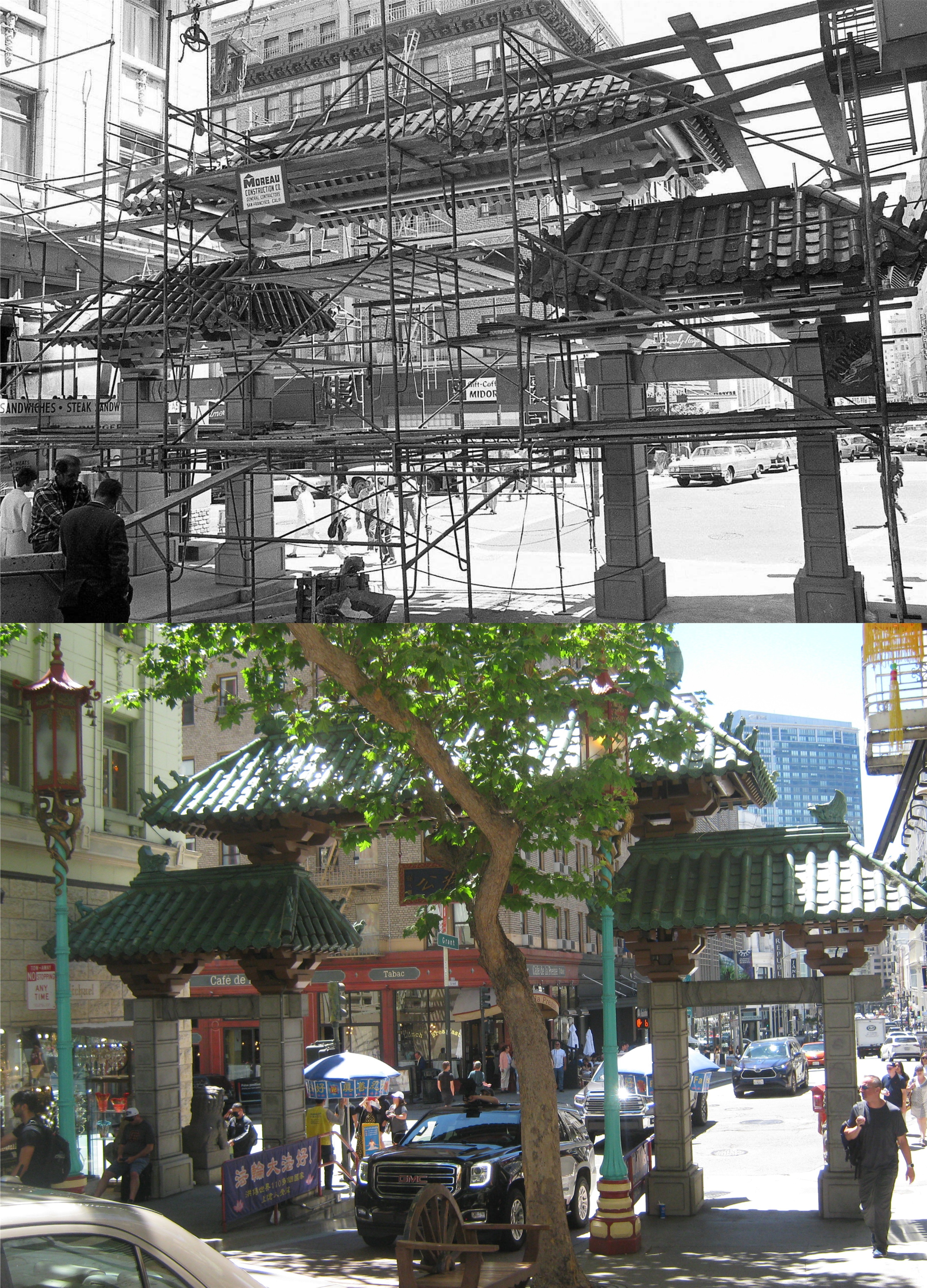
Originally, the general consensus was that the southern border of Chinatown was Pine Street. By the 1920s, Bush Street had become more accurate. Even Dashiell Hammett points that out in his classic mystery novel ‘The Maltese Falcon’ when Sam spade takes a cab to the spot where his detective partner Miles Archer was murdered. {Where Bush Street roofed Stockton before slipping downhill to Chinatown, Spade paid his fare and left the taxicab. San Francisco’s night-fog, thin, clammy, and penetrant, blurred the street}. In 1968, construction began on the Chinatown Dragon Gate at Grant Avenue and Bush, a gift from Taiwan, permanently establishing Bush Street as the southern gateway to Chinatown. The gate was completed in 1970, and is probably the most photographed spot in Chinatown. Yesterday’s post Pandemic visitors were back here with their cameras, including me. (Thumbnail images)

This is where {Bush Street (roofs the Stockton Tunnel) before slipping downhill to Chinatown} and Grant Avenue where the Dragon Gate is. (San Francisco Pictures Blog)

These two pre Dragon Gate pictures show the view from Bush Street looking up Grant Avenue to Pine Street. They show a lively, although not completely Chinese in theme, stretch of block. The first picture is the cover of a recent book, definitely on my bucket list, and the second one is from the San Francisco Pictures Blog.

Before the Dragon Gate, there was another gateway erected here at Bush Street, as seen in this picture from the 1930s, but I haven’t found a lot of information about it yet.

The rest of the vintage pictures were taken by photographer, Vince Maggiora, for the San Francisco Chronicle newspaper during construction of the Dragon Gate from 1968 to after its completion in 1970. Here you’re looking northeast from Bush Street and Grant Avenue in 1969:

The view from the southeast corner of Grant Avenue and Bush Street: I’ll bet there was a lot of burger and soda breaks among the crew.

Looking back through the gate to the southeast corner of Grant Avenue and Bush Street during construction:

Looking south down Grant Avenue toward Bush Street in 1971, after the gate’s completion:

Driving and walking through the Chinatown Dragon Gate, seen here in Vince Maggiora’s 1972 picture, has become another San Francisco must-do.


Muni Heritage Day, 2022

Muni Heritage Day, 2022: Great fun for everybody and a chance for me to update some slide pictures I took in the 1980s. (Thumbnail images)

The festival was held here between Steuart Street and the Embarcadero, in front of the Muni Heritage Museum. The Muni Heritage Museum building wasn’t around when I took my 1984 slide with the infamous Embarcadero Freeway in the background.

The free streetcar rides took the less traveled route down Steuart, and left on Mission to the Embarcadero. My picture of the intersection is from 1984; you can see the Bay Bridge and the Embarcadero Freeway in the far background.

I headed over to Market Street to hitch a bus ride up to the Civic Center. The older image is from 1983; the Embarcadero Freeway would have been behind me.


8th and Market Street, looking toward the Orpheum Theater in 1985: This would have been around the time the F Line started running vintage streetcars on a regular basis.

Market Street at Powell, looking toward the Ferry Building in 1985: The streetcar in the vintage picture was in Saturday’s festival and maybe the bus next to it too. There are a lot of vintage buildings in these shots too; the Flood Building on the left, the Phelan Building, the Call Building, the Humboldt Building and the Emporium Building across Market Street, among others.

I even got a chance to update my picture from Muni Heritage Day, 2016. I haven’t changed a bit in six years; I mean, except I got older, and more tired, and have less energy, but other than that…..


7th, 8th, and 9th Streets

This is a follow up to my 4th, 5th, and 6th Streets post, which was a follow up to my 1st, 2nd, and 3rd Streets post. It doesn’t getting any lower than that, (in street numbers). Most of these updates are where the streets intersect with Market Street; you don’t want to wander too far down 7th, 8th, or 9th Streets from Market Street, unless you enjoy seeing “the (bitter) angels of our nature”. (Thumbnail images)

7th Street at Mission Street, looking west along Mission in 1915: In a SOMA area heavily developed now, at least two buildings on the left have survived. (SFMTA Archives/San Francisco Picture Blog)

The old 7th Street Post Office Building, between Market and Mission Streets, circa 1905: They wouldn’t have had too many new-fangled automobiles on the old stone 7th Street back then. (opensfhistory.org)

Looking east along Market Street at 8th in 1941, where the much loved Crystal Palace Market was. Horse Doovers were a MacFarlane Candy confection, with a play on words for the French appetizer expression hors d’oeuvre. (San Francisco Picture Blog)

8th Street, looking toward the old City Hall near Market Street in 1905: The City Hall Building, located where the San Francisco Main Library is today, crumbled within minutes after the 1906 Earthquake. (opensfhistory.org)

Very little has changed looking east along Market Street since 1931; except for the Transamerica Pyramid and the Bank of America Buildings peeking out over the top on the picture right of the old Empire Hotel Building. (SFMTA Archives/San Francisco Picture Blog)

Looking west along Market Street at 9th in 1985; they were just beginning to run the old streetcars along Market Street back then. Twin Peaks are in the far background of both pictures. (San Francisco Picture Blog)

Only motorcycle parking is allowed now in front of the old Wells Manufacturing Company Building on 9th Street, south of Howard Street. The vintage picture is from 1951. (opensfhistory.org)