With the Labor Day Weekend approaching and the unofficial end of summer, I thought I’d post a few vintage pictures of some “working class heroes” from the past, and the jobs they did around San Francisco.
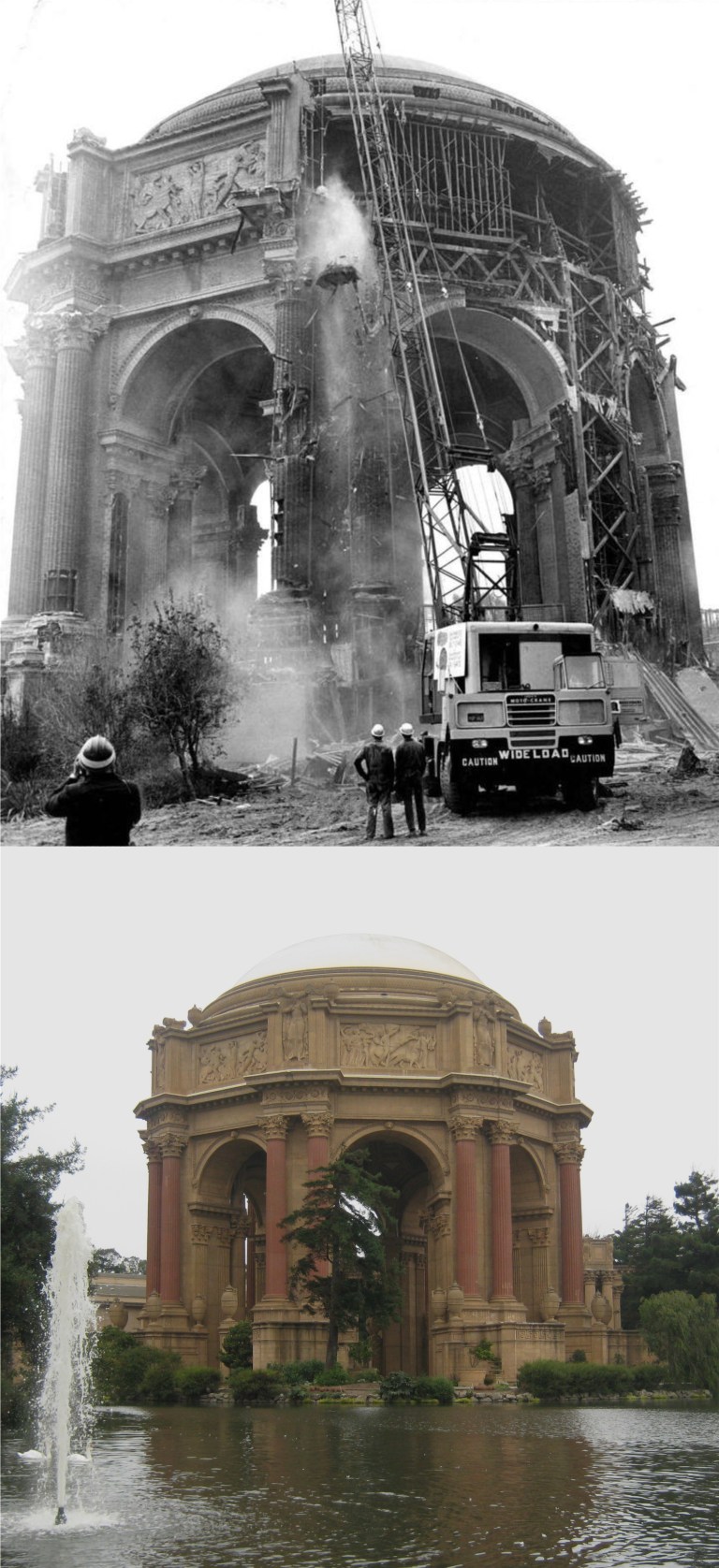 This was a big work order out at the Palace of Fine Arts. In 1964 the 1915 survivor from the Panama Pacific Exposition of the same year was demolished and rebuilt. The moat was drained so the vintage picture is closer to the structure. (SF Gate, San Francisco Chronicle)
 Street cars and a Belt Line Railroad train look like their racing under the pedestrian walkway of the Ferry Building in what must have been a busy work day in the 1940’s. (San Francisco History Center)
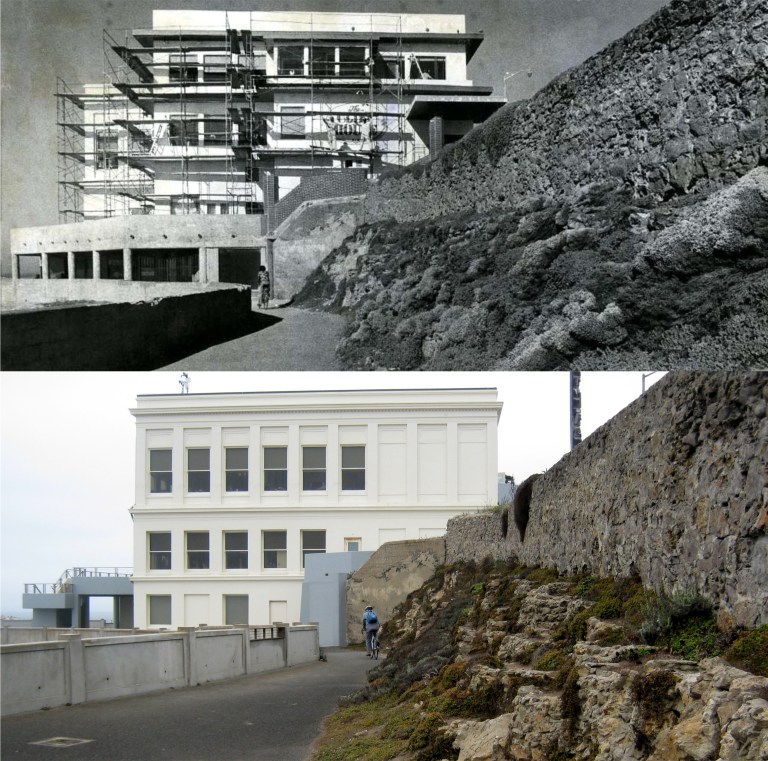 A facelift or maybe just a painting being done on the Cliff House in 1978: This was the Cliff House that I loved the best and have the fondest memories of.
 Sometimes, it’s not about working in the City, but about looking for work, which this lady at Eddy and Powell Streets in the 1960’s may have been doing. Or, she may have been looking for the address of an ex boyfriend she was stalking! I’ll give her the benefit of the doubt. Eddy doesn’t cut through to Powell anymore, but stops at Hallidie Plaza. The Flood Building behind her was the location of the flagship San Francisco Woolworth’s Department Store which had covered up the building with some kind of neo-deco look, if there is such a thing, at the time. You can see the Powell Street cable car tracks in the vintage picture but no lines, and the cable cars were only 25 cents a ride then, and a lot of times they didn’t even take your money. (SF Chronicle)
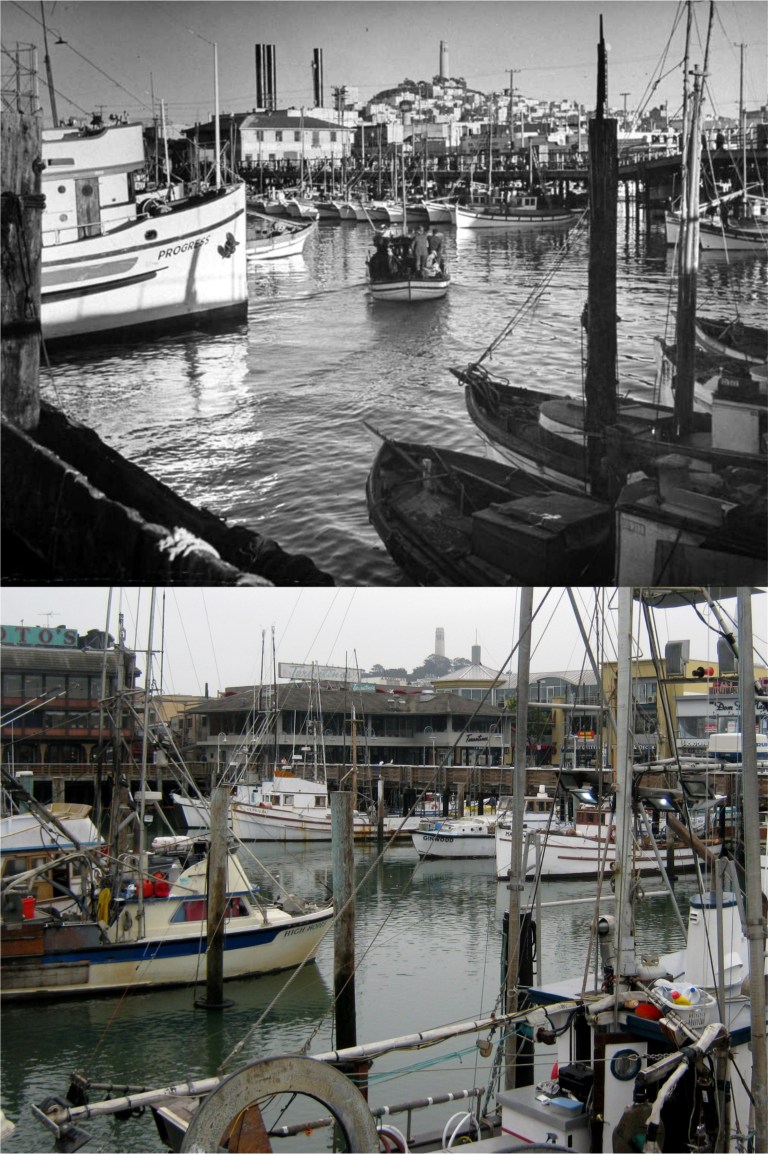 Fishermen bringing in a haul on an early workday morning at Fisherman’s Wharf in the 1930’s: They go out to sea in the middle of the night and bring in their catch long before the tourists get to Fisherman’s Wharf.
 This picture I took for a previous post of a guy selling crabs at Fisherman’s Wharf makes a nice comparison with this 1940’s photo at Fisherman’s Wharf. (SF Chronicle)
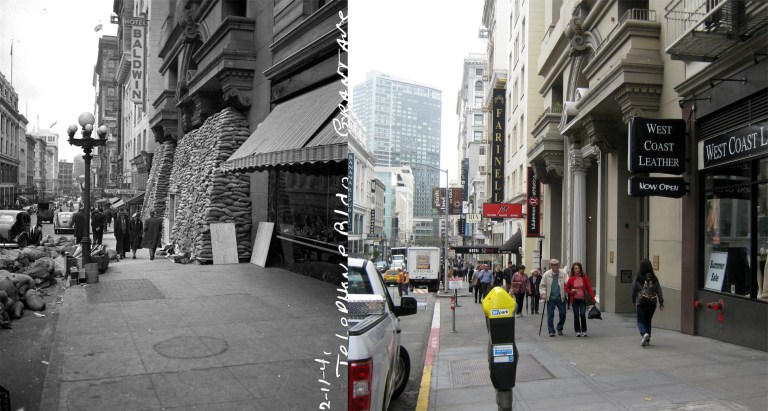 If you don’t think that was a lot of work stacking up those sand bags in front of the old Telephone Exchange Building on Grant Avenue in December of 1941 then you’ve got a job here with me! This building routed most long distance calls in and out of San Francisco at the time, and was considered so important that the sand bags were piled up to protect it from bomb damage just after Pearl Harbor. There was a real concern at the time that San Francisco would be bombed by the Japanese soon.(SF Chronicle)
 A little further down Grant Avenue near Market Street, probably near the same time as the previous picture, some type of delivery work is being done. Maybe they were putting sandbags in front of the wrong building!
“Hey, you guys, it’s further up the street!” (SF Gate, the San Francisco Chronicle)
 “Working girls” in San Francisco: This is an interesting story I learned of recently. On January 25th 1917 approximately 300 prostitutes stormed the Central Methodist Church at Leavenworth and O’Farrell Streets to confront Reverend Paul Smith, one of the main crusaders against prostitution in San Francisco. “Hell hath no fury like a harlot scorned!” The ladies told the Reverend most of the women needed the money to support their children, and they could not survive on wages they could earn at other work. The confrontation became heated, and also a little fantastic! One of the ladies said that “it was men who were to blame for the prostitutes’ lot in life. It was men who sought out prostitutes and other men who profited from their trade.” When Reverend Smith asked them if they would be willing to do housework, one of the ladies answered, “What woman wants to work in a kitchen?” Although Reverend Smith appeared to be sympathetic, he wasn’t a “forgiving” pastor, and it was clear that the ladies weren’t going to change his mind. A crowd had gathered outside the church as the “fallen angels” stormed out, many of them covering their faces. (Found SF, and the San Francisco Chronicle)

 The San Francisco Chronicle issue of the incident and the “Magdalenes” leaving the church:
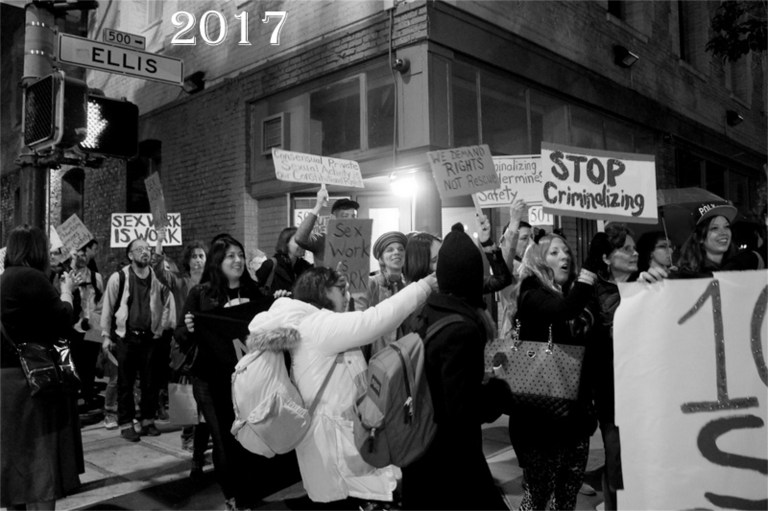 On January 25th 2017, a march was held on the 100th anniversary of the prostitutes’ demonstration. (Nation Reports)
 The demonstrators marched to the intersection of Leavenworth and O’Farrell Streets where the church once stood. (static1.squarespace.com) . Below is a link to the Found SF site and an article about the original demonstration.
http://www.foundsf.org/index.php?title=Prostitute_March_1917

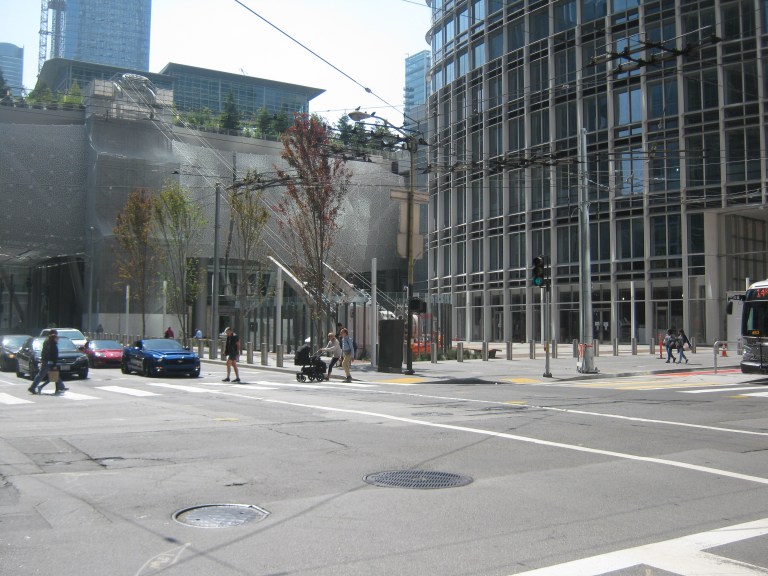 We’ll start at the northeast corner of Mission and Fremont Streets looking toward the two terminals on closing day in August of 2010 and this weekend, as all of these pictures will be.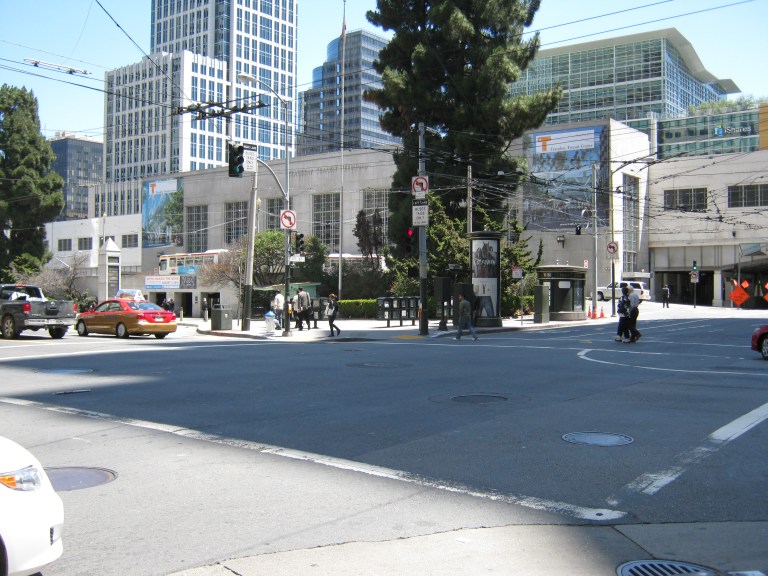
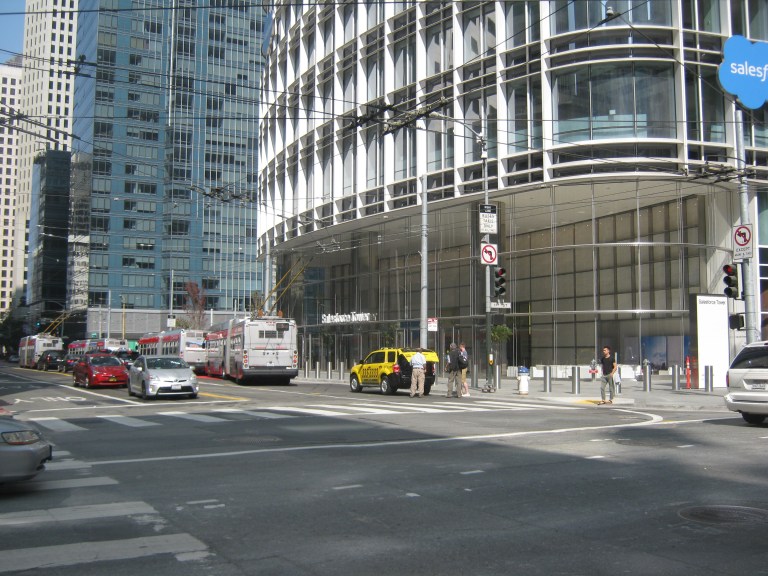 We’ll move down Mission Street one block to the northwest corner of Mission and 1st Streets.
 The main entrance to the Transit Terminal then and now: Although the Salesforce Building and Terminal were built where the old terminal was, the entrance to the new building is a little further back from Mission Street and closer to Fremont Street.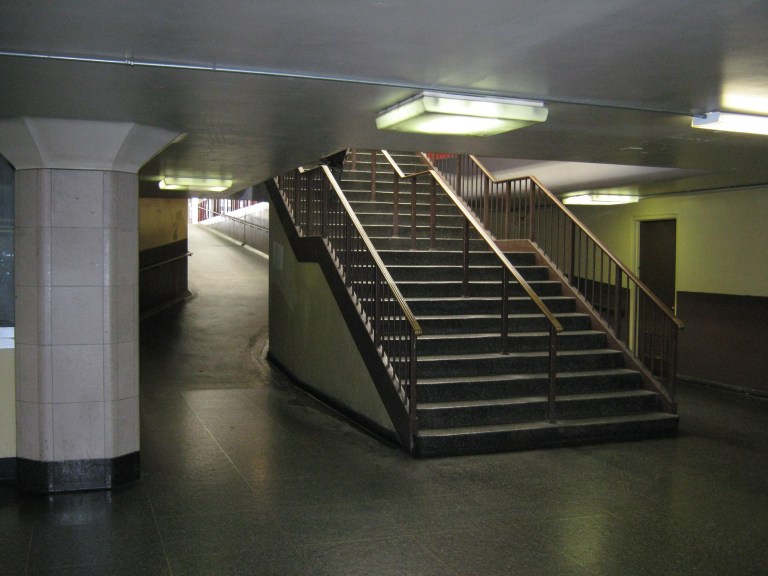
 These are one of the old stairs and ramps that went from the second level to the third floor where buses arrived and departed and today’s escalator to the second level where buses travel to and from the Bay Bridge in the new transit center.
 These were the old benches at street level where you waited for your bus to depart and if you were like me, fell asleep some times and missed it. The stairs in the back took you to the second floor, where you went up to a third level for the buses. The bottom picture is looking down to street level from the escalator that goes to the second level today.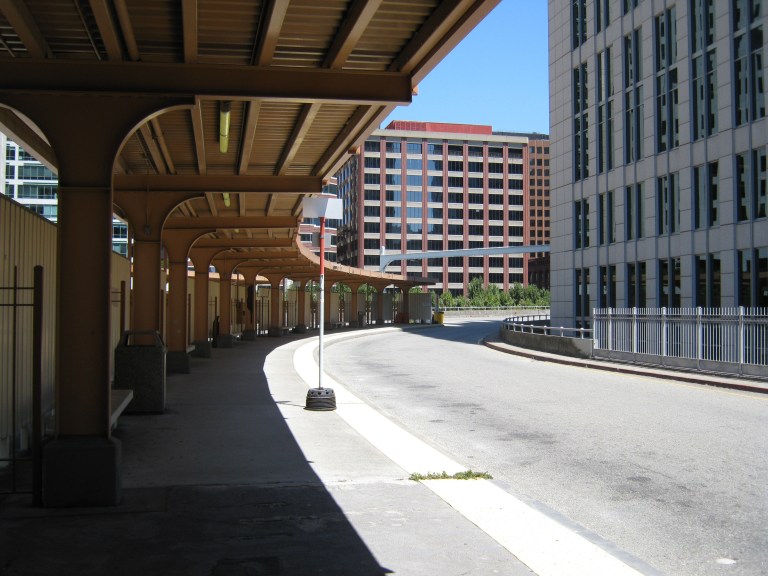
 Buses from the East Bay arrived on the eastern side of the terminal here, and left for the Bay Bridge on the western side of the building. Now, buses arrive and leave on the bus bridge to the Bay Bridge on only the west side shown in the bottom photo.
 This is the western side of the old terminal looking toward the Pacific Telephone Building on New Montgomery Street, and from the park on the roof of the Salesforce Transit Terminal.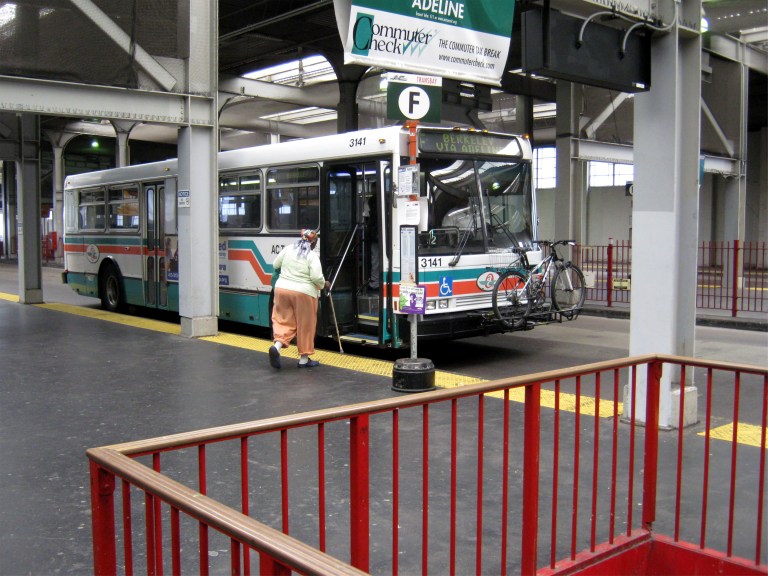
 There wasn’t as many people leaving by bus in 2010 or this weekend, but there will be eventually.
 Getting ready to depart in 2010 and today: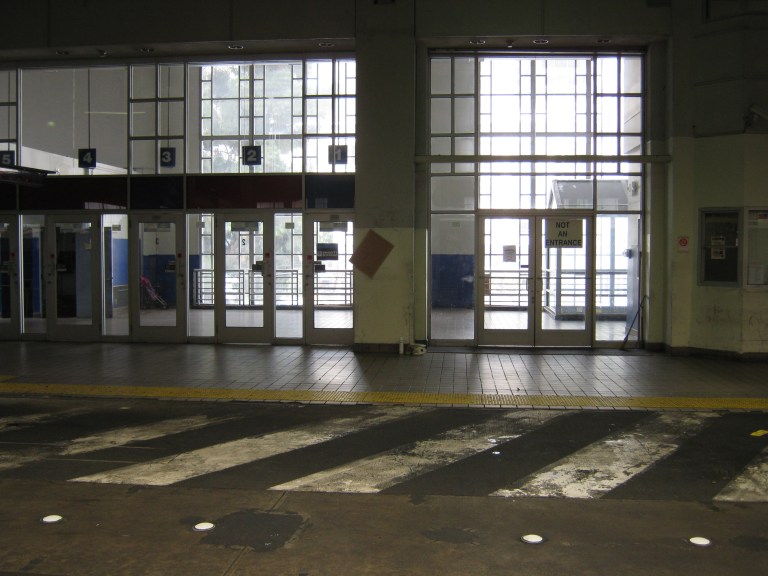
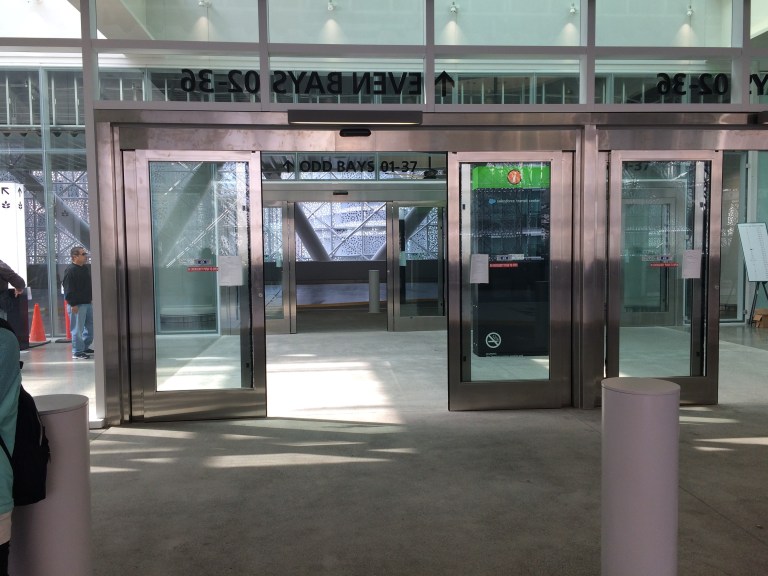 Both of these images are looking toward the north side of the two terminals. In the old Transbay Terminal picture on top, this was where passengers used to catch the Key Systems Trains that crossed the lower deck of the Bay Bridge.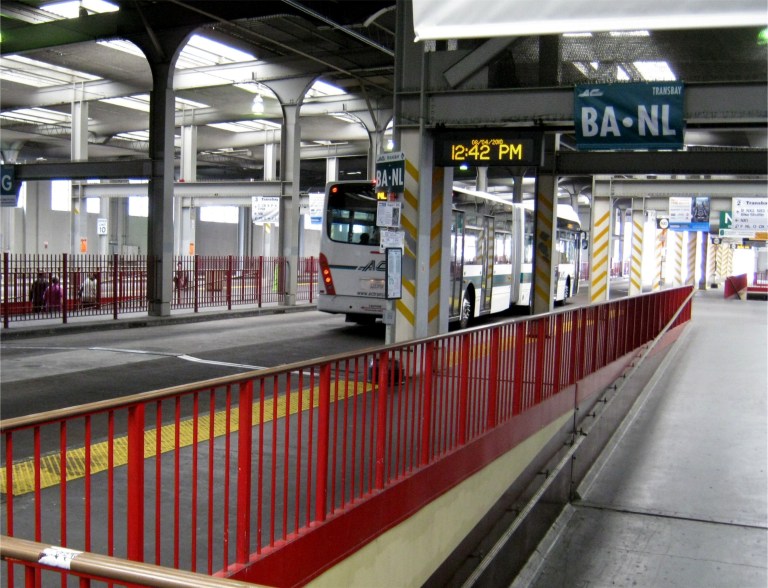
 Two buses off, back across the Bay Bridge: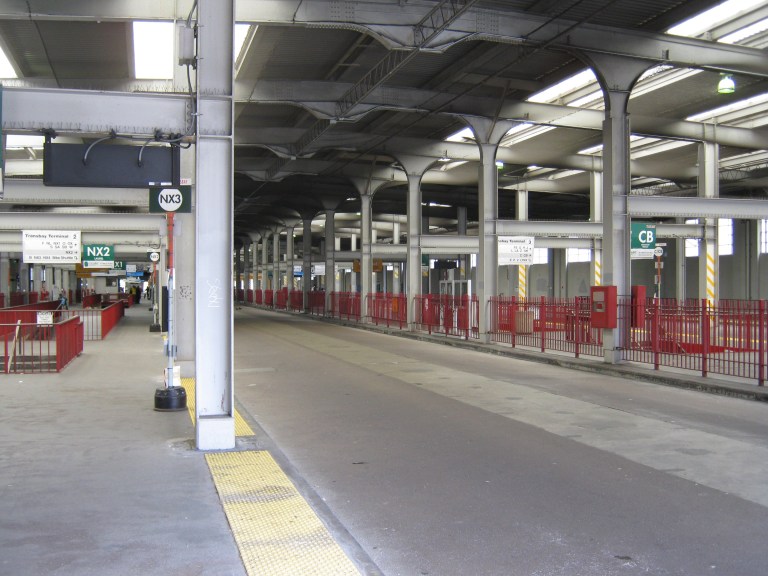
 What was lost and what was gained: I guess the thing to say is that they are and were both beautiful in their way.
 Happy passengers, I hope, arriving at the terminal then and now.
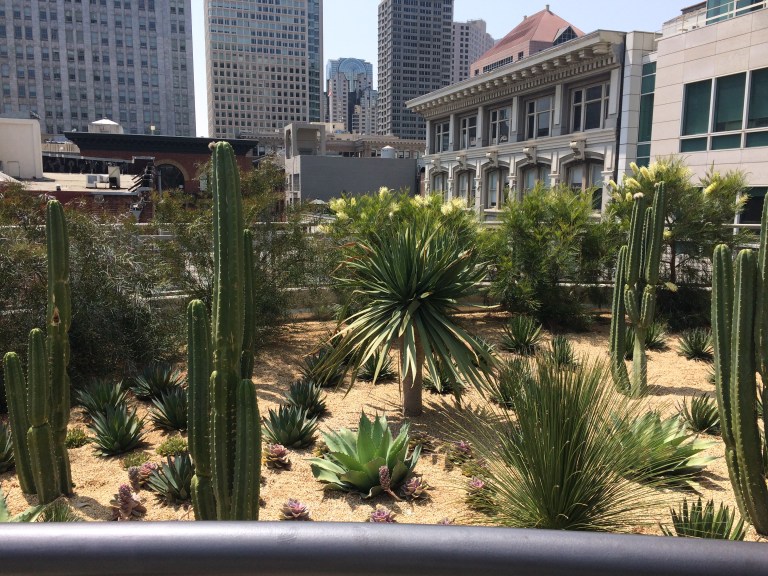 Now let’s look at some of the civic attractions of the two transit terminals. The rooftop park in the new transit terminal is very beautiful, complete with interesting things to see, like the desert garden on the northwestern side of the park.
 And, there’s the incredible Salesforce Tower.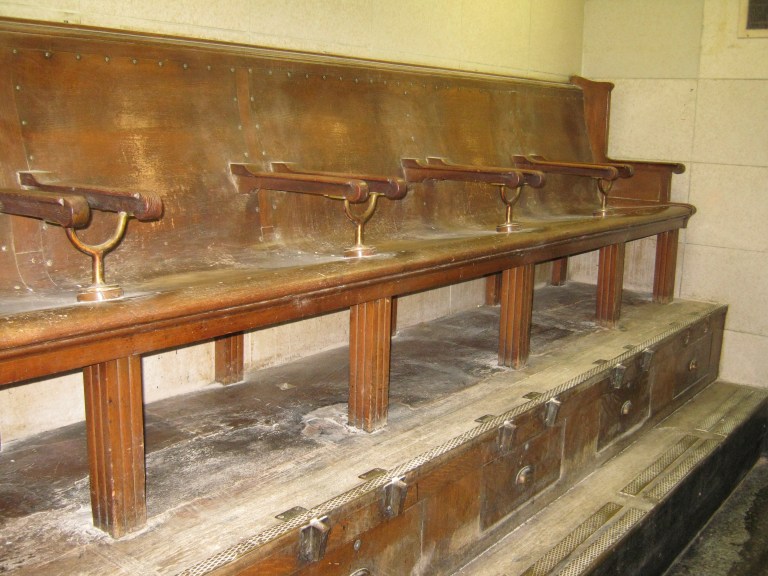
 Of course, there isn’t anything today like the vintage shoe shine stand in the old building. I image, however, that they probably have a more efficient heating system today.
 Also, I didn’t see any ticket booths in the Salesforce Terminal like this one, long closed by 2010.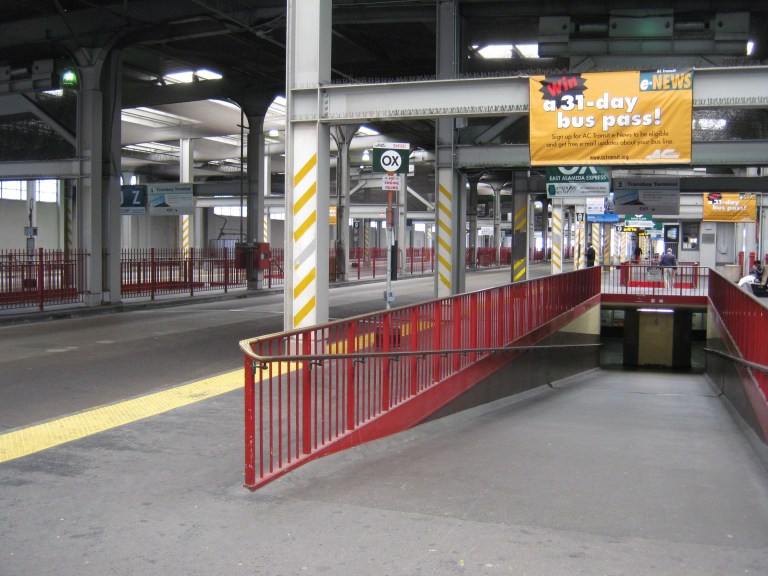
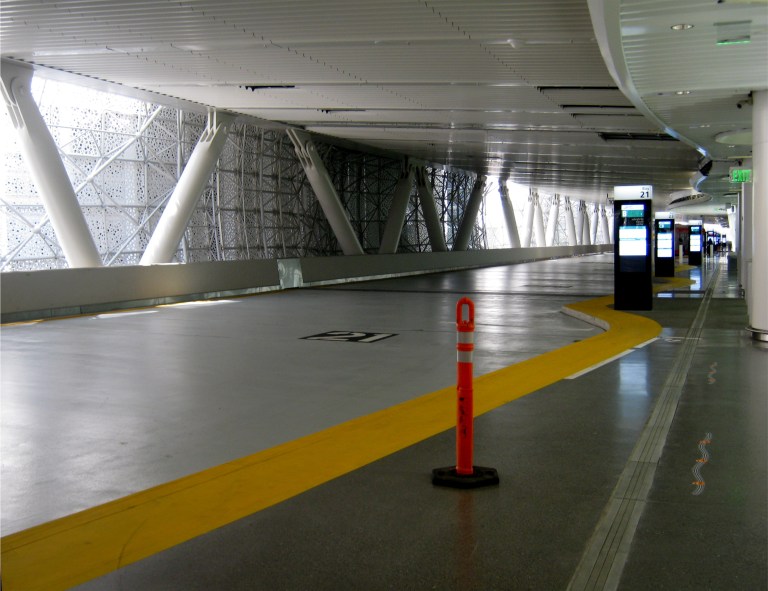 Let’s take a last look at what was, and what is.
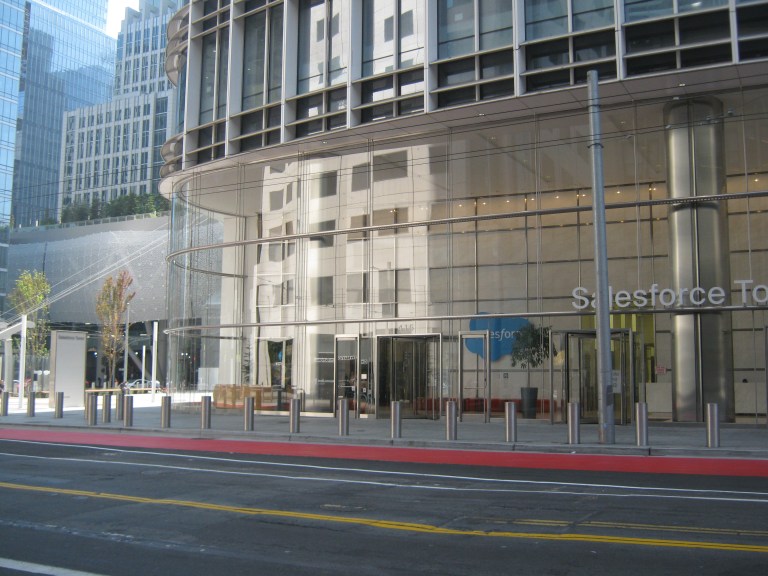 When I came back a few days later in August of 2010, the old Transbay Terminal was closed up forever.
 I walked up the ramp in 2010 where the old streetcars used to arrive, and looked back to Mission and 1st Streets. I thought about all of the people, including friends and I, who came and went here. Buses are starting to come back here now, and a lot more will.
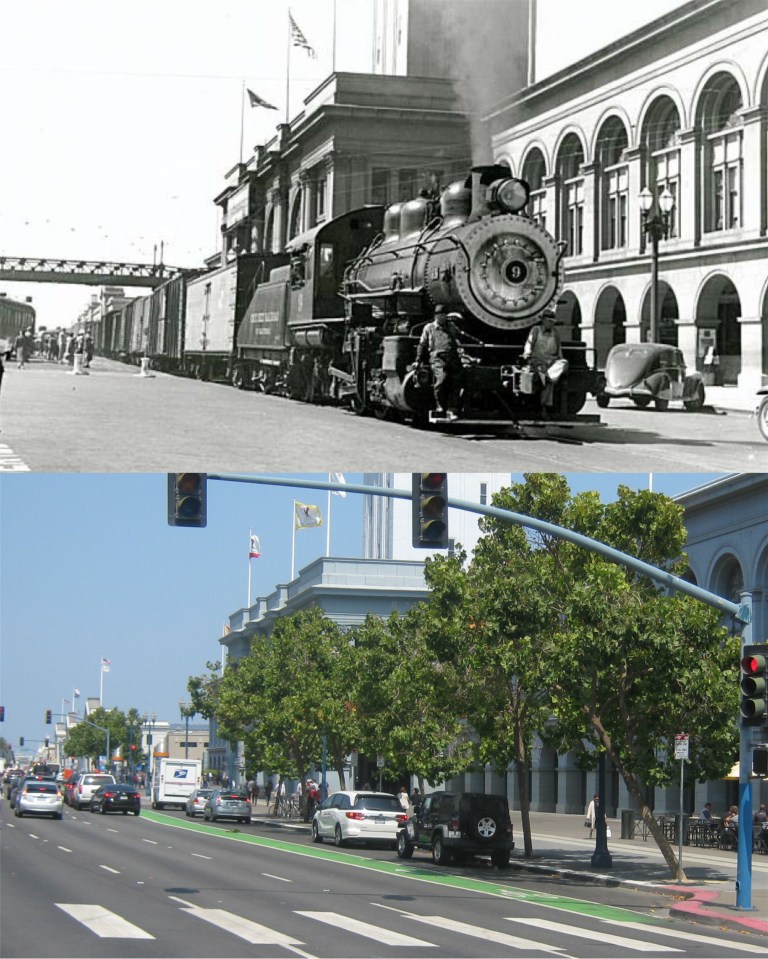 This is at the Ferry Building, where this old Belt Line Rail Service train was passing in the 1940s. It seems so antiquated nowadays! I’m used to the normal traffic you see here these days, like on Naked People on Bikes day. (Vintage picture from SFGate)
 This is looking northeast toward Sansome Street from Market during the 1940s. This is a great picture from Market Street Railway. The blue-green curtained Crown Zellerbach Building blocks out the view of the Shell Building from here today. The building behind the one with the TYPEWRITERS sign in the vintage picture has been remodeled and is the copper colored building behind the Zellerbach Building. The Ferry Building can be seen at the far right in both photos.
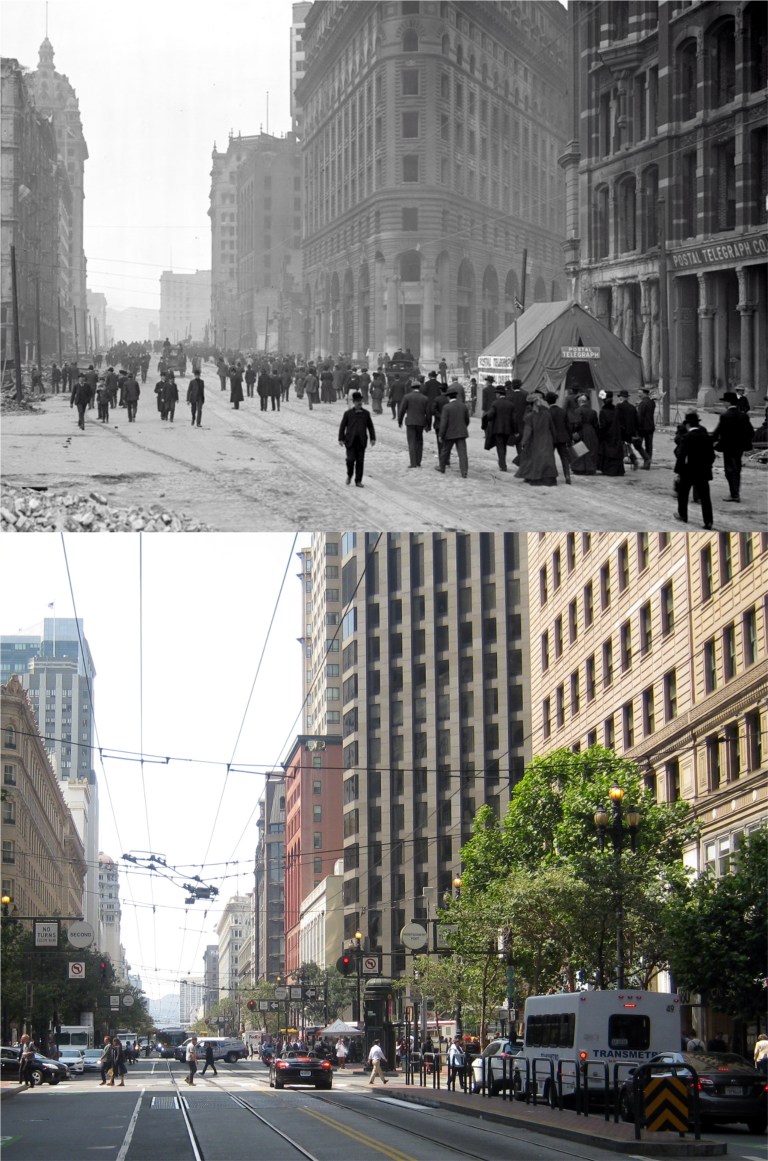 This is Market Street looking west near Montgomery Street just after the 1906 Earthquake and Fire. The damage looks light because the fire that destroyed most of San Francisco hadn’t spread yet. The crowned Call Building and old Palace Hotel are on the far left. The Palace Hotel was destroyed in the fire, but the Call Building survived. The rebuilt Palace Hotel and remodeled Call Building are on the left in my photo, as well. (San Francisco Library History Center)
 This is on 3rd Street, south of Mission Street near Minna, in 1939. The Call building is in the background in both pictures. The building to the right of the WORK CLOTHES sign is in the center of my photo, as well, and is having some type of facelift now. (retrosnapshots.com)
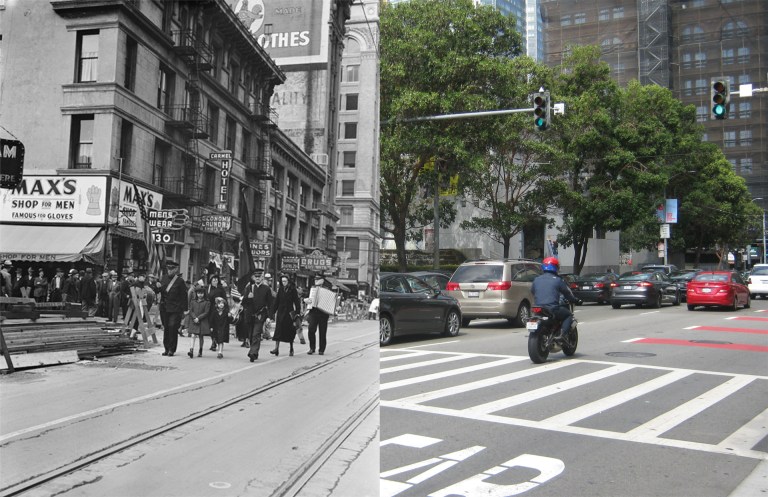 A Salvation Army Band is marching along the same spot as the previous photo, and was probably taken on the same day in 1939. The buildings directly behind the band have been demolished and the location is now part of the Yerba Buena Gardens. (retrosnapshots.com)
 Looking west from the north side of Market Street toward the old Humboldt Building in the late 1960s: (Vintage Everyday)
 This is an antiwar protest near Union Square on Post Street, looking east toward Stockton Street, at the end of the 1960s. That was probably a police motorcycle on fire. (Vintage Everyday)
 I parked in Pier 45 at the Wharf. Sometimes I can get a parking pass there, and that’s worth gold in the summer for parking at Fisherman’s Wharf. This is the view from the west side of Pier 45 today and in a rather blurry image from 1935. I probably could have got a perfect line up, but I didn’t want to cut out the Ghirardelli Tower on the right in my picture.
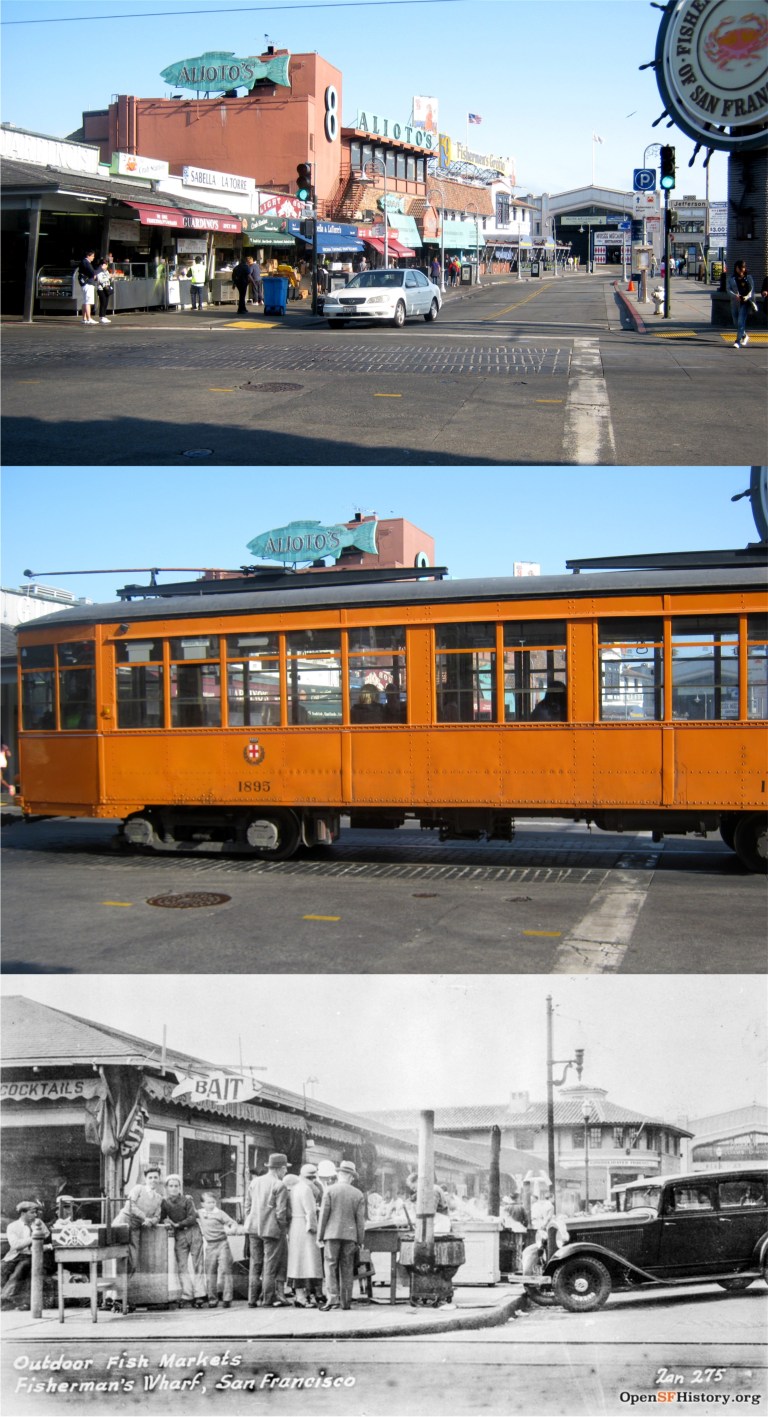 A cable car was my first choice, but it was 8:30 AM when I got to Fisherman’s Wharf, and the cable cars don’t run until 10:00 AM. I was taking a couple of pictures at Jefferson and Taylor Streets when an inspiration from Milan, Italy, the old #1895 streetcar built in 1928, rattled past. The bottom picture is the same spot in 1937.
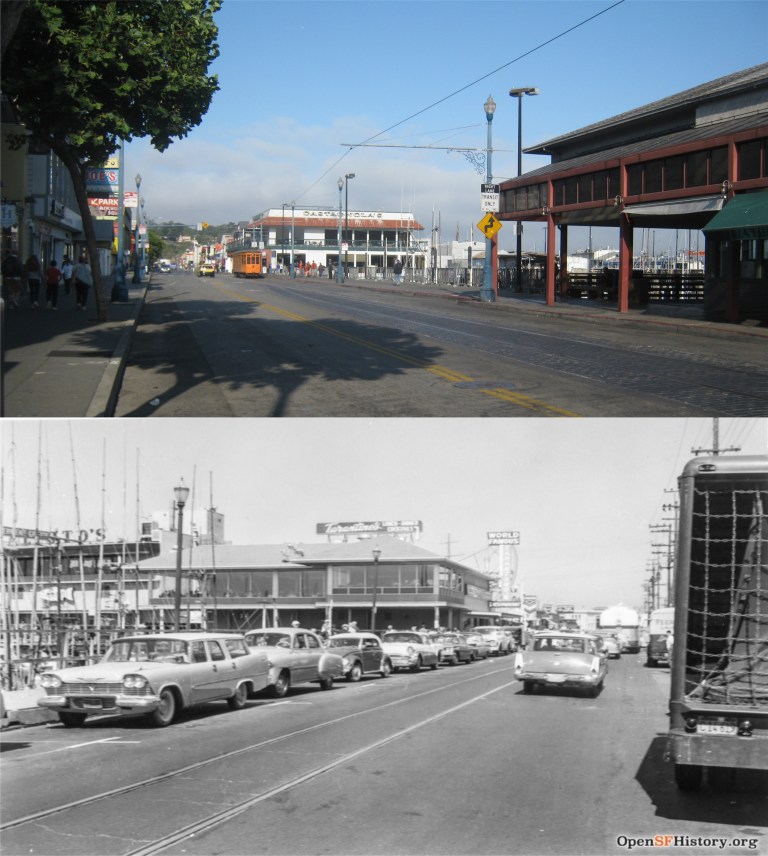 The F Line of vintage streetcars that travel along the Embarcadero and Market Street was running, so I figured that if I ran fast enough I could catch it. This is a reverse then and now looking to and away from Taylor street past the Fisherman’s Wharf Lagoon on Jefferson Street today and in 1960.
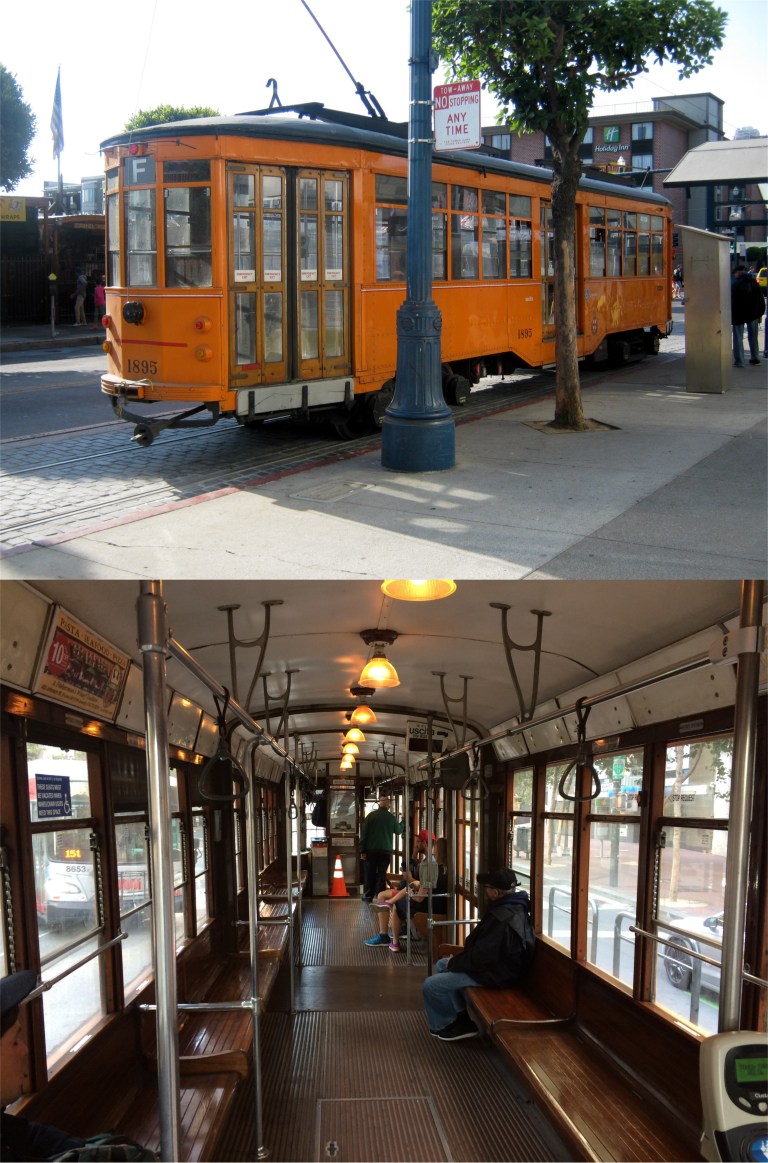 How was I to know that the motorman was going to take a ten minute brake at the stop? Oh, well, good exercise! I stood at the back of the car where the letter F is to get my pictures. You can see from the bottom photo there aren’t a lot of people heading away from the Wharf in the morning. Before long, “Clang, clang, clang, went the trolley.” and I was off, sans a high-starched collar and high-topped shoes like Judy Garland wore.
 This is where Beach Street approaches the Embarcadero today and in 1930. Notice the Eagle’s Restaurant. When Pier 39 was demolished in 1978 for the amusement center that’s there today, they decided to save the old café, which was going to be torn down for a garage, and moved it across the street to the second story of Pier 39. It’s the white peaked building in the right center of my picture.
 We’re rolling down the Embarcadero past Pier 17, where the Exploratorium is now housed. The bottom picture is Pier 17 seen from Telegraph Hill in 1957. (San Francisco Library History Center)
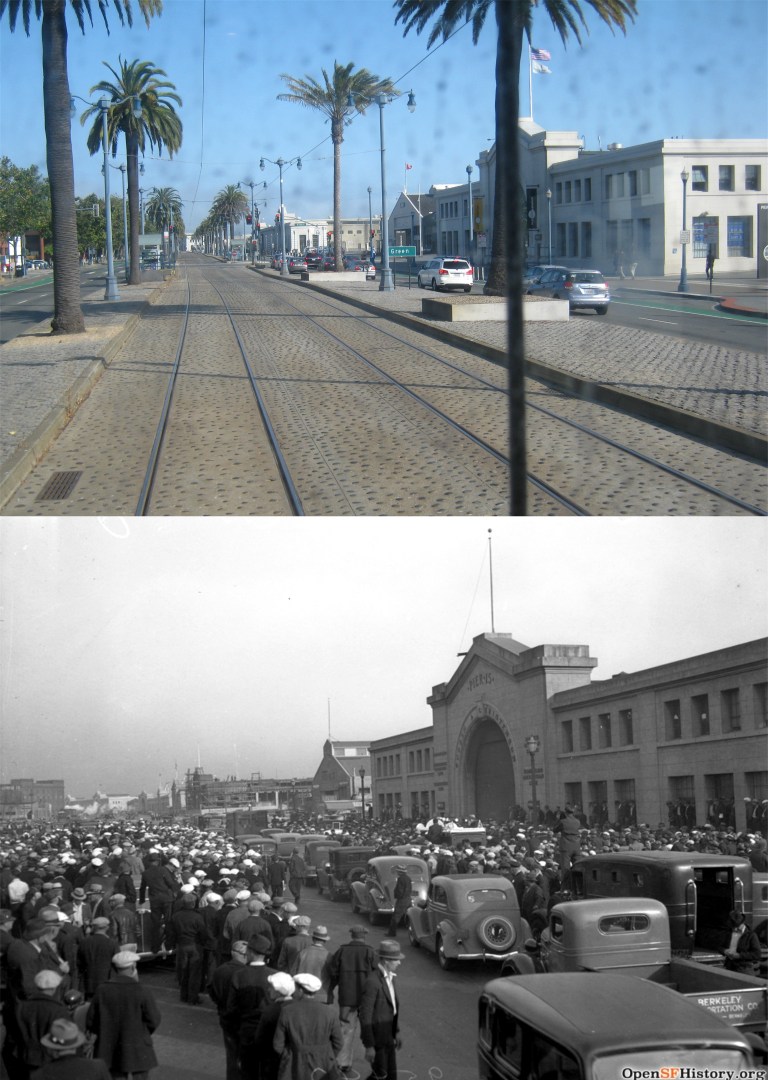 We’ve passed Pier 15 and Green Street, where an organized labor strike was happening in 1937 in the bottom photo.
 This is where Broadway comes into the Embarcadero looking toward Telegraph Hill. The bottom picture was taken just after the 1906 Earthquake and Fire.
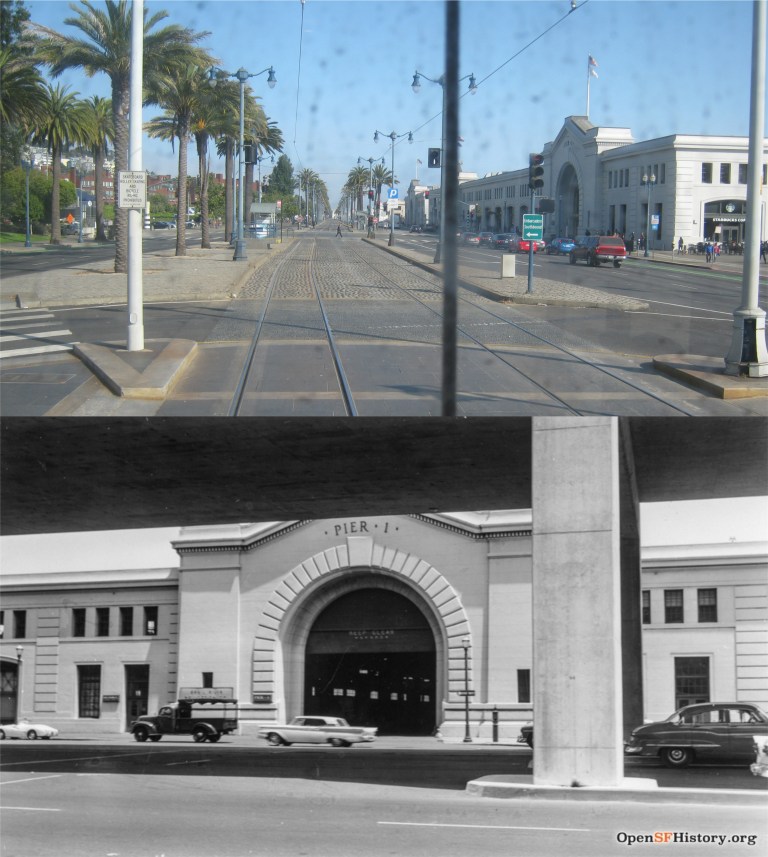 Now we’ve passed Pier 1 as we near the Ferry Building. If we were at this spot in 1960, like in the bottom picture, we’d be directly under the Embarcadero Freeway.
 As we rattled past the Ferry Building, something inside my subconscious mind was telling me to keep my head and arms inside the car. The bottom picture was taken in 1905. Look at all of the streetcars in front of the Ferry Building. They look like cable cars but they’re not; they only have two tracks and no middle slot.
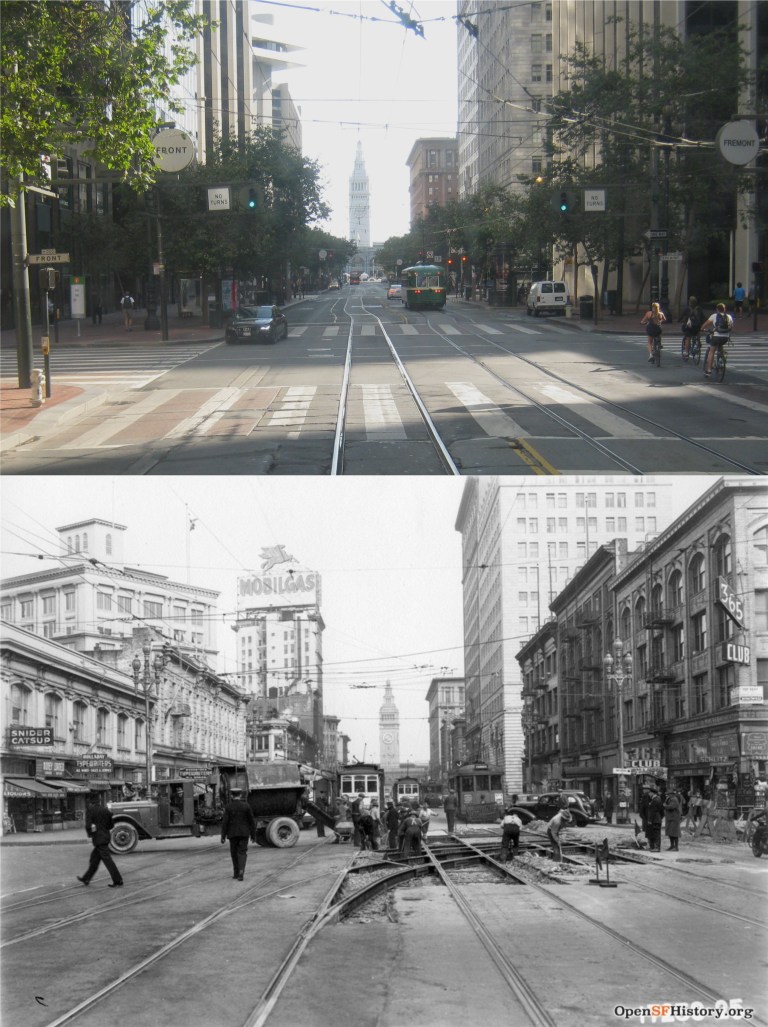 When we rounded the turn to Market Street I got off where Front and Fremont Streets merge into Market to head over to see the new Trans Bay Terminal, but that idea didn’t fly! “There are 894,363 people in the naked city” and every one of them decided to visit the new transportation center too, while all of the out-of-towners were at the Outside Land Concert. I’ll get around to it. The bottom photo was taken at this spot in December of 1938.
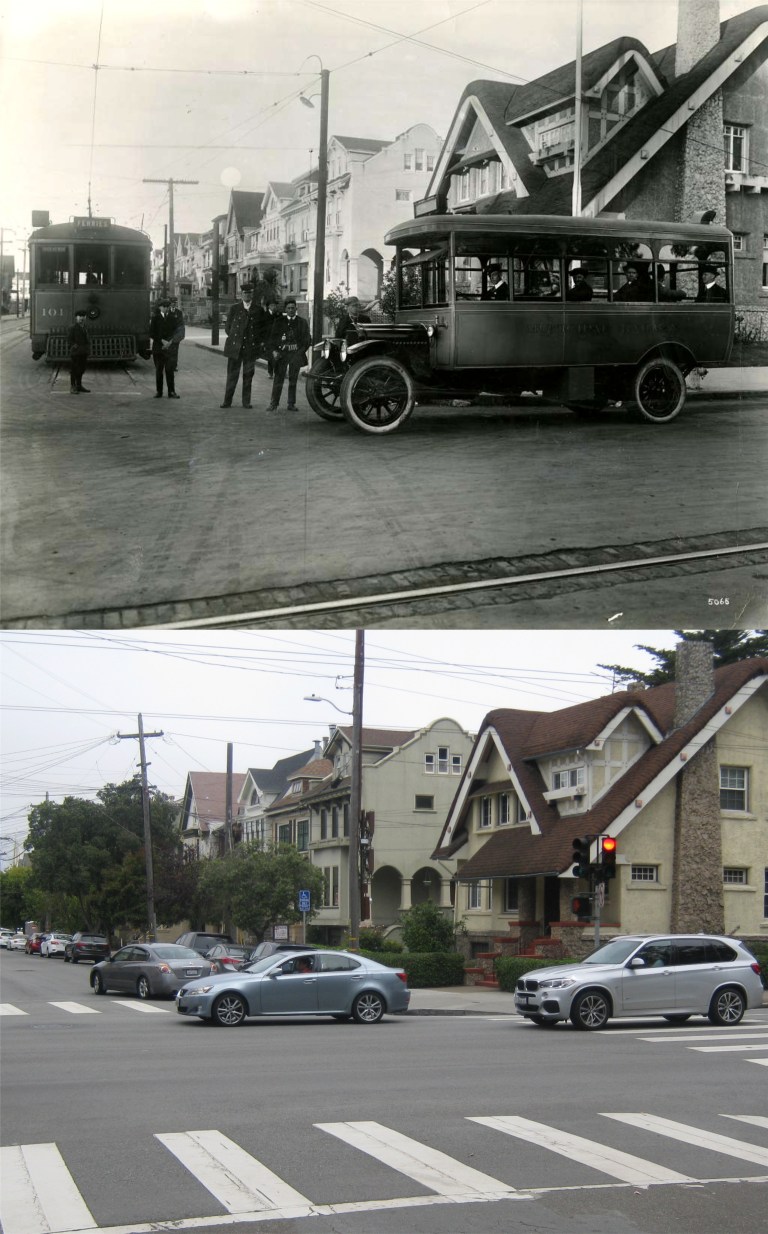 Fulton Street: A streetcar and a motor bus at Fulton and 10th Avenue next to Golden Gate Park around 1920. I’ll bet MUNI would like to have that in their vintage streetcars and buses collection! (SFGate)
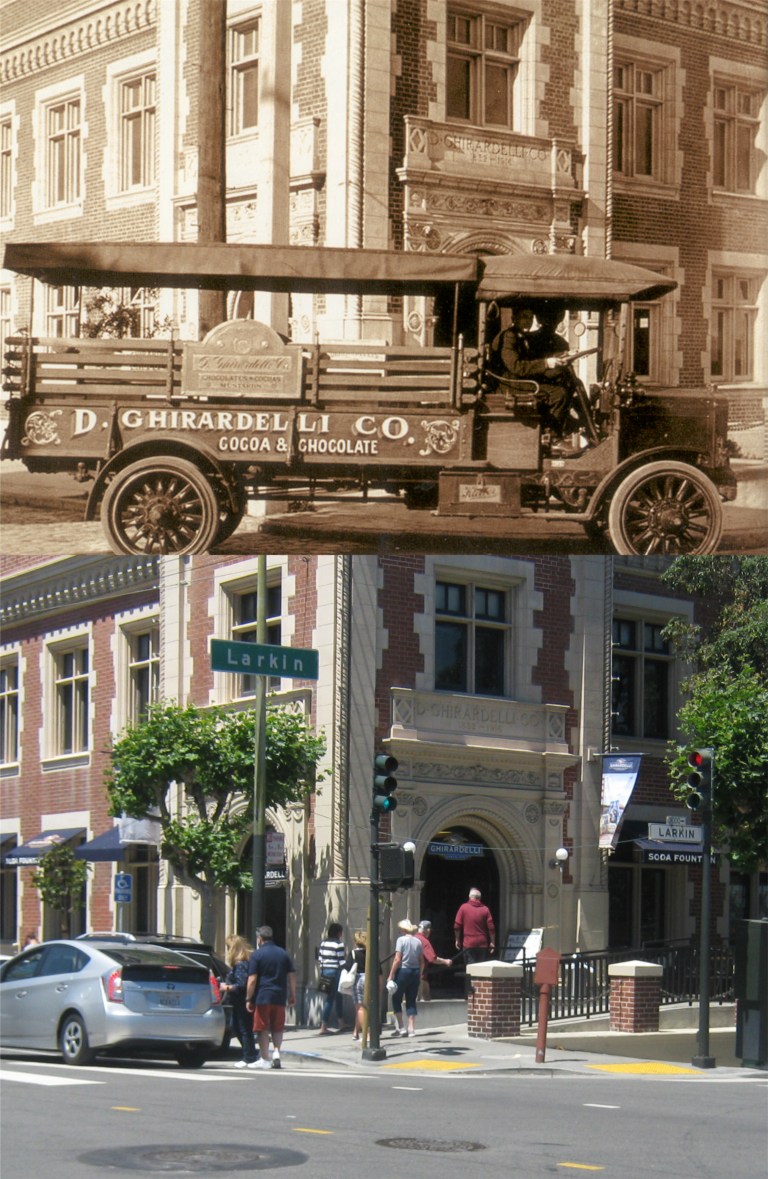 A chocolate truck at the Ghirardelli Building: This was taken at Larkin and North Point Streets, probably around the same time as the previous picture:
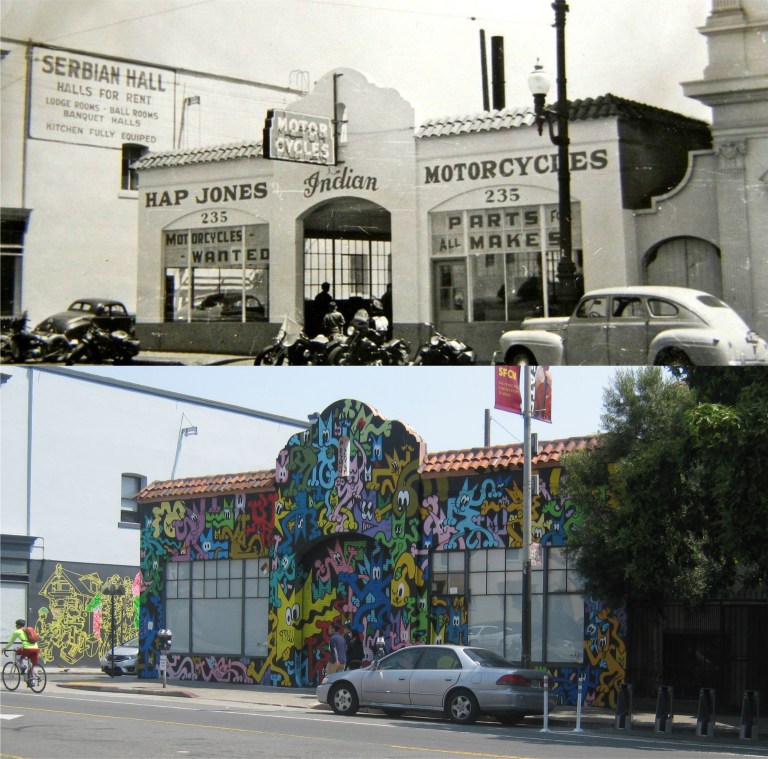 Hap Jones legendary motorcycle dealership on Valencia Street, south of Market Street in the 1940’s. Hap opened his motorcycle sales business here in 1937. The motorcycle shop is gone now, and the building certainly does have a different look today! I hesitate to admit it, but I like it! (Imageshack.com)
 Market Street at Grant Avenue looking east on August 14th 1945: San Francisco celebrates VJ Day ending World War Two. Next week will be the 73rd anniversary of this day. (San Francisco Library)
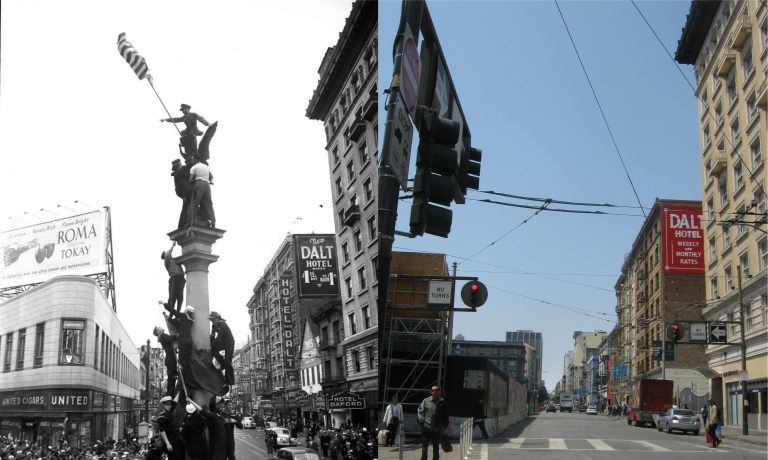 Turk Street Looking west from Mason, August 14th 1945: On the same day as the previous picture revelers climb the Winged Victory Statue that used to be about where I took the modern picture from. The triangle shaped building on the left in the vintage picture has only recently been demolished.
 The Winged Victory Statue is now on the corner of Market and Montgomery Streets.
 A cable car heading north on Mason Street near Greenwich in a Charles Cushman picture taken in 1957:
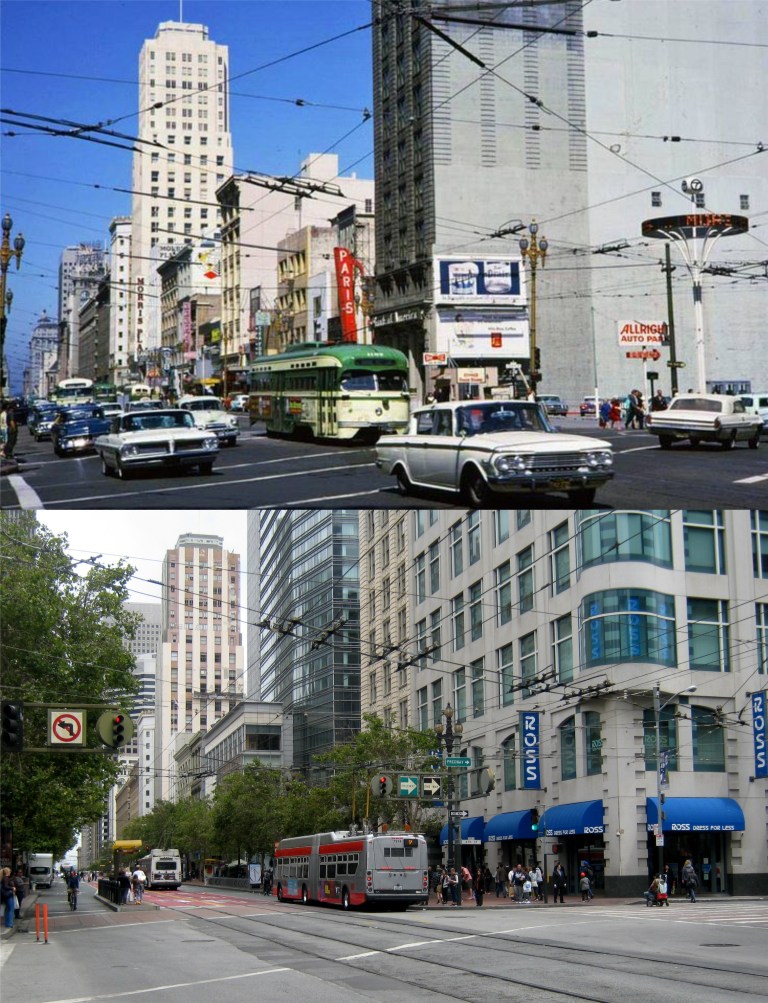 Market Street looking east near 4th Street in the mid 1960’s:
 Another view of Market Street looking east in 1967: These were taken between 4th and 5th Streets. That’s a lot of buses! I only got one in mine. (SFGate)
 Polk Street looking north from California Street in 1974: Mug Root Beer ads were on MUNI buses all over town back then, including one in a scene from the 1971 film ‘The Organization’ starring Sidney Poitier. (SFGate)
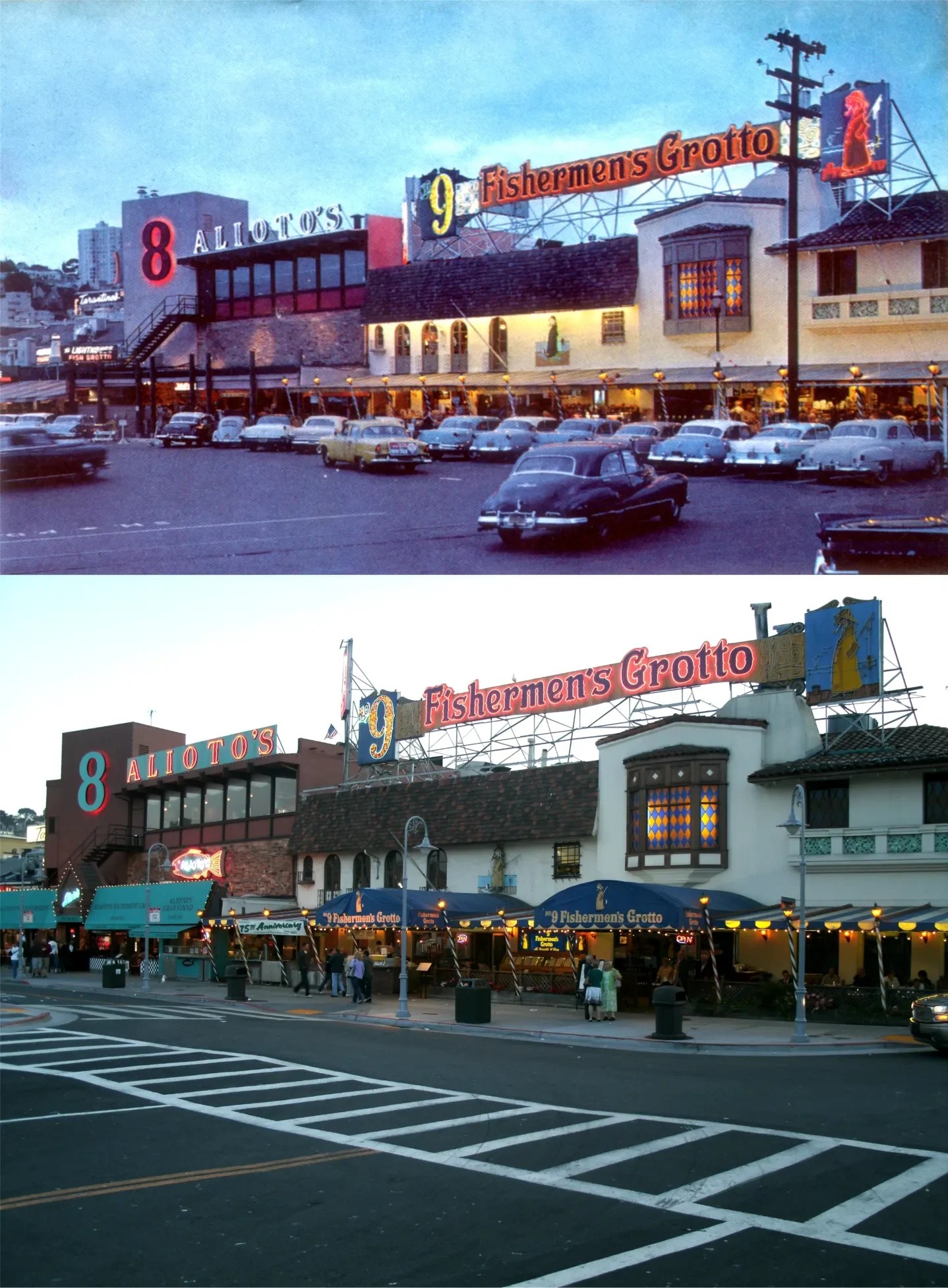
 Michael Douglas played Inspector Steve Keller. In ‘The first Day of Forever’ he is assigned to be a bodyguard to a call girl played by Janice Rule who has been targeted for murder by one of her “clients”. Keller is cold and distant toward her at first, but eventually develops affection for her. Here they pass the Fisherman’s Wharf Boat Lagoon with Alioto’s and #9 Fishermen’s Grotto Restaurants behind them.
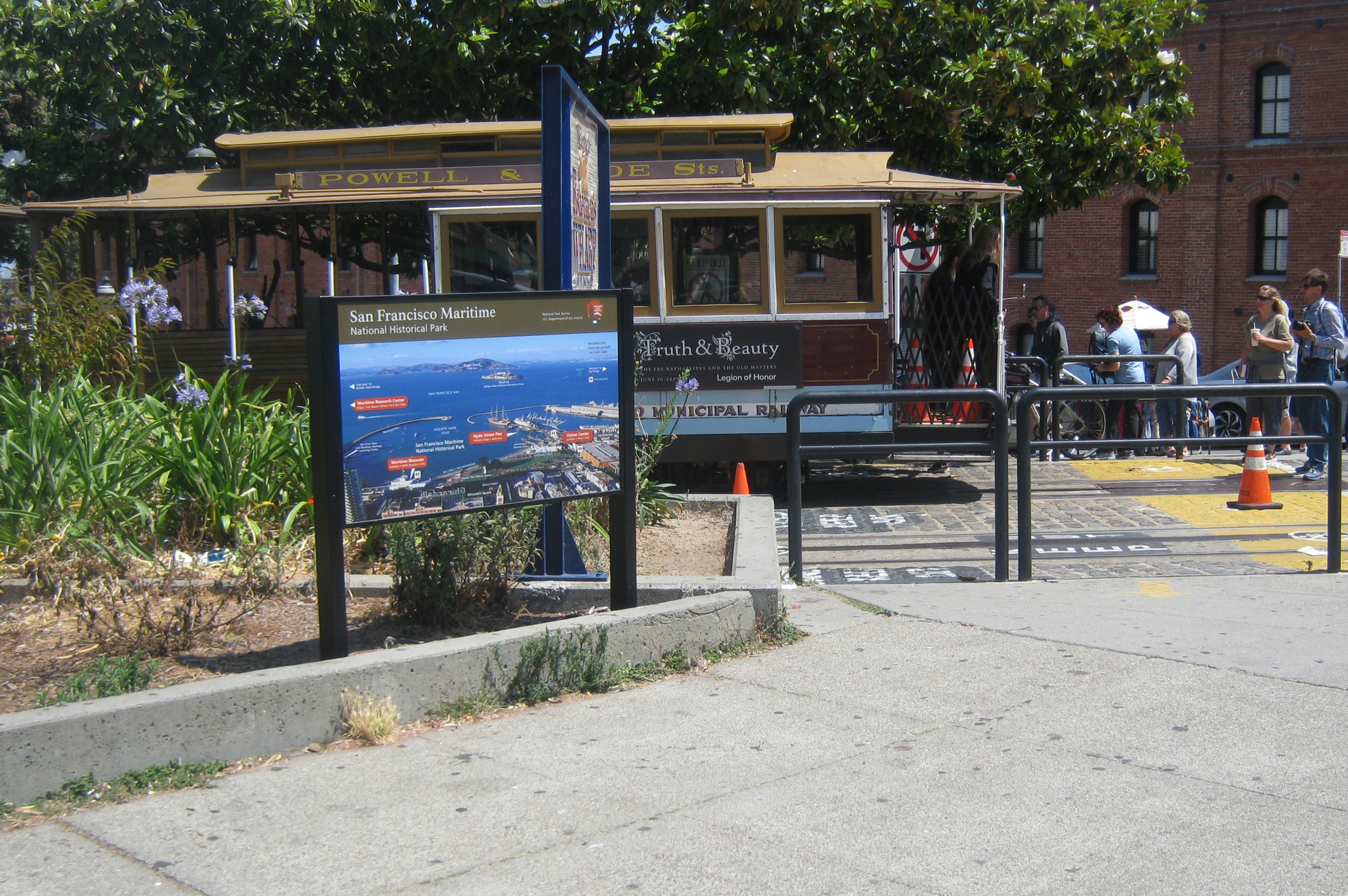 Karl Malden played Lieutenant Michael Stone. Here he is at Aquatic Park where the Hyde street cable cars turn around in ’45 Minutes from Home’. Hey, that is the cable car you’re looking at, Lieutenant, right? My kind of cop! The corner here has been reconfigured a bit where the cable cars arrive and depart.

 They get into their unmarked patrol car and turn onto Larkin Street pursuing a hot tip; probably another restaurant that serves good chili dogs, they track down a lot of these in the series. They pass by Ghirardelli Square on the right.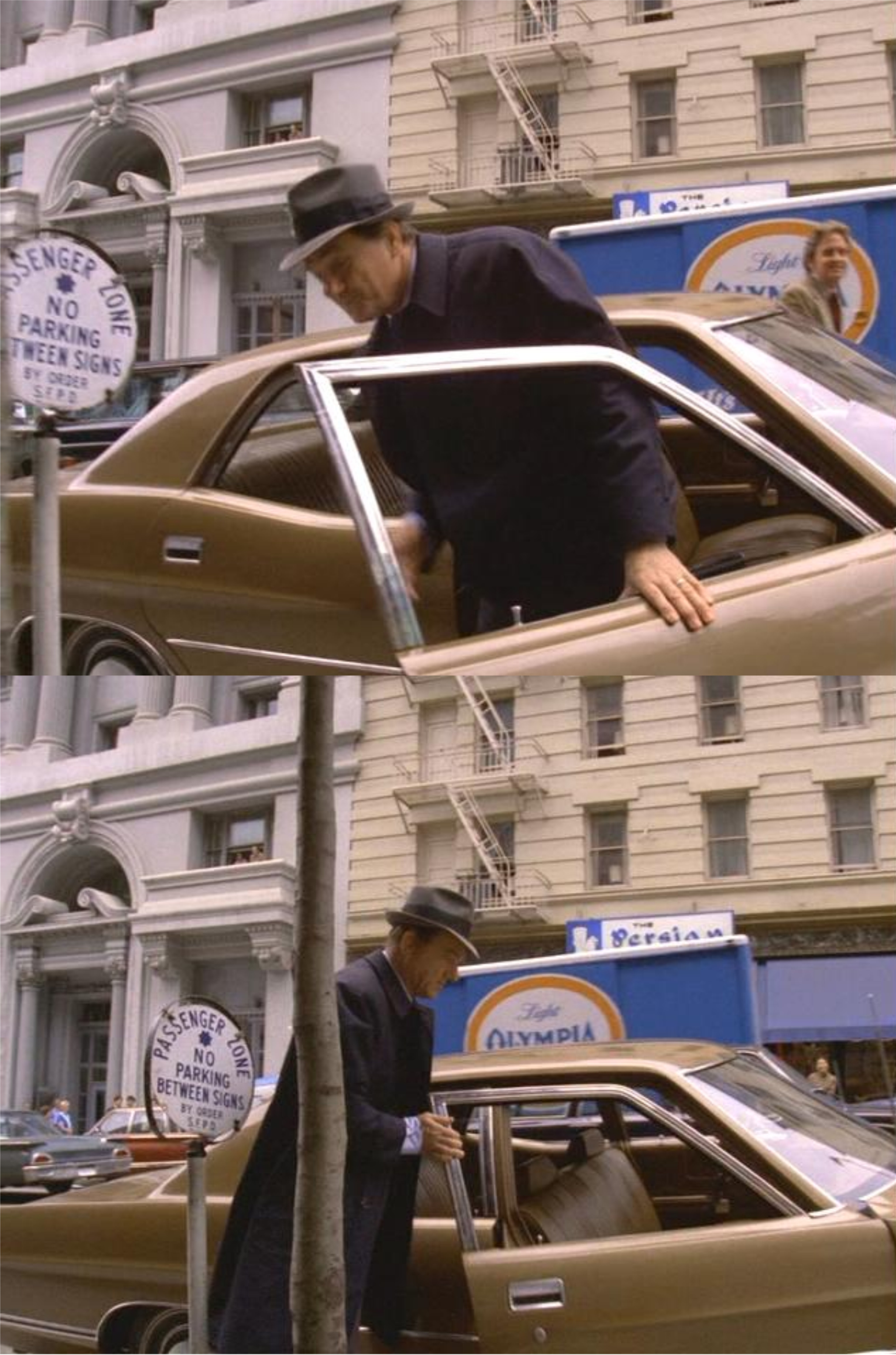
 At the end of ‘45 Minutes from Home’ they park on Grant Avenue and walk into Chinatown. I wonder if they still make Olympia Beer! That’s a historic and forgotten building on the left behind them. During World War Two it was the main telephone exchange center and was considered so important sand bags were stacked at the entrance to protect it from Japanese bombs that were expected to be dropped on San Francisco after the Pearl Harbor attack.
 Here is a vintage picture of the building during World War Two. (SF Chronicle)
 “That was the end of a good case, buddy boy! This coke and burger in exotic Chinatown are on me.”

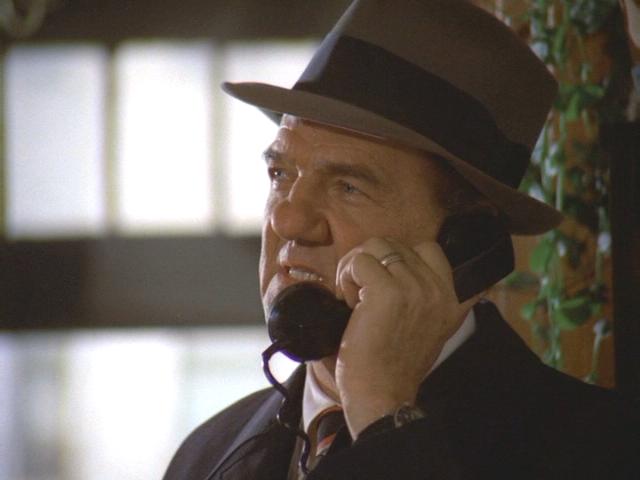 Their investigations often led them to ordinary locations that are hard to track down. In this scene from ‘Timelock’ they cross a street and enter into a building with addresses on the entrance of an unnamed street looking for a suspect. I was afraid that I was going to have to do some homework to locate this spot, but Lt. Stone made the job easy with his check-in call. “We’re at 2207 Taylor Street.” Thanks, Lieutenant!”
 The rest of this collection is devoted to ‘In the Midst of Strangers’. As I mentioned at the opening, I think it is one of the best hours the show has to offer. Most of the episode takes place in and around Union Square, albeit a Union Square of a long time ago. The episode shows a vibrant but small location in a big city and creates an atmosphere that probably wasn’t even the way it was in 1972, but should have been. It opens up with a northwestern view of Union Square from the roof of the City of Paris Department Store. This was the way Union Square looked from World War Two until it was remodeled in 2002. My picture was taken from the Cheesecake Factory on top of Macy’s, the closest I could get to a comparison. The plot involves three bad guys staying in a suite at the St. Francis Hotel overlooking the park who systematically rob people passing by or through Union Square after studying their movements by telescope or eavesdropping on them while lingering in the park, to find the ones ripe for the picking. This was two years before Gene Hackman made that kind of activity famous here in the 1974 film ‘The Conversation’.
 David Wayne plays an elderly and popular newspaper salesman who’s friendly with just about everybody who comes to Union Square. His station is here on the northwest side of the square back when one of the entrances to the underground parking garage was still there. Later in the episode Wayne will be robbed by the thugs of three thousand dollars of his savings.
 In one “feel good” scene, a cable car passing by the St. Francis Hotel on Powell Street waits while Wayne sells newspapers to friendly riders on the car. People were just trying to get on a cable car in my picture at the spot, and nobody would have been interested in buying a paper.
 Look at some of the stores on Post Street in 1972, like Gumps, Bonds Suits, and Florsheim Shoes.
 From a robbery to a kill: The crooks spot a victim going into a jewelry store on Post Street and one of the gang played by Robert Foxworth follows him across the intersection of Post and Stockton Streets into the northeast entrance of Union square.
 After buying a newspaper from David Wayne the victim boards a cable car on Powell Street at the front end while Foxworth climbs on the back. Now watch the number 525 cable car as it climbs Nob Hill.
 After passing Sutter Street the cable car changes to number 510. Of course, the one in my picture changed from number 12 to number 7, but I’m not going to pretend it’s the same cable car.
 By the time the victim’s cable car reaches the crest of Nob Hill it’s been demoted to number 509 and the man behind the victim has changed his clothes!
 The victim should have stayed on the magic cable car. When he gets off at California Street he’s hustled into the yellow LTD approaching on the left by Foxworth and driven by his two accomplices. They drive down California Street and turn into Joice Alley. When the man being robbed resists he’s killed by Foxworth. He didn’t even get to read the paper Wayne sold him.
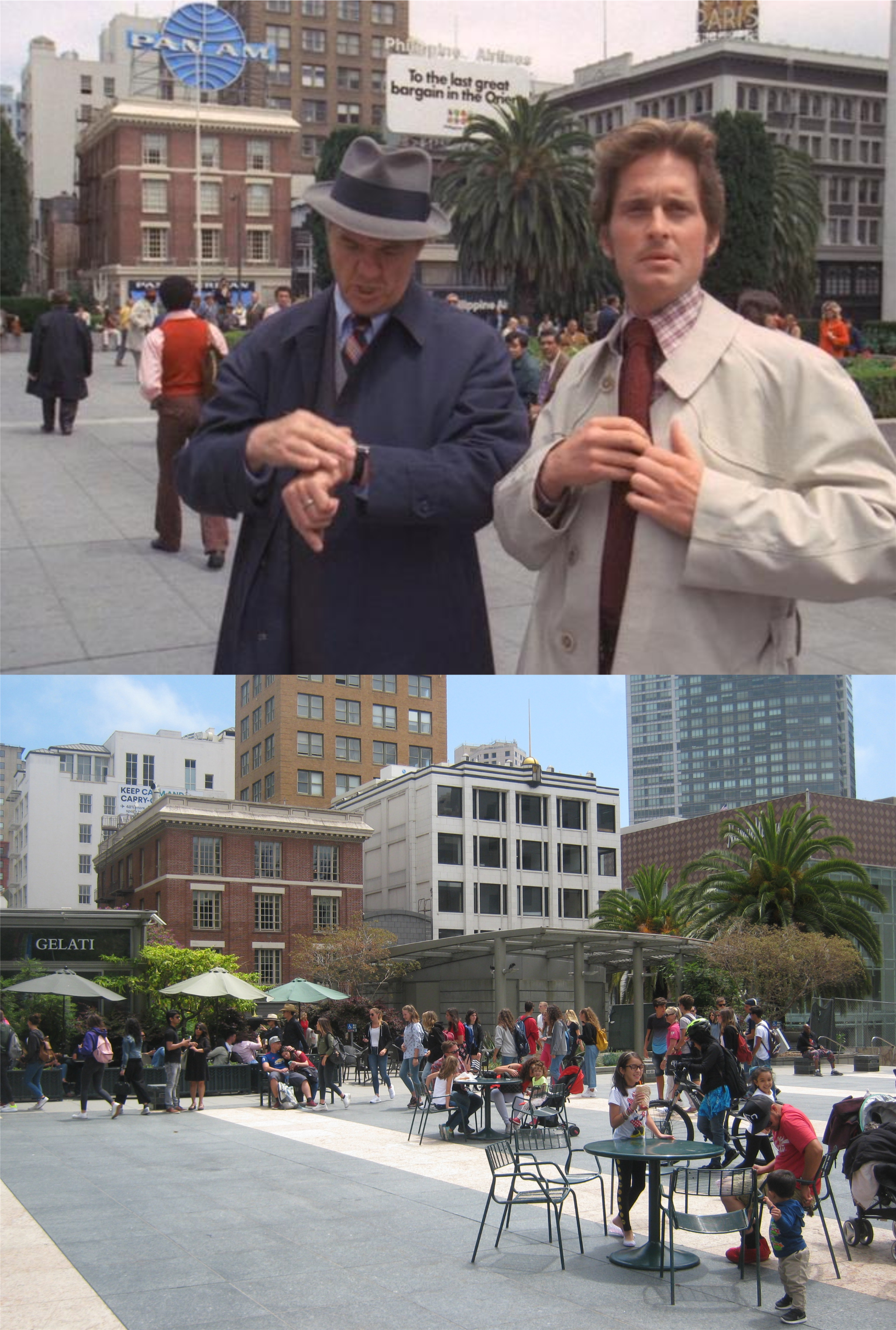 After Wayne is robbed Stone and Keller peruse Union Square looking for clues. Behind them are Maiden Lane and the City of Paris Department Store. The City of Paris was demolished in 1979.
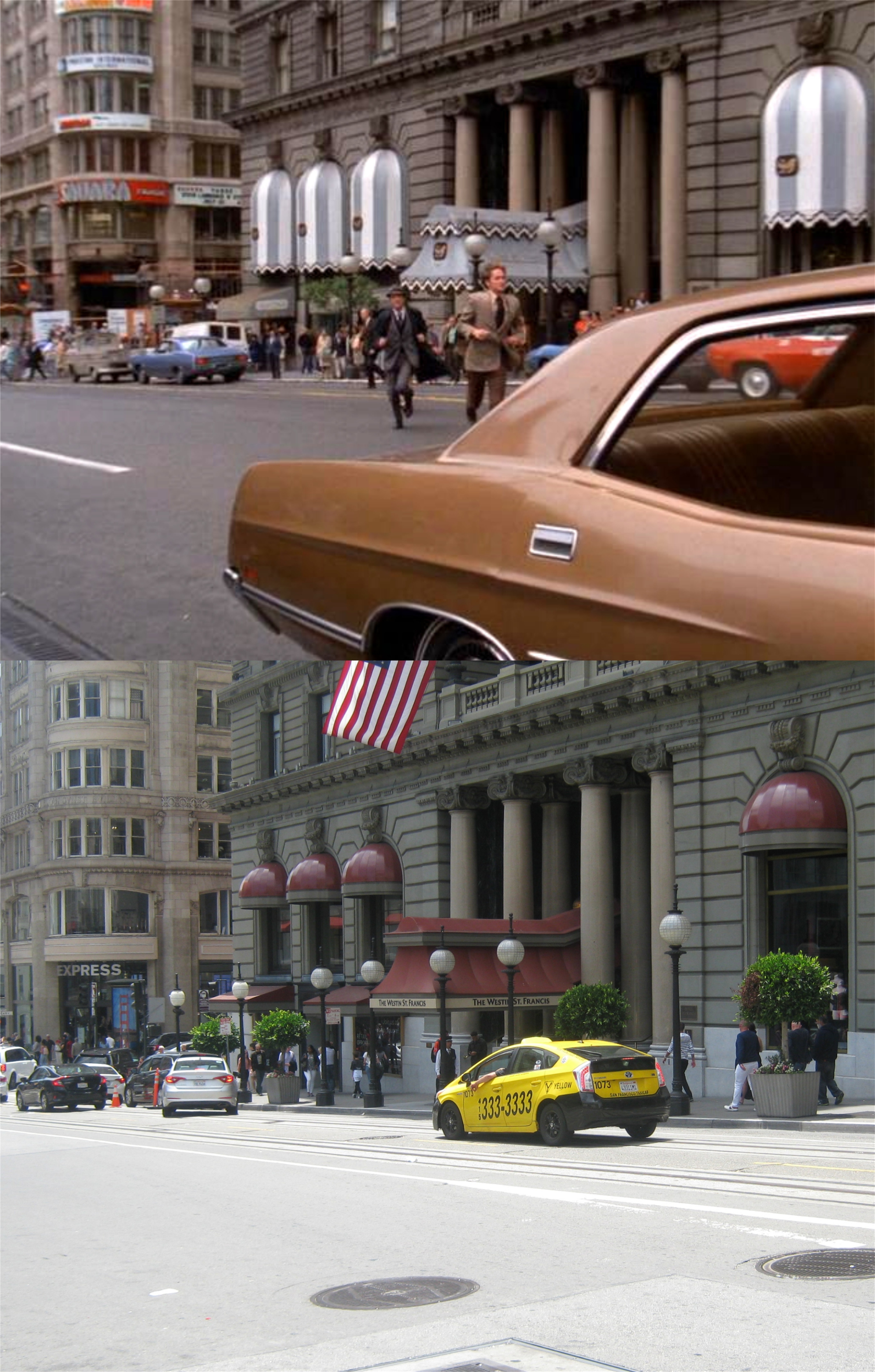 Wayne spots one of the men who robbed him and follows him to the room where the rest of the gang is staying. After nearly getting caught and losing his life he contacts Stone and Keller, but the crooks have left before they can get there. The chase is on.
 After a race through San Francisco the bad guys turn down this street in the Presidio.
 The road leads to Fort Point, built just before the Civil War.
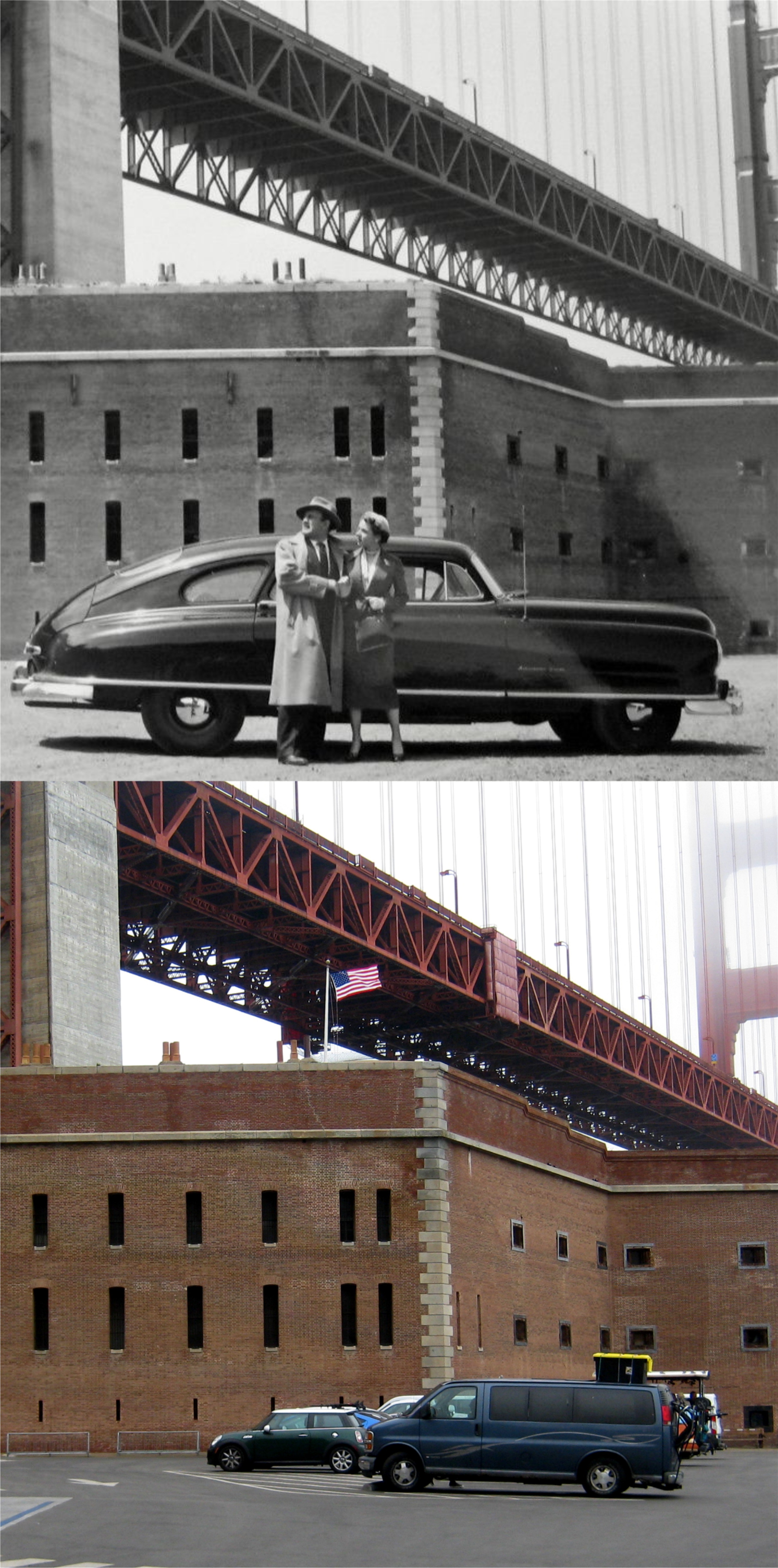 They should have taken a lesson from Lee J. Cobb and Jane Wyatt who tried to hide from the police here in the 1950 crime movie ‘The Man Who Cheated Himself’. There’s no way out from here. (Film image from Rotten Tomatoes)
 The crooks drive into the fort through the main entrance followed by Keller and Stone. The suspects exit their car and begin shooting at the two officers.
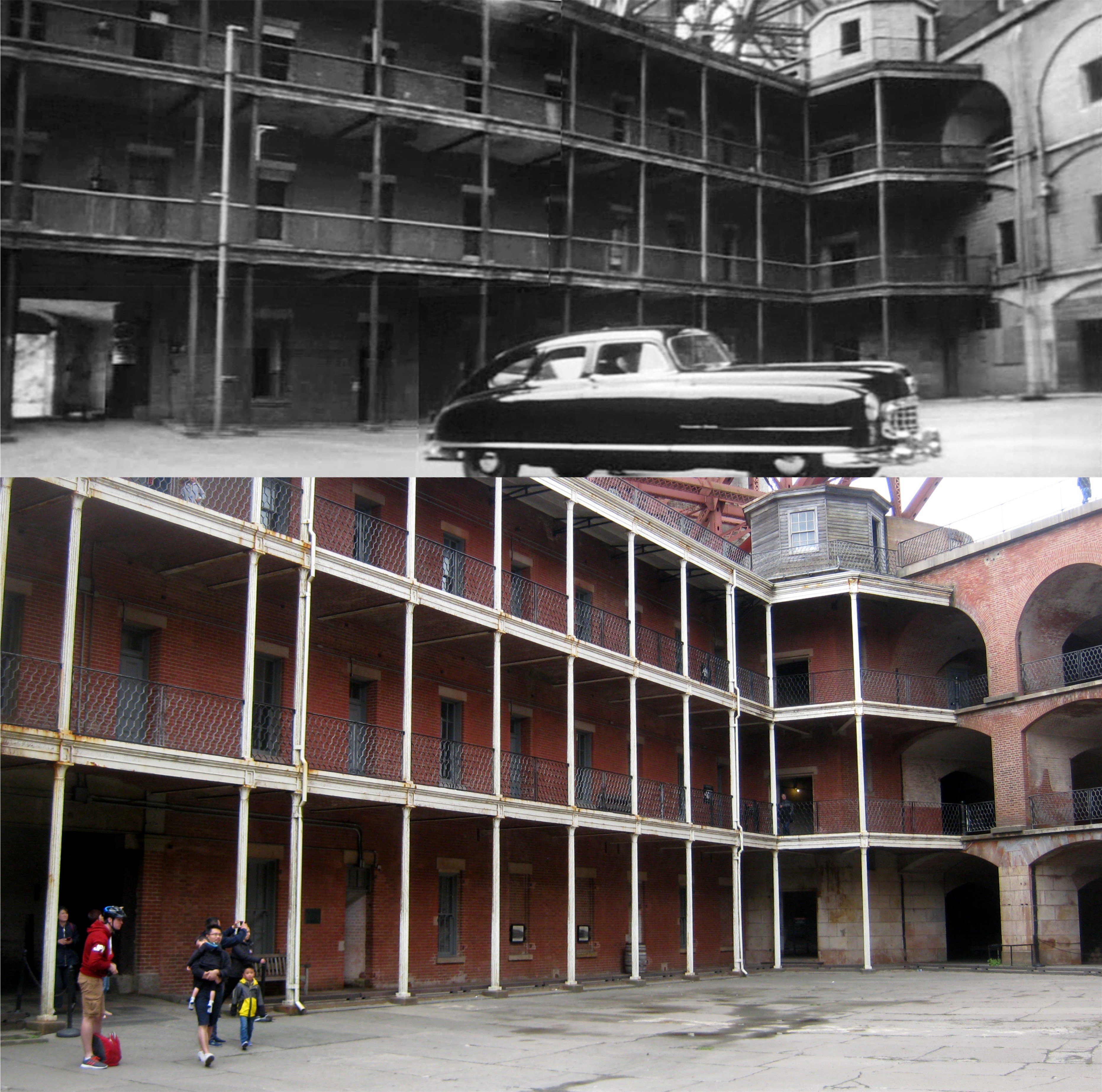 Jane Wyatt and Lee J. Cobb drove into Fort Point here as well. (Film image from backstageweplayers.org)
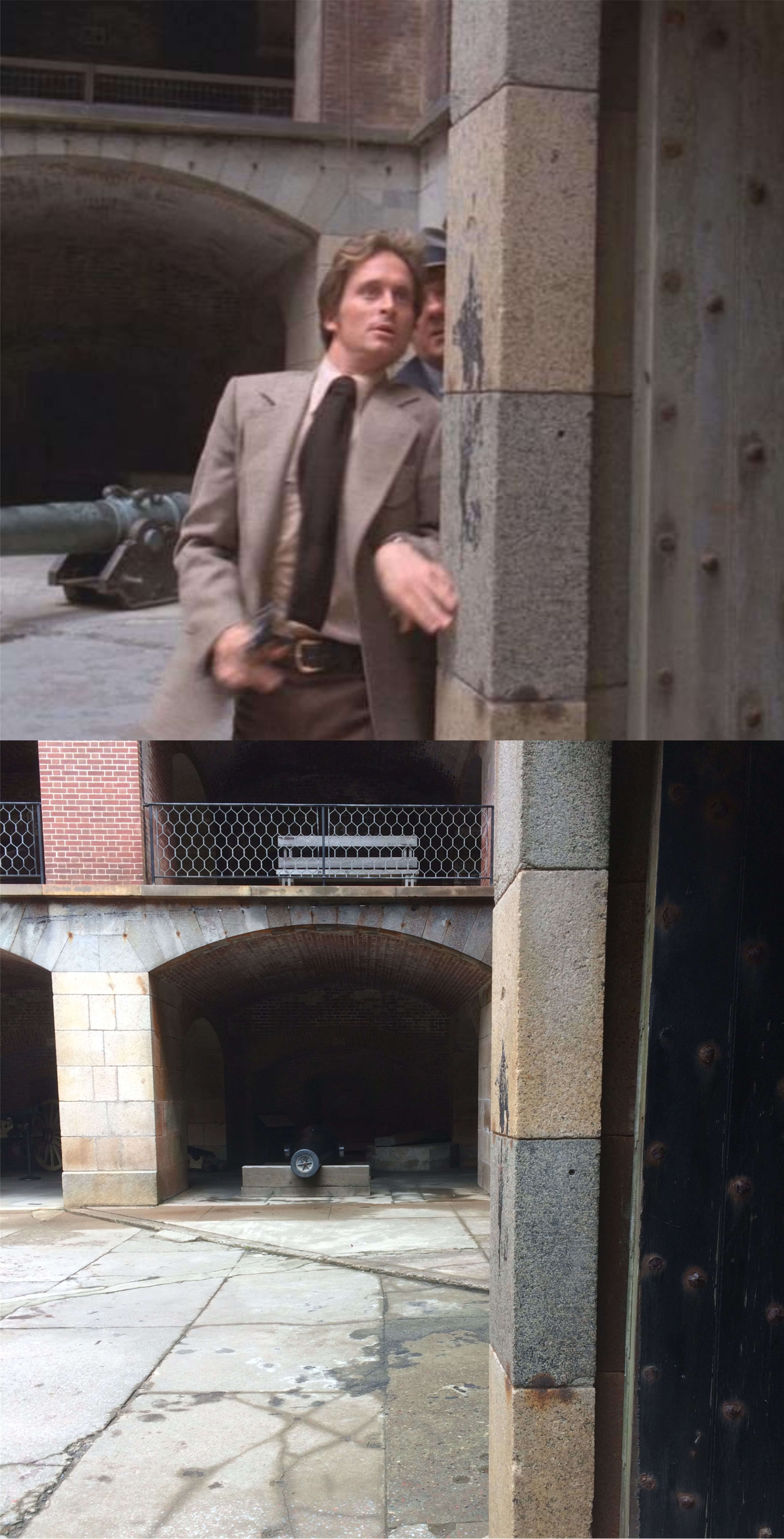 As the villains head up to the roof of the fort, “someone’s sneakin’ ‘round the corrrrrner”.
 A well placed shot takes care of one heading up. They have some kind of ramp on the ground below this spot so I couldn’t get an exact lineup.
 One down and two to go: Stone and Keller follow the rest up to the top.
 Foxworth makes a dash along the roof of the fort. This scene appears to have been filmed late in the afternoon.

 Stone, having to make a tracking shot with the sun in his eyes, fires and down goes Foxworth near the old lighthouse. Two down and one to go. I could have got him myself if my finger was loaded.
 Jane Wyatt and Lee J. Cobb didn’t have any better luck escaping from police when they tried to hide up in the lighthouse in ‘The Man Who Cheated Himself’. (Film image from the Movie Gourmet)
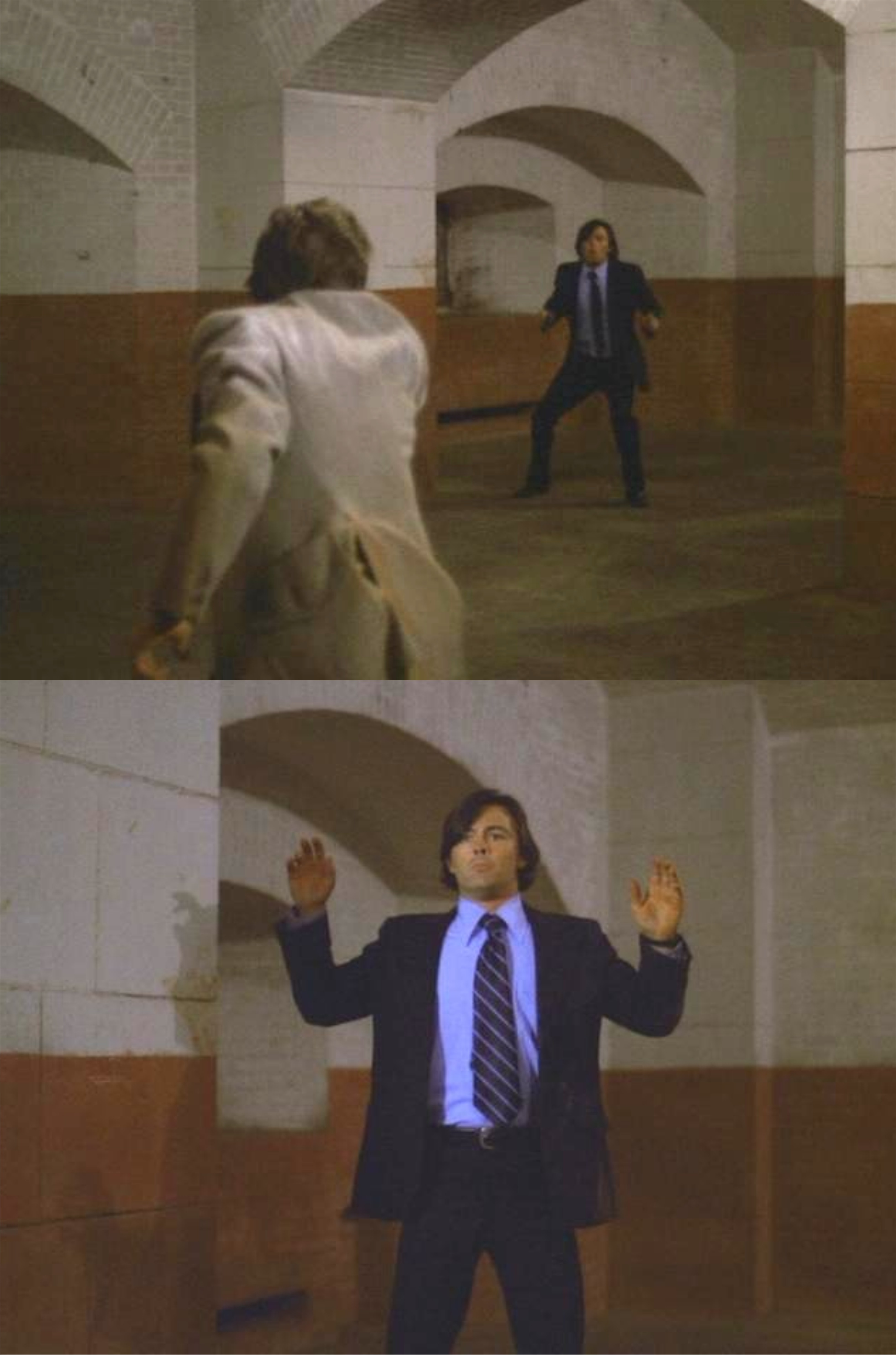 The third suspect wisely decides to give himself up.
 And so Lieutenant Stone and Inspector Keller tidy up another case and head for the nearest chili dog.
 San Francisco Film Locations Then & Now