Tours by Tim

The summer’s approaching, and that means family visitors from out of state. They wanted to see as much of San Francisco as they could in three and a half days, so I took the tour guide job and enjoyed every minute of it. San Francisco is always a little lonelier to me for awhile after they leave. (thumbnail images)


On the first day, after boba tea in Chinatown and a cable car ride up Nob Hill, I took them to the top of the Mark at the Mark Hopkins Hotel. The view is a lot different from there now than from the old postcard from ebayimage.com.


After hearing the story of how it got its name, the kids wanted to pose in “Weepers Corner” on the northwest side of the top of the Mark.


The Point Bonita Lighthouse in Marin County, north of the Golden Gate Bridge: I can’t take credit for this location idea, I had never been there before, but my visitors wanted to see it. (lighthousefriends.com)


The Urbano Sundial: “Made it Ma, top of the world!” (Ingleside Terraces Homes Archives)


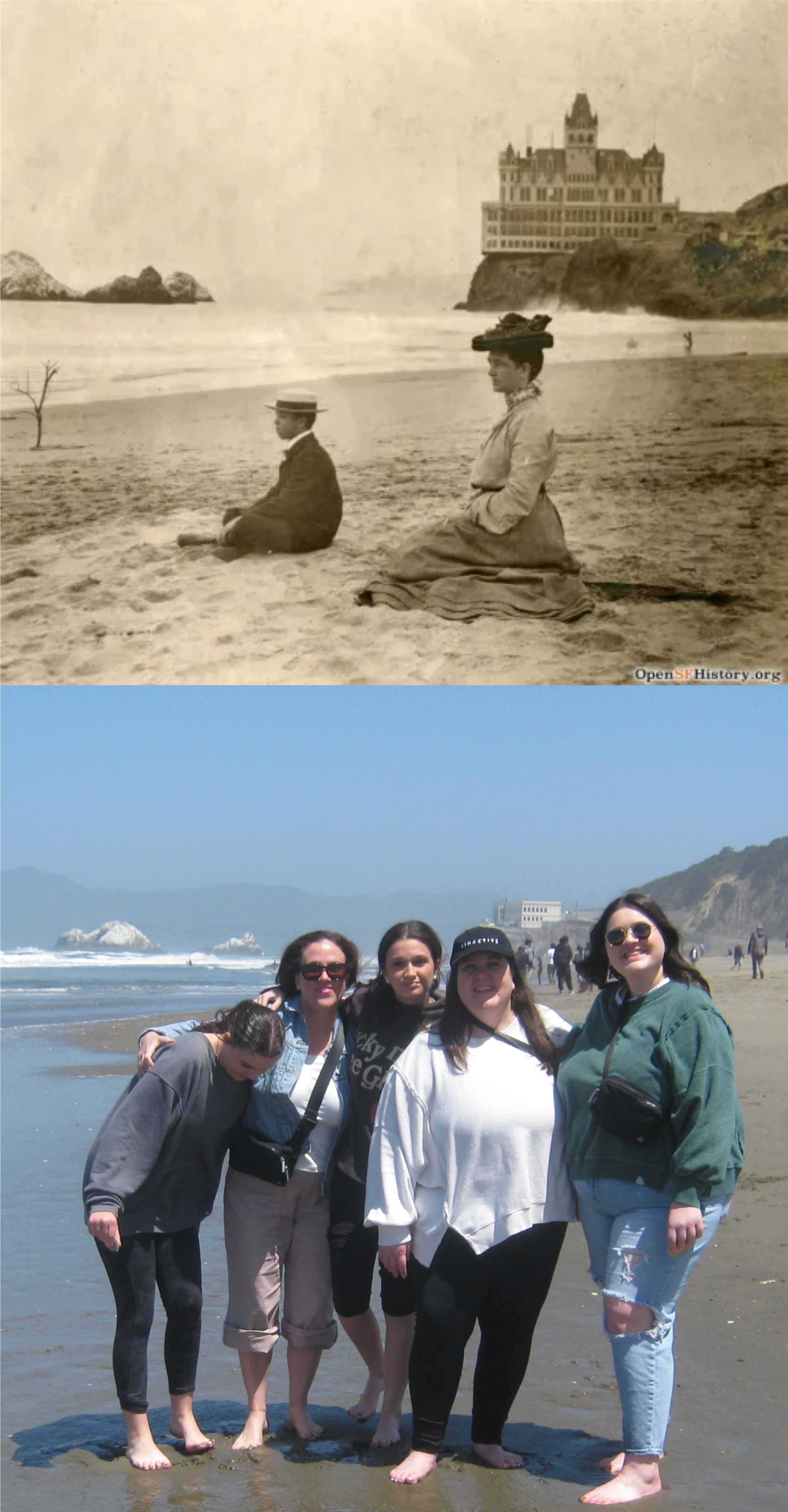
The obligatory visit to Ocean Beach, and perfect weather for it: (opensfhistory.org)
  

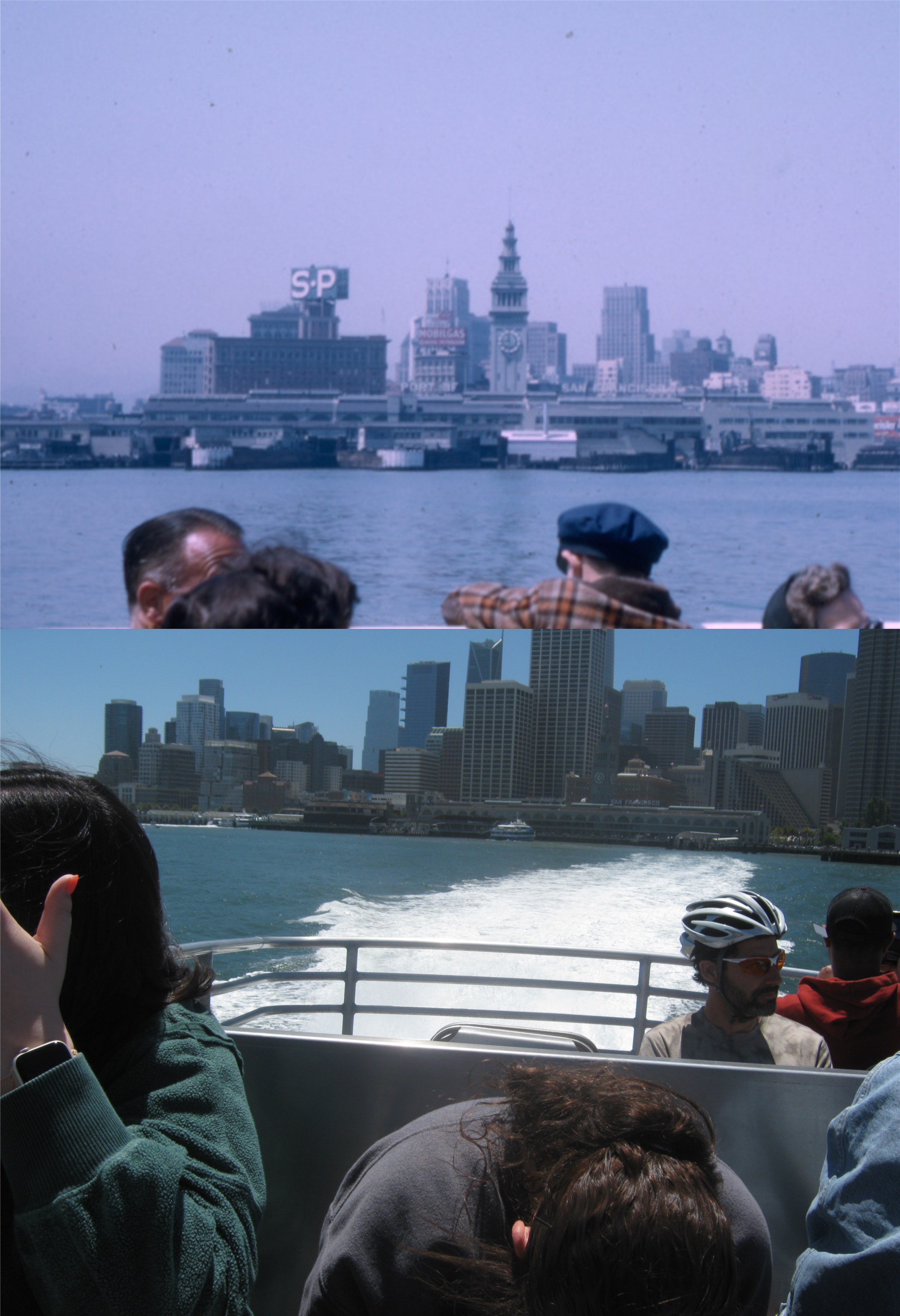
A boat ride out to Treasure Island for a late lunch at the Mersea Restaurant and Bar: (opensfhistory.org)


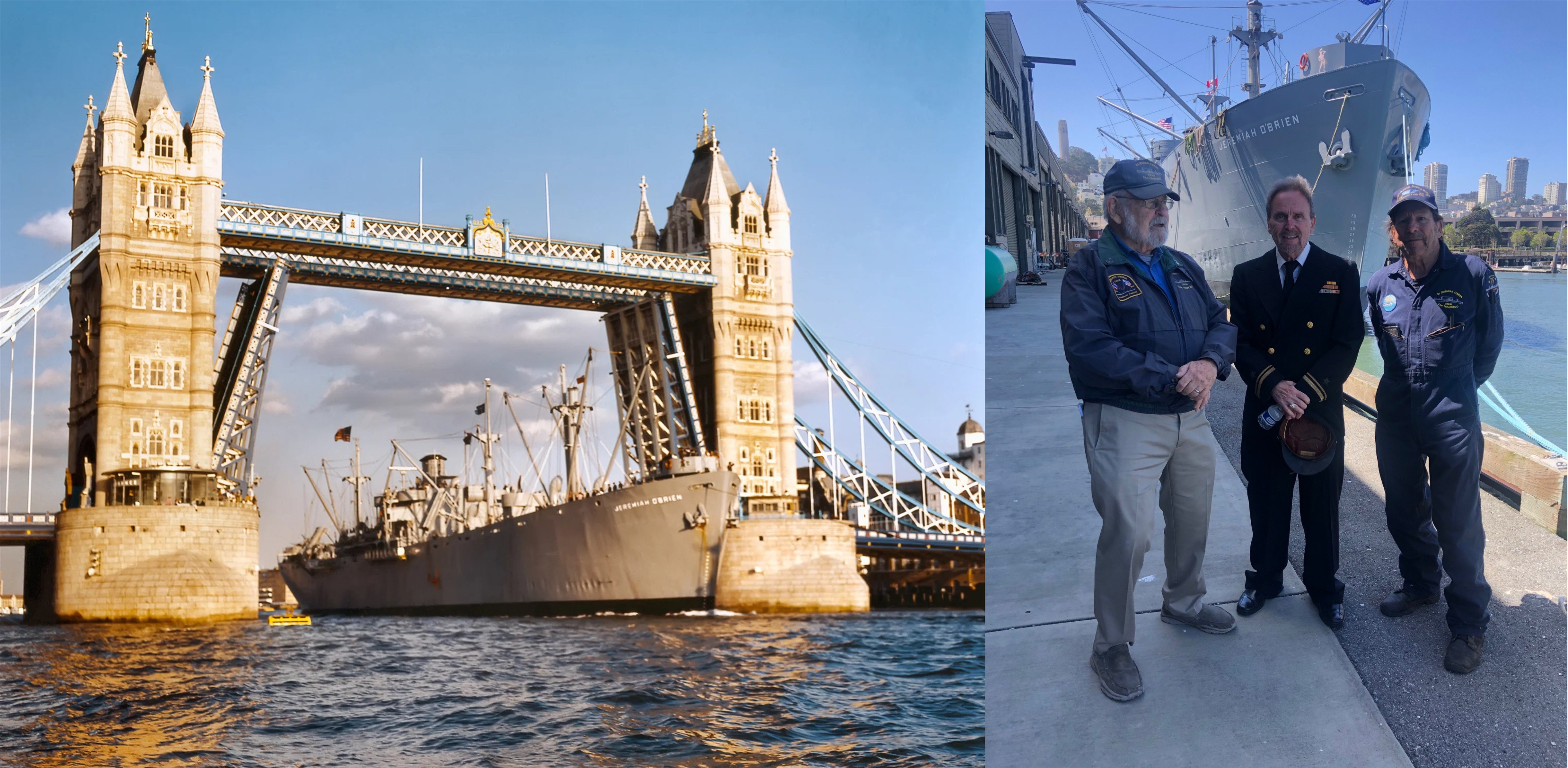
But for me, the highlight of the visit was last Saturday. They put together a gathering on board the Jeremiah O’Brien Liberty Ship to commemorate the 80th anniversary of the D-Day, Normandy, Invasion, and the kids got to come on board. There were commemorations, period clothes, and a Rosie the Riveter contest, among the honors. I wore the uniform my father wore when he served on the USS Wichita Cruiser during World War ll, and I got to chat with Carl Nolte, on my right, who writes the ‘Native Son’ column for the San Francisco Chronicle. Mr. Nolte traveled with the Jeremiah O’Brien thirty years ago when she sailed back to Normandy for the 50th anniversary of D-Day chronicling the journey with daily updates for the picture. It wasn’t the first time the Jeremiah O’Brien visited Normandy, she was there for the original invasion on June 6th 1944. The picture from shopify.com is of the Jeremiah O’Brien sailing through the Thames Bridge in London for the 1994 anniversary. My brother, Kevin, on my left, is one of the O’Brien’s crew members who helped put the commemoration together, and we were his guests.


You don’t celebrate the Memorial Day Holiday….. You observe it

That reminds me of a talk show I was watching long ago, with Lee Marvin as a guest. The host said to Marvin, “I understand that you were awarded a Purple Heart.” for Lee’s service during World War ll. Marvin, who was wounded during the battle for Saipan, replied, “You’re not awarded a Purple Heart, you’re given one. I’d rather not have received it.” I’m looking back over several military oriented posts I’ve shared in the past, some of them directly concerning Memorial Day, in honor of those who “gave the last full measure of devotion” so the rest of us can enjoy the weekend. These are some of the places where they will be remembering the real meaning of the observance. (Thumbnail images)


They’ll be observing the day in the Presidio, where the old Military Hospital Building is. They once had a great Army Museum in this old building.


Soldiers gearing up for battle during the 1898 Spanish-American War. “Bully!”


The old Montgomery Barracks in the Presidio, dating back to the 1800s: The top picture, where the old Parade Grounds were, I took in 2007. Nice pickup truck in the earlier picture. If you’re wondering if it still runs, yes, it does.


When the Presidio was mostly closed to the Army:


A Memorial Day service in May of 1943 at the monument to the Unknown Dead at the Presidio Military Cemetery: (Vintage picture, San Francisco History Center)


San Francisco is first and always a navy town. This is a 1985 picture I took of the USS Enterprise, sailing into the Bay under the Golden Gate Bridge during the October Fleet Week.


The USS Tennessee sails into the Bay under an unfinished Golden Gate Bridge in the 1930’s, and the battleship USS Iowa sails out to the Pacific Ocean under the bridge in May of 2012: This was almost certainly the last time a battleship will sail under the Golden Gate Bridge.


Old Fort Mason, in a slide picture I took in 1985, and an update in 2018. The area is quiet now, but the amount of activity that went on here during the Second World War was incredible, and many military people left from here that didn’t make it. It’s those we honor this weekend.


A picture honoring survivors of the Bataan Death March on a marker at the old train stop building, still there, at Fort Mason:


They’ll be commemorating the weekend onboard CV-12, the USS Hornet in Alameda, as well.


The World War ll submarine, the USS Pampanito, will be remembering the 52 United States submarines with their crews that didn’t make it home during the war.


And the crew of the Liberty Ship, the Jeremiah O’Brien, held their Memorial Cruise last weekend. My pictures were during the 2018 Memorial Cruise. Next weekend, the Jeremiah O’Brien, a survivor of the 1944 Normandy Invasion, will be holding another event to honor the 80th anniversary of D-Day.

The City as Suydam saw it

The City as Suydam saw it; like Professor Harold Hill’s Gary, Indiana, it kind of rolls off the tongue. Edward Howard Suydam, pronounced Soo-damn, was an illustrator, born in 1885 and died in 1940. There’s not a lot on the internet about him, he came to my attention, due to his sketches that are in two San Francisco biographies written by Charles Caldwell Dobie during the 1930s,’San Francisco, a Pageant’ and ‘San Francisco’s Chinatown’. Although Dobie’s books are interesting histories of San Francisco as well as vintage tours of the city during the 1930s, they’re not without imperfection. For example, his racist remarks on his description of the 1930s South Park in ‘San Francisco, a Pageant’ is hard to take. However, E. H. Suydam’s pencil drawing, many in areas of the city not usually covered by artists, are fun to look at. I’ve covered some of his drawings in the past, and here’s another collection I did recently trying to duplicate in photograph some of his pencil sketches. (Thumbnail images)


O’Farrell Street, looking toward Market Street and the Call Building: This would have had to have been drawn no earlier than 1939 when the Call Building was remodeled and its dome removed.


Market Street, looking toward Mason Street and the old Admission Day Monument: The monument is now located at Market Street and Montgomery. The Western Insurance Building on the left has been remodeled and is still there.


Looking toward the Clift Hotel on Geary St. from Mason Street:


The old Pacific Stock Exchange Building on Pine Street at Sansome, with the Russ Building on Montgomery Street in the background:


Old Beckett Alley in Chinatown, once notorious for having the most brothels of any street in San Francisco:


California Street at Grant Avenue in Chinatown, looking toward St. Mary’s Square: The Russ Building can barely be seen from here now.

‘Far from the Madding Crowd’, part two

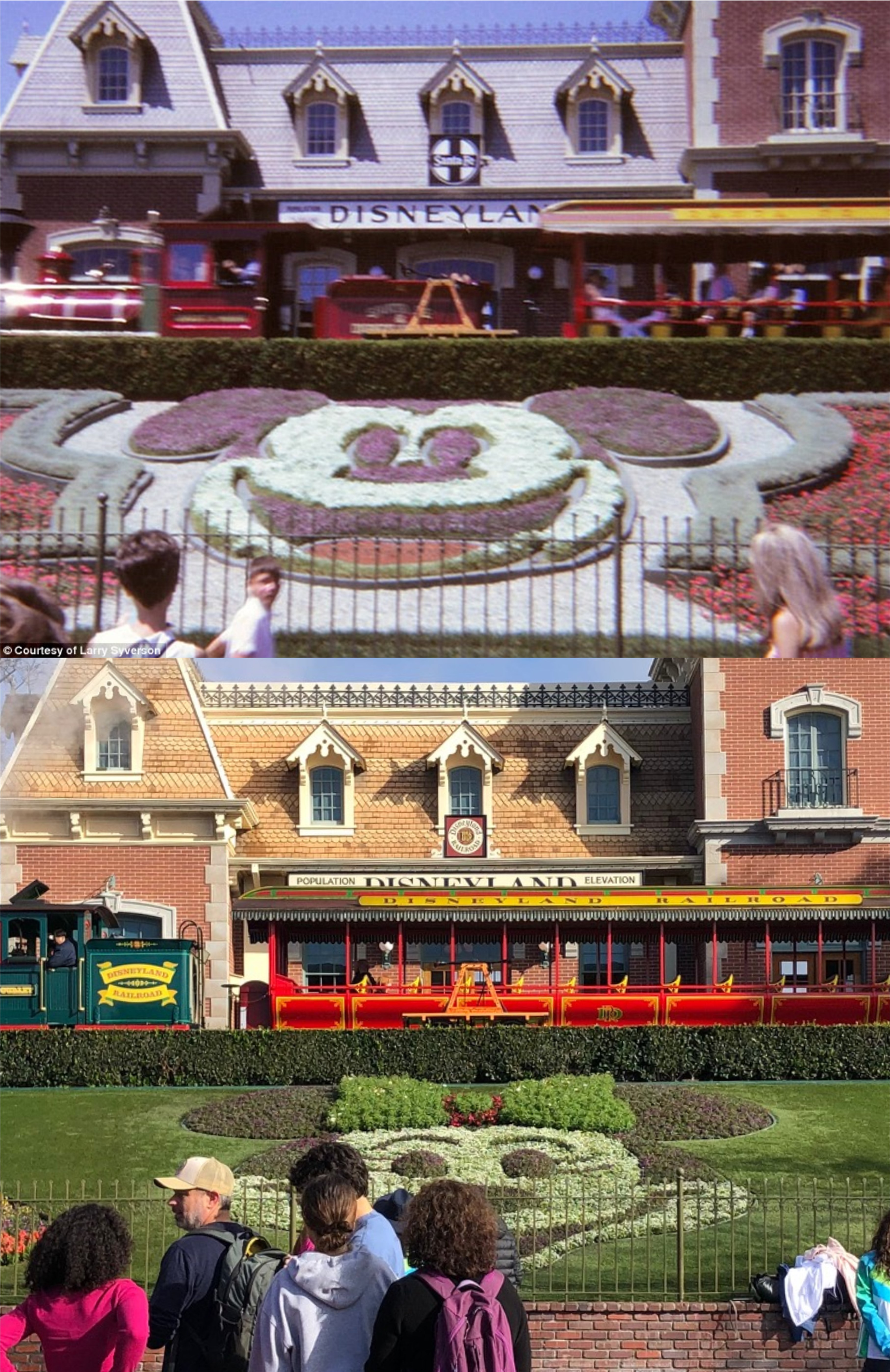
It might not make much sense that a person would escape to Disneyland to get away from a crowd. As I’ve mentioned, I have an income tax filing practice, and the “madding crowd” of March income tax filers is far more stressful to me than any Disneyland crowd has ever been. I had family flying out from Virginia to visit Disneyland at the beginning of this March, and they wanted me to be there. I knew that I’d get behind in my work, but I’ve never been to Disneyland in March, and it didn’t take much for a Disneyland revelation like that to get me to go. Before I headed down there, I found a collection of interesting pictures taken by a photographer named Larry Syverson on a visit to the park he took with his girlfriend in August of 1969. The Disneyland before the New Millennium of California Adventure and Downtown Disney is the Disneyland I have the most memories of.  It’s probably why I keep going back there, so I did some updated photos of Syverson’s 1969 images of Disneyland the way it was. (Thumbnail images)


The Sleeping Beauty Castle:


The old French Market in New Orleans Square: That’s Larry’s girlfriend in the pink striped outfit.


Tomorrowland and the old People Mover Ride: The People Mover track is still in Tomorrowland.


It’s a Small World, and Larry’s girlfriend again on the left:


The riverboat Mark Twain in Frontierland before the opening of the Big Thunder Mountain Ride:

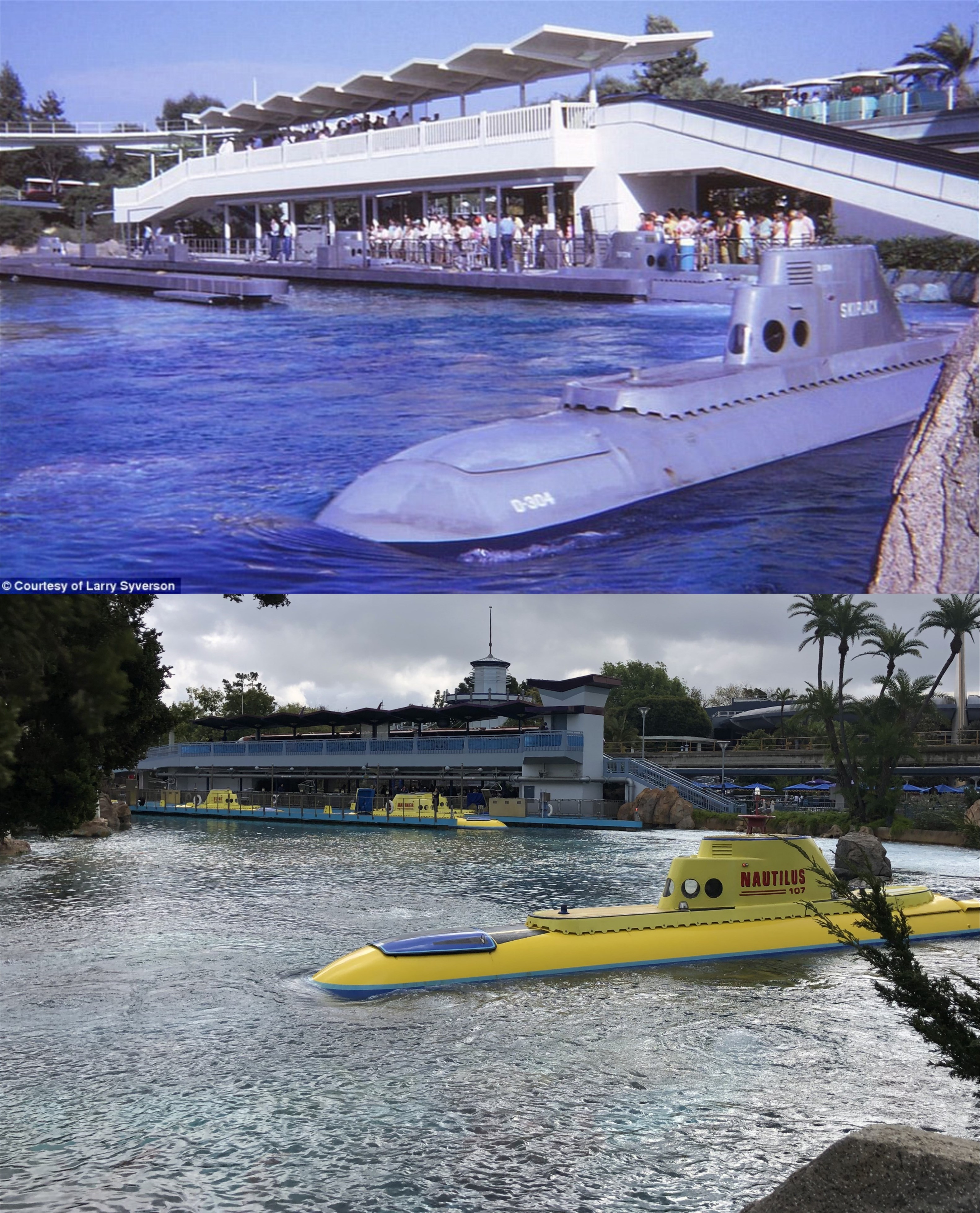
The Monorail Station, the People Mover Ride and Submarine Ride in Tomorrowland:


The Jungle Cruise in Adventureland:


The Mark Twain Riverboat passes by the frontier town where the Mine Train through Nature’s Wonderland and the Pack Mule Ride left from. The Thunder Mountain Railroad Ride is there now.


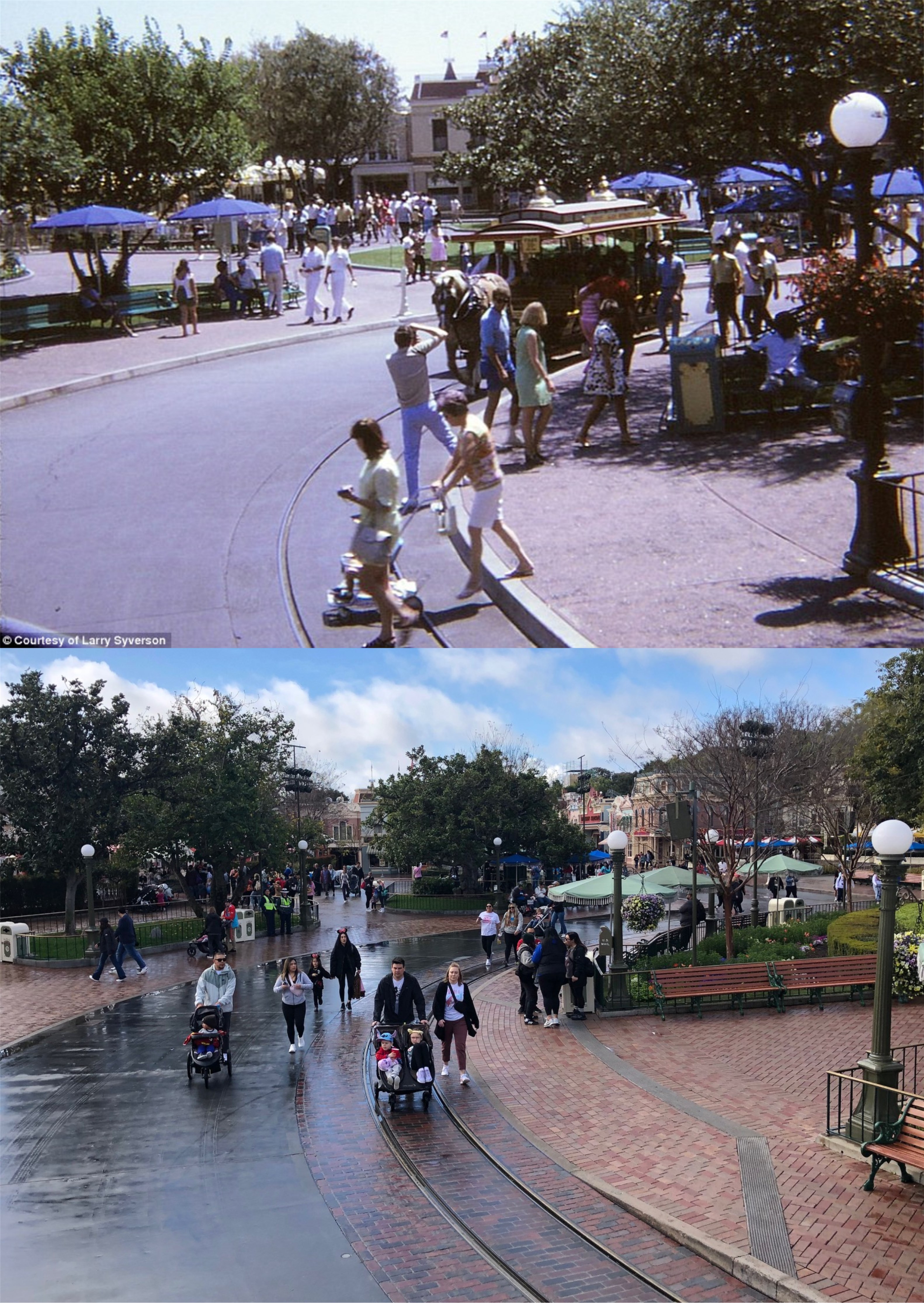
The Main Street Plaza from the top of Omnibus Ride:

The Disneyland entrance at the Main Street Train Station:


The naked truth concerning Rincon Park

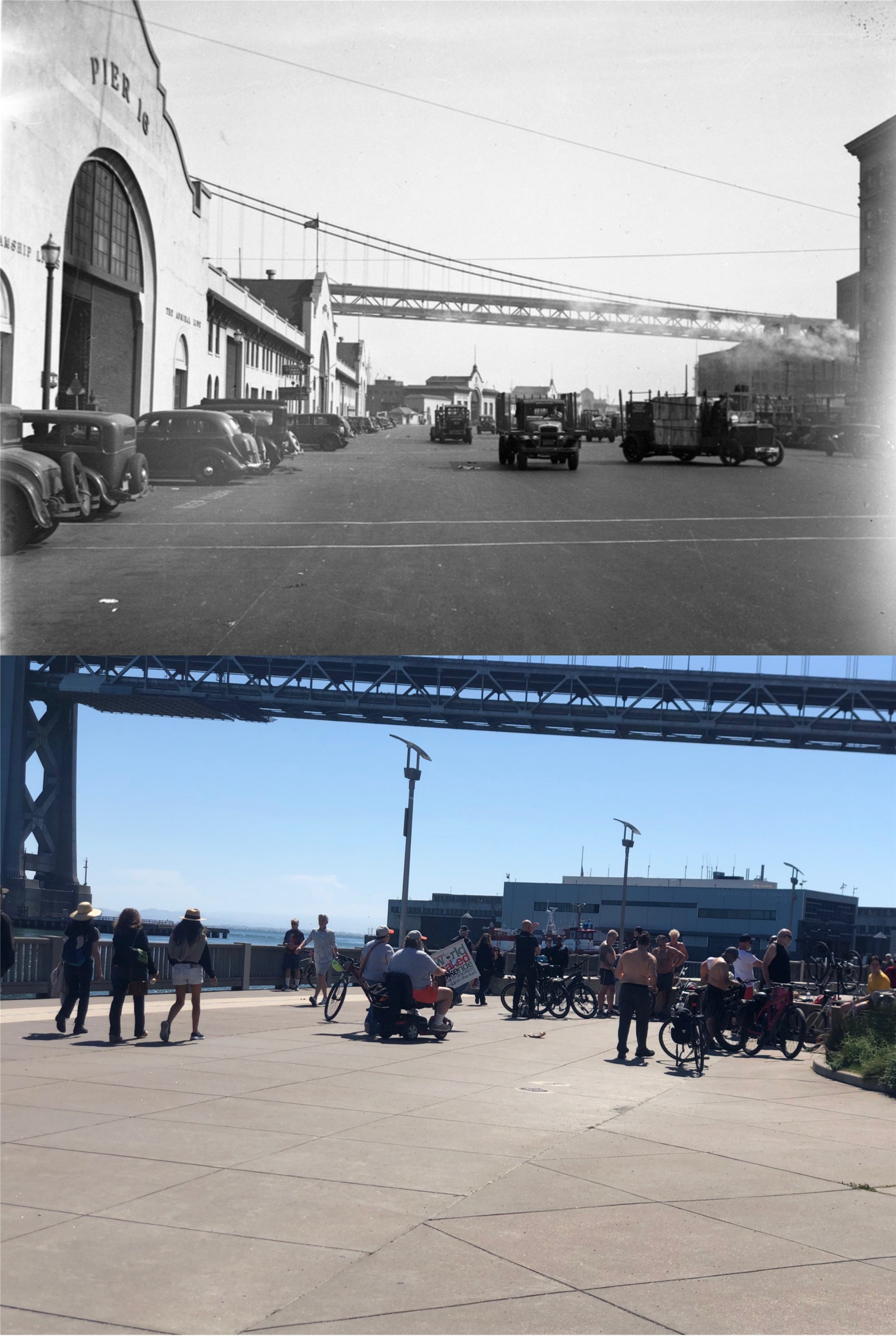
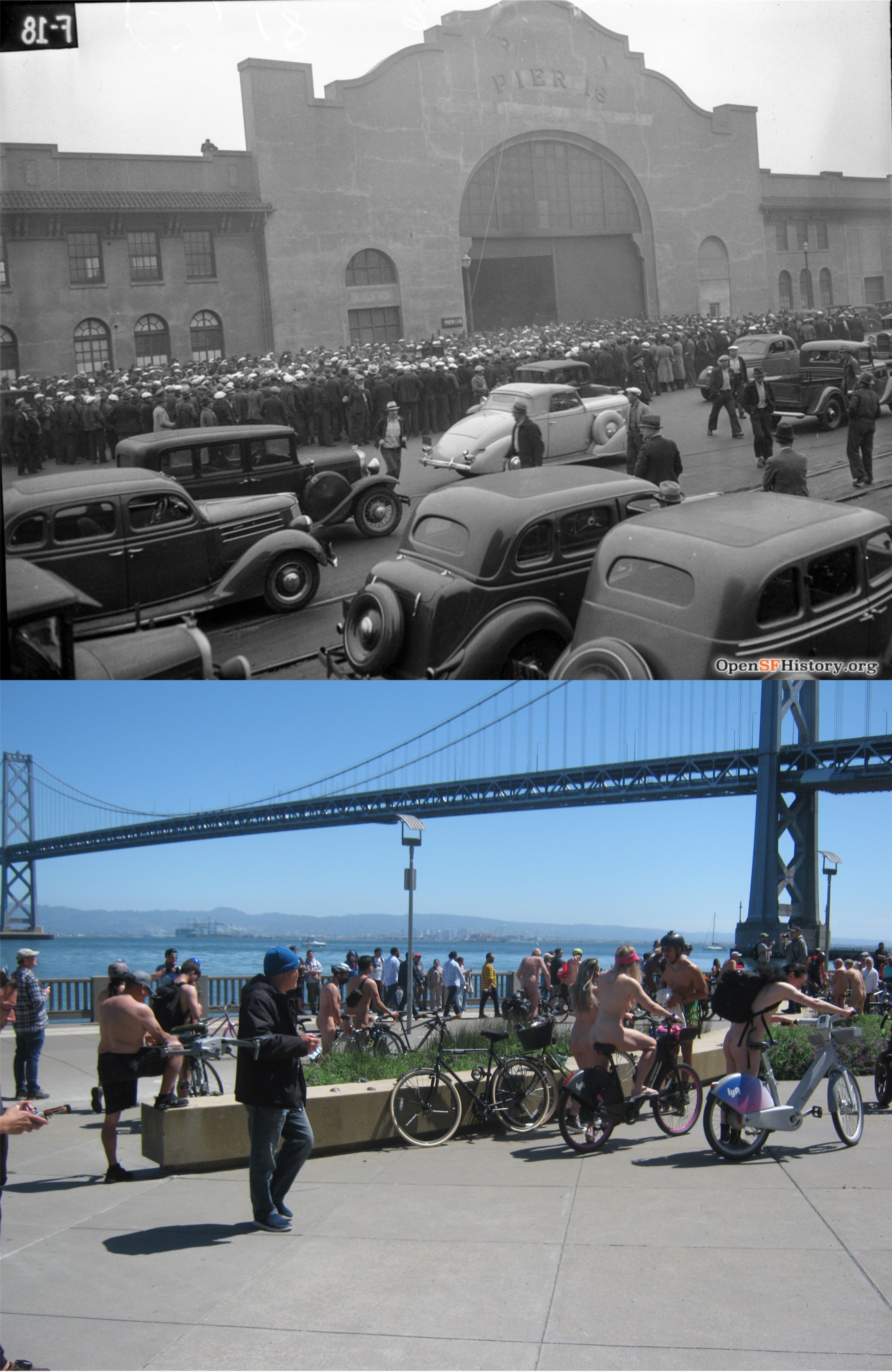
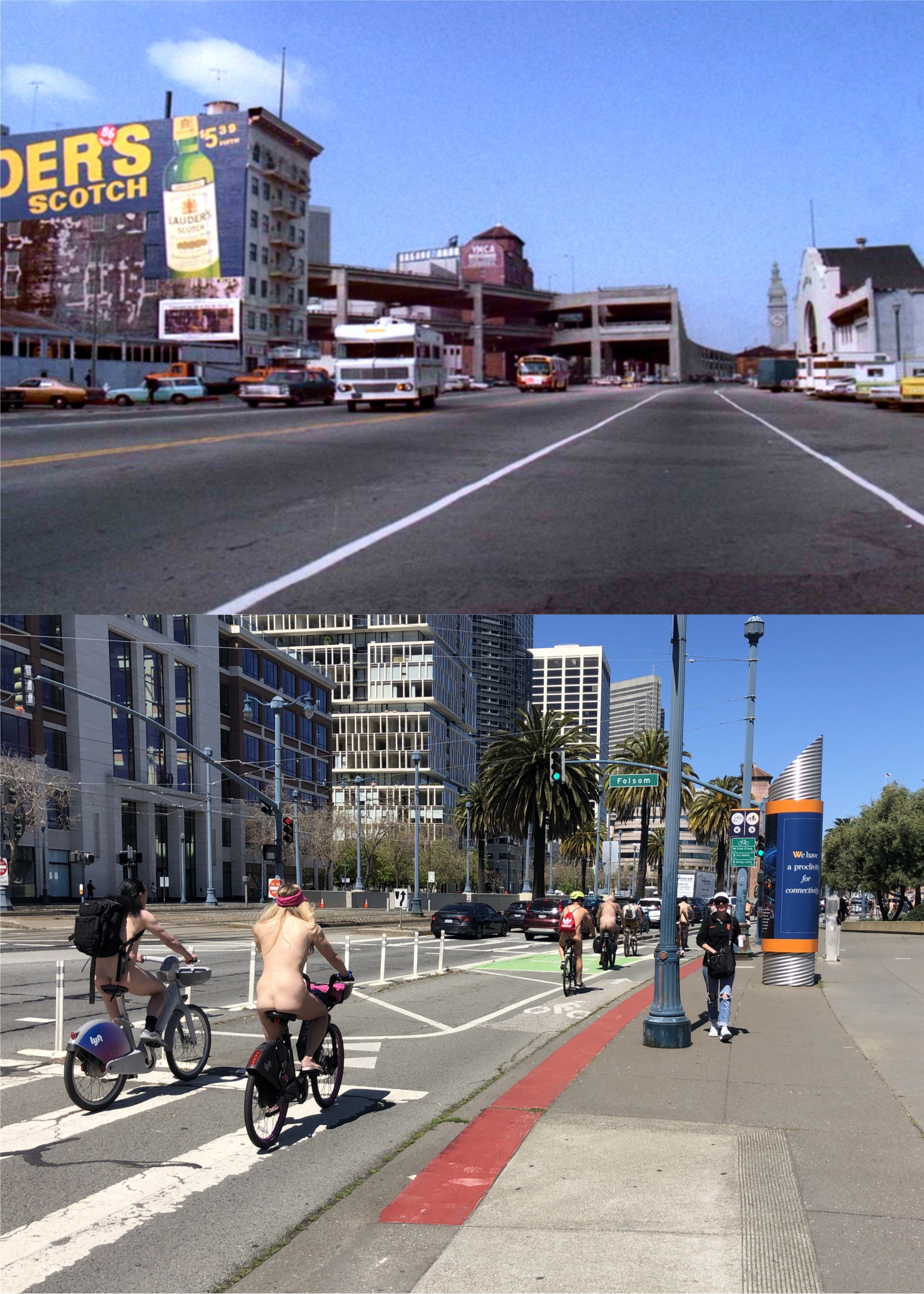
While recovering from one of the most stressful income tax filing seasons, (I’m getting too old for this job, and don’t I know it) I headed over to the Embarcadero last weekend to take in some of the scenery (!) They were staging another ‘Naked Bike Ride’ that started from Rincon Park, south of the Ferry Building. The last time I saw one of these was, I think, 2012, and I was glad to see that I wasn’t the only one who’s gotten more out of shape since then. Rincon Park stretches from Howard Street to Folsom where the old Piers 16, 18 and 20 used to be. Like the rest of the Embarcadero, this area used to be bustling with waterfront activity long past. (Thumbnail images)


I entered Rincon Park just south of Howard Street, and approached the middle of the park where the goings on, (bad choice of phrases) were beginning. The vintage picture from opensfhistory.org is the near area circa 1940.


About the middle of Rincon Park here is where they starting taking off from. (Another poor choice of words) Right about here was where Pier 18 was. The vintage picture was taken in September of 1937, during a labor dispute by teamsters that didn’t get as out of hand as the 1934 issue, but other photos from the opensfhistory.org website show that it was getting pretty scary.


The riders circled Rincon Park and headed north on the Embarcadero. My picture was taken at the tail end of the ride. I’m getting very awkward with my sentences! The top picture is a close comparison from a 1972 episode of the television show ‘The Streets of San Francisco’. The YMCA Building is in the background of both photos; to the left of the Winnebago is the old Seaboard Hotel, scene of the attempted assassination in near the beginning of the 1968 film classic ‘Bullitt’.


The Winnebago in the previous TV image turns into Pier 18, already a crumbling ruin by then.

Here’s another great picture, looking north from the spot where the riders were heading, taken in July of 1938. (opensfhistory.org)


I’ll close with another exposure (I give up) looking north along the Embarcadero. The vintage photo was taken during the violent waterfront strike of 1934. The trucks are filled with soldiers ready to confront the teamsters. (opensfhistory.org)

Well remembered (Part Three)

In two previous posts I wrote about a Facebook Page that I’m a member of entitled San Francisco Remembered. Group members post pictures from San Francisco’s past that are of interest to them, or they may actually post interesting pictures from their own photo collection. I’ve posted a few of my own pictures on their page. Last fall, I did a few update comparison pictures of some of the vintage photos posted by group members. I’ll post a few of them along with the first name of the group members who contributed the vintage pictures. Also, San Francisco Remembered is a great reference page for use in identifying locations in San Francisco that someone (like me) may be trying to find. I’ll include two links after my pictures of posts on my website where San Francisco group members guided me to San Francisco locations that I couldn’t find by myself. (Thumbnail images)

Market Street at Kearny, 1969: American Savings covered up the old Chronicle Building to modernize it back then and in 1999, Lotta’s Fountain was moved back to its original spot and restored to its original size. (Leilani M.)


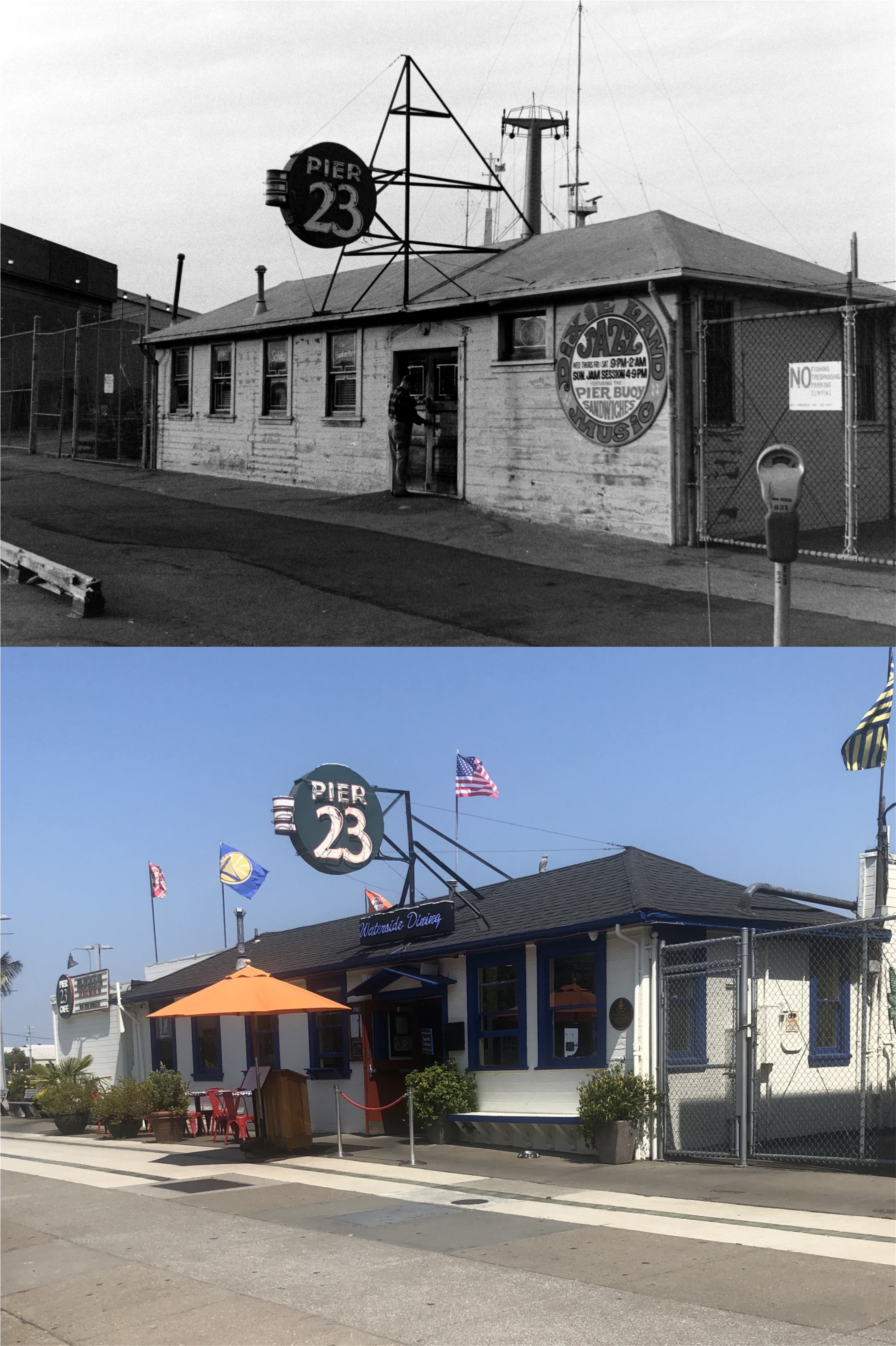
Pier 23 on the Embarcadero; the vintage picture looks like it was taken during the 1970s. This is a great place to stop for lunch now. (Henry B.)


Market Street at Mason in 1974: I just went there to see if the same lamppost is still there. (Leilani M.)


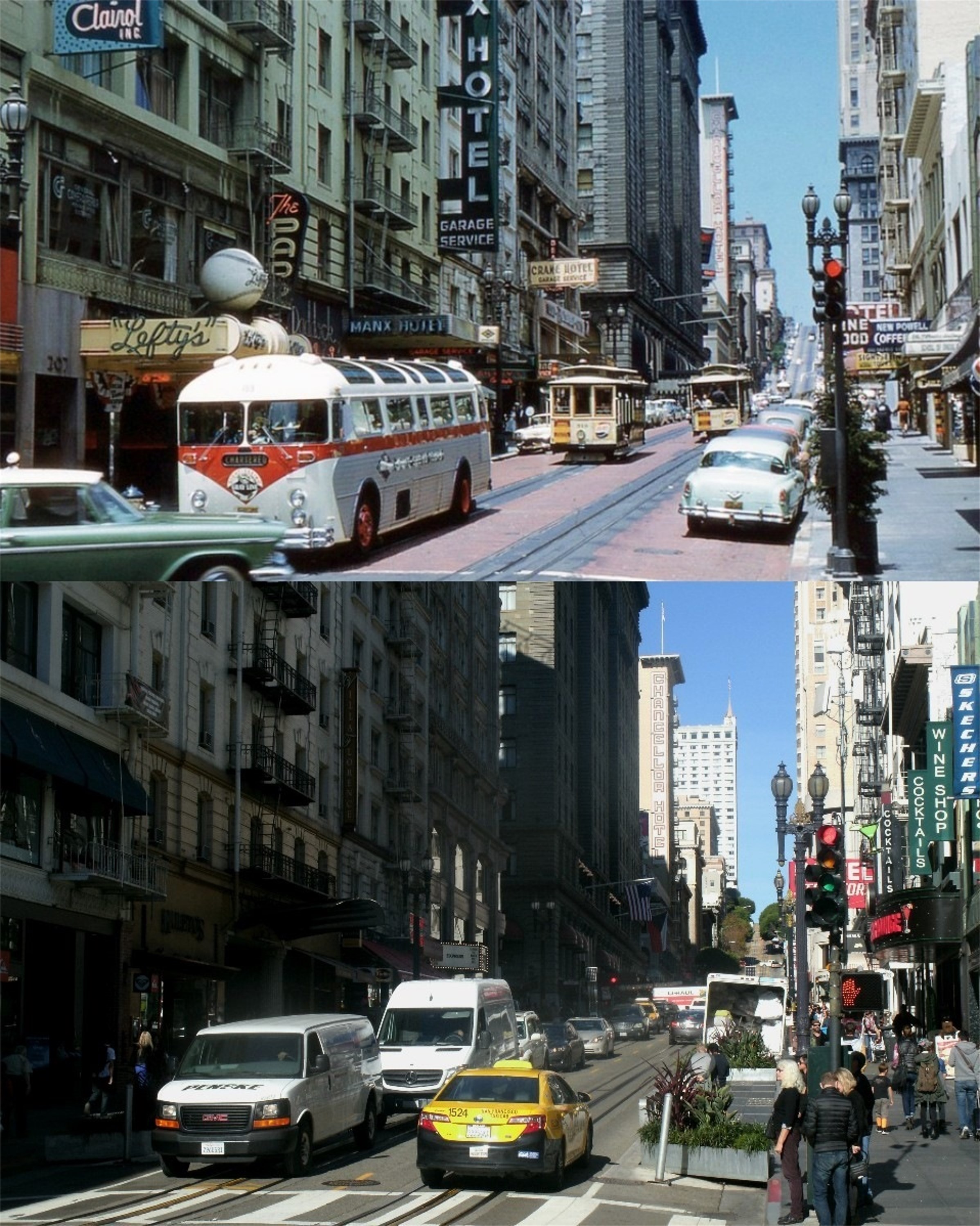
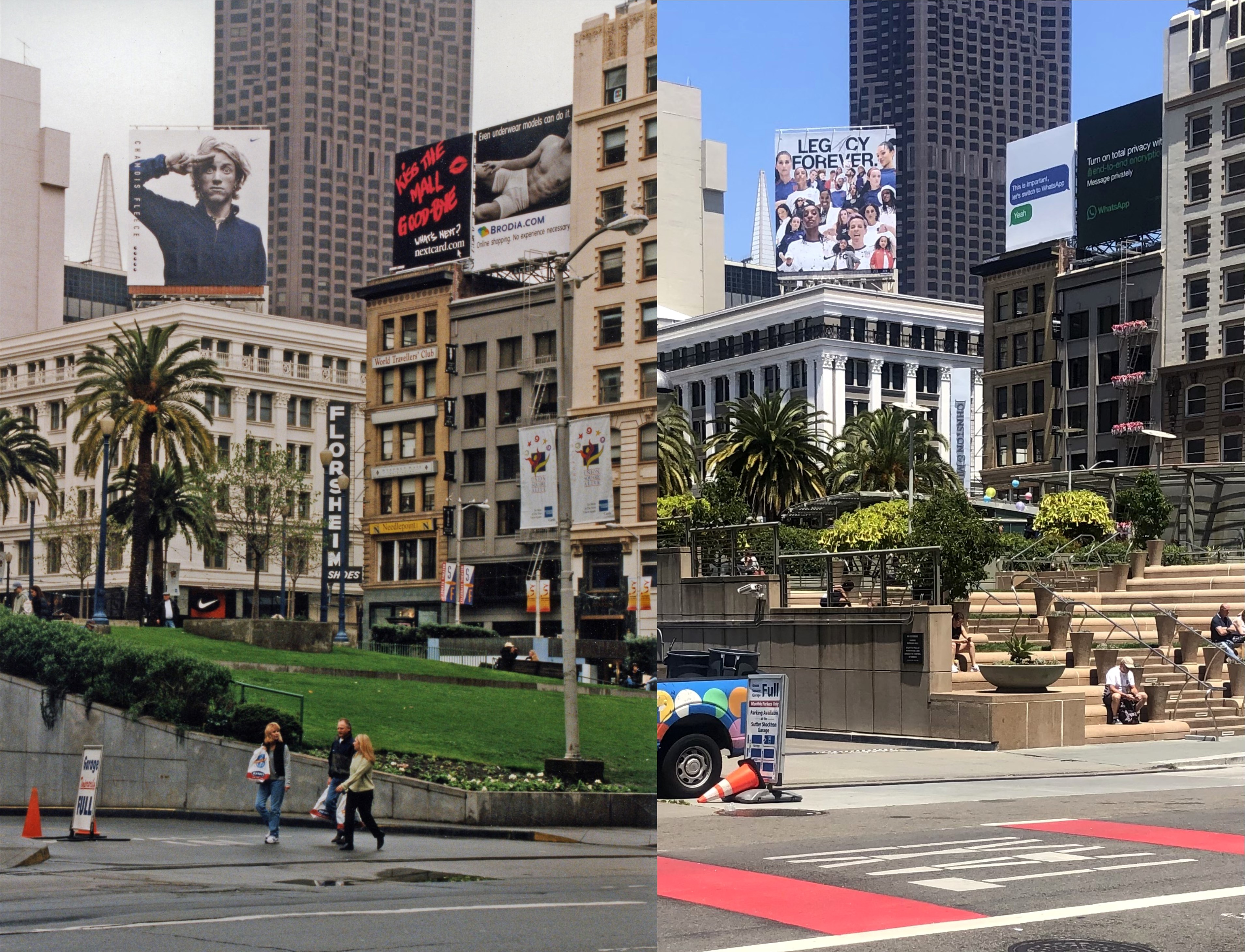
Union Square in the 1990s, the decade that .coms came into everybody’s life: (Ray M.)


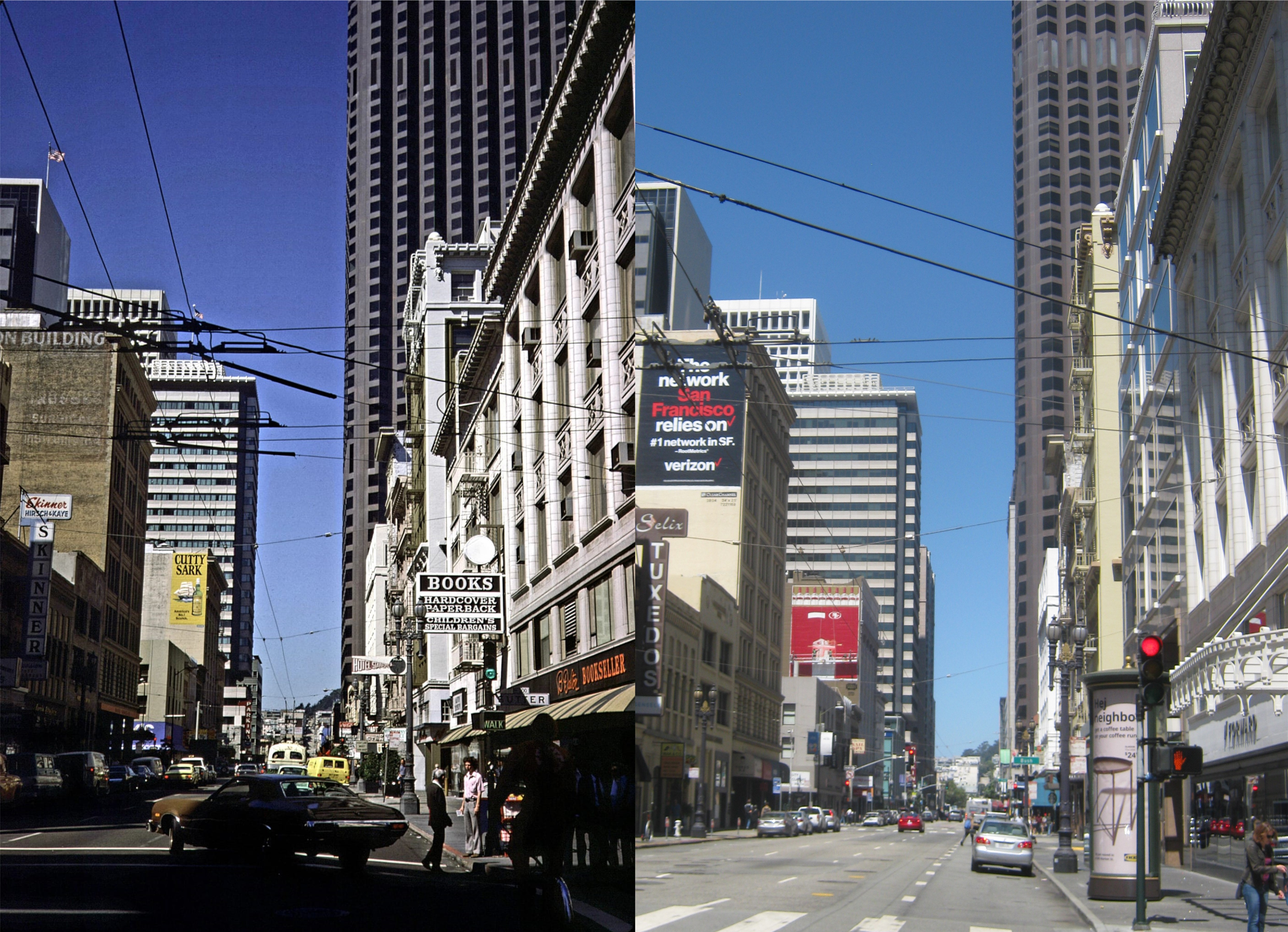
Kearny Street, looking north toward the Bank of America Building in 1974: Ah, B. Dalton Bookseller! They had stores all over back then, and you could find great books on anything from Hollywood films to World War Two to San Francisco, or my favorite subject, quantum mechanics. (Leilani M.)


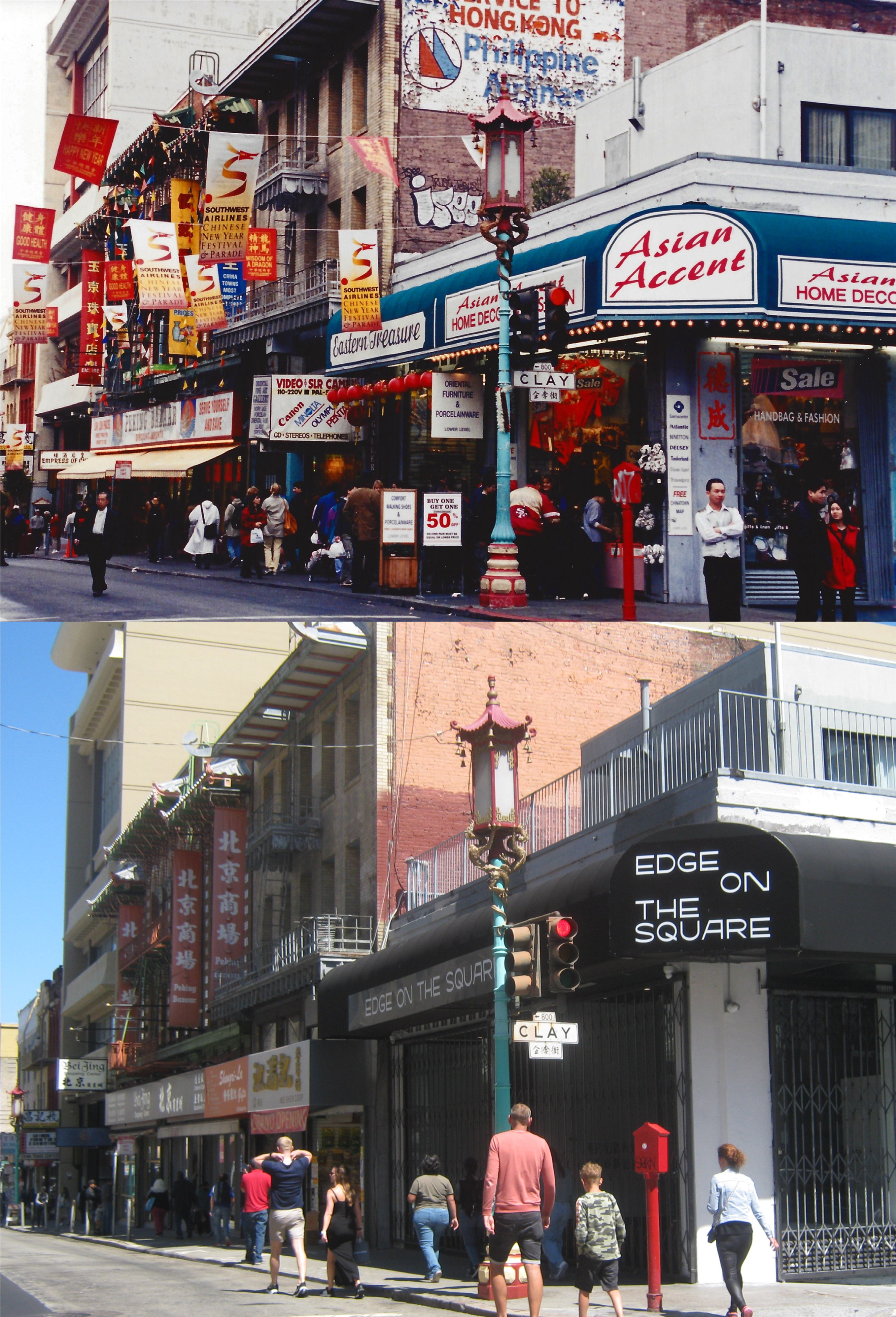
Grant Avenue at Clay Street, also during the 1990s: “Excuse me, I’m looking for Chinatown. Could it be behind all of those signs and banners?” (Ray M.)

“With a little help from my friends”

Outclassed again (For Judy)


“Pick another year, any year.” “Okay, 1939.”

1939 was a good year for San Francisco, and also the year the first person in my immediate family visited SF. My San Francisco exploring has been interrupted by the 2024 Tax Season, but I don’t usually get a chance to post something on February 29th, so I searched my archives for some past pictures I posted for the 85th anniversary of 1939. (Thumbnail images)


Dorthea Lange’s photo from the ramp of the First Street exit off of the Bay Bridge, now called the Fremont Street exit. You can see Coit Tower, the Shell Building, the Standard Building, and the Russ Building among other landmarks in her picture, none of which are visible from here today.


An artist’s rendition of what the Transbay Terminal that opened in 1939 would look like, and the Transbay Terminal on the last day before it closed forever in August of 2010.


A lady waiting for an auto, bus, streetcar or cab at on Market Street at Jones in 1939: I don’t know if that coat that’s attacking her would go over too well nowadays.


A couple of 1939 free-spirits riding their bicycles up to Sutro Heights above Playland-at-the-Beach:


The road leading from Yerba Buena Island to the Treasure Island Exposition that opened in 1939:


Grant Avenue, Chinatown, in 1939:


A long-ago 1939 family in a probably posed picture at Ocean Beach, with the Cliff House and Seal Rocks in the background:


My 17 year old mom, on the right, next to the Pool of Enchantment at the de Young Museum on her 1939 visit from North Dakota, and an update I did at the spot before the building was demolished in 2000:


“Pick a year, any year. Okay, 1971.” (For Laura)

Why 1971? Well, there are a lot of vintage pictures from different sources on the internet taken in San Francisco during 1971. Also, I’m old enough to remember what San Francisco was like in 1971. Besides, 1971 was probably an important year for some people. (Thumbnail images)


Coming out of the Yerba Buena Tunnel onto the Bay Bridge:


Look at that grouchy looking guy on the northwest corner of Jefferson and Taylor Streets. I hope I don’t look like that when I take pictures around San Francisco. (Vintage picture, SF Chronicle)


The 1971 San Francisco skyline from the top of the St. Francis Hotel: You can spot a number of the same buildings in both pictures. (Vintage picture, San Francisco Public Library Archives)


Fleishhacker Pool and Pool House after closing in 1971: The pool is buried beneath the parking lot of the San Francisco Zoo today, and the Pool House was burned down by homeless people shortly after I took my picture.


Edging into the Tenderloin on O’Farrell Street, looking east from Mason Street: (Vintage picture, amazingurban.com)


The old YMCA Building on the Embarcadero, with the infamous Embarcadero Freeway on the right: (Vintage picture, San Francisco Public Library Archives)


A couple of buddies fishing behind Pier 5: The pier has been cut back and remodeled now, so this is as close of a comparison picture I could get. You can just see the top of Yerba Buena Island on the right in my picture. (Vintage picture, UC Berkley Library Archives)


Looking across Embarcadero Center Plaza toward Market and Steuart Streets from the Vaillancourt Fountain: This is as close of a comparison picture I could get because the Park Padel Pickleball Court obstructs the view from the fountain in the vintage picture now. The Southern Pacific Building is on the right in both photos. The Rincon Annex Post Office Building is blocked from the view here now by One Market Plaza. The Hills Brothers Coffee Building is in the far background of the older picture. The old Audiffred Building is behind where the San Francisco Railway Museum Building on Don Chee Way is today. (Vintage picture, San Francisco Public Library Archives)


Not Portsmouth “Plaza”

Way back to when I was 15, I learned from Herb Caen that, although it is often referred to as Portsmouth Plaza, a true San Franciscan calls it Portsmouth Square. From an article by Ko Lyn Cheang in last Thursday’s San Francisco Chronicle, I learned that they may be closing the famous park in Chinatown for several years for renovations. Some consider this little spot as the most historic piece of land in San Francisco; In 1846, John B. Montgomery, Captain of the USS Portsmouth, raised the first United States flag in the city of San Francisco at what was then called ‘La plaza’. In 1848, prospector, John Brannan announced the discovery of gold in Sacramento, which started the 49ers on a roll (the original ones). It’s overcrowded and the bathrooms are a fright, but its closer will disrupt the lives of a lot of people in San Francisco. These are a few pictures I’ve posted in the past that were taken at Portsmouth Square. (Thumbnail images)

The original Hall of Justice Building on Kearny Street. spelled Kearney in the old photo, across from Portsmouth Square. The vintage picture was taken after the 1906 Earthquake. The now closed bridge in the modern picture crosses over to the Hilton Hotel, which replaced the rebuilt Hall of Justice in 1968.


The rebuilt Hall of Justice on Kearny Street in 1958 from a Charles Cushman photo: Both pictures were taken from Portsmouth Square. This building appeared regularly in television shows such as ‘Lineup’ and ‘Ironside’, and many crime pictures like ‘Impact’. ‘The Man Who Cheated Himself’ and ‘The Lady from Shanghai’. The old hall was demolished in 1967.


Of course, the best look you get at vintage Portsmouth Square is from the website opensfhistory.org. This 1960 photo and update are looking at the southeast corner of Portsmouth Square.


The southeast corner of the Square in 1937, looking in the opposite direction from the previous pictures: The buildings in the background are the same in both photos.


Orson Welles, on trial for murder in the Hall of Justice Building, escapes and runs across Kearny Street to Portsmouth Square in the 1947 film ‘The Lady from Shanghai’.


Rita Hayworth chases after Orson Welles across Portsmouth Square in ‘The Lady from Shanghai’.


Probably my favorite Chinatown scene from any movie is from the 1949m film ‘Impact’. Here’s the setup; Brian Donlevy is on trial at the old Hall of Justice Building on Kearny for murdering his unfaithful wife’s lover. (He’s innocent) Anna May Wong has information that may save him but will not testify, although she comes to the courthouse out of guilt. Ella Raines, Donlevy’s new squeeze, spots her as she leaves the courthouse and a chase is on. As Anna May’s taxicab turns onto Washington Street from Kearny on the corner of Portsmouth Square jumps into a waiting taxicab to follow her.


They race up Washington past Portsmouth Square to Grant Avenue. This chase scene covers much of Chinatown, including some of its old alleys.


A child looks at the Robert Louis Stevenson Monument at Portsmouth Square in 1939:

“Who’s he, Daddy?’

“He wrote Treasure Island.”

“You mean, about the Fair?”

“No, it’s a story about adventures on a mysterious island with treacherous scoundrels, cutthroats, and pirates.”

“Oh, Alcatraz.”

‘The Streets of San Francisco’ takes a cruise


In this rousing and well made episode of the television show ‘The Street of San Francisco’ from 1974, Lt. Mike Stone (Karl Malden) and Inspector Steve Keller (Michael Douglas) are up against terrorists who are planning to place explosive bombs all around San Francisco. 1970s television doesn’t get any better than this. (Thumbnail images)

The episode titled ‘Flags of Terror’ opens in Tokyo, where three members of a group of terrorists are purchasing miniature bombs that can be hidden in cameras. They later plan to smuggle them in to San Francisco.


The cruise ship the terrorists arrive in docks at Pier 35: They build them bigger nowadays.

Stone and Keller happen to be inside Pier 35 on a routine check for smuggling. We get a good look at the inside of Pier 35 in 1974, and also, a nice pair of legs on the right. The girl reading the book on the far right is about to get in serious trouble.


The bad guys (and girl) try to smuggle their explosive cameras past customs, but an alert agent smells a rat. When he motions an armed guard to come over, the terrorists make a break.


As the terrorists make their break, they grab some hostages. Yeah, they did that in 1974 too. The girl is the one we saw inside Pier 35.


They exit the north side of Pier 35 with their hostages here.


As the terrorists run along the Embarcadero, you can see the old Pier Inn Cocktail Lounge between Piers 33 and 35 in the background. They bottom picture with the Pier Inn in the background is a snapshot I took on a rainy late afternoon in the late 1980s.


As the villains shoot back at the customs agents chasing them, a father and daughter are going into Pier 35 to take a Hawaiian cruise. The daughter is hit and killed. Later in the episode her vengeful father almost gets all of the hostages killed by trying to shoot at the terrorists.


The terrorists run past Pier 35 and the side of the pier where the world War ll Liberty Ship, the Jeremiah O’Brien, is berthed today.


Right on their heels are Lt. Stone and Inspector Keller.


The criminals jump into a red van and head down the Embarcadero followed by multiple police cars, including Stone and Keller. In this three set you can see the now gone Piers 37 and 39 in the upper right of the top photo. In the middle picture you can see the mast of the sailing ship, the Balclutha when it was berthed at Pier 43 on the far right.


The terrorists head down the Embarcadero, turning onto Broadway where the Embarcadero Freeway ended.


Cut off by police at the foot of Broadway, they head back to the Embarcadero


The pursuit continues south underneath the Embarcadero Freeway. Their van crashes into a pile of boxes on the corner of Mission Street and the Embarcadero at the old Audiffred Building.


The chase continues to an area that was once skid row in 1974. Surprisingly, all of the buildings in the film scene are still there. The terrorists eventually hijack a yacht south of China Basin, and threaten to kill everybody on board including the hostages and themselves unless a seaplane is delivered. This is top notch entertainment.