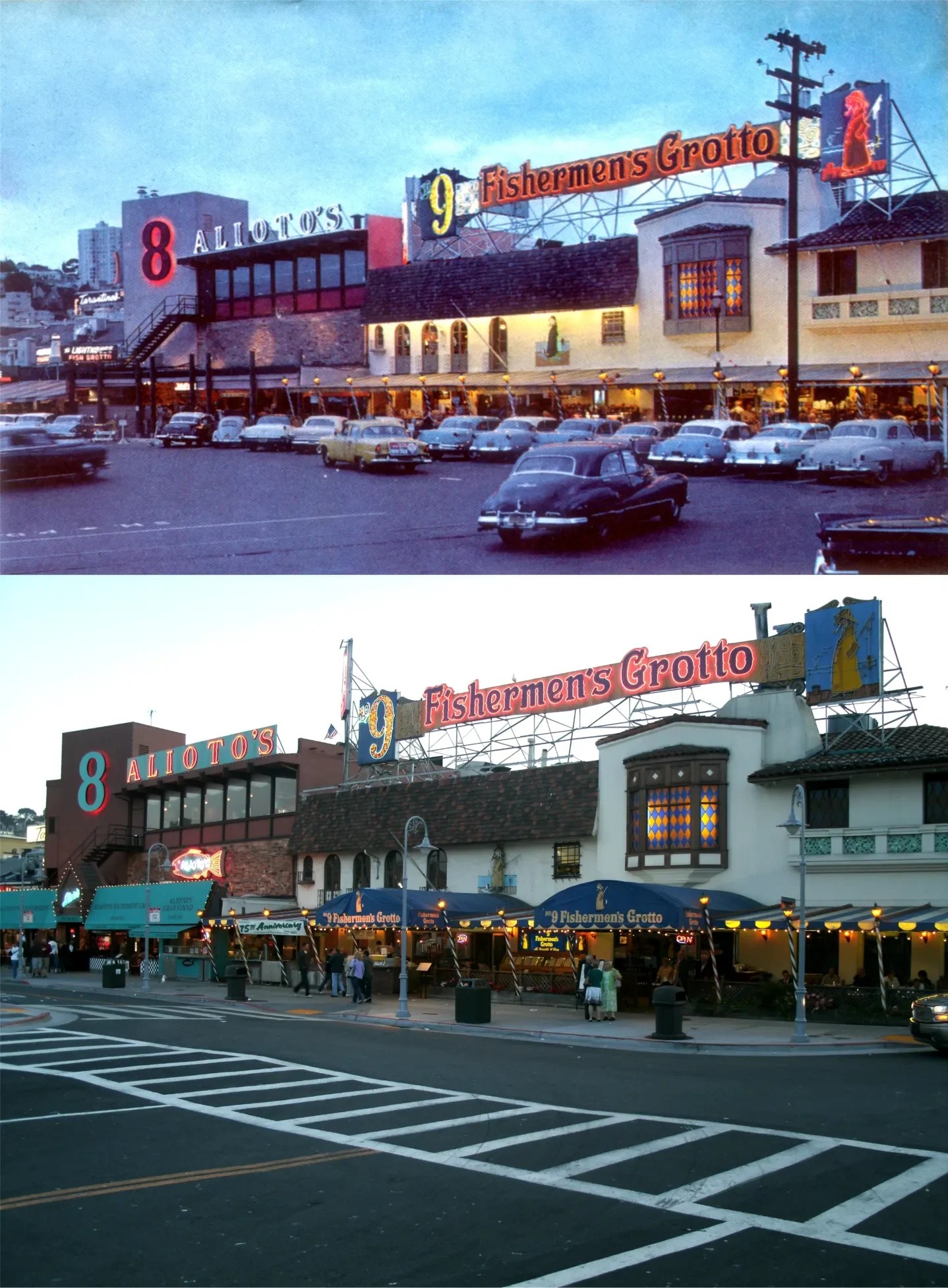
Actually, these aren’t all designated as “Streets”, but ‘More little alleys, places, a street, and a lane’ is kind of a long title for a post. Some of these spots are relatively little known, but a few of them are historic, and one of them is featured in a 1940s noir film. (Thumbnail images)
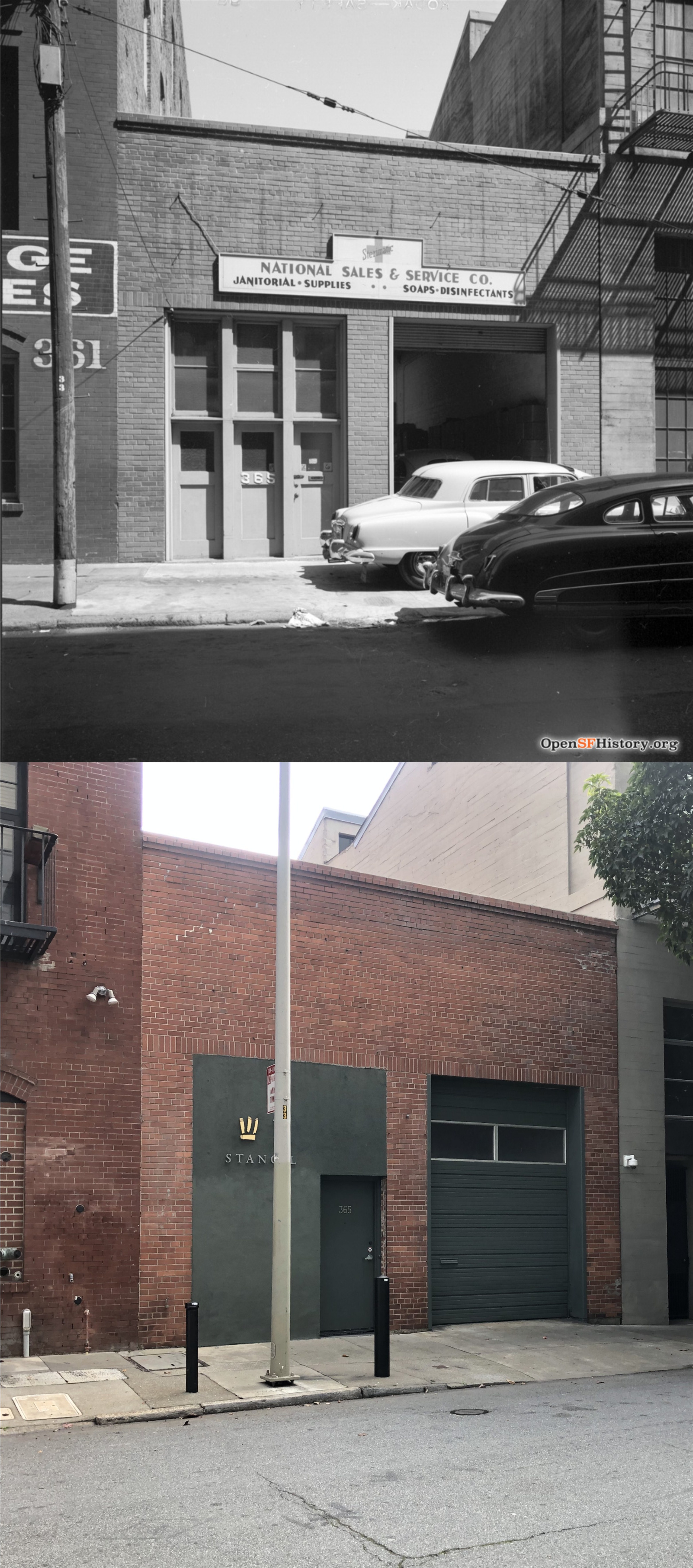
365 Tehama Street in 1951 was kind of a boring place to take a picture of, unless you owned National Sales and Service Co., but the cars and the fact that the little brick building has survived add flavor to the picture today. (opensfhistory.org)
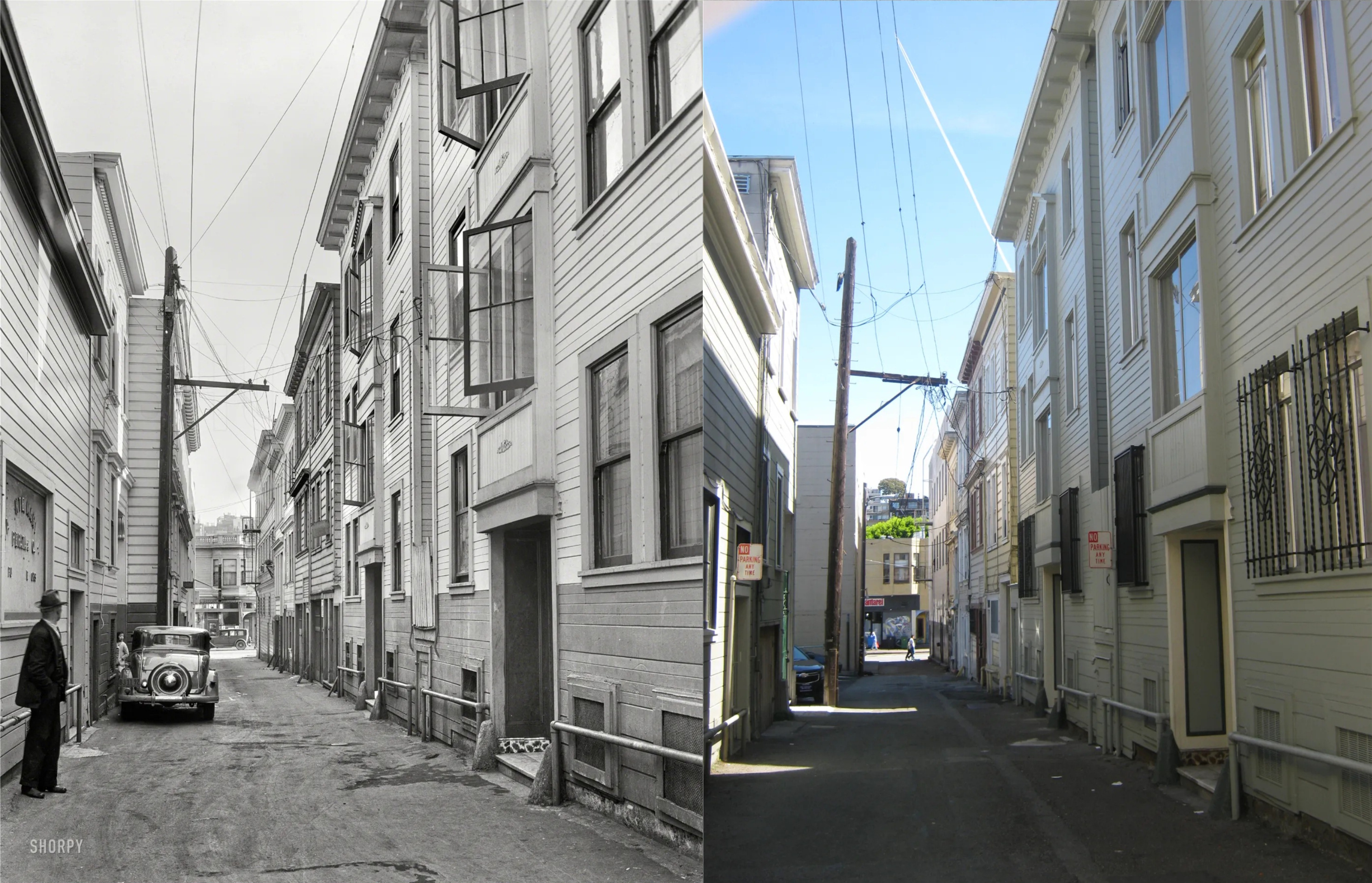
Card Alley, North Beach, in 1936: There may have been something exciting that happened in this alley once, but I’ll be darned if I know what it was. It makes a good picture, though. (Shorpy Archives)
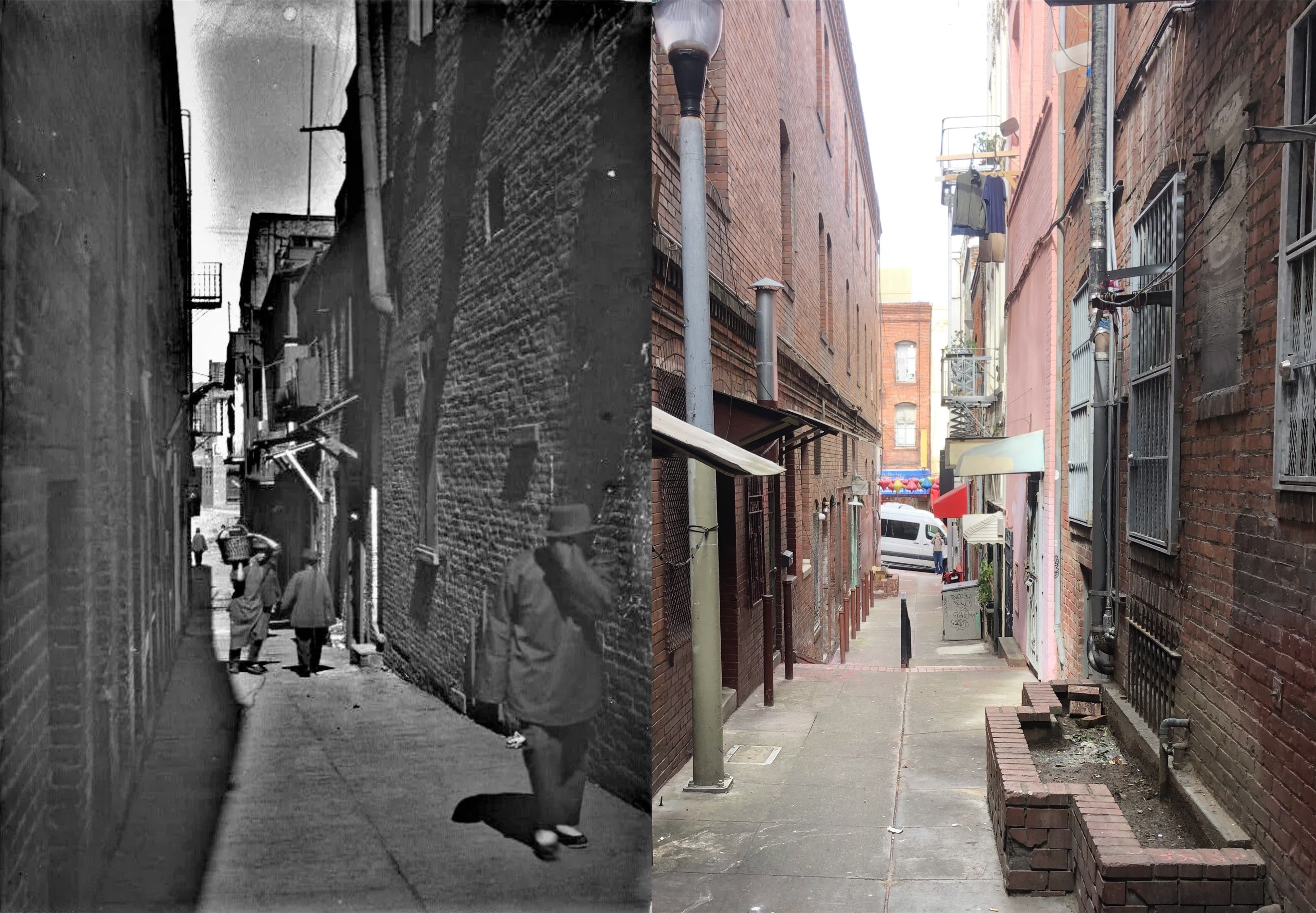
St. Louis Alley: Medium.com writes that “this narrow passage was once one of the busiest and most vividly document corners of old Chinatown.” Before the 1906 Earthquake and Fire, it was a place of Tong Wars, prostitution, and opium dens.. Medium.com refers to it as a “passage” because you could enter it from Jackson Street, travel to the back of the alley, and cross over to Dupont Street (Grant Avenue) through a gap in two buildings. That area is closed of now. Foot travel through the alley, for whatever reason, was heavy until after 1906. Now, it’s just a quiet little spot to sit and rest for a bit, which I’ve often done. (Medium.com)
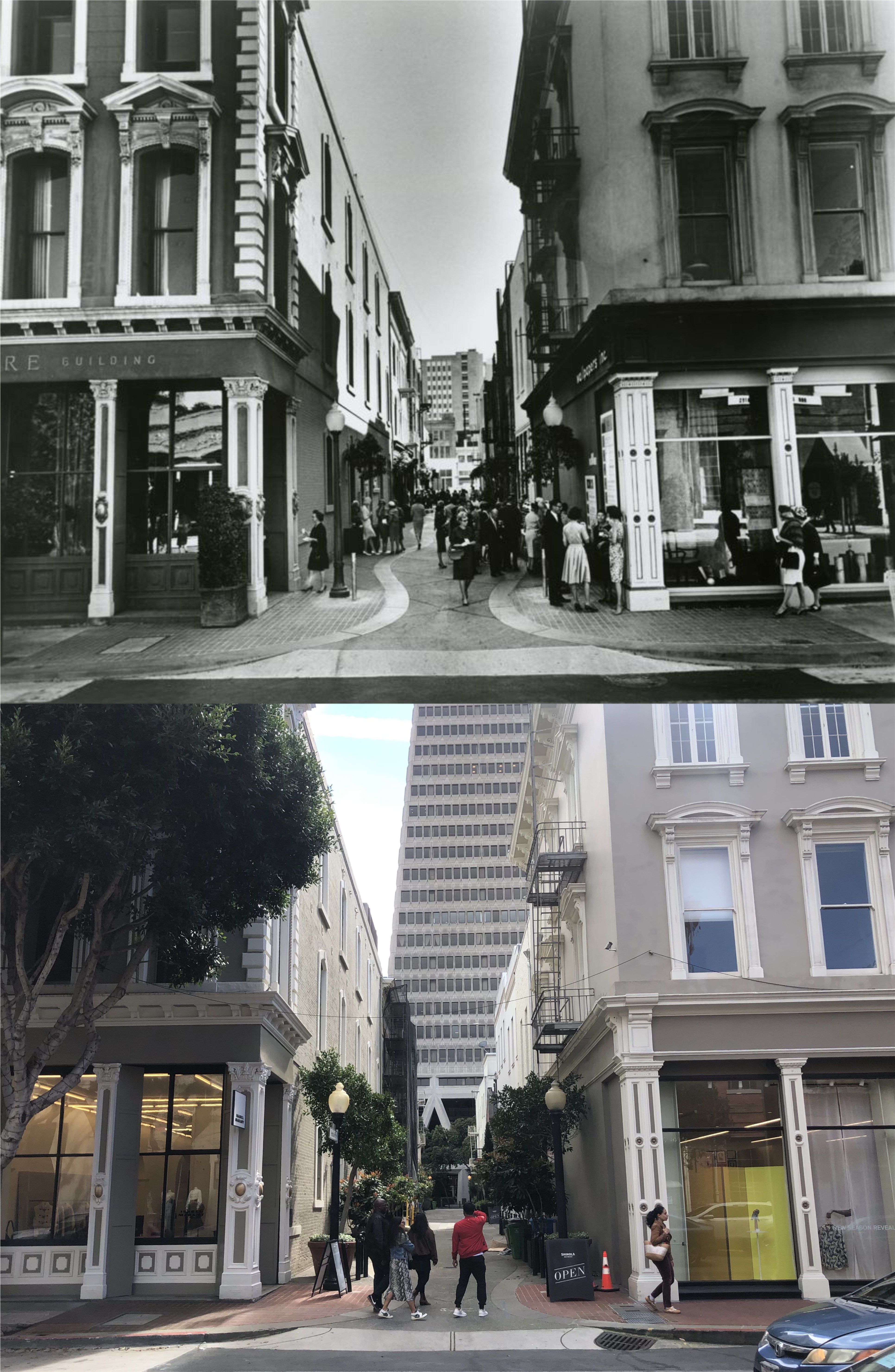
An undated photo of Hotaling Place in historic Jackson Square, probably from the early 1960s before the Pyramid Building was built: (San Francisco Library Digital Archives)
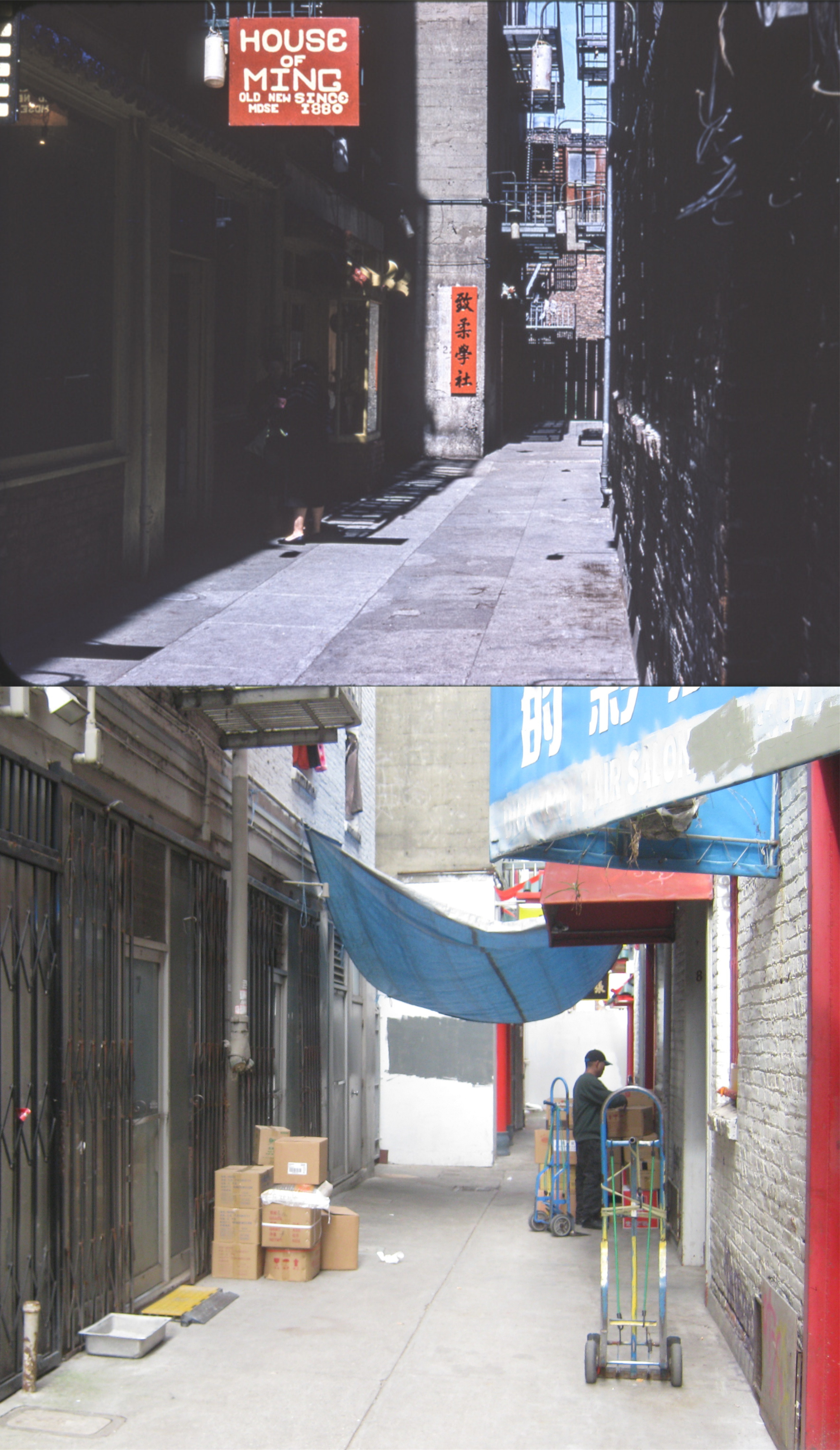
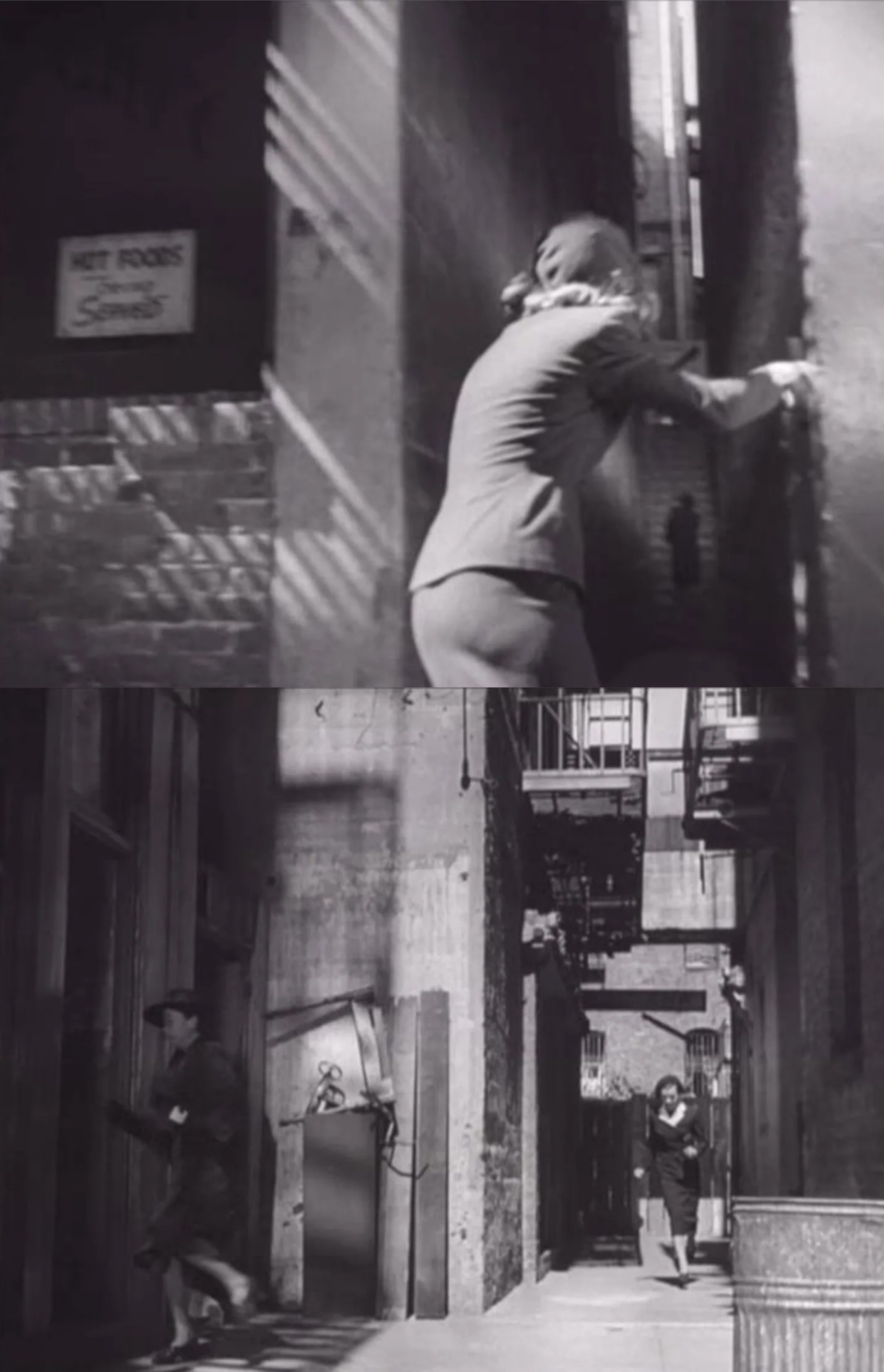
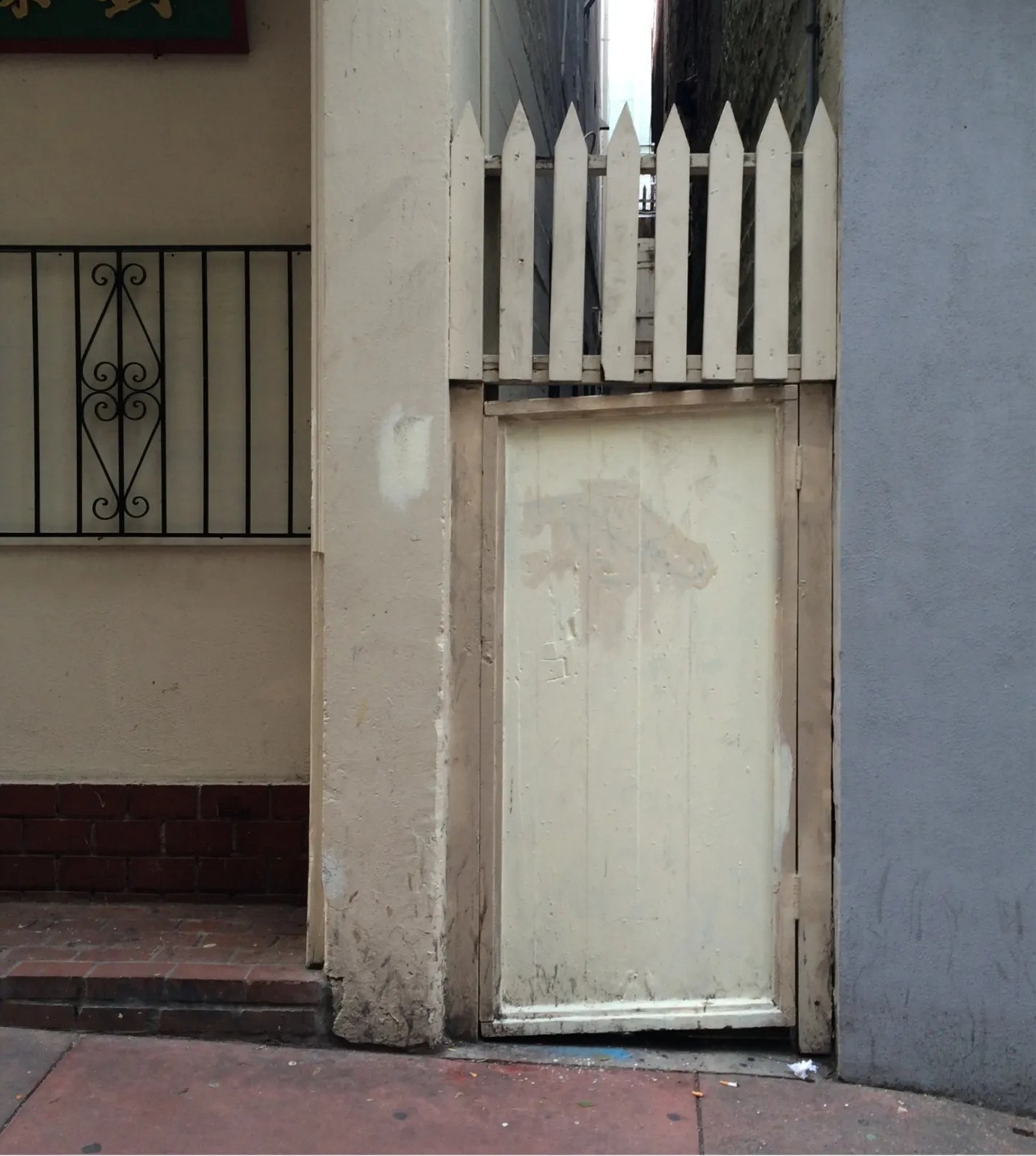
The House of Ming in 1960 in Old Chinatown Lane; probably the best name for any Chinatown alley: In the 1949 film noir ‘Impact’, Ella Raines chases Anna May Wong through a passage way between two buildings from Ross Alley into the back of old Chinatown Lane, and into a building near where the House of Ming was. The passage way is fenced off now. (opensfhistory.org)
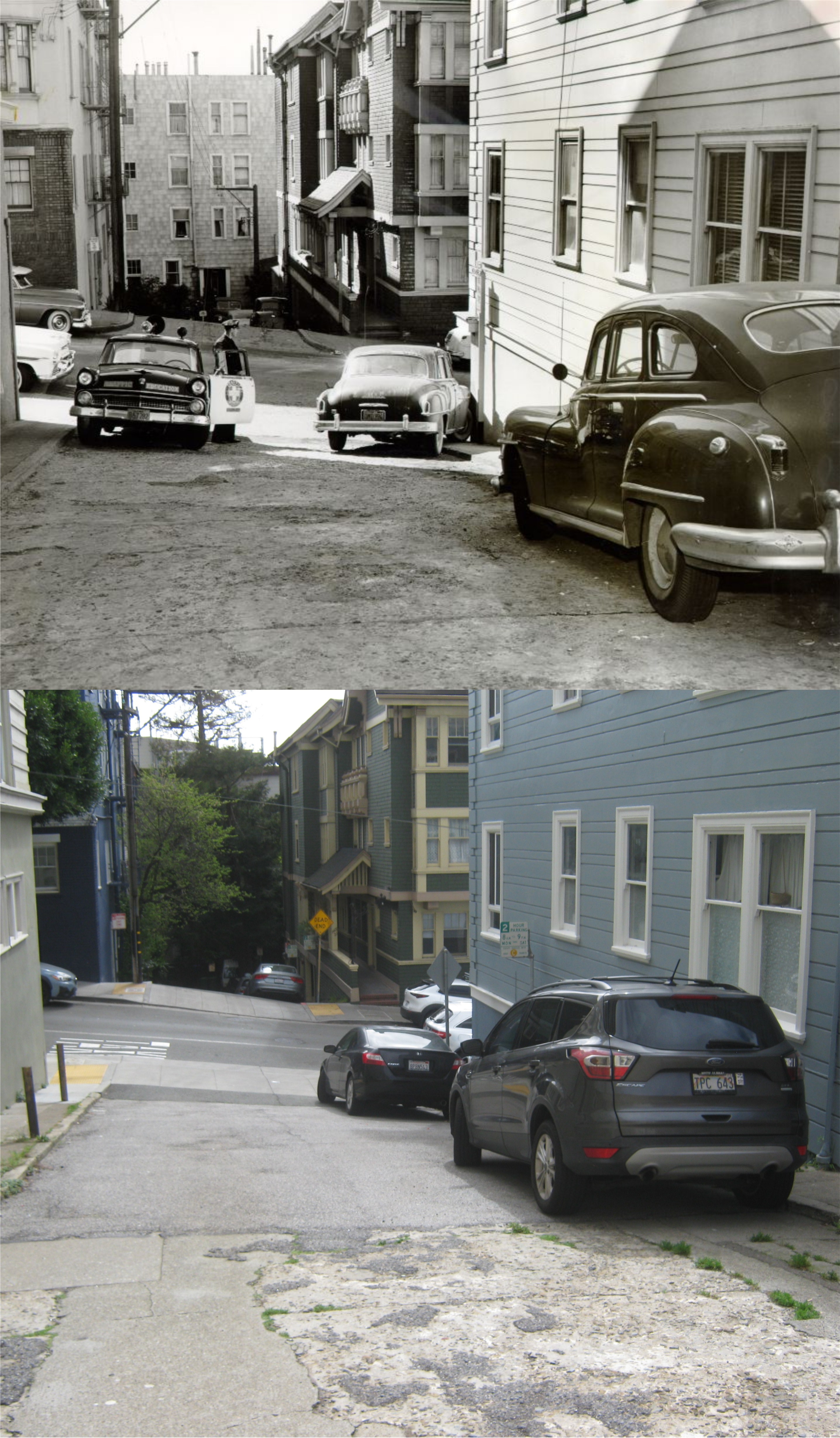
A runaway car on Kimball Place at Sacramento Street, on the west side of Nob Hill in 1956; I like this comparison picture best in the set; it looks like something out of a 1950s crime show. (San Francisco Library Digital Archives)
 San Francisco Film Locations Then & Now