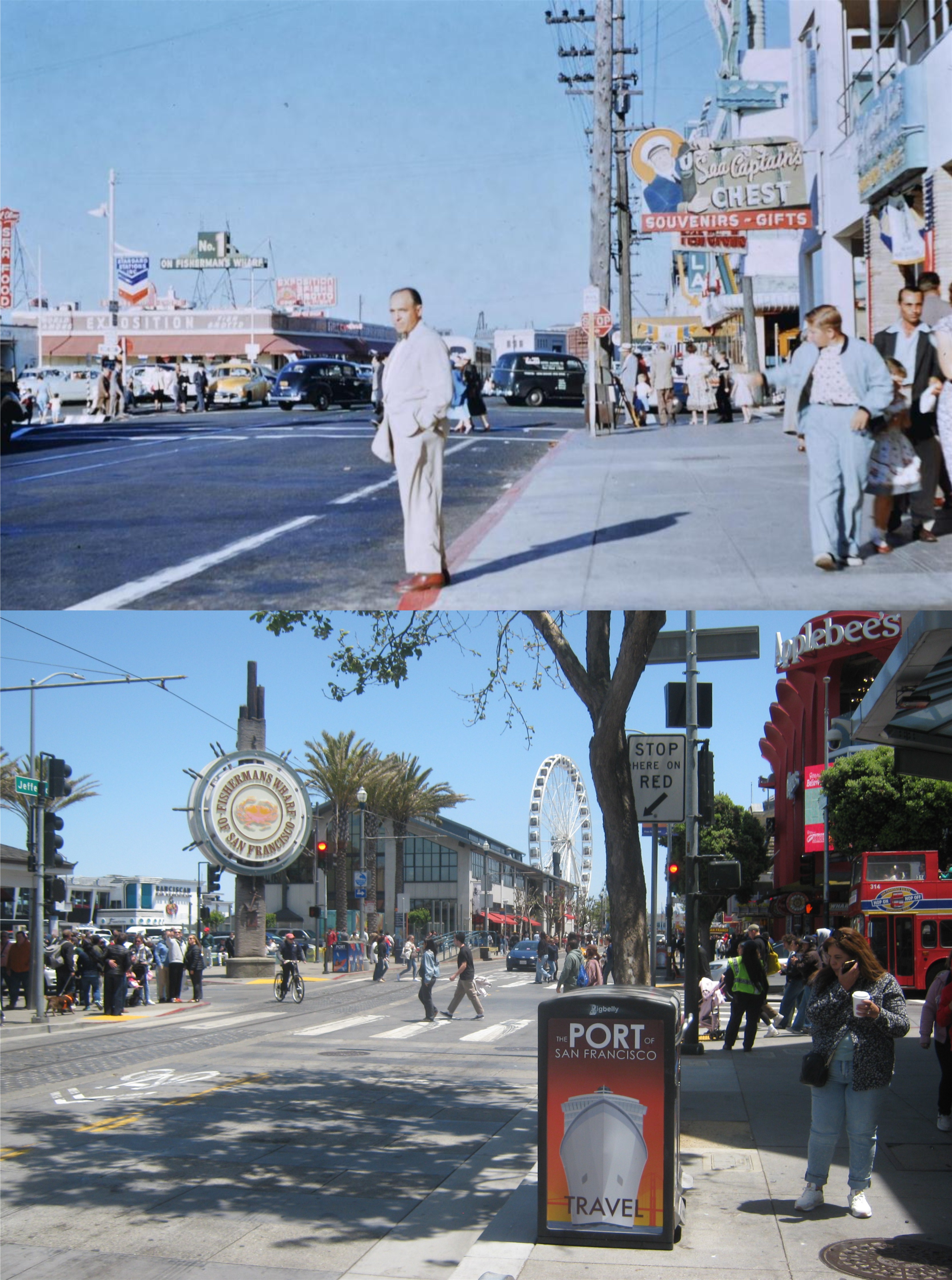
“Pick an intersection, any intersection.” “Okay, Taylor and Jefferson Streets.”

I haven’t visited Fisherman’s Wharf for awhile, so I stopped by over the Memorial Day Weekend. It’s definitely not what it was before 2020, but it’s still a tourist trap, still fun to visit, and Jefferson at Taylor is still the heart of the Wharf. (Thumbnail images)


Taylor and Jefferson in 1954: “It’s all about the cars”. (opensfhistory.org)


Looking east during the 1950s: I remember the Sea Captain’s Chest as a kid, but it didn’t survive the 70s. That’s the SkyStar Wheel in the background of the modern photo. (fishermanswharf.org)


Looking north during the 1950s, when they still had the gas station there that was designed to look like a ship. That’s a mean looking lady in the crosswalk of the old picture! (Vintage Roadside)


Looking south toward Russian Hill: I got a reasonable line up on this one, but picked the wrong time of day. (opensfhistory.org)


The southwest corner of Taylor and Jefferson Streets: I always thought that the Tokyo Sukiyaki Restaurant must have felt out of place near Alioto’s, Tarantino’s, Castagnola’s, and Sabella & LaTorre’s, but they probably served good food, if that was your taste. (San Francisco Main Library Archives)


Looking toward the northwest corner of Taylor and Jefferson in 1937: You can see Pier 45, where the Musee Mecanique is today, on the right of both pictures. (opensfhistory.org)

Simon Templar comes to San Francisco

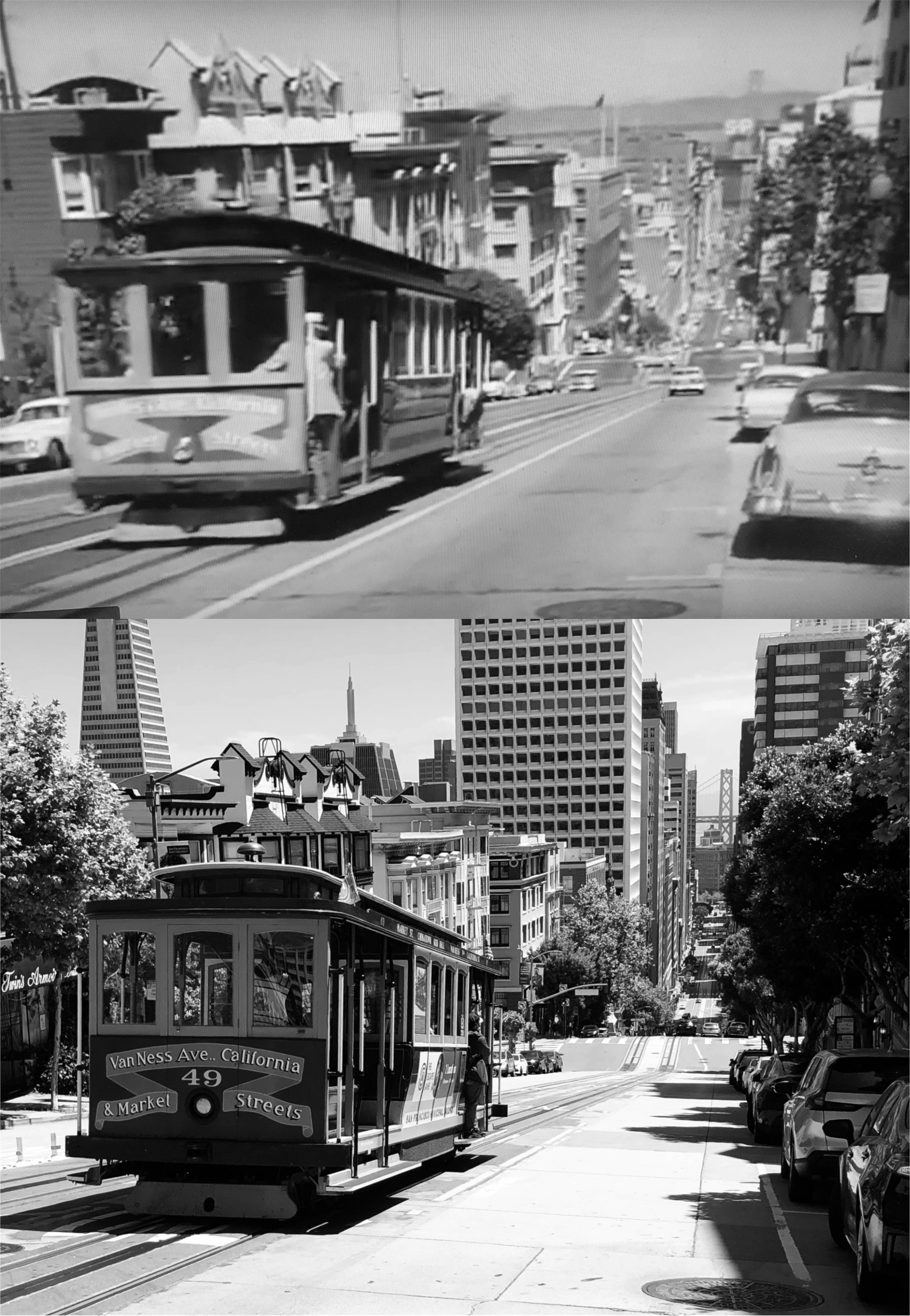
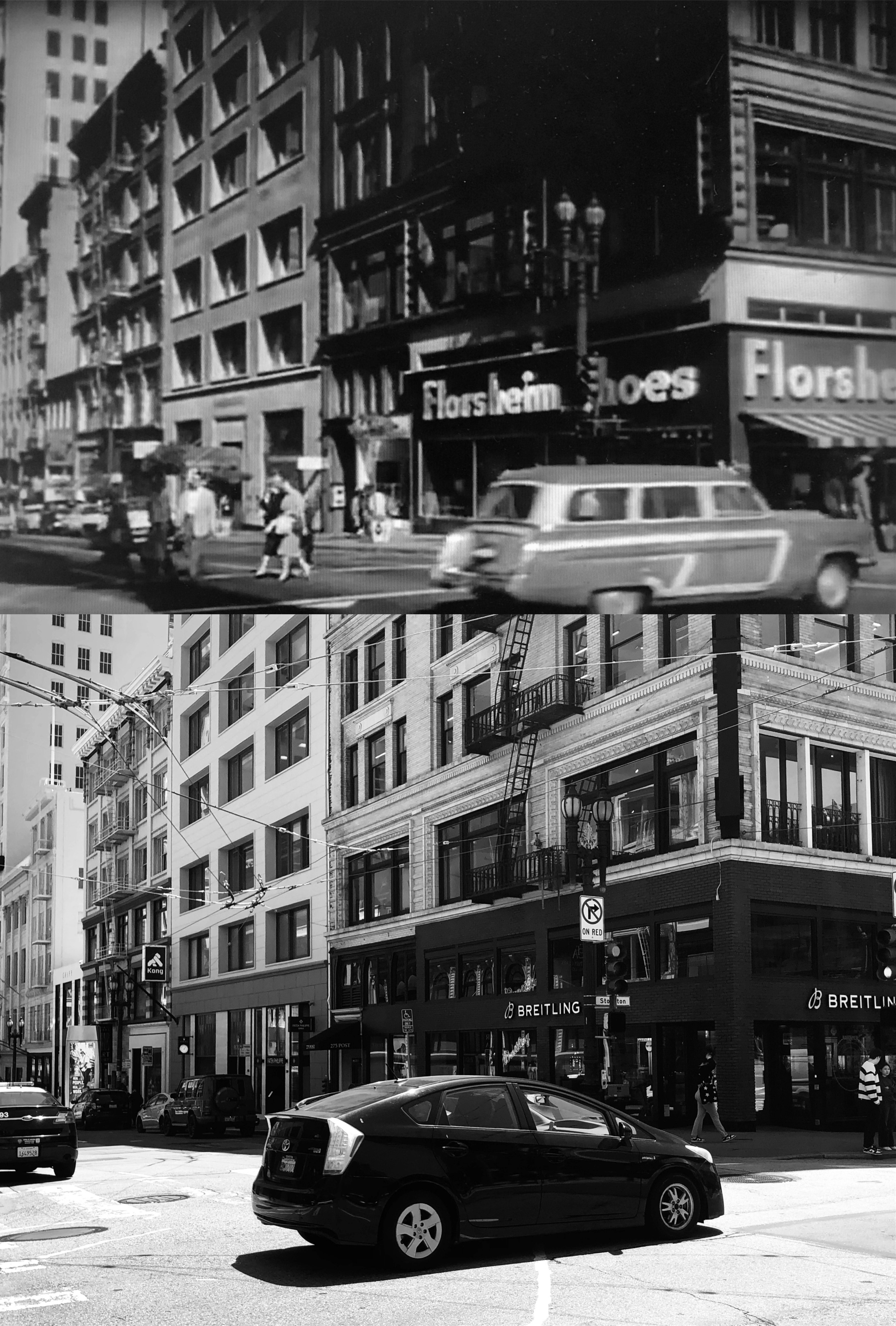
I was watching an episode of the television show ‘The Saint’ starring Roger Moore that aired in March of 1964, and was set in San Francisco. Although the captures are grainy they’re discernible, and you can see some interesting vintage San Francisco in the images. (Thumbnail images)


You don’t actually see Roger Moore on location in any of the outdoor shots, so his scenes were probably filmed in a studio, but he came back twenty one years later as James Bond in ‘A View to a Kill’. The San Francisco location pictures may also have been stock footage taken in San Francisco from around that time.


Post Street, looking past Union Square to the City of Paris Store: You can’t see the Dewey Monument through the trees from here now.


The obligatory cable car at Powell and California Streets: What’s interesting in this scene is the KSFO Radio Station sign at the Fairmont Hotel, and in the far background, Grace Cathedral before the south spire was built.


Looking down California Street from Powell as the cable car in the previous film picture passes: Visitors got in my way when number 50 passed me heading down California, so I had to wait for the next one, which was number 49.


The southeast corner of Stockton and Post Streets: You see a lot of interesting 50s and 60s cars in these vintage street images.


A scene looking down Geary Street from the northwest corner of Geary and Stockton Streets. Hey, is that lady in the vintage photo talking on a cell phone?

Charlie Chaplin Festival, 2025, in Niles, CA

This event gets better and better every year. (Thumbnail images)


Mini Chaplins and pretty Chaplins out at the 2025 Charlie Chaplin Days:


From a picture in the Niles Museum: Charlie’s leading lady in the five films he made in Niles, Edna Purviance, is on the left. Chaplin is next to her. The house that Edna stayed in while in Niles is behind them, and, yes, Charlie and Edna had sleepovers.


They’re still taking good care of Edna’s house.


The festival goes from Friday evening until Sunday evening. This is the schedule of the events they held.

‘It was the Rialto of the desperate, Street of the Adventurers.’

That’s how the San Francisco Sun newspaper described Kearny Street three days after the 1906 Earthquake in an article called ‘The City That Was’. {Kearney Street, a wilder and stranger Bowery} or {In a half an hour of Kearney Street I could raise a a dozen men for any wild adventure, from pulling down a statue to searching for the Cocos Island Treasure} are some of the passages from the article describing Kearny Street; interestingly spelled Kearney by the long ago author. It’s not as colorful as it used to be, but you can find as many vintage pictures of Kearny Street as you can of Market Street, California Street, or the Embarcadero. I took a picture taking walk along some of Kearny Street over the Mother’s Day weekend. (Thumbnail images)


Kearny  Street at Broadway: The caption says 1905. (UC Berkeley Library Archives)


Kearny at Columbus during the 1930s: The building on the left in the vintage picture where the Pyramid Building is now was the beloved Montgomery Block Building, the hangout of writers and artists. The Sentinel Building is in the center of both pictures. (San Francisco Main Library Archives)


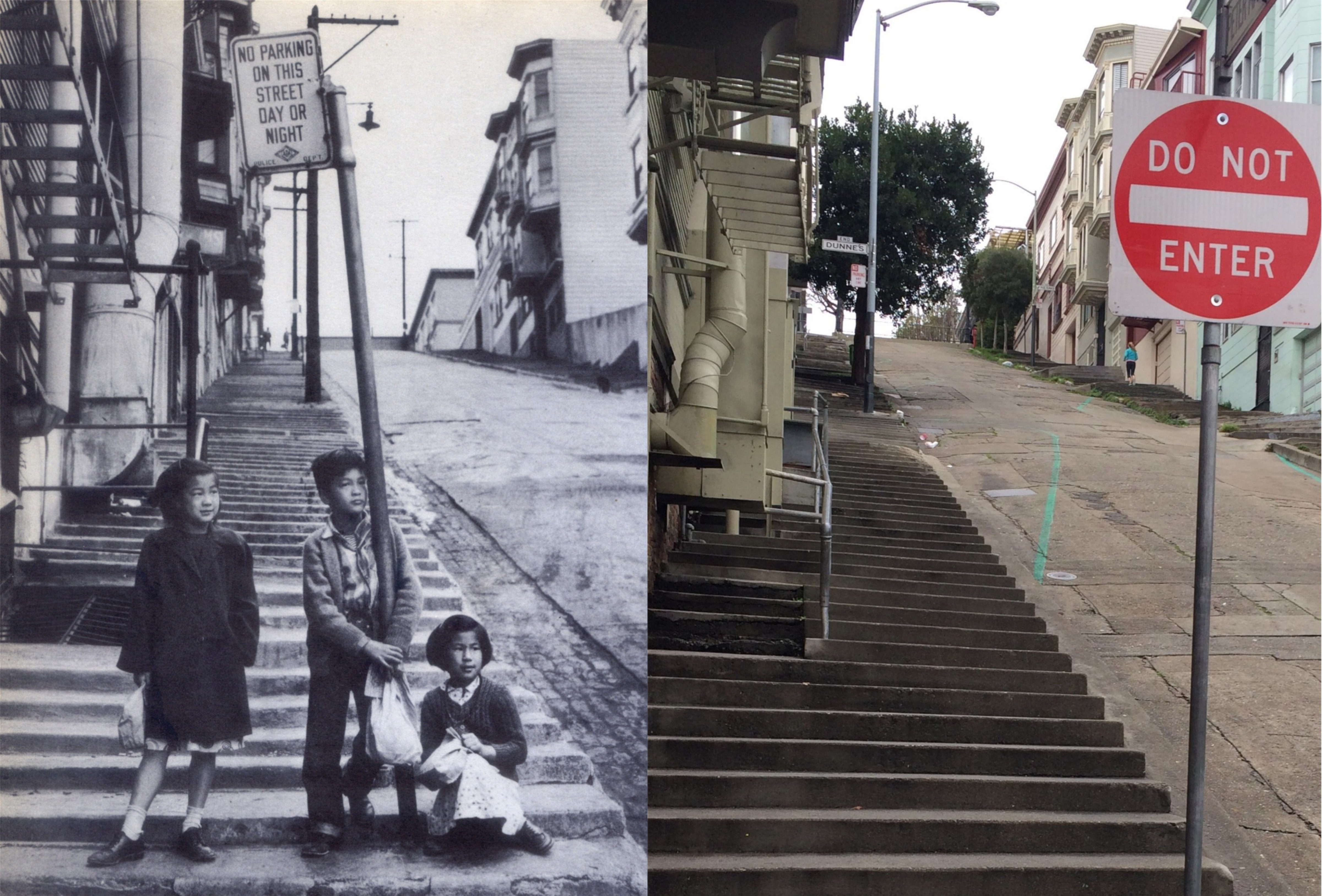
The next two sets are related. These first two are a then and now I did some years back of a picture I found in a 1949 magazine showing three children on the northwest corner of Kearny at Broadway.


This photo I found in the San Francisco Main Library Archives last week while researching for vintage Kearny Street pictures. I looked at it closer and wondered if they were the same kids as in the previous magazine picture. Yup, they sure are! The picture was taken at the same spot from the opposite direction.

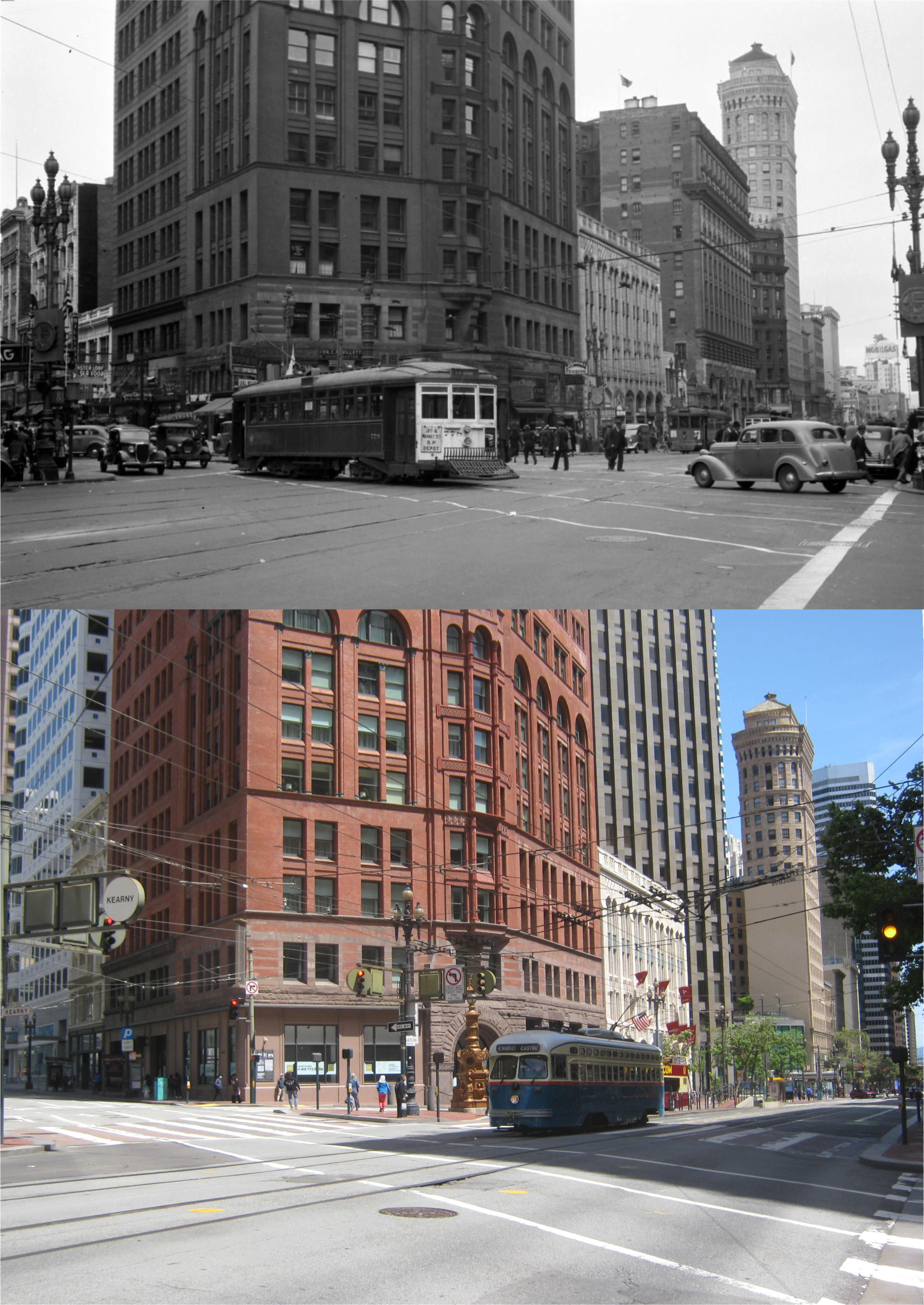
An off-Broadway nightclub at Kearny Street and Nottingham during the 1960s: Kearny and Market Streets from 3rd Street in 1938: (San Francisco Main Library Archives)


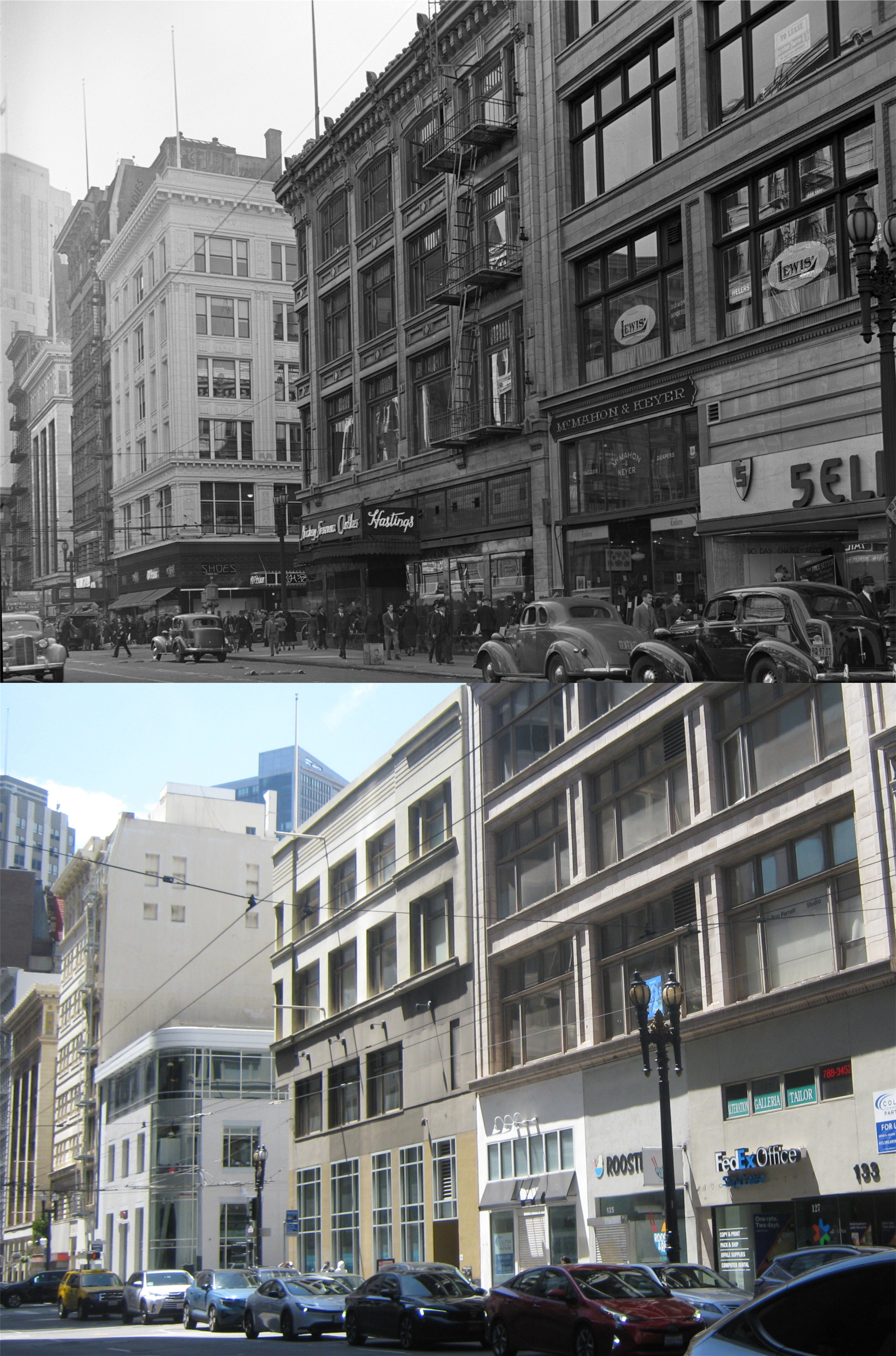
The Hastings Department Store on the northwest corner of Kearny and Post Streets in 1938: (UC Berkeley Library Archives)


Looking back past Hastings toward Post Street in 1938: You can see the Call Building, now called Central Tower, at the far left of both photos. (UC Berkeley Library Archives)


The old and new Palace Hotel, looking past Lotta’s Fountain at Kearny and Market Streets: (UC Berkeley Library Archives)


Market Street at 3rd looking towards Kearny in 1938 and a quiet Mother’s Day, 2025: You can see the then extended and in a different spot, Lotta’s Fountain, behind the old streetcar.

“Now, I’m standing on the corner of Third and Market. I’m looking around. I’m figuring it out. There it is, right in front of me. The whole city. The whole world. People going by. They’re going somewhere. I don’t know where, but they’re going. I ain’t going anywhere.” – From ‘The Time of Your Life’ by William Saroyan. (San Francisco Main Library Archives)

A whirlwind tour of San Francisco, all in 42 pages

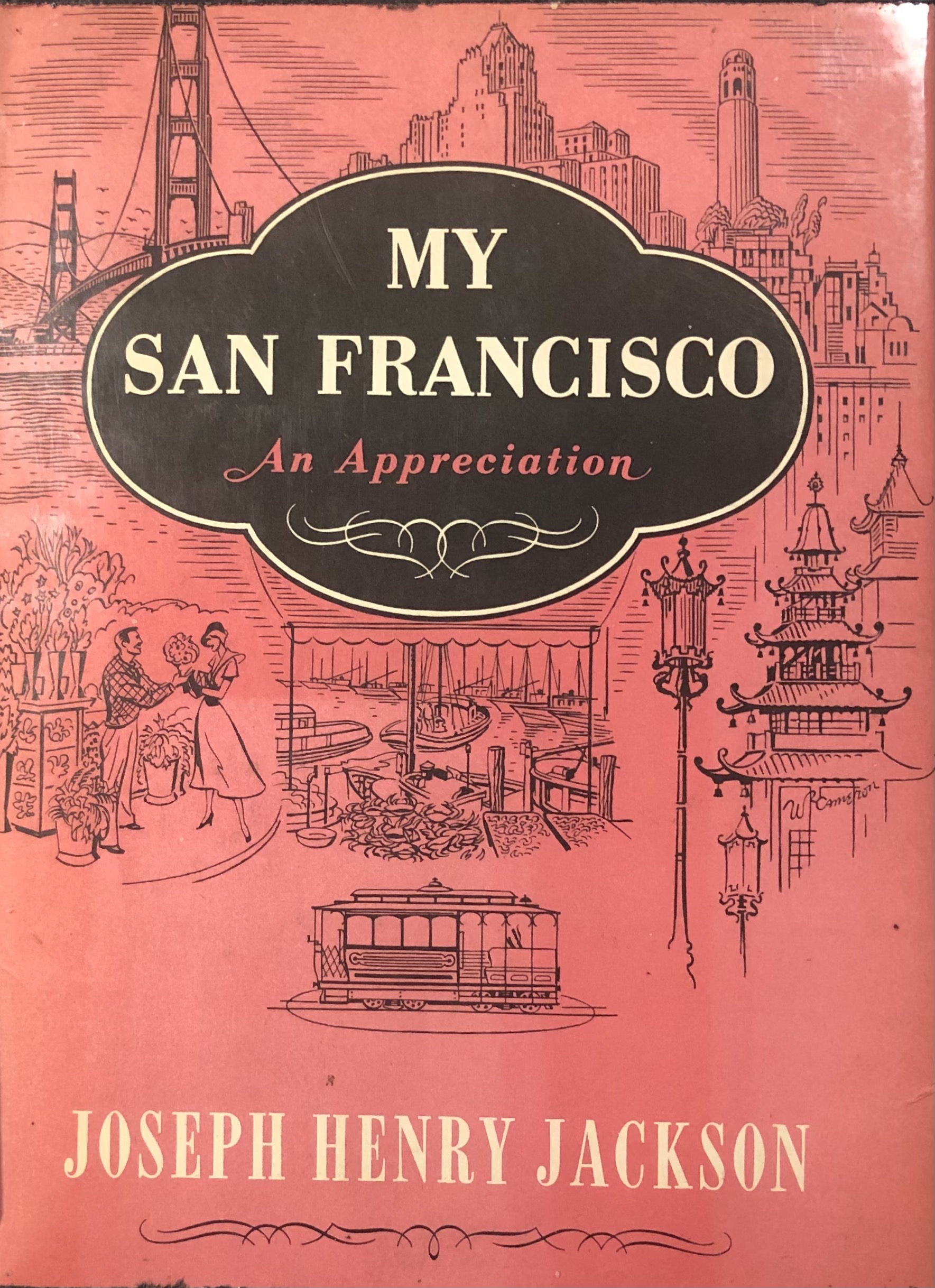
I finished reading a book titled ‘My San Francisco An Appreciation’, written in 1953 by Joseph Henry Jackson. At 42 pages, you can finish it in less than an hour. It’s a great travelogue and time capsule describing the San Francisco of 72 years ago. I’ll post some of the author’s passages, and add some update pictures I’ve done on a few of the locations Mr Jackson writes about. (Thumbnail images)


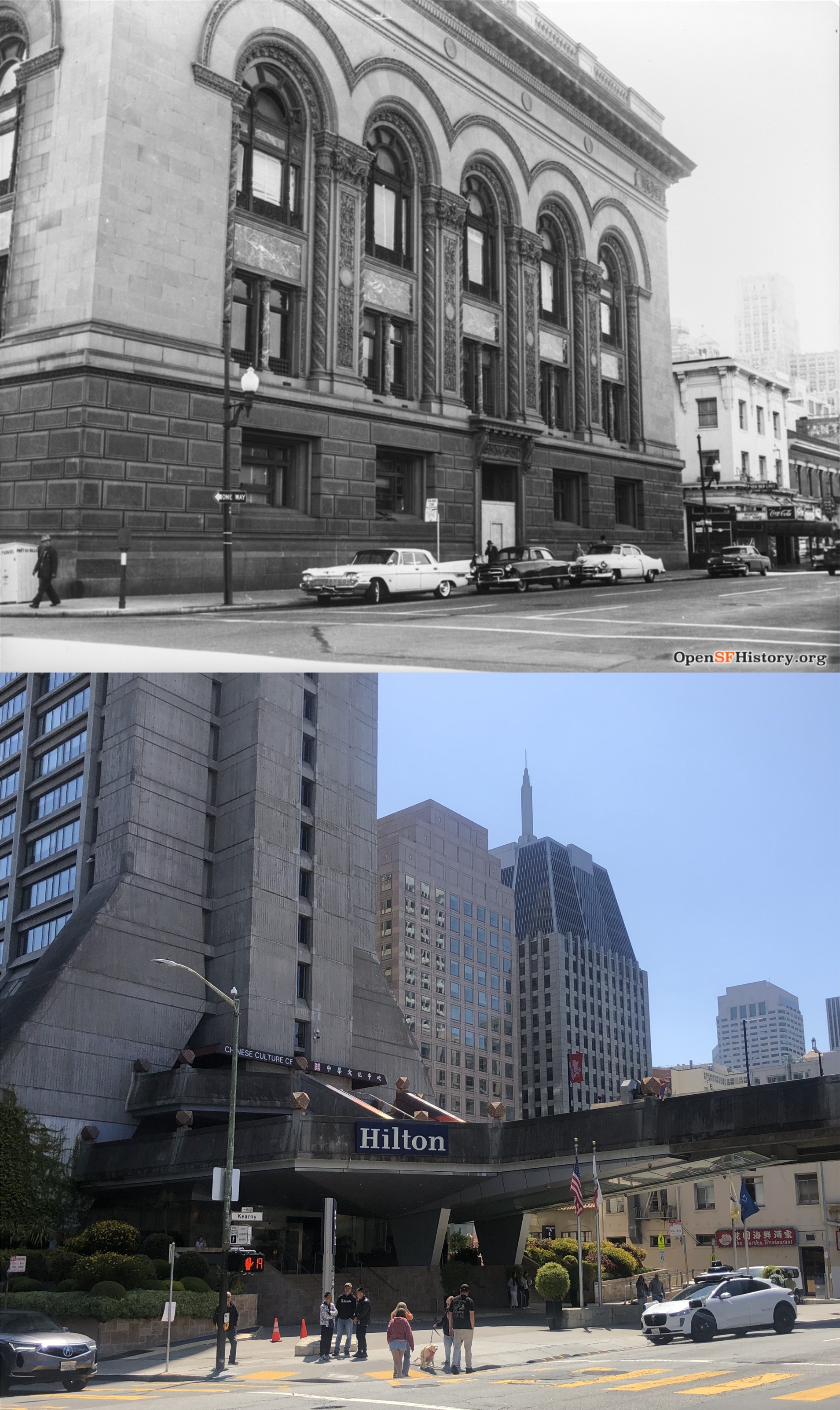
{Over on Kearny Street, the Hall of Justice process offenders day after day, facing Portsmouth Square where the Spanish customs-house used to stand.} The old Hall of Justice was torn down in 1967, and a Hilton Hotel is there now. (opensfhistory.org)
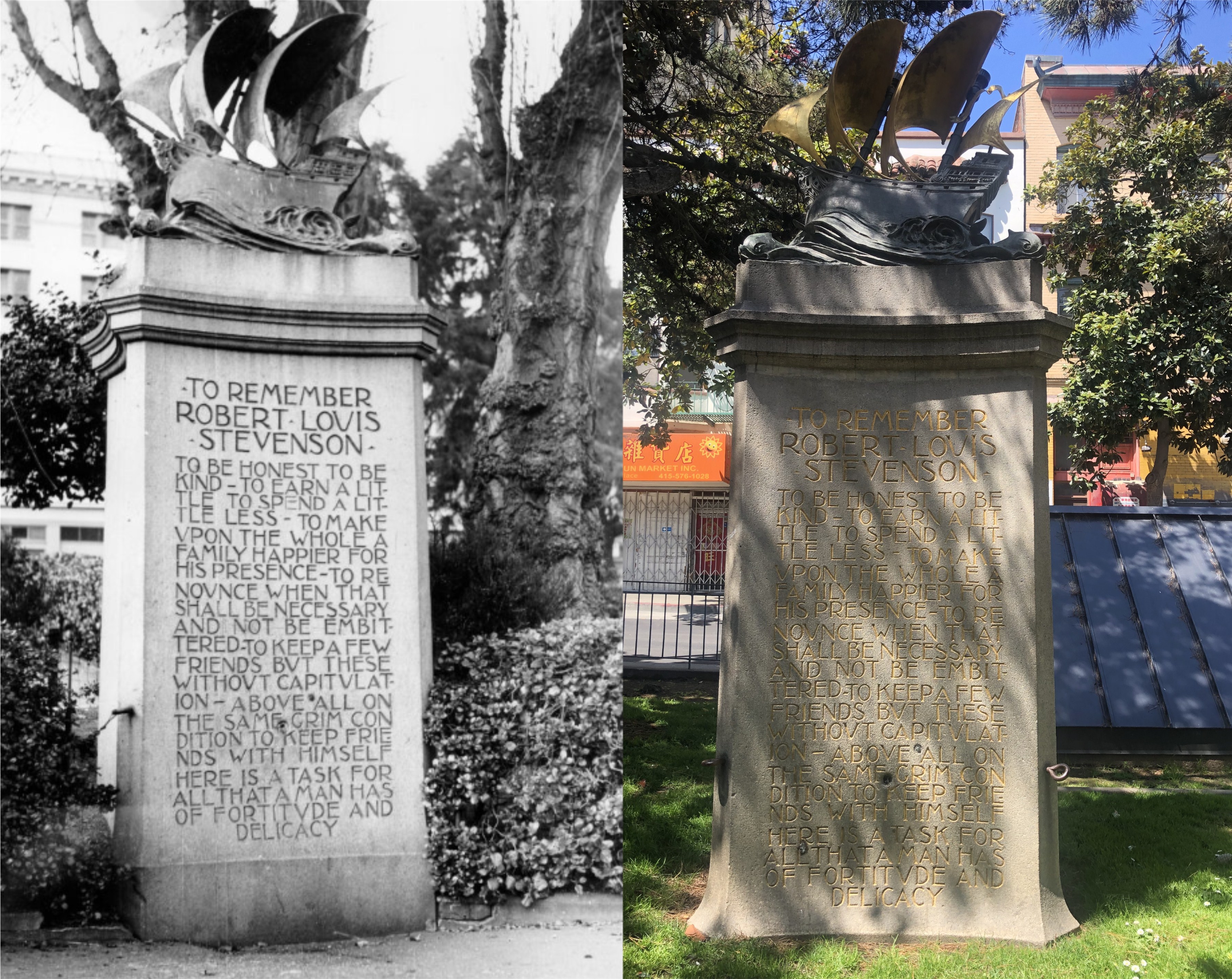
About Portsmouth Square, Jackson writes, {Across the way from the parked police cars a little galleon atop a granite shaft spreads its bronze sails over the chiseled lettering: “To be honest, to be kind, to earn a little, to spend a little less”} He’s referring to the Robert Louis Stevenson Monument in the Square.
  

{It was in the Presidential Suite at the new Palace Hotel, that President Harding died, seven stories above the Palm Court where General Grant had been received with wild enthusiasm half a century earlier.}
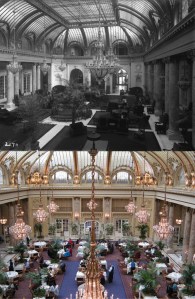
 

The above mentioned Palm Court is still there.


In reference to the Russ Building on Montgomery Street, Jackson writes, {On the Bush Street side, just where the tenants garage-entrance dives underground, there once stood the little tobacco shop of Mr. Thomas Ware.} The garage-entrance on Bush still dives underground. Jackson goes on to write that it’s only a short walk from here down to Montgomery Street where the stagecoach robber, Black Bart, was captured. (opensfhistory.org)
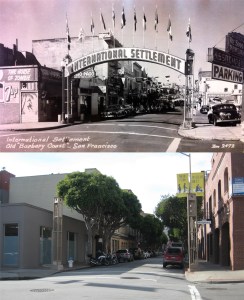
  

{Even The brassy International Settlement – milder successor to the city’s wild Barbary Coast, and, you would say, made to order for the tourist trap, is a haunt of San Franciscans.} Last time I was there, the posts that held the International Settlement sign up over Pacific Ave and Montgomery Street were sill there.


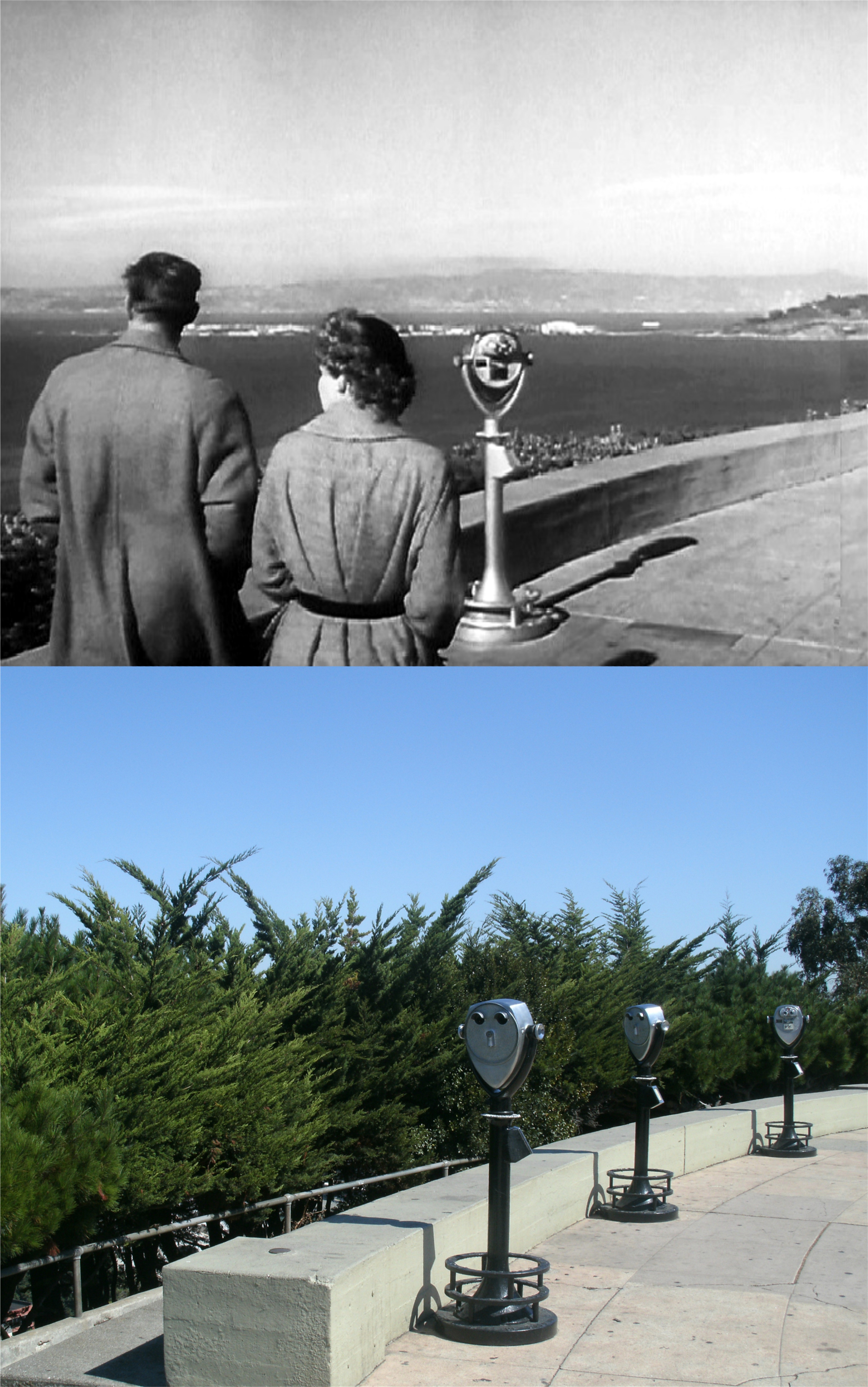
{On an evening when the winds are tempered and the air is clear, you may take a newcomer to the flattened top of Telegraph Hill where the broad parking space lies at the base of Coit Tower; he can see the sweeping curve of the Embarcadero with its jutting piers at this point better than from anywhere else} In a scene from the film ‘Woman on the Run’ with Ann Sheridan and made three years before Joseph Jackson’s book was published, that description of the Coit tower parking lot was accurate; the view through those telescopes have to be somebody’s joke now.


{Who are the people you find on a sunny Sunday if you make a run out to the Cliff House where the peninsula has rounded its turn into the Pacific?} Well, actually, nobody today, Mr. Jackson.
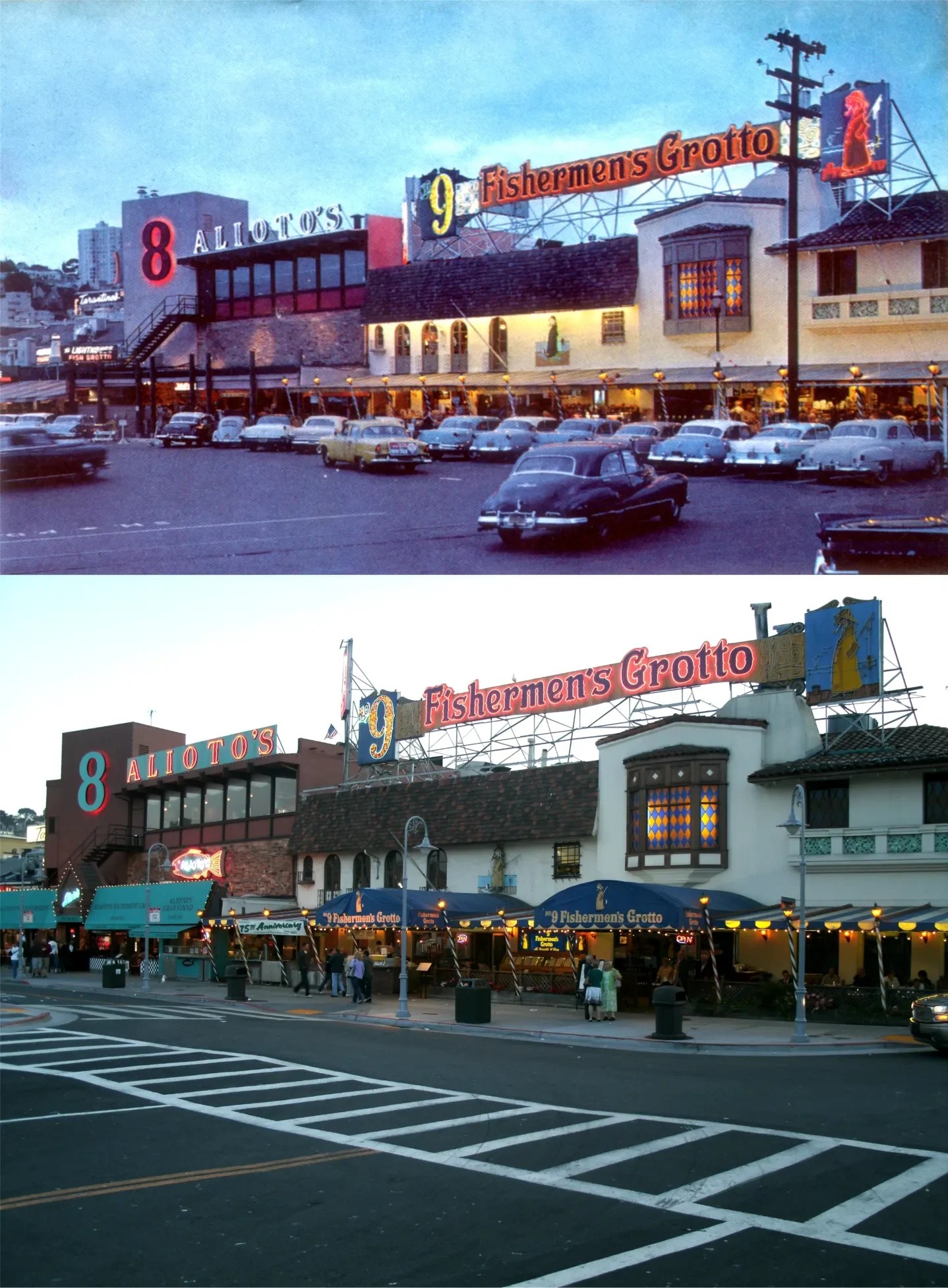
“Pick a street, any street. Okay, Battery Street.”

“I’d rather be a busted lamp post on Battery Street, San Francisco, than the Waldorf-Astoria.”

That remark is attributed to a prominent long ago man-about-town named Willie Britt right after the 1906 Earthquake and Fire. However, the statement is also quoted as coming from a prize fighter named Jimmy Britt, who was also in San Francisco during the earthquake. I don’t know if it’s that wonderful of a street, but I took a walk along Battery Street last Sunday, a street that runs from Market Street to the Embarcadero, looking for interesting buildings that have survived the sands of time. They were easier to locate than finding out information about who actually made the “busted lamp post” comment in 1906. (Thumbnail images)


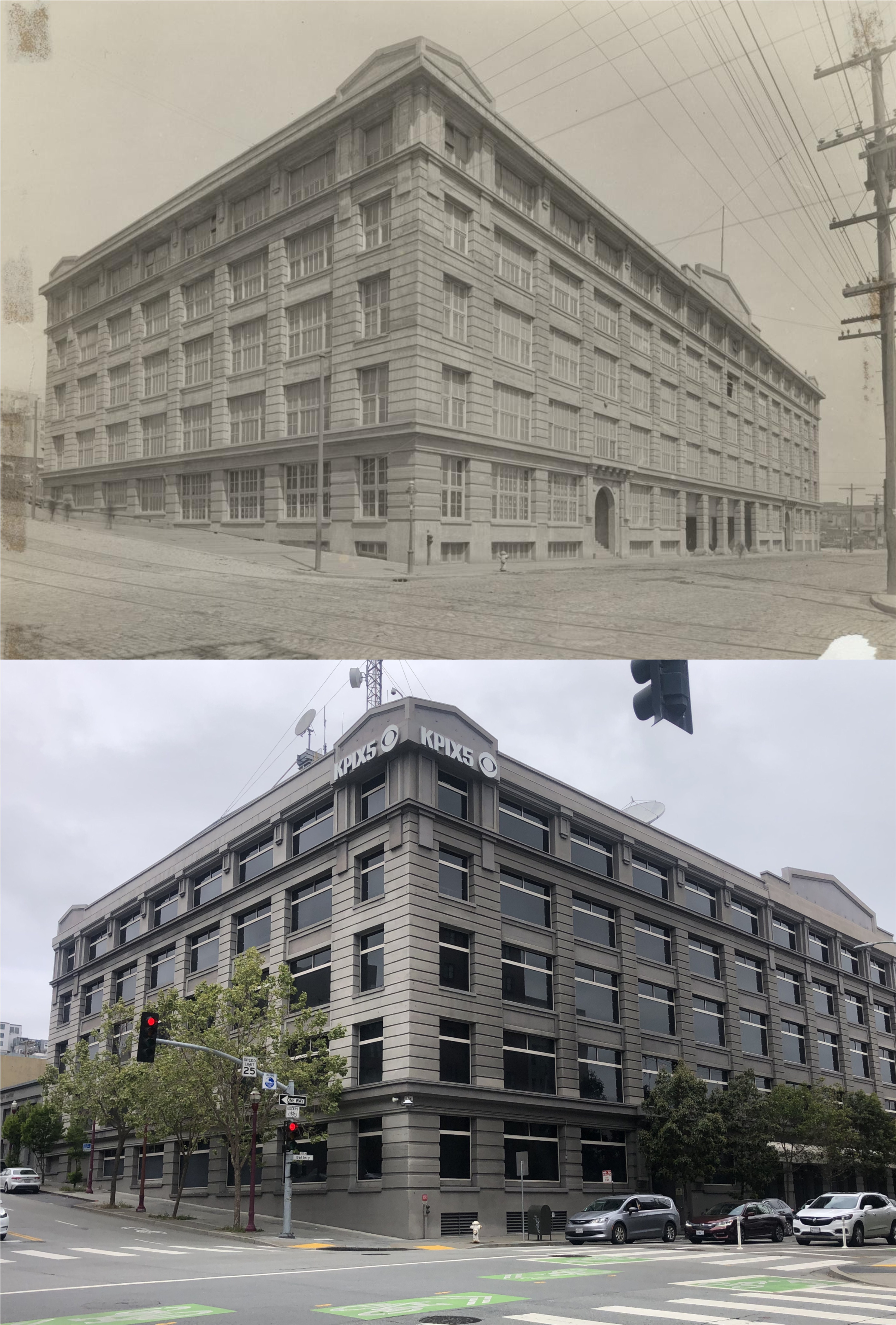
The UC Berkeley Library Archives caption refers to this old photo of the building on the northwest corner of Broadway and Battery Street as an “unidentified building”. It’s not unidentified today if you watch Channel 5.

A 1950s picture of 901 Battery Street on the northwest corner of Battery and Vallejo Streets: (San Francisco Main Library Archives)


The old RCA Communications Building on the southeast corner of Battery and Sacramento Streets: (San Francisco Main Library Archives)


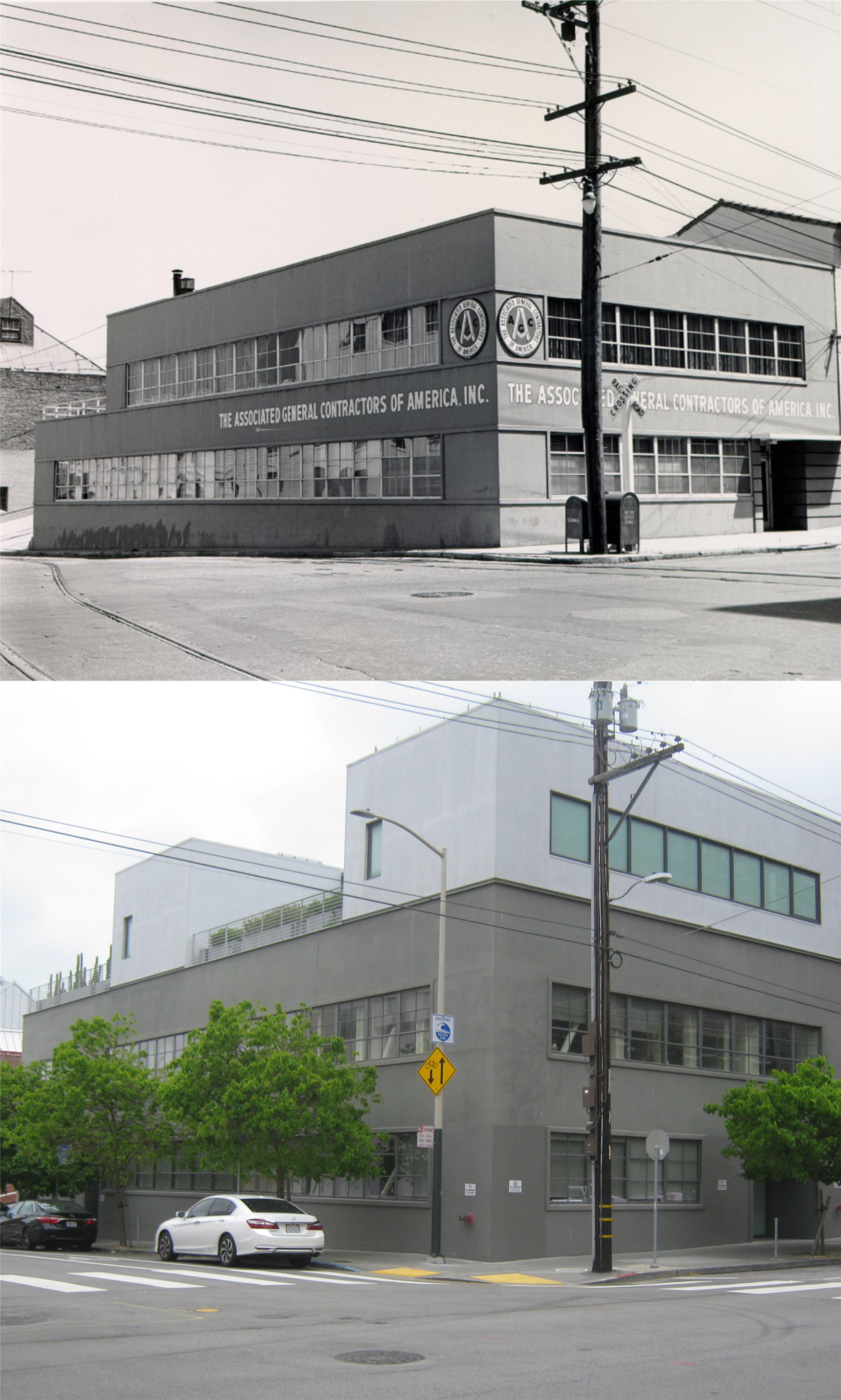
An interesting building on the southeast corner of Battery and Vallejo Streets: The old telephone pole survived too. (San Francisco Main Library Archives)


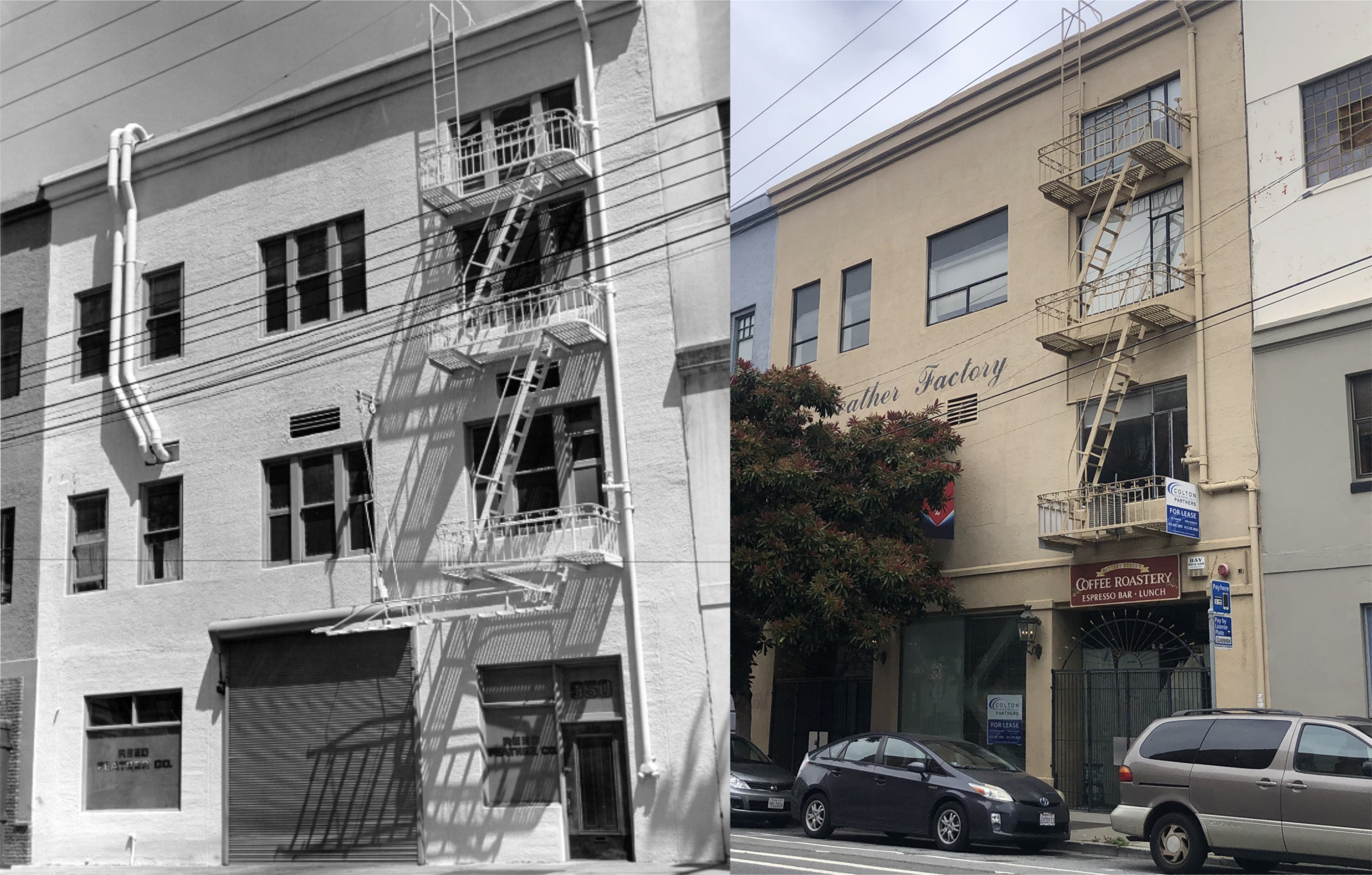
The Reed Feather Company Building at 950 Battery Street is now the Feather Factory Hotel. (San Francisco Main Library Archives)


Street work on Battery Street near Pine, looking toward Market Street in 1916: Both of the buildings on the southeast and southwest corners of Battery and Pine have survived. (opensfhistory.org)


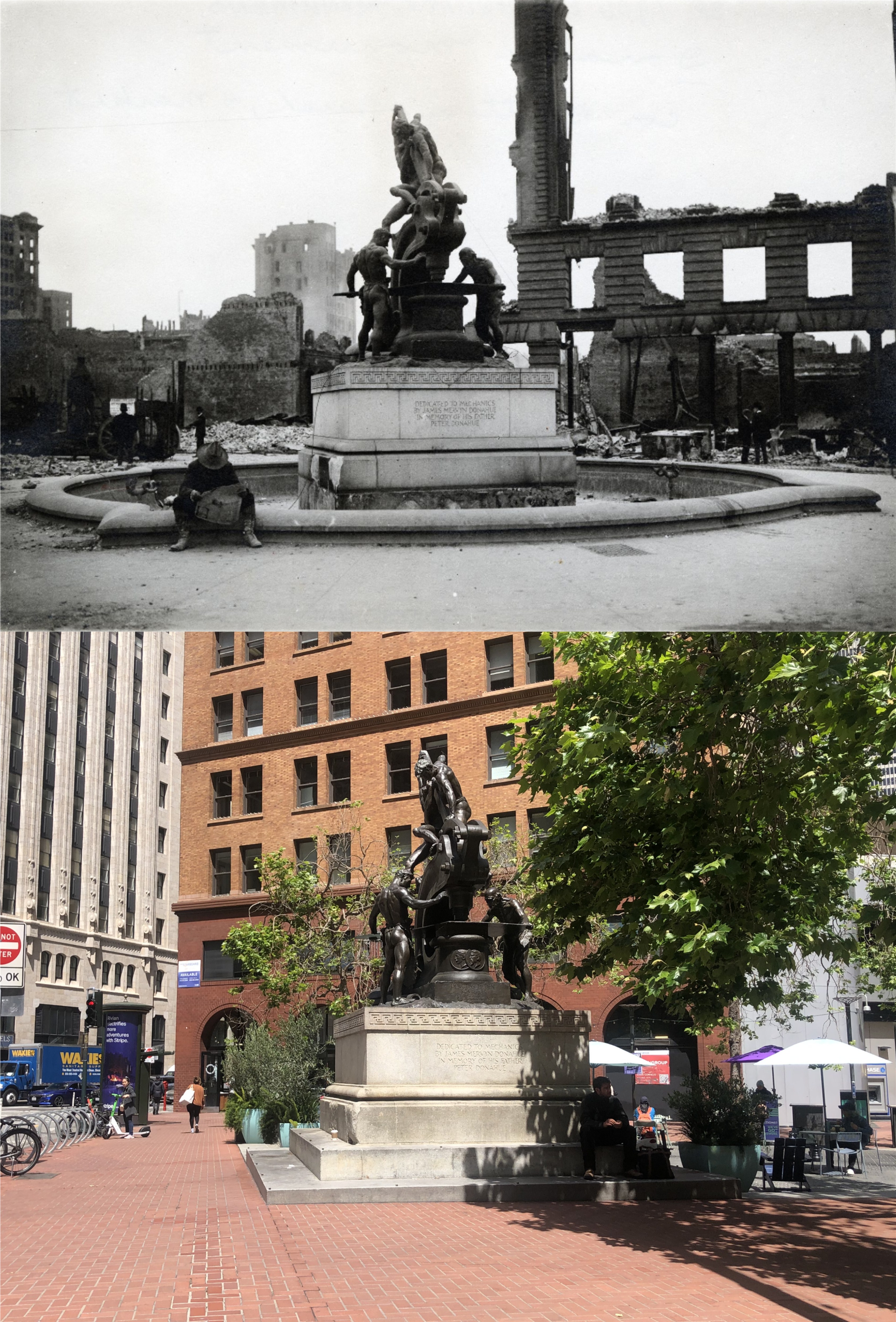
Probably the most well known man made object on Battery Street is the Mechanics Monument on the corner of Battery and Market Streets. Dedicated in 1901 as the Donahue Fountain, it was a survivor of the 1906 Earthquake and Fire, as seen in the vintage photo. In May of 1903, President Theodore Roosevelt spoke to a large crowd using the monument as a backdrop. (Source, Wikipedia). The 1906 picture is from the San Francisco Main Library Archives.