“Come on in and see totally vintage pictures of the intersection of Broadway and Columbus Avenue. A fantasy for your eyes to enjoy! Step right in.”
Well, that probably wouldn’t have pulled them in, gawking, off the street on Broadway in the 1960s, but that’s what I’m offering. These are updates before, during, and after the period that the intersection of Broadway and Columbus Avenue became famous or notorious, whichever your viewpoint, as the topless and nude dancing capital of the country. (Thumbnail images)

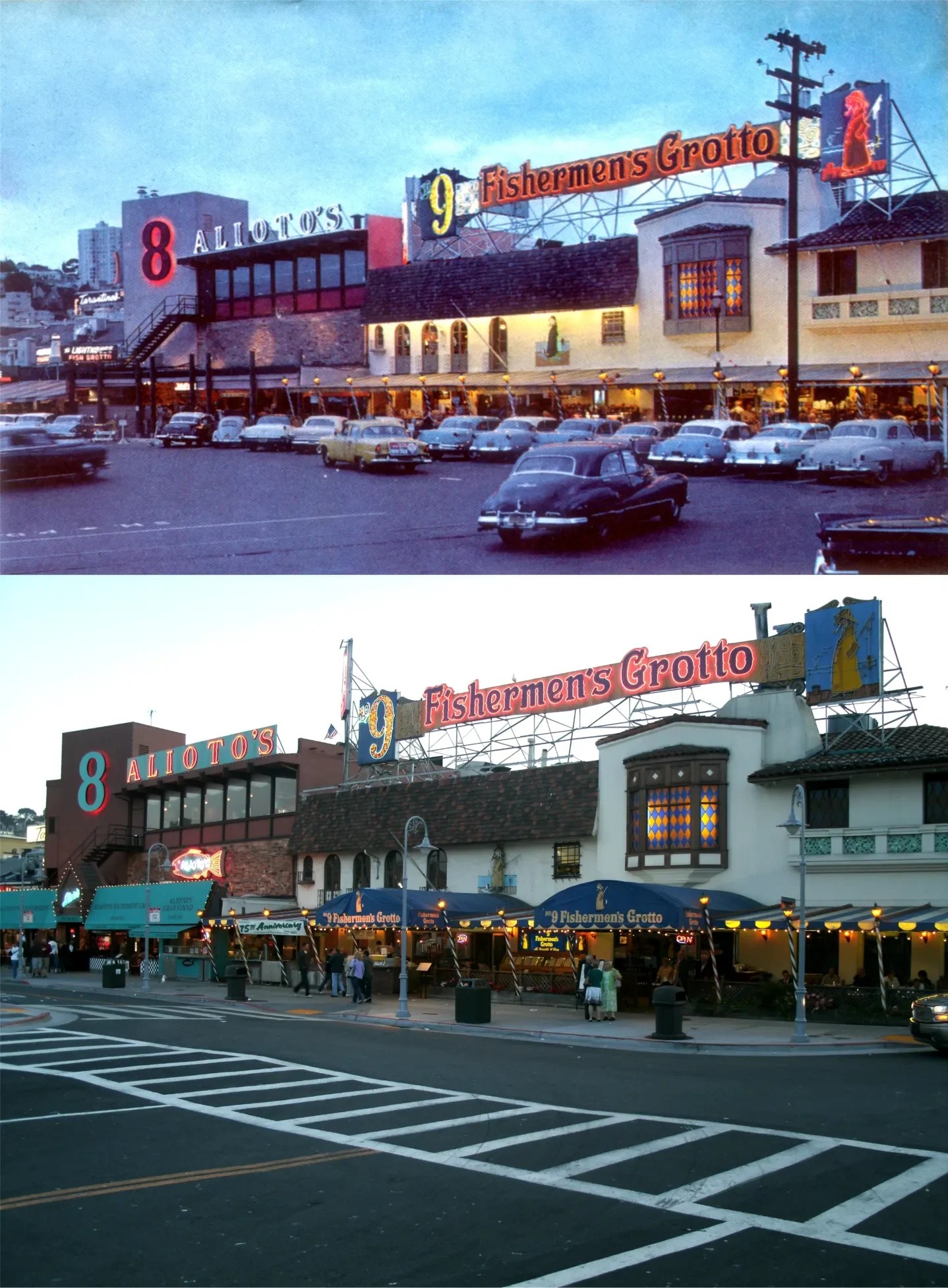
Looking east across Columbus and along Broadway in 1922: The Condor Club and Big Al’s signs are still there as a reminder of what the area was once renown for. (UC Berkeley Library Archives)
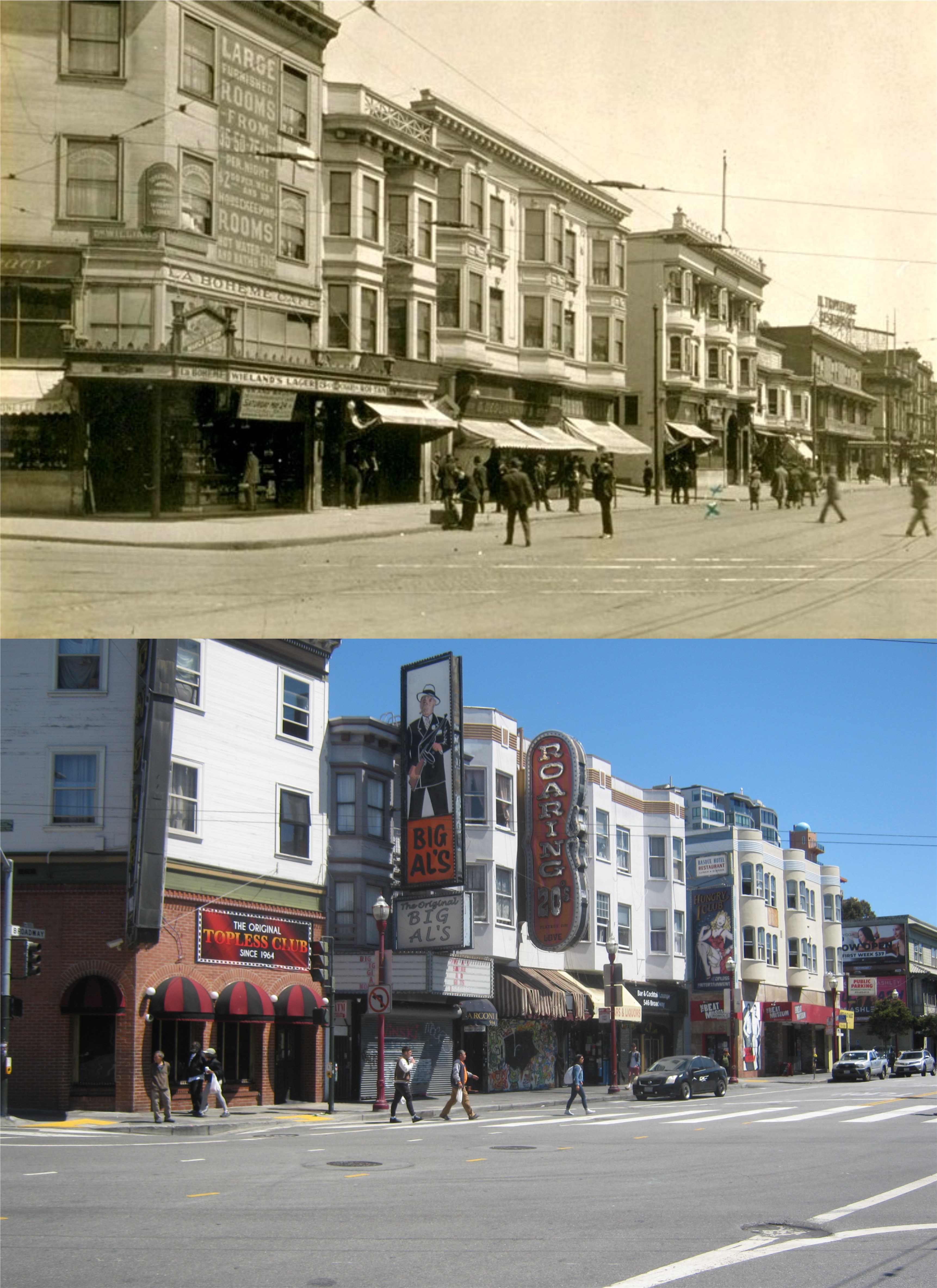
A closer view, looking northeast and probably taken the same day in 1922 as the previous vintage picture: (UC Berkeley Library Archives)

Looking northwest across the intersection in 1943: The building behind the streetcar was painted with various famous jazz musicians by muralist Bill Weber in 1987. (opensfhistory.org)
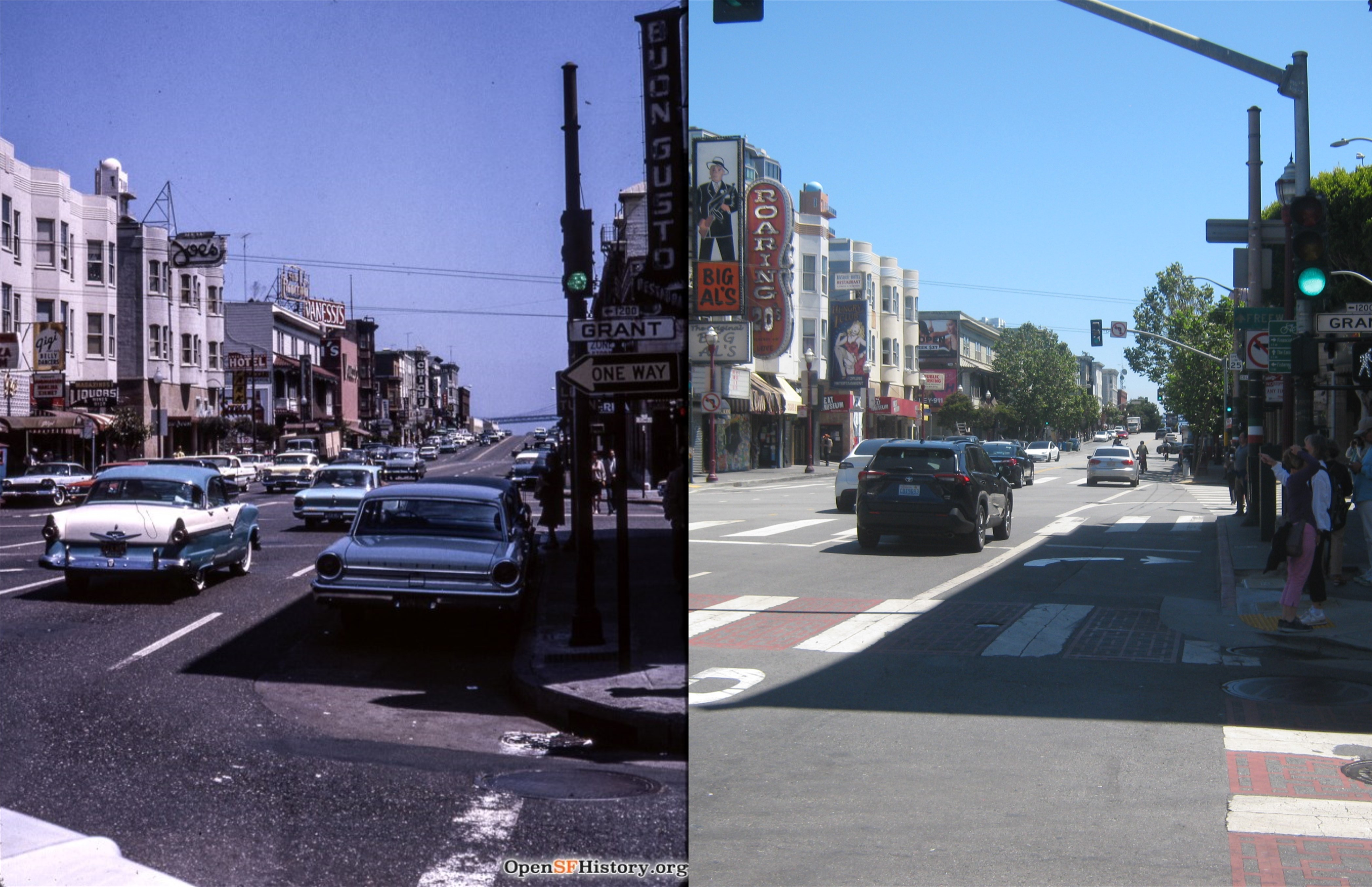
Looking east across the intersection from Grant Avenue during the 1960s: The area was still relatively quiet, but that was all soon to change drastically. (opensfhistory.org)
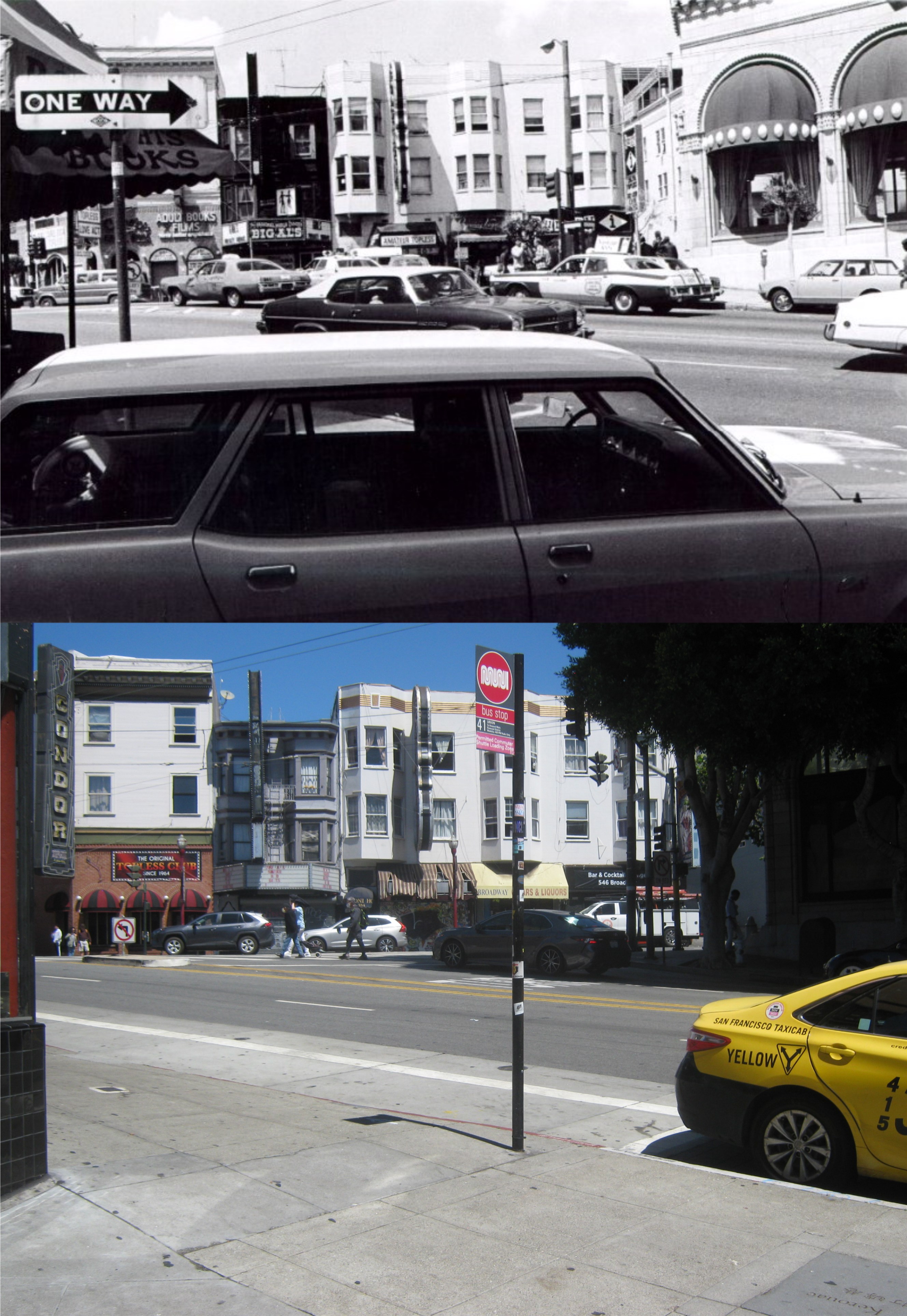
This is an interesting picture. The station wagon turning on to Columbus Avenue is exiting from what was then called Adler Avenue. The alley runs between City Lights Books and the Vesuvio Café from Columbus to Grant Avenue. My friends and I spent a lot of time during the 80s and 90s sitting upstairs in Vesuvio’s on Saturday nights watching the parade of humanity passing by below. The alley is now named Jack Kerouac Alley. (San Francisco Public Library Archives)

And then along comes Carol, (sung to the tune of ‘Along Comes Mary’ by the Association). Carol Doda’s naked act, rising from a piano in the Condor club, spawned an industry of topless and totally nude dancing clubs along Broadway in the 1960s and 1970s that attracted visitors from across the country and overseas. I remember when I was a teenage, my Uncle Fritz and Aunt Ellen drove out here from Grand Forks, North Dakota, and talked my mom and dad into taking them over to see the topless clubs that were causing quite stir in the nation at the time. My Uncle Fritz wasn’t all that impressed, saying “What da hell? We got better stuff than that in North Dakota!” To which my dad answered, “Like what, Fritz, a girl in coveralls driving around on a tractor?” When UHF television stations came along in the early 1970s, Carol Doda did a commercial advertising for Channel 36 referring to the channel or herself, which was never quite clear, as “The Perfect 36”. We always wondered why Carol wasn’t advertising for Channel 44 instead. (SF Gate)

By the 1970s there were protests at the Broadway and Columbus intersection, referring to the area as “pornographic”, which by then it was. (San Francisco Public Library Archives)

Another look at the intersection before and after it became the “flesh tart” capital of the country. I had to get my update of the 1950s picture a little further north up Columbus Avenue than from where the vintage picture was taken so I could get the Columbus Tower Building in, still painted white back then rather than today’s green. The area is much less glitzy today, but, as mentioned, the Condor Club and Big Al’s signs remain as a reminder of what once was. (San Francisco Public Library Archives)
 San Francisco Film Locations Then & Now
Just above the wagon leaving Adler Street, the Apollo is an odd Buick that I do not know much about. I really do not know what designates it from the Skylark, except that in about 1975, the Skylark was the coup and the Apollo was the sedan. It was not available for long before evolving back into the Skylark from which it came. The Eldorado in front of it, with only its tail visible at the right edge of the picture, was actually a rad car for a Cadillac. The Continental in the next picture was supposedly a rad car also, but I still think that those backward doors are totally lame. The only Continental that I ever saw driven by a chauffeur, which such cars were designed for, was the car that President Kennedy was assassinated in.
Say, I didn’t notice the backward doors on the Continental behind Carol! We used to call those “kidnap doors” when we were young, probably inspired by watching reruns of the Untouchables.
They are also known as suicide doors because if one accidentally opens one instead of rolling down the window while the car is moving, he is likely to fall out while trying to close it. Actually though, the door is likely to get yanked off the car by wind resistance if the car is going fast.