
The Giants were playing the third game of a three game match-up with the Boston Red Sox last Sunday out at Oracle Park, a team they haven’t played much since the 1912 World Series, seen here in the old score card from Wikipedia. William Taft was President during that World Series, but he got knocked out of office the following month by Woodrow Wilson, just like the Giants got knocked out of the 1912 World Series by the Sox. I put on my old Giants Jersey, or shirt, or whatever it is, that a friend of mine nicknamed Enzo gave me long ago, and headed over to SF to update some vintage pictures from the UC Berkeley Library Archives that were taken back when the Giants were still in New York, and the Red Sox were still in Boston. Oh, wait, the Red Sox are still in Boston. (Thumbnail images)
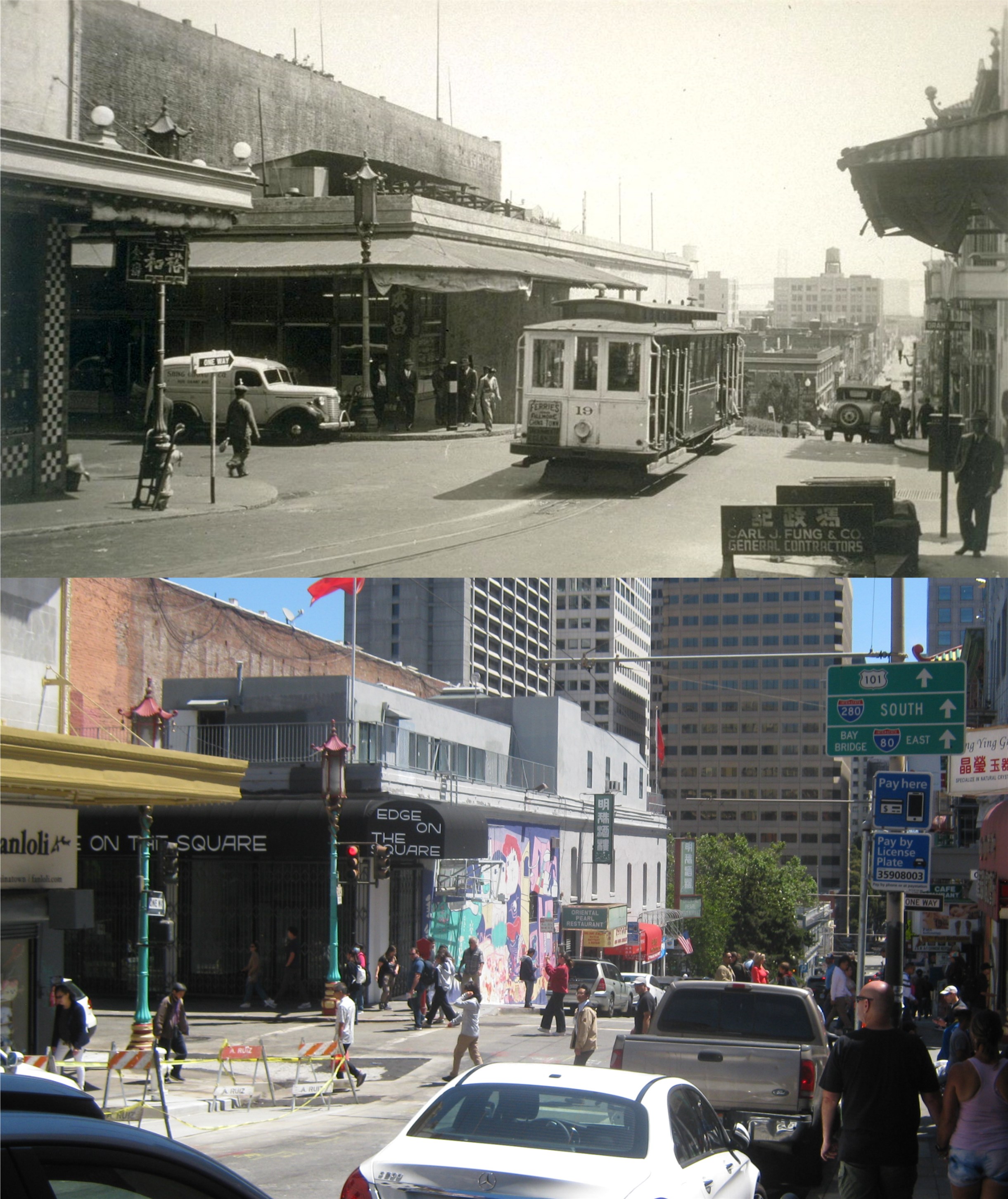
I took the Metro Subway that opened in January of 2023 to Chinatown and did a walk-back to Downtown SF along Grant Avenue, following the game on the MLB App as I took my pictures. Chinatown was packed yesterday and you’d be surprised how many people were wearing clothes with a Giants logo on them. This is looking down Clay Street at Grant Avenue in the 1930s.

Looking down Clay Street toward Kearny past Portsmouth Square in 1922: The game was one to nothing, Giants, at this point. The Giants got another run and held on to a two to nothing lead until the Seventh Inning.

They block off a large portion of Chinatown’s Grant Avenue lately on weekends.
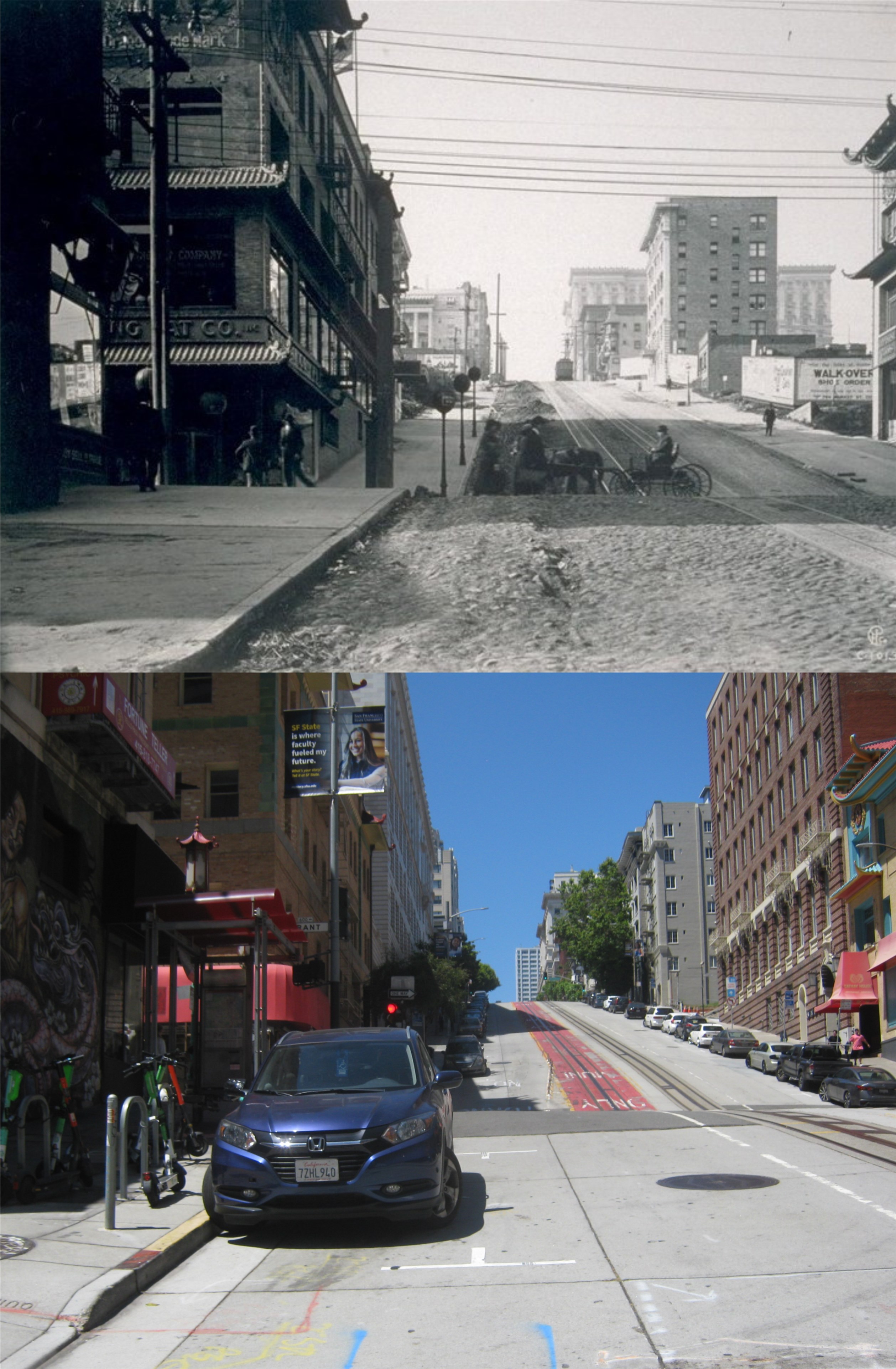
Chinatown was completely destroyed in the 1906 Earthquake and Fire, but was already coming back to life less than a year later in 1907 here at Grant Avenue and California Street when the Sing Fat Building on the left and the building now known as Dim Sum Corner on the right were built. The Fairmont Hotel where Tony Bennett first sang ‘I left My Heart in San Francisco’ is up Nob Hill in both photos.
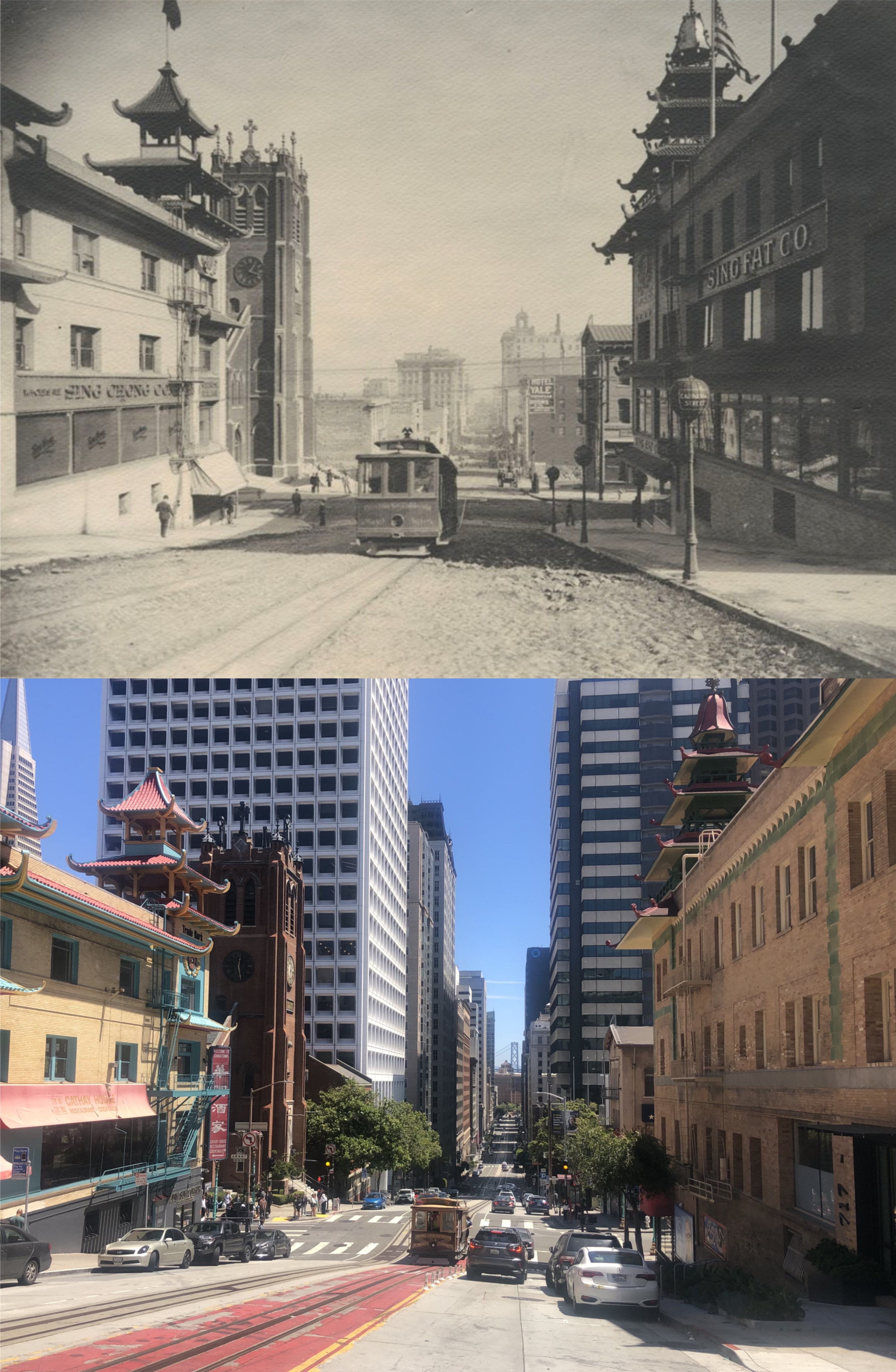
Looking back down California Street past Grant Avenue, the exact opposite of the previous photos, and a year later in 1908:
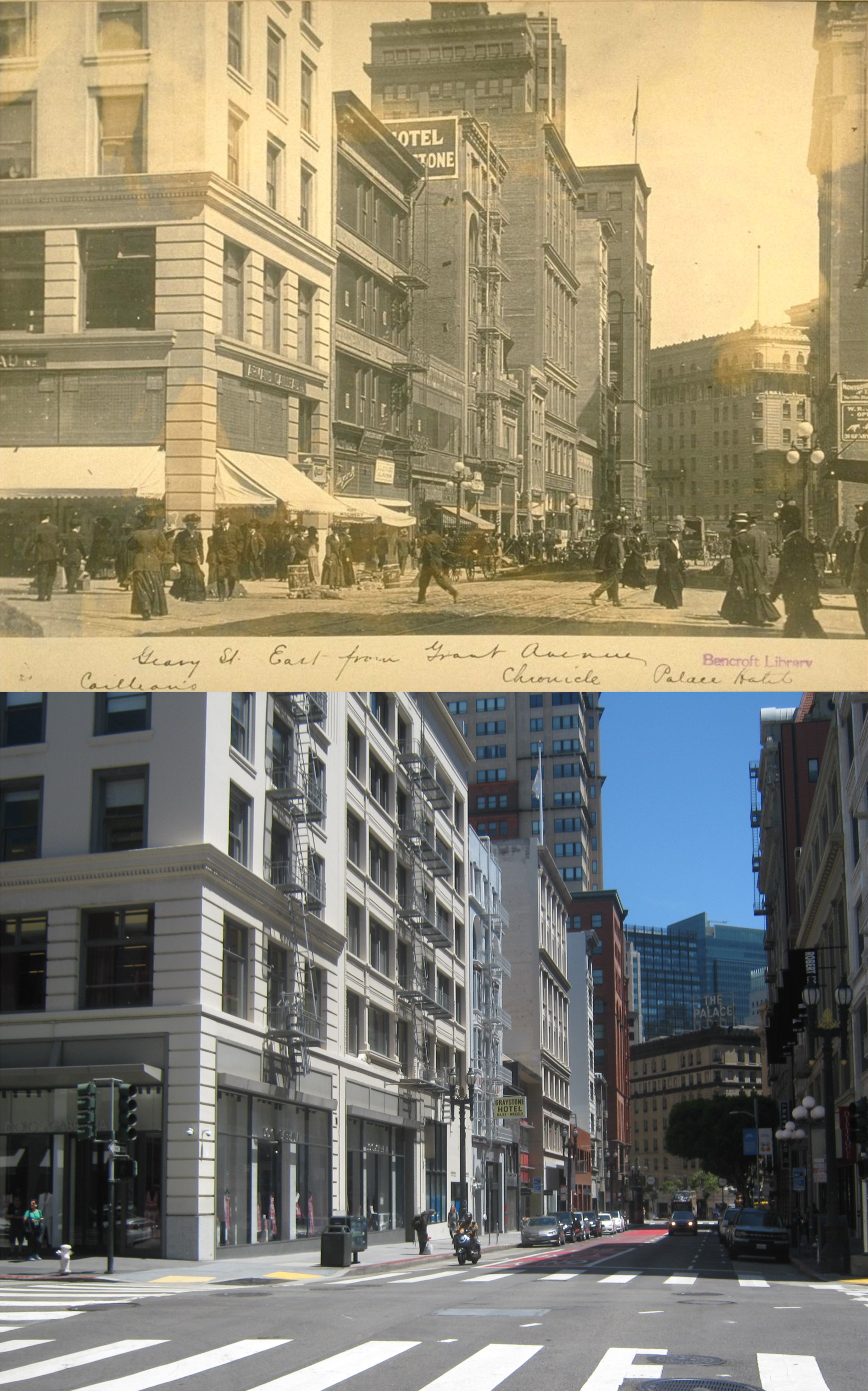
I stayed in Chinatown longer than I planned, so when I got back downtown to Grant Avenue at Geary, looking toward Market Street and the Palace Hotel 1909 in the vintage picture, the Sox had picked up a run, but the Giants still led two to one.

A flower stand on the corner of Grant Avenue and Geary Street in 1939: . You don’t see as many flower stands around San Francisco as there once were, but I don’t think it’s because of the rising crime rate; thieves aren’t romantic and they don’t usually steal flowers. Soon, the game was tied at three each and would go into extra innings, so I decided to head back on BART. On the way, my App told me that the Giants won the game on a walk off single in the Eleventh Inning. I’ll bet they were cheering in San Francisco.
 San Francisco Film Locations Then & Now
The architecture of Chinatown is obviously unique, but what is with those elaborate roof tiles above the cornices that are barely visible from the distance on the ground, or from upper floors of nearby buildings? It seems like a lot of effort for something that can not be seen from directly in front of the buildings. It is as if the buildings were to be seen from a distance, but there is not much distance from which they are visible.
The two most prominent examples of this are at Grant Avenue (Dupont Street back then) and California Street. When these two buildings were constructed just after the 1906 Earthquake, the rooftops could clearly by seen by the tycoons up on Nob Hill whose mansions were all destroyed by the quake. It may have been for the benefit of the Hopkins, Crockers, Fairmonts, Huntingtons, and Stanfords who wanted Chinatown to be relocated down near where Candlestick Park used to be. Just a guess.
Do you mean that they were mocking those who wanted them to relocate? That seems like too much work. I would prefer architecture that is less objectionable to the distant neighbors.
Well, it’s just a theory, and theories of mine wouldn’t have discovered quantum mechanics, but the Chinese did want to make it clear to those in power that they weren’t going anywhere after the 1906 Earthquake destroyed their community.