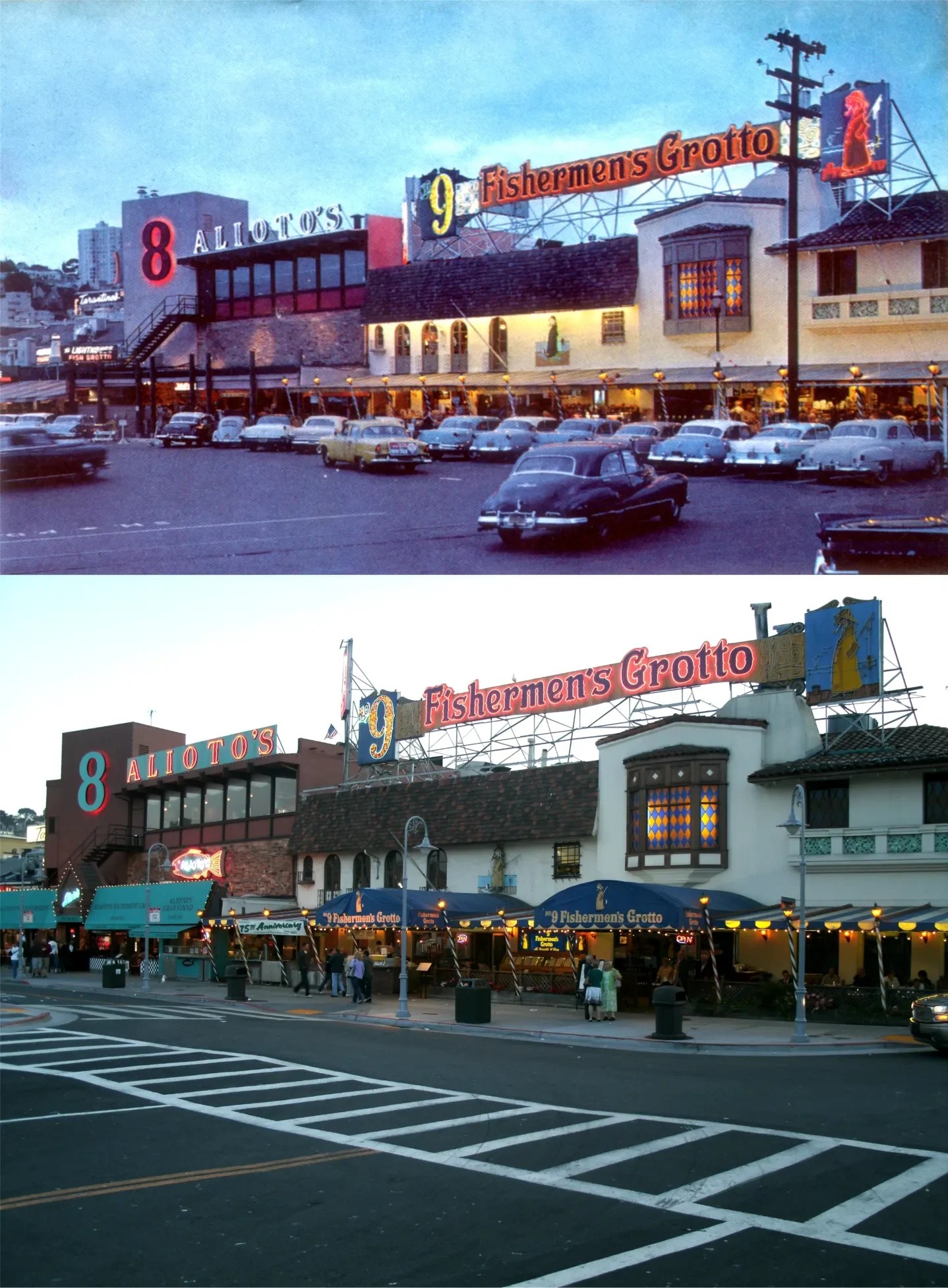
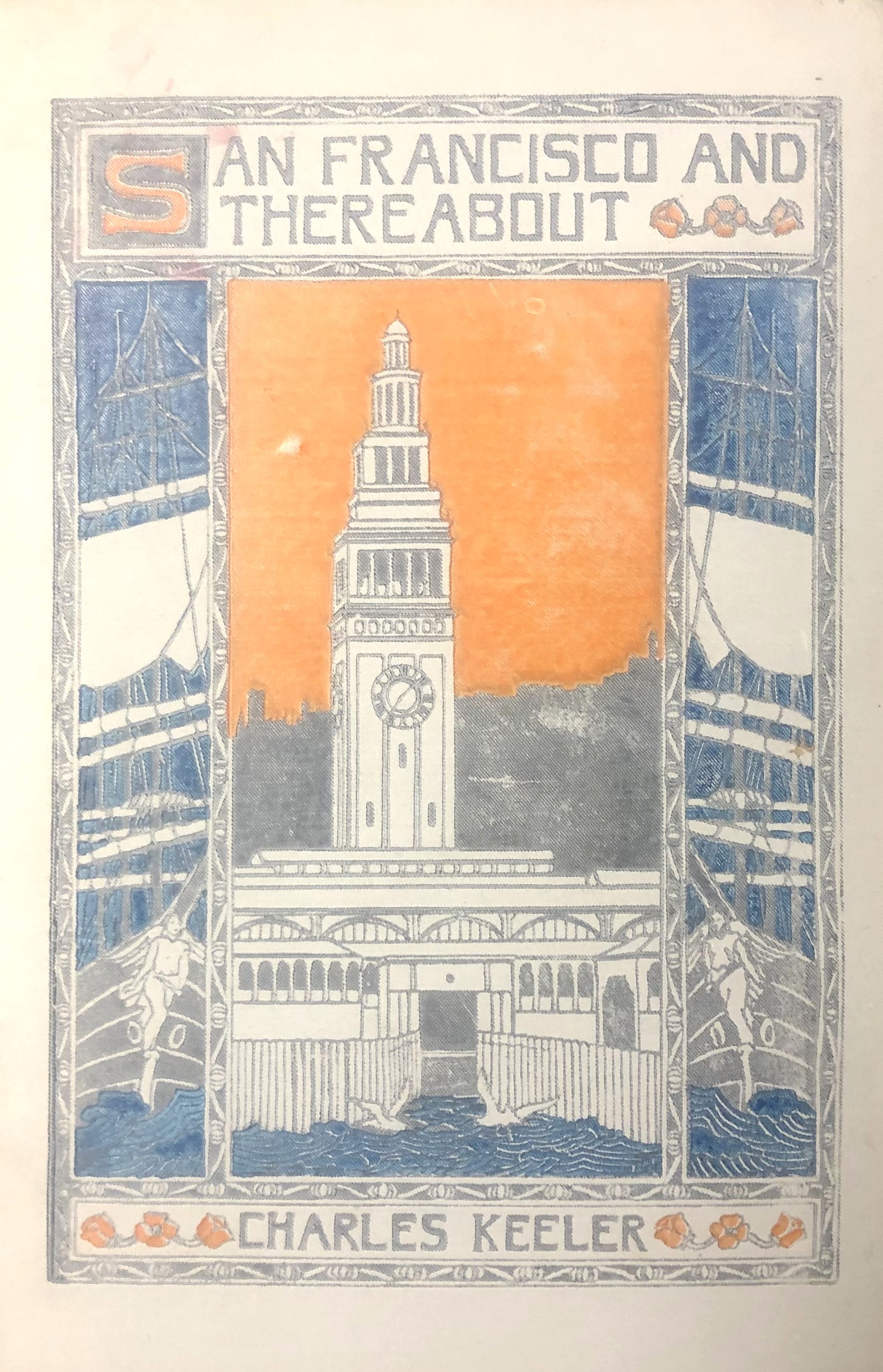
A friend of mine named Cindy, who works in a library, occasionally sets aside discarded books about vintage San Francisco for me. Sometimes, they’re a real treasure, at least to me anyway. This cavalcade of a long ago San Francisco, written by Charles Keeler and published in 1902, should probably have been kept in the historical studies section of the library for review, but not for checking out. However, I’m not giving it back….. unless they really want it. I did a few updates of some of the photographs in the book, you know, in case some things are different after 121 years. I’ve also included passages with descriptions from the book that relate to each of the vintage pictures. (Thumbnail images)
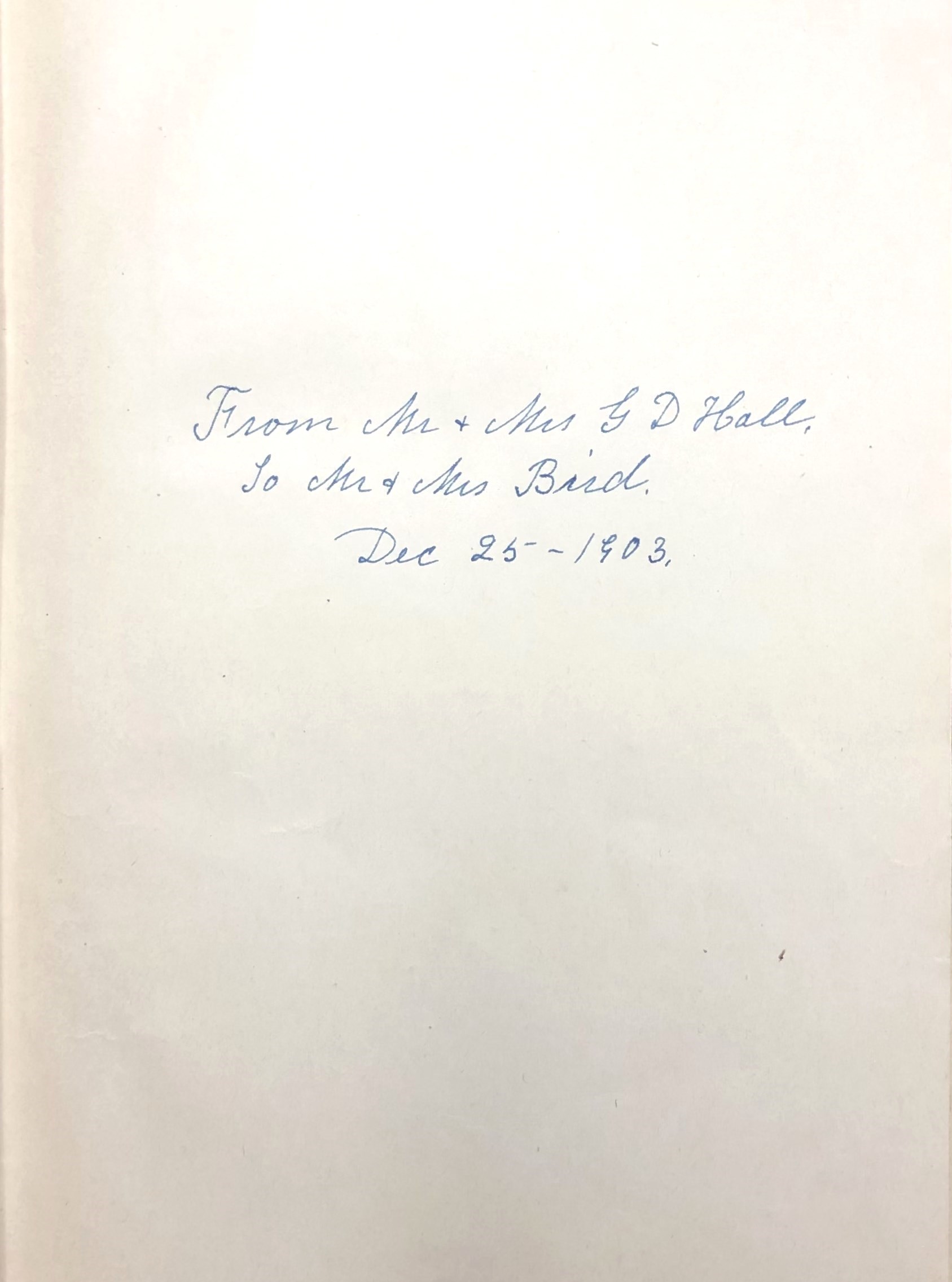
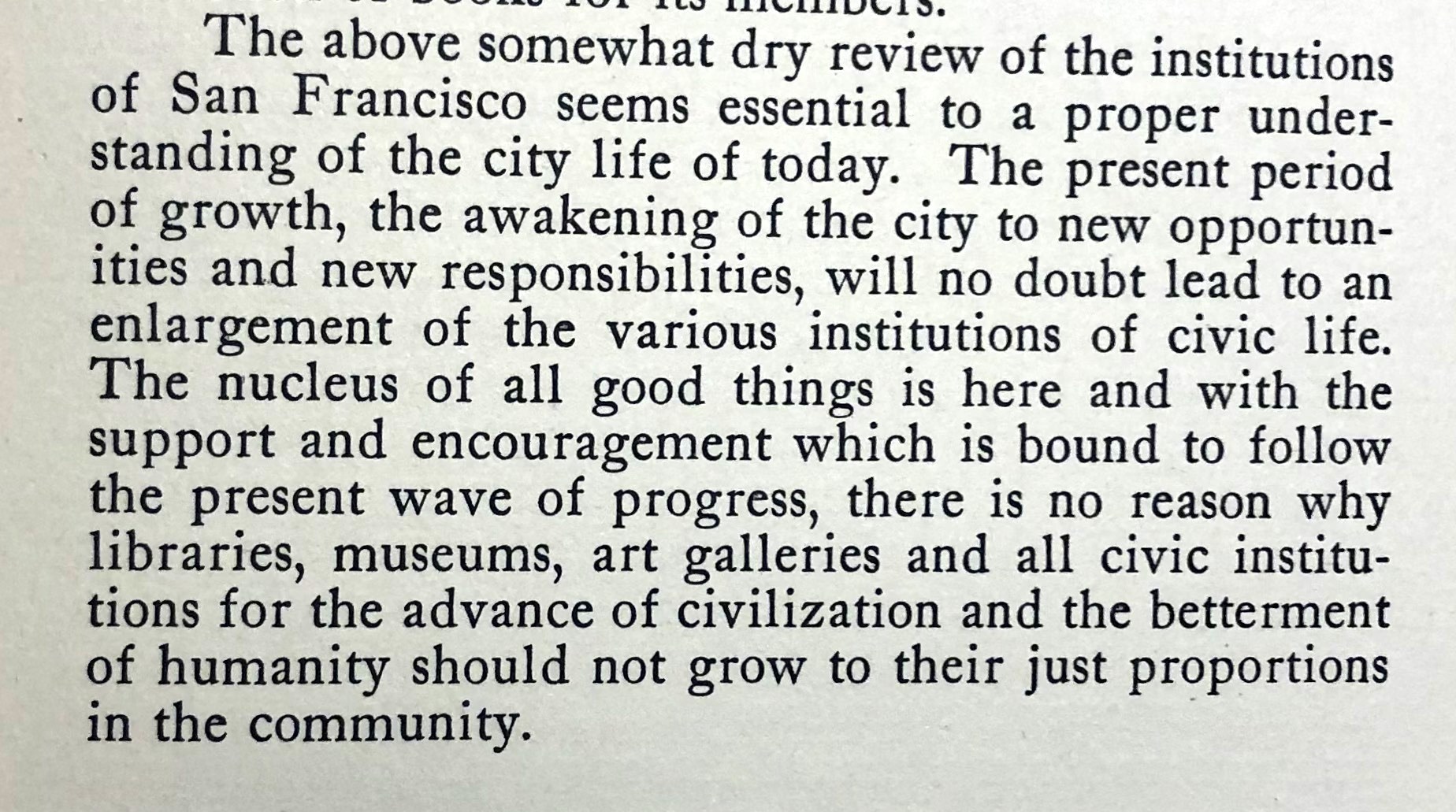
It was autographed from Mr. and Mrs. Hall to Mr. and Mrs. Bird on Christmas Day of 1903. Mr. Keeler gives a review of his work in one of the chapters. Contrary to what Mr. Keeler wrote, there was one good reason why the civic institutions that he mentioned here may not grow; less than four years after this book was published most of them were all gone, and maybe Mr. & Mrs. Hall and Mr. and Mrs. Bird, as well.
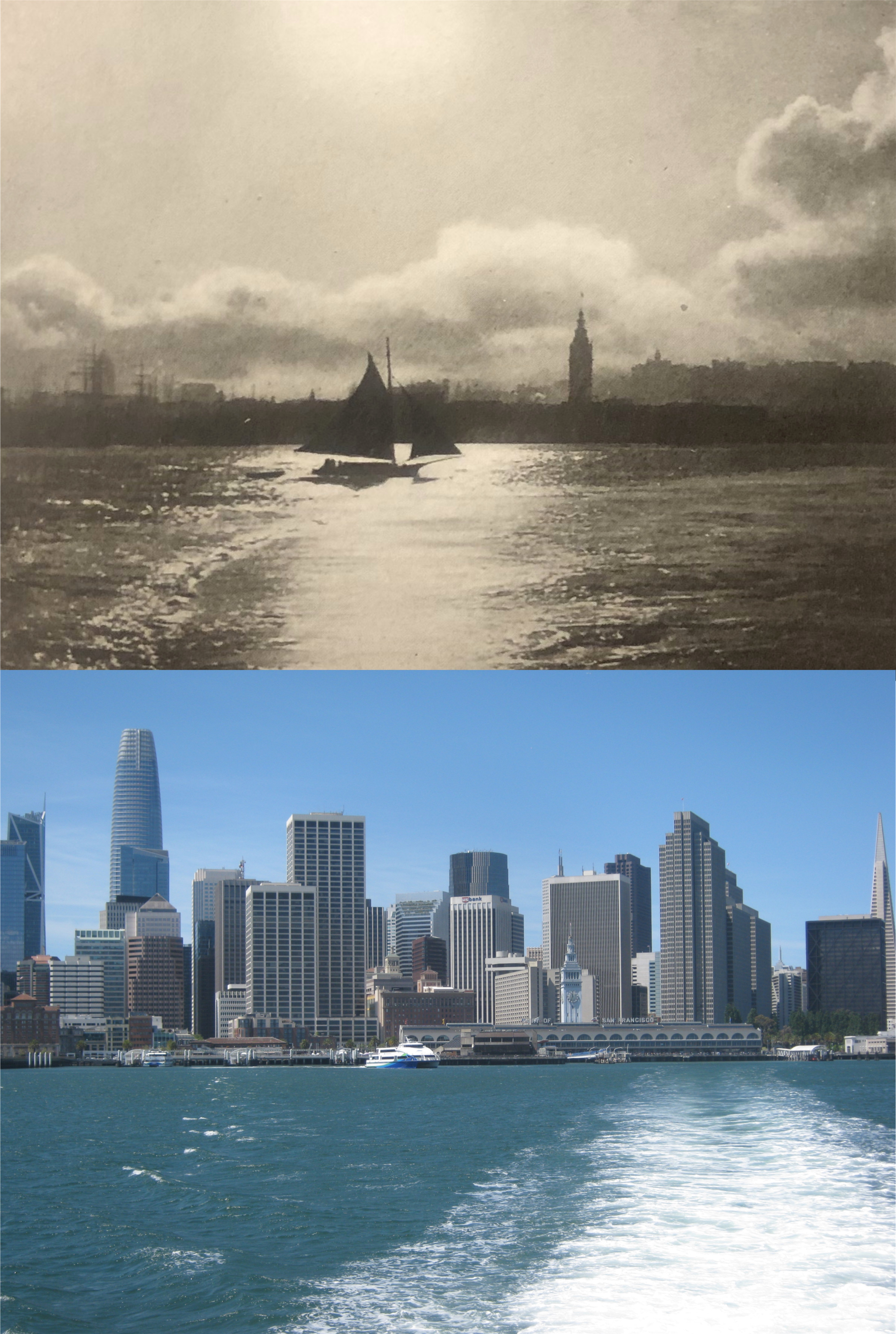
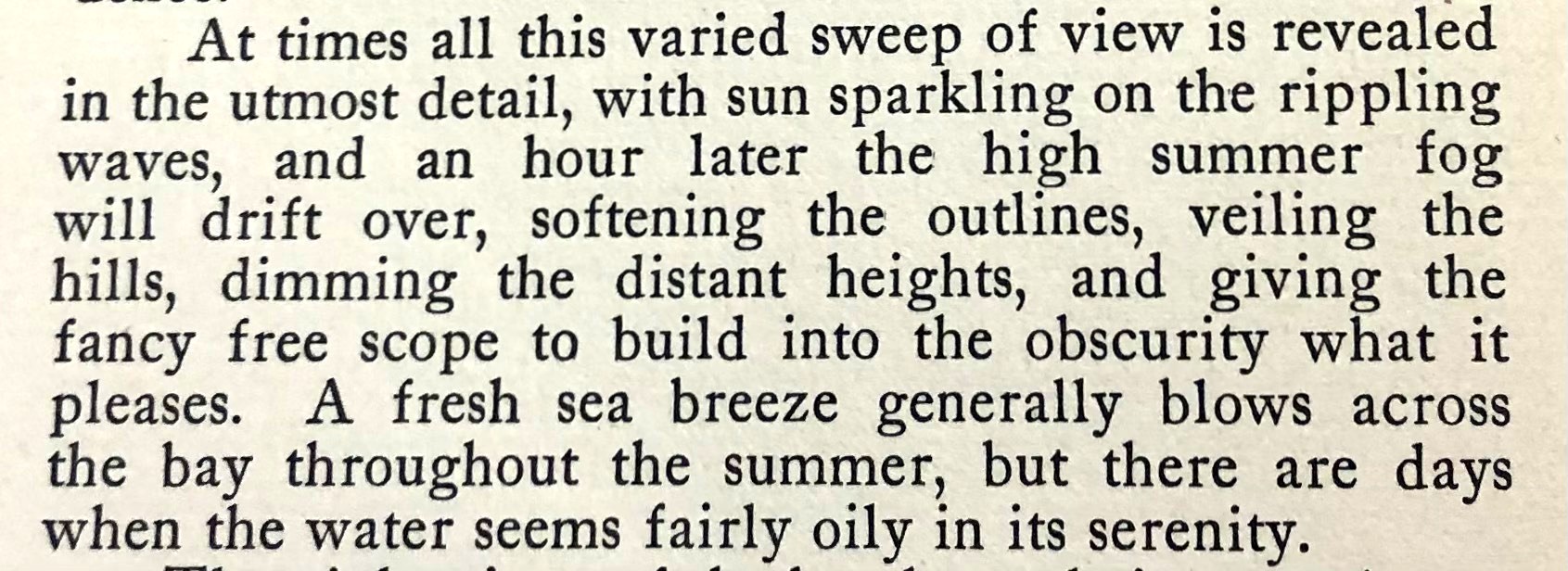
A view of the Embarcadero near the Ferry Building from the Bay:
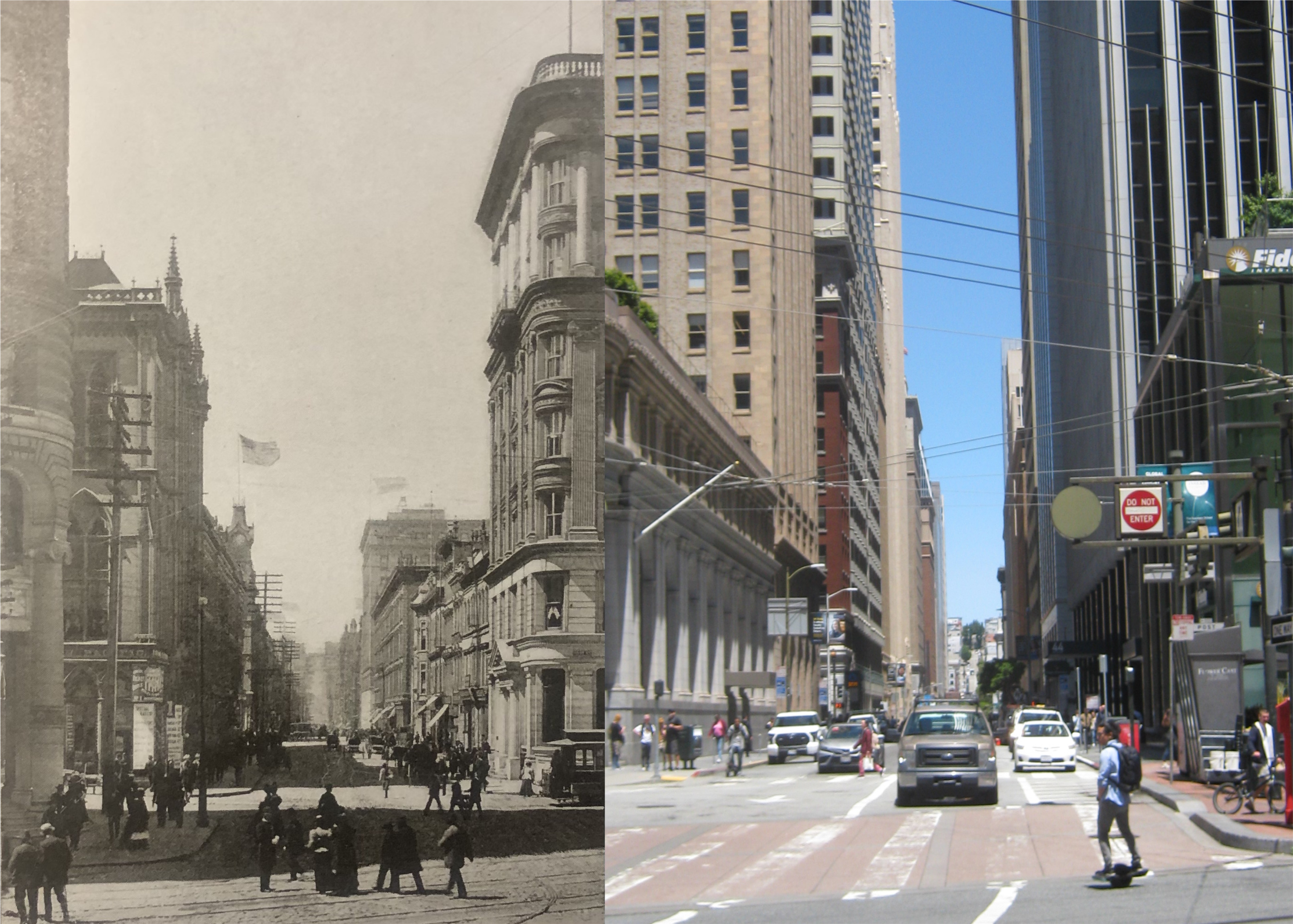

Montgomery Street, looking toward Telegraph Hill, from Market Street: The author jumps on a cable car at the Ferry Building, and rides along Market Street.

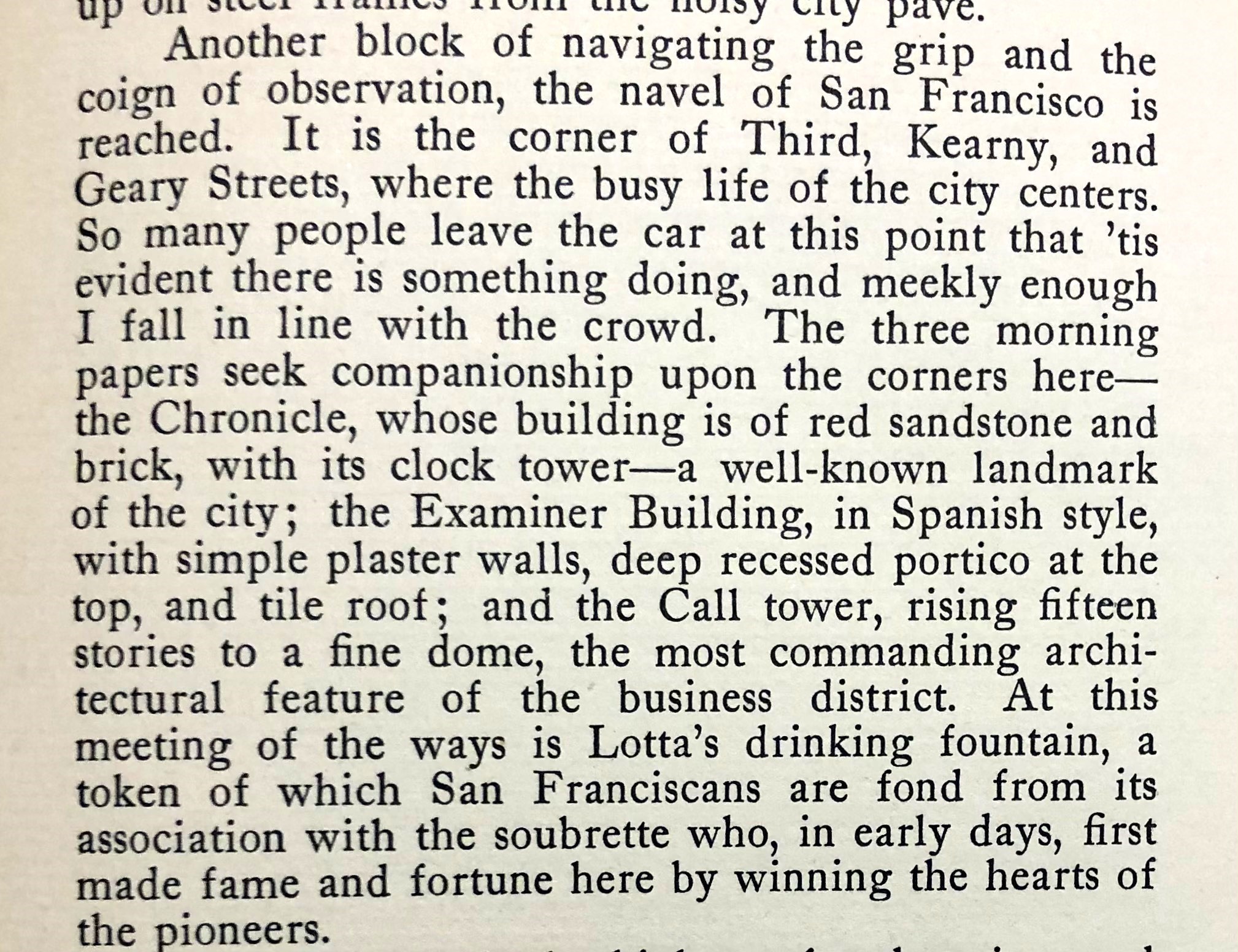
Mr. Keeler gets off the cable car at Market, 3rd, and Kearny Streets, along with, apparently, most of the other passengers. The prominent buildings, from left to right, are the Chronicle Building behind the Fed Ex truck in the modern photo, the Palace Hotel, William Randolph Hearst’s Examiner Building, and the Call Building. The Palace Hotel and the Examiner Building were destroyed in the 1906 Earthquake and Fire of 1906 and completely rebuilt, The Chronicle and Call Building survived the disaster. The Ferry Building, back then and under scaffolding right now, is in the background on the left.
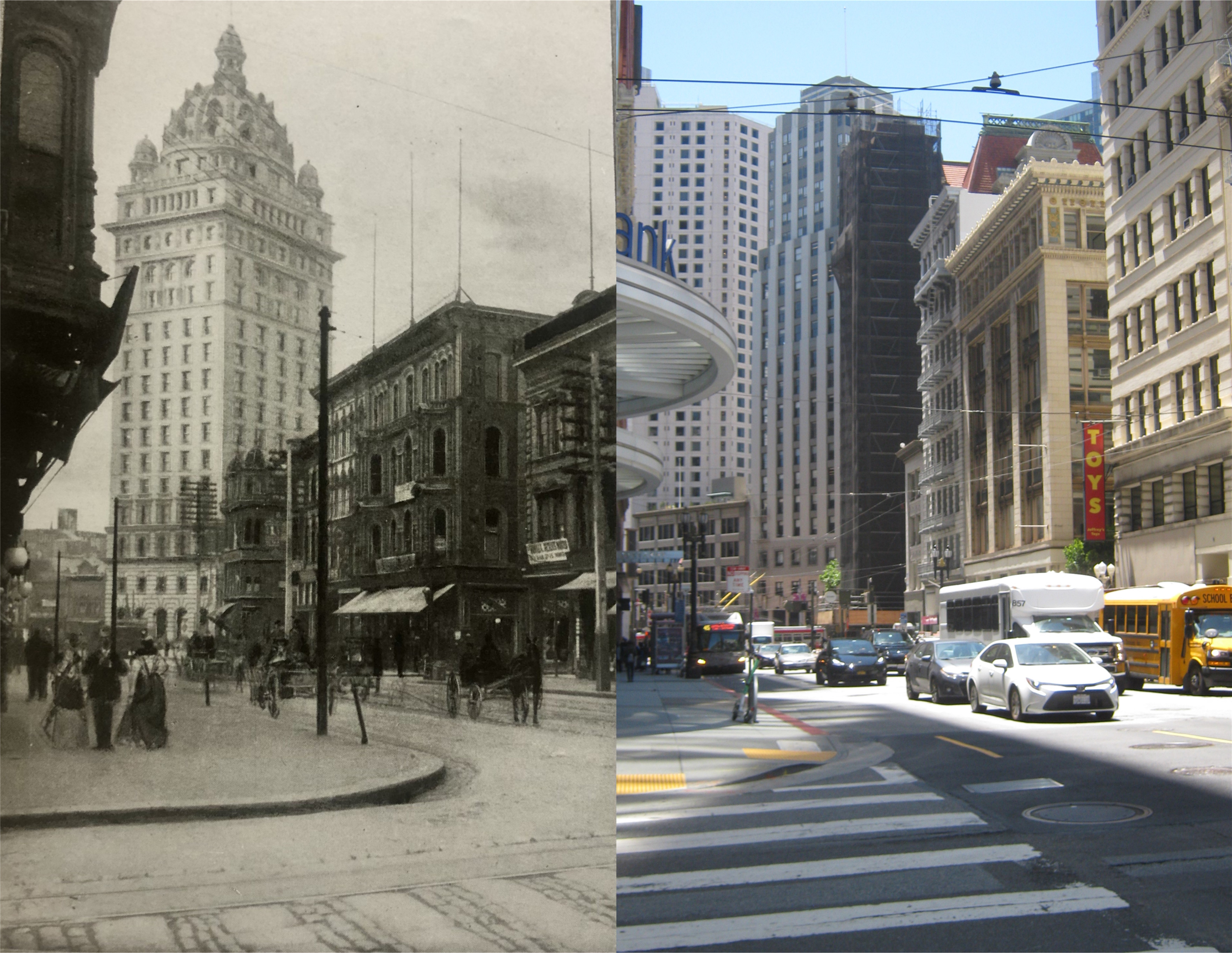

The author wanders along Kearny Street. The domed Call Building, seen from Post and Kearny Streets, is in the background. In the late 1930s, the Call Building was remodeled and the dome was removed. It’s behind the Gothic looking Mutual Savings Bank Building, under renovation, that was built after the vintage photo was taken. Maiden Lane is seen behind the TOYS sign in the modern photo, but is also seen in the vintage picture. However, when the earlier picture was taken the alley was called Morton Street. Morton Street used to be a prominent customer area for ladies with questionable income earnings. I’ll give you a hint, the question was usually, “How much?”


The author writes about an electric light show on Market Street that extended from the Ferry Building to the City Hall Building. That City Hall collapsed within seconds after the 1906 Earthquake struck.
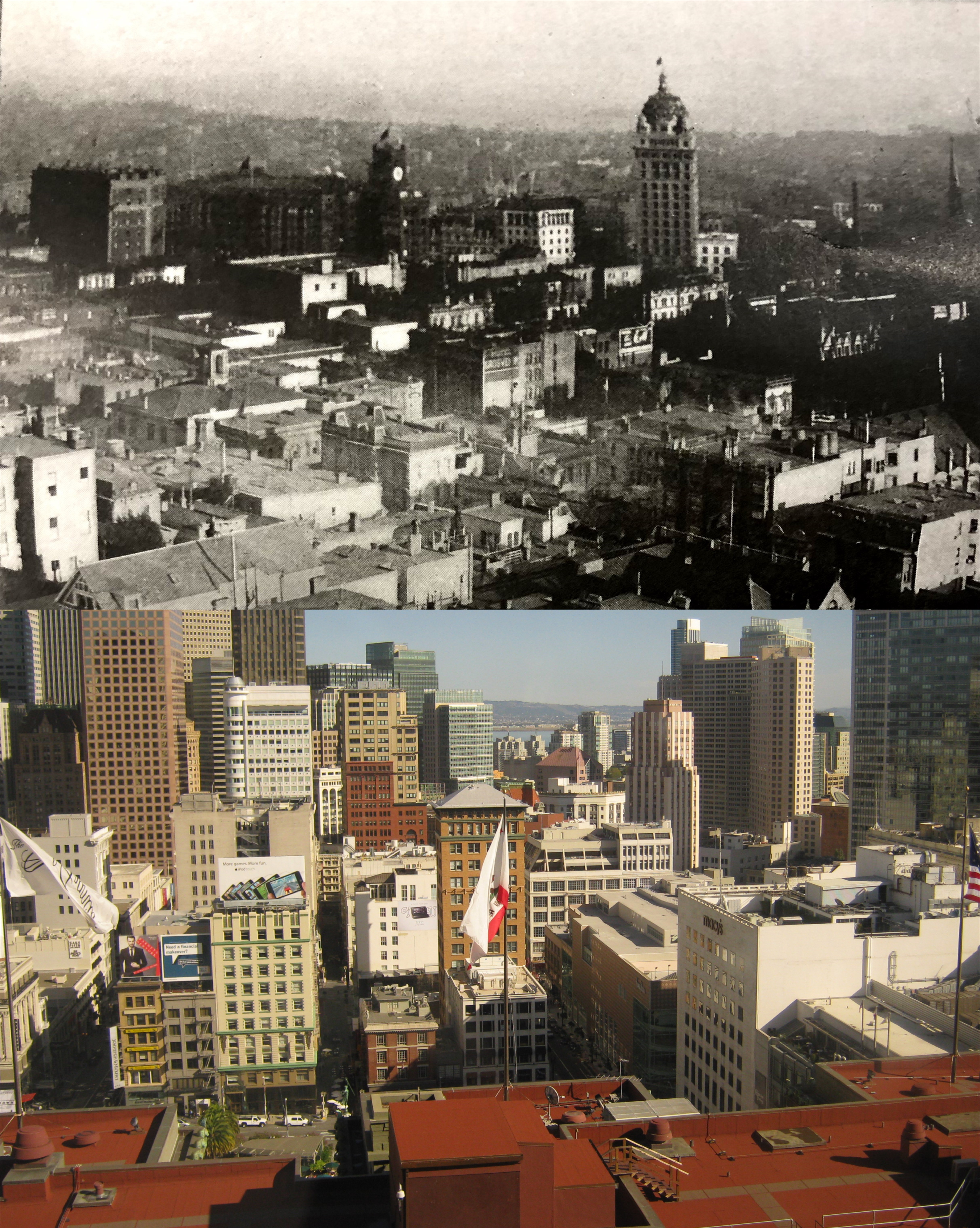
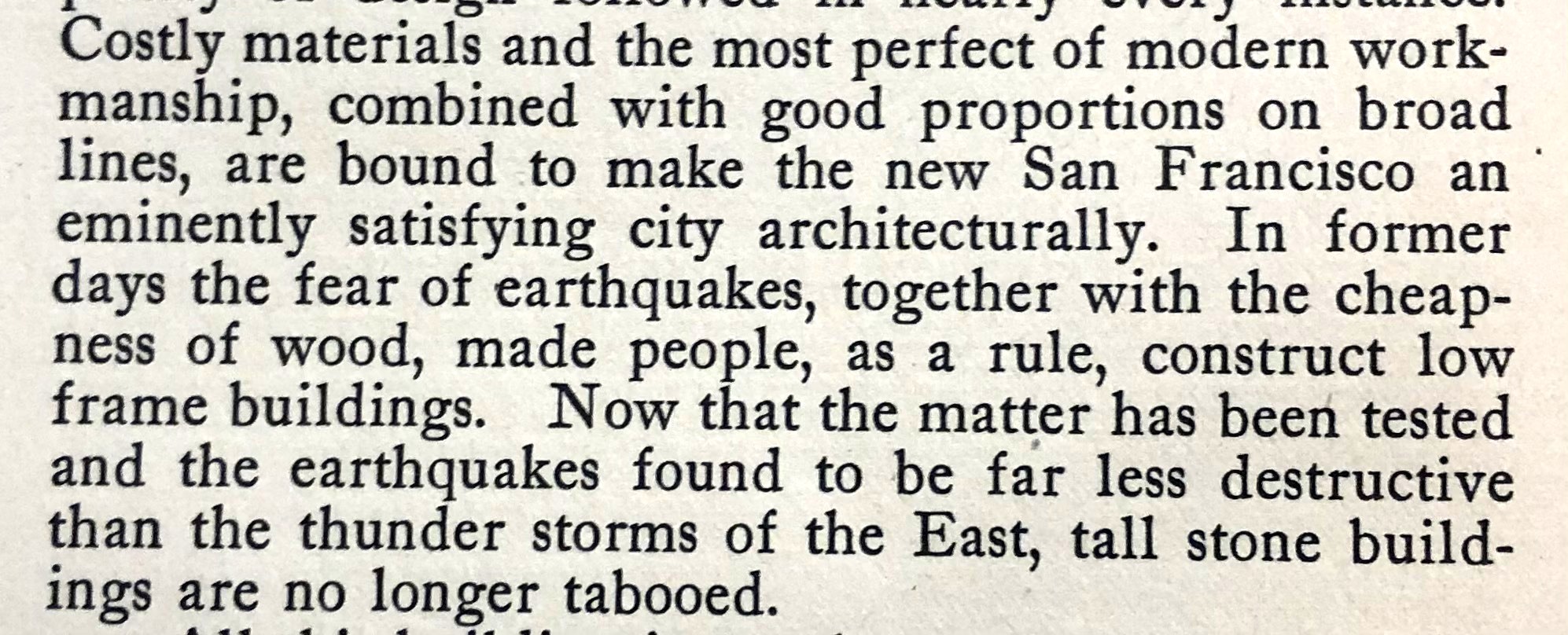
The view of Downtown San Francisco at the beginning of the Twentieth Century and nowadays: The Call Building, on the right in the old photo, is the brown and white striped building directly below it in my picture. The author’s “ignorance is bliss” view of earthquakes is both fascinating and poignant.


Charles Keeler takes in Golden Gate Park, as well, including the Japanese Tea Garden and the Moon Bridge.


I’ll close with a contemporary, for the times, map of the Bay at the end of the book, and Charles Keeler’s curtain-call description of San Francisco.
 San Francisco Film Locations Then & Now
Oh my! Earthquakes were found to be far less destructive?! Modern buildings of stone or terra cotta?!
The last two chapters of the book were devoted to the East Bay and the South Bay, Here’s what the author wrote about San Jose.
{From the Stanford University and the academic Town of Palo Alto close to it, a ride of a few miles on the train takes the traveler to San Jose at the head of San Francisco Bay. This city is fifth in population in California, and is noted for its park-like streets shaded by spreading foliage trees or ornamented with rows of palms, its many substantial buildings and general air of prosperity and thrift. It may well appear so with the great fruit country that surrounds it, where some of the finest prune orchards of the State are to be found, as well as acres and miles of other varied deciduous fruits, all cultivated to the last degree of perfection.}
That sounds about right! However, Palo Alto is close to STanford University?! Isn’t Stanford University close to Palo Alto?