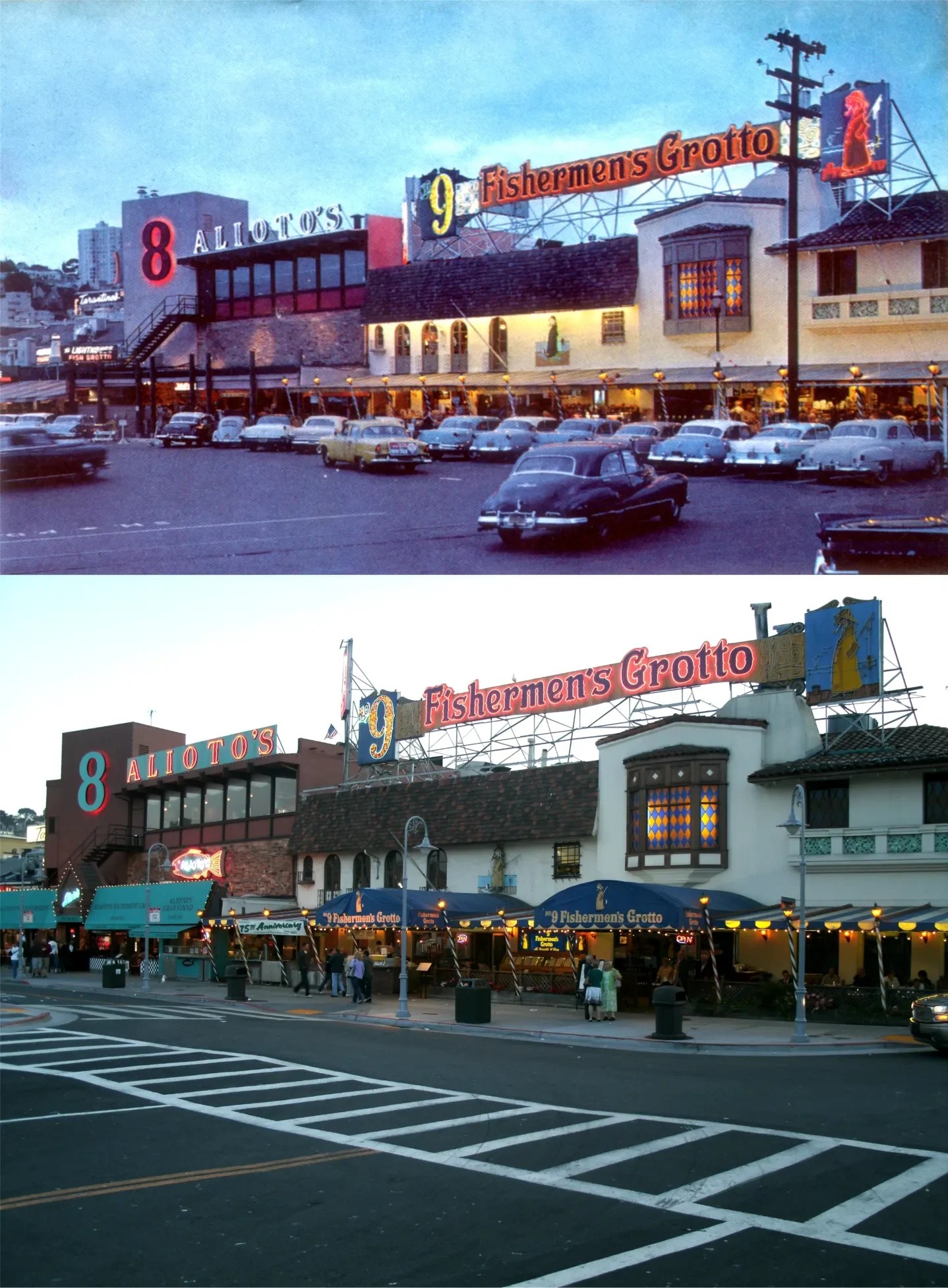
San Francisco is a city of hills, and walking around it can tire you out quickly. Herb Caen once said that if you get tired of walking around San Francisco you can always lean against it. These are some vintage pictures a few spots, most of them still around, where you could take a breather when those long days on your feet in San Francisco started to catch up with you.
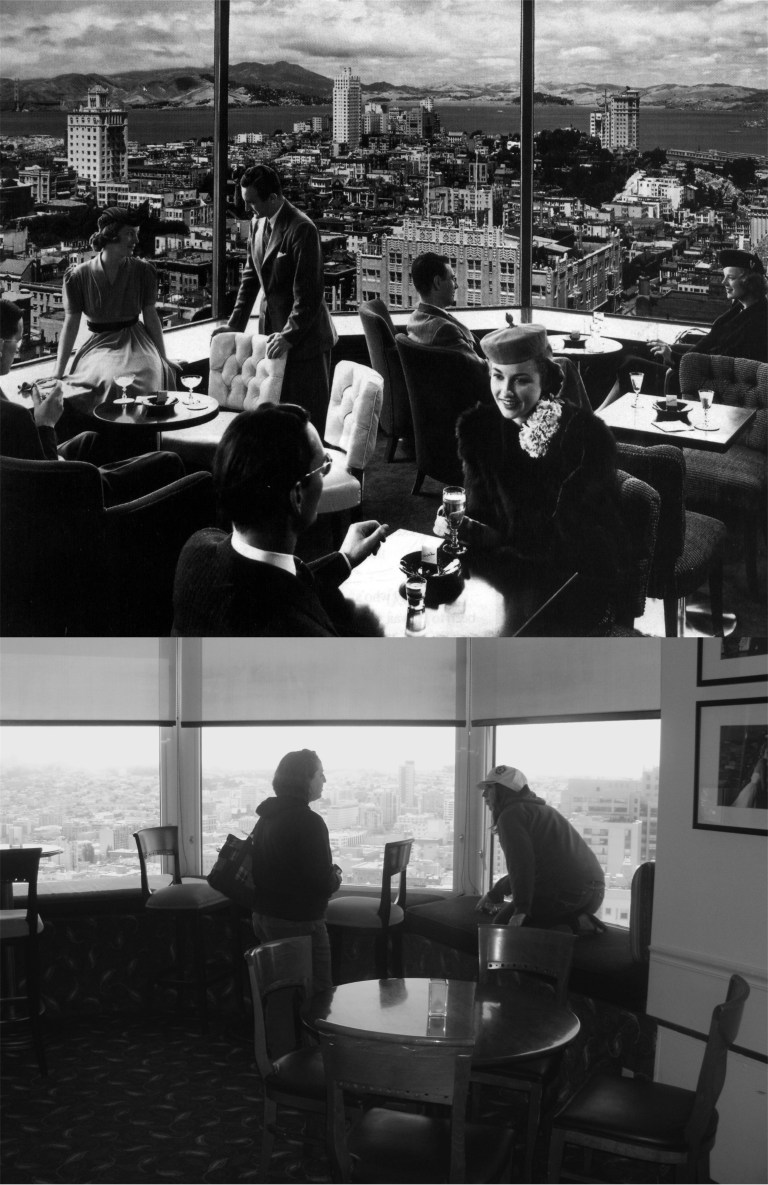 The northwest corner at the Top of the Mark, “Weeper’s Corner”, looks like the 1940’s or early 1950’s: “Weeper’s Corner” got its nickname during World War Two when mothers, wives and sweethearts sat in this corner watching their loved ones sail off to the Pacific Theater of the war. The Top of the Mark is still a special place to take a break; visitors are no longer required to dress up to come up here, and as far as I know, weeping in this corner is still allowed.
 The old Redwood Room at the Clift Hotel, seen here in the 1950s, is another historic place to relax with a cold one and try to forget about all of the money you’re spending on your visit to San Francisco. (hippostcard.com)
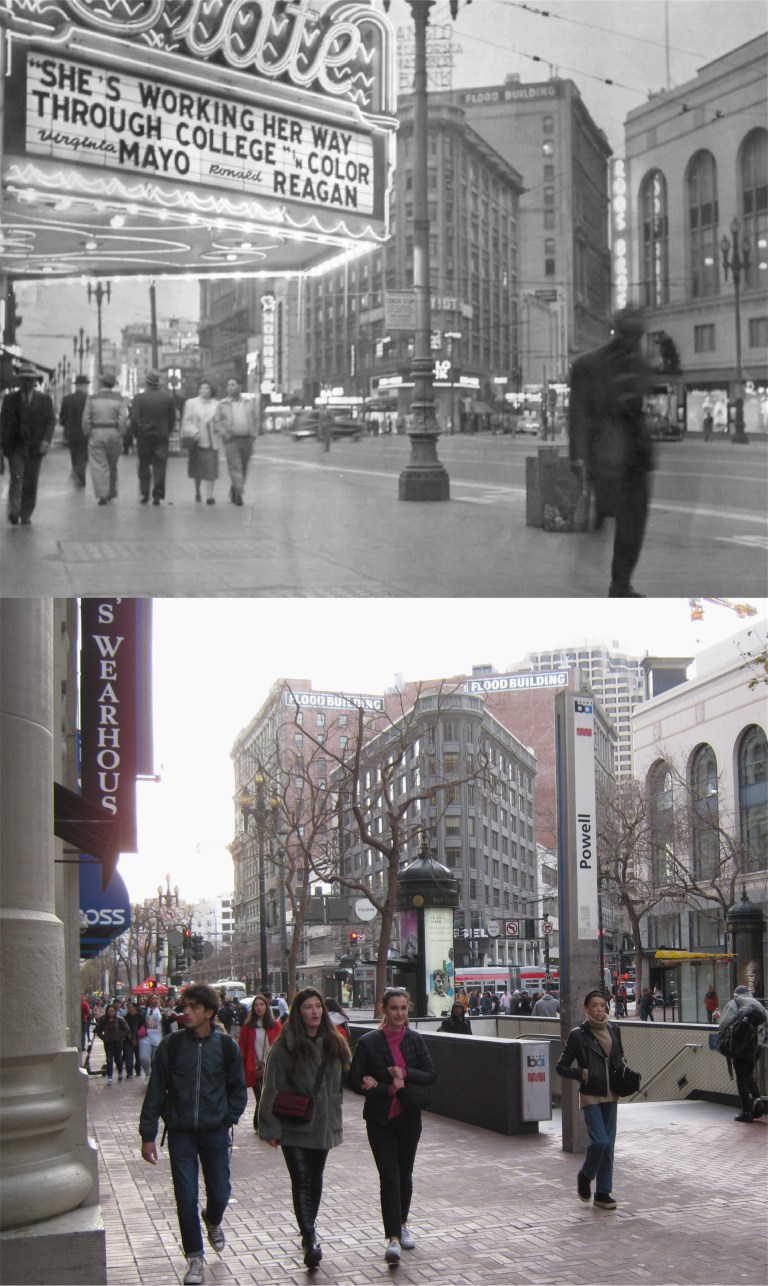 Checking out a flick on Market Street to get away from it all, like here at the State Theater at 4th and Market Streets in 1952, isn’t going to work anymore; all of the theaters in this area have been demolished. (tumblr.com)
 Now, if you really want to make it a special afternoon, lunch in the Garden Court of the Palace Hotel is one of the best ideas for a breather; although, sometimes it’s prettier and cheaper just to sneak upstairs and take a picture of the hotel court. (ebay)
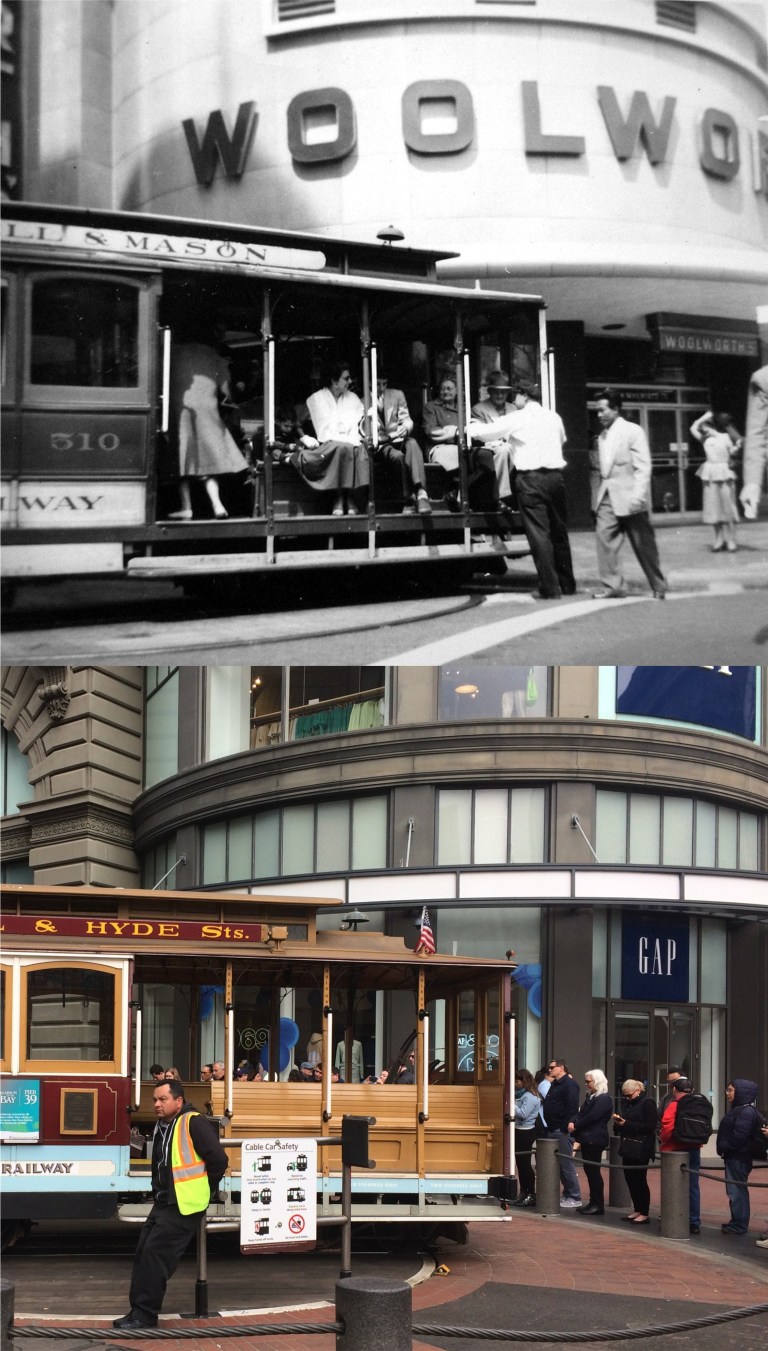 A relaxing cable car ride at Powell and Market Streets might bring the energy back to your feet, but the problem is that the wait standing in the long line to catch a car can sometimes be longer than the walk you took around San Francisco.
 Hotels like the Fairmont, St. Francis, and here at the Sir Francis Drake lobby, seen here in 1928 in the vintage picture, usually don’t mind visitors sitting awhile to relax in their lobbies. Sometimes, they even encourage people to stop and browse on occasions like holidays. (North Point Press)
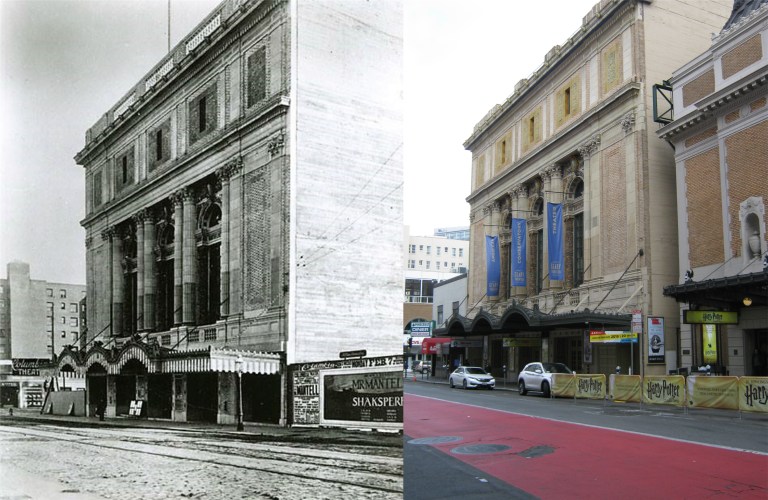 And if you need a long rest, you can catch a play at the Geary Theater on Geary St.. near Mason Street, seen here in 1910, the year the theater opened. The Curran Theater, west of the Geary Theater, had not been built yet in the vintage picture. (San Francisco Theaters / blogspot.com)
 The Geary and Curran Theaters looking west in 1958: Notice what was playing at the Curran Theater. (blogspot.com)
“He’s a what?”
“He’s a what?”
“He’s a Music Man!”
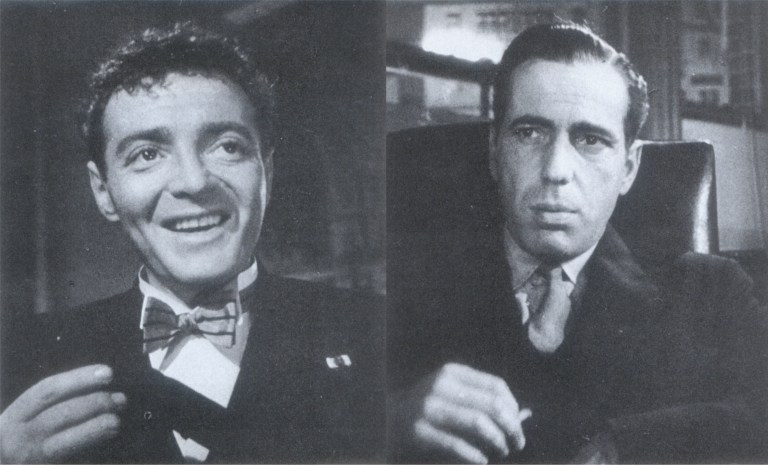
 I’ll pause for five seconds while movie buffs spot what’s going on here….. Joel Cairo (Peter Lorre) in attempting to search the office of Sam Spade (Humphrey Bogart) in the 1941 film ‘The Maltese Falcon’ is knocked out by Spade. In searching through the pockets of the unconscious Cairo, Spade finds, among other things, that Joel will be attending a play that evening at the Geary Theater. This was where Cairo was planning on being that night in the novel by Dashiell Hammett, as well. (Flare Books / Richard Anobile)
 Executive Order Number 9066, signed by Franklin D. Roosevelt on February 19th, 1942, forced Japanese citizens on the West Coast to leave their homes and businesses for internment after Pearl Harbor in fear that some may create acts of sabotage in support of Japan’s military machine. The Japanese owners of this business on Grant Avenue south of Pine Street in Chinatown, (there were several Japanese owned businesses on Grant Avenue between California and Bush Streets in 1942) are selling off as much of their inventory as possible before being relocated. Ironically, their shop was the one with the green BLOWOUT SALE sign in the window behind the California flag in my update.
 South of the Ferry Building, around 1984: I was standing in the shadow of the Embarcadero Freeway. Looks like I got here close to the same time as I did thirty six years ago. They’re doing some work on the south wing of the Ferry Building lately, but I haven’t had a chance to find out what that’s all about yet.
 The Embarcadero just south of Levi Plaza around 1985: Although the old Belt Line Trains were long gone by then, the tracks still ran down the Embarcadero all the way to China Basin. The Embarcadero Freeway, where it stopped at Broadway, is in the center. One of the buildings the Exploratorium is housed in now is on the far left.
 Pier 33, on the left, on a rainy day: I’m not sure when I took this picture; some of those cars look newer than the 1980’s. Might have been in the 1990’s; neither one of those decades seems that long ago to me! I remember the Peer Inn Restaurant, though; it was where the restaurant with the pink awning is now.
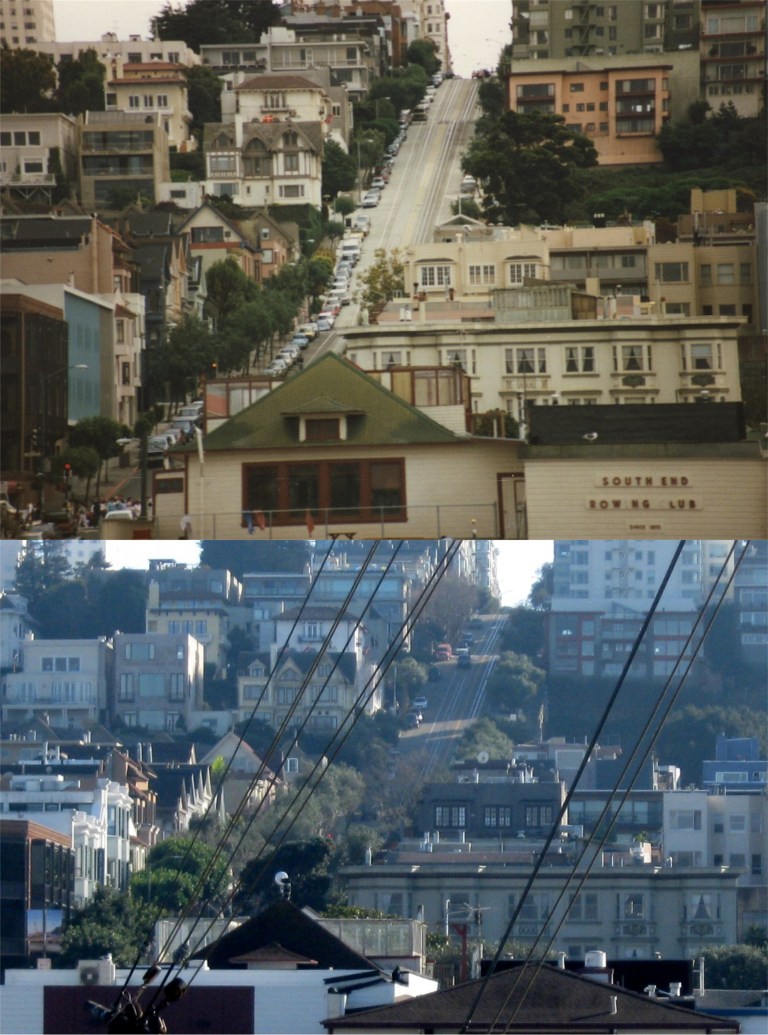 I had to do a little detective work to locate where I took these two photos. They were taken around 1985. I wasn’t even sure if I took them on the same day, but Hyde Street coming down Russian Hill in the second picture was my guideline. They were both taken from the second deck of the old ferryboat the Eureka at the Historical Hyde Street Pier. I was able to find the same spot I took my old pictures from on a visit to the Eureka last Saturday; maybe the first time I’ve been on board that old ferryboat since then. The top one, of course, is looking toward Telegraph Hill, the bottom one is Russian Hill, with a close up of Hyde Street where the cable cars plunge down from the top of the hill.
 I took the top picture in 1985; some vistas don’t change much with the passing of time.
 {San Francisco
 The main character is Gregory Richards, eighteen years old and down-and-out, trying to get a job on one of the many ships docked along the Embarcadero in 1936. His two main troubles are a pending waterfront strike, and the fact that none of the ship crews are willing to hire someone who hasn’t shipped out and hasn’t had ship sailing experience. He meets a fellow named John Brant who is willing to sell him a phony discharge certificate proving he has had sea experience and tells him where a ship named the SS Araby, that will hire him if he’s willing to cross a picket line, is docked.
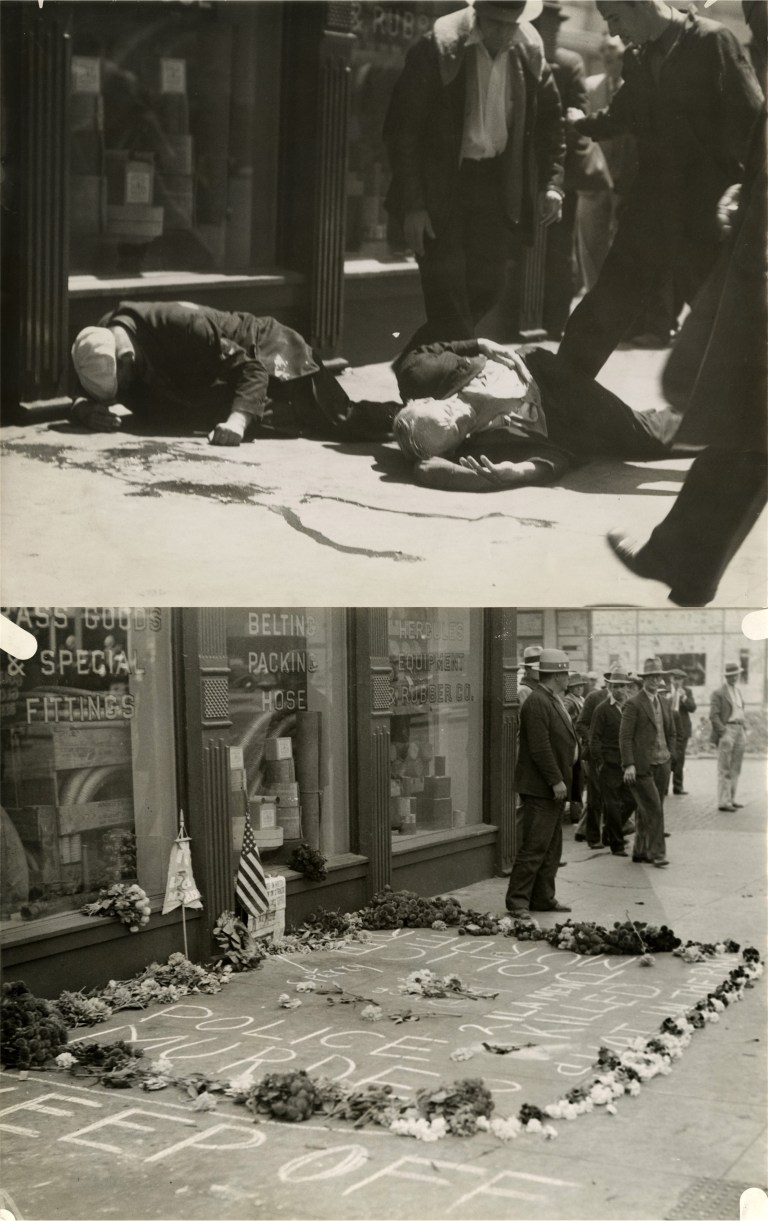 Before Richards runs into John Brant, he is warned of the dangers along the waterfront by a gentleman at a sailor’s hiring hall, particularly for strike breakers. When Richards inquires about police protection, the fellow tells him,
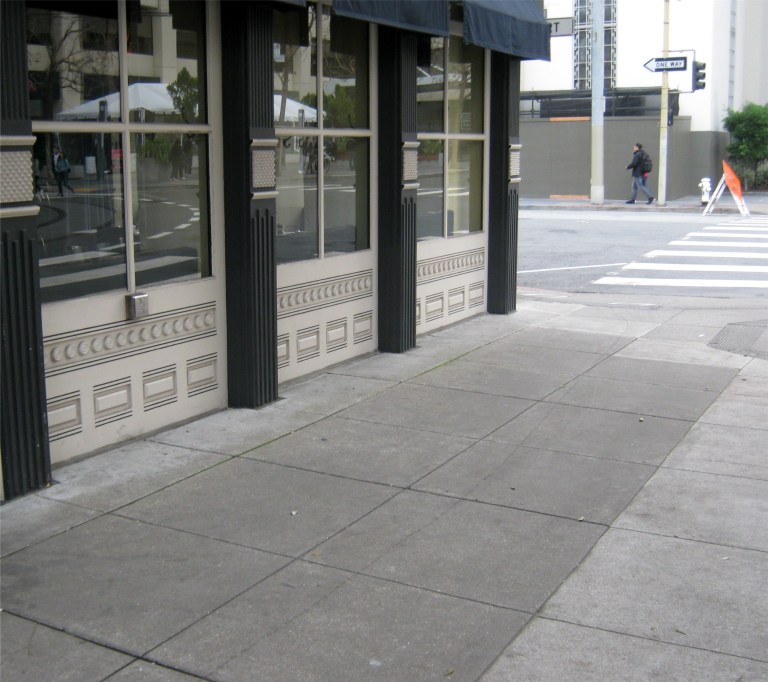 The spot where the previous two pictures were taken today:
 There is a marker describing the incident on a building at Steuart and Mission Streets today.
 The “Bloody Thursday” incident is still commemorated today on the sidewalk in front of the Longshoremen’s Hall on North Point Street.
 Greg counts the piers as he walks from Mission Street to Pier 43.
 Having been discouraged by the picketers in front of Pier 43, Greg requests assistance from a police officer watching from across the street to cross through the picket line and board the Araby.
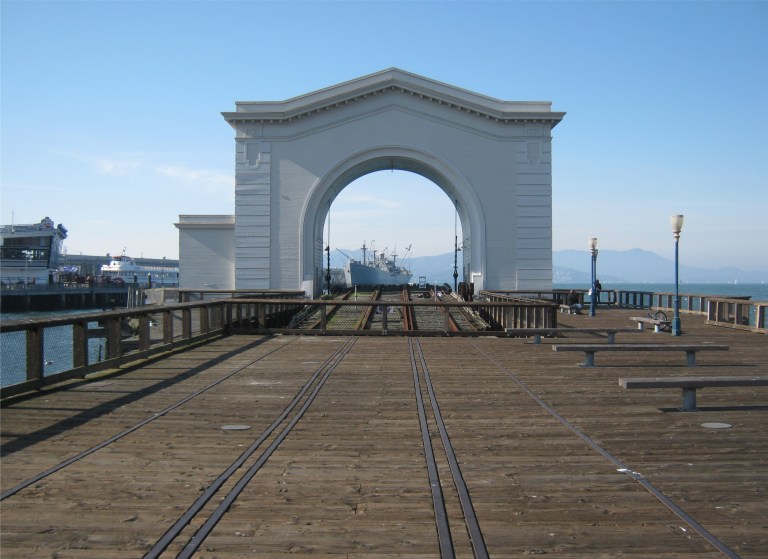 The top vintage picture above from opensfhistory.org is Pier 43 with a ship docked there in 1939. The picture below it I took looking through Pier 43 toward the Liberty Ship Jeremiah O’Brien:
 Greg is hired on to the crew of the Araby, but shortly after, an arsonist fire is started in the cargo hold. A series of clues leads Richards to believe that John Brant, who gave him his phony discharge certificate, is involved. He confesses to Captain Jarvis, master of the freighter, and Third Mate, Tod Moran in order to warn them of his suspicions. Partly because of his honesty, and partly because he can identify John Brant, they keep him on the crew. They leave the ship to search the waterfront for John Brant.
 The Ferry Building is mentioned often in ‘Foghorns’.
 Richards, Moran, and Captain Jarvis go back to the waterfront hotel where Brant sold Richards his phony discharge certificate on the corner of Mission Street at the Embarcadero and called the Bay View Hotel, and break into a room Brant was occupying when they made the sale looking for clues. They find a message that leads them to believe Brant will be meeting a confederate at the Canton Low Restaurant in Chinatown.
 But John Brant, sensing a trap bolts out the back door of the restaurant, as Greg takes after him. He follows Brant out to St. Mary’s Square at Quincy Street.
 Throughout the book is mentioned a foreboding possibility of another waterfront strike like the one in 1934 that shut down the entire San Francisco waterfront. In 1937, Longshoremen led by Harry Bridges were establishing a union along the San Francisco waterfront that was opposed by many ship company owners. In August of 1937 they founded the International Longshore and Warehouse Union. This 1937 picture from opensfhistory.org shows longshoremen gathering in front of Pier 15.
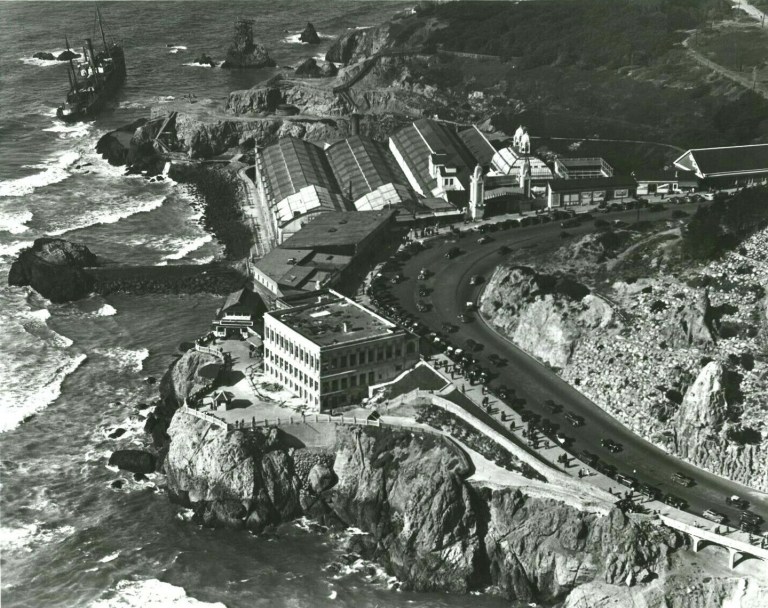 I’ll close with another reference in the book to an historical San Francisco Incident taking place when the book was written. In October of 1936, the cargo ship the SS Ohioan ran aground on the rocks near the Sutro Bathhouse and the Cliff House. The crew, much of the cargo, and parts of the ship were salvaged, but in March of 1937 the ship caught fire and was eventually smashed to pieces by the surf. The photo above is an aerial view of the Cliff House and Sutro’s Bathhouse showing the stranded SS Ohioan at the upper left. (ebay)
 A closer look at the stranded Ohioan and the area behind Sutro’s where she ran aground: (Vintage photo from worthpoint.com)
 San Francisco Film Locations Then & Now